
Skip to content
A Certain Magical Index
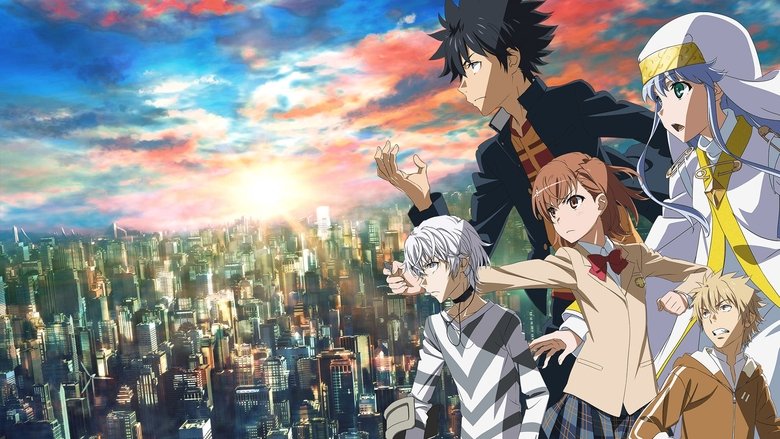
A collision of neon cyberpunk science and cloistered occult mysticism, where the desperate warmth of human resolve shatters the cold machinery of predetermined fate under fractured, glowing skies.
A Certain Magical Index

A Certain Magical Index

とある魔術の禁書目録

05 October 2008 — 05 April 2019 Japan 3 season 74 episode Ended 7.5 (199)

Cast: Atsushi Abe, Yuka Iguchi, Rina Sato, Nobuhiko Okamoto, Shizuka Itoh

Animation Sci-Fi & Fantasy Comedy Mystery Systematic Devaluation of Human Life vs. Individual Empathy Free Will and Overcoming Pre-Destination The Coexistence and Clash of Science and Magic The Nature of Heroism, Guilt, and Atonement Memory, Identity, and Self-Definition

Overview

Set in a hyper-technological enclave west of Tokyo known as Academy City, A Certain Magical Index explores a world deeply divided between two conflicting spheres of supernatural power: the scientific side, driven by esper development and cutting-edge technology, and the secret magic side, anchored in ancient religions, occult rituals, and esoteric traditions. Academy City's students undergo rigorous brain development curricula to awaken psychic esper powers, ranked from Level 0 (powerless) to Level 5 (godlike abilities).

The narrative follows Toma Kamijo (Kamijou Touma), a seemingly powerless Level 0 high school student whose right hand houses a mysterious negation ability called the Imagine Breaker. Touma's ordinary life unravels when he finds Index, a young English nun whose brain stores 103,000 forbidden magical grimoires (Index Librorum Prohibitorum), hanging on his balcony railing. By sheltering Index, Touma becomes the bridge and battleground between the Anglican Church, Roman Catholic factions, Russian Orthodoxy, secret cabals, and Academy City's shadowy leadership.

As the three seasons progress, the scope expands from localized street skirmishes and institutional rescues to grand geopolitical, ideological, and spiritual conflicts. The story branches into a three-protagonist structure—following Touma, the reformed psychic antihero Accelerator, and the powerless underdog thug Shiage Hamazura—as their separate paths intersect across escalating conspiracies, culminating in a devastating global confrontation.


Core Meaning

The overarching thesis of A Certain Magical Index is that predetermined systems, institutional dogmas, and arbitrary hierarchies must never dictate human dignity, compassion, or destiny.

Whether through Academy City's brutal scientific experiments that treat human lives as expendable data or through magical and religious institutions that sacrifice individuals for cosmic "salvation," systems continuously craft illusions of inevitability. Touma's right hand and moral philosophy embody the rejection of these grand illusions: real salvation does not stem from omnipotent authority or cosmic design, but from an individual's refusal to abandon someone in distress, regardless of personal cost, rank, or logic.

Thematic DNA

Systematic Devaluation of Human Life vs. Individual Empathy 30%
Free Will and Overcoming Pre-Destination 25%
The Coexistence and Clash of Science and Magic 20%
The Nature of Heroism, Guilt, and Atonement 15%
Memory, Identity, and Self-Definition 10%

Systematic Devaluation of Human Life vs. Individual Empathy

Academy City's Board of Directors views students as statistics and laboratory subjects (demonstrated in the Level 6 Shift project), while religious institutions view Index and their disciples merely as functional vessels or doctrinal weapons. The narrative continually pits bureaucratic and theological calculation against raw individual empathy.

Free Will and Overcoming Pre-Destination

Characters consistently struggle against their assigned labels—whether being a "Level 0 failure," a "monster born to be a villain," or a sacrificial pawn. The series asserts that one's purpose is defined by personal choices rather than origin or cosmic status.

The Coexistence and Clash of Science and Magic

The show builds an intricate world where the scientific paradigm (espers, quantum mechanics, Personal Realities) and the occult paradigm (Hermeticism, Christian mysticism, Kabbalah, Thelema) reflect and distort one another. It questions whether disparate worldviews can coexist without destroying humanity in crossfire.

The Nature of Heroism, Guilt, and Atonement

Explored primarily through the parallel journeys of Touma, Accelerator, and Hamazura. Accelerator believes he is tainted and unfit to be a traditional hero, choosing to protect others from the shadows of Academy City's dark side while seeking redemption for his past atrocities.

Memory, Identity, and Self-Definition

Beginning with Touma losing his entire past memory to save Index, the series explores what truly constitutes a person's identity. Touma chooses to embody the ideal of the "hero" his former self was believed to be, showing that who you choose to be today matters more than who you remember being.

Character Analysis

Kamijou Touma

Atsushi Abe

Archetype: The Reluctant Savior / Pure Hero Key Trait: Self-sacrificing obstinance; Imagine Breaker in his right hand.

Motivation

Driven by an instinctual, self-sacrificing urge to protect anyone in distress without needing a calculated reason.

Character Arc

Loses his pre-series memories in Season 1 and struggles with "imposter syndrome," fearing he is merely mimicking a dead boy's heroism. Across three seasons, he moves from street rescues to stopping global wars, realizing his desire to protect smiles is genuine and self-determined.

Accelerator

Nobuhiko Okamoto

Archetype: The Fallen Antihero Key Trait: Vector manipulation; sharp, manic laugh masking deep vulnerability.

Motivation

A desire to atone for past atrocities and fiercely protect Last Order and the innocent from the dark side of Academy City.

Character Arc

The strongest esper, twisted into mass slaughter in search of absolute deterrence so nobody would fight him. After being defeated by Touma and taking a brain injury protecting Last Order, he becomes a guardian of the vulnerable, discarding villainy to embrace atonement and awakening angel-like white wings during World War III.

All 5 characters and cast

Symbols & Motifs

Imagine Breaker (幻想殺し - Illusion Killer)

Meaning:

Symbolizes the grounding of reality—the violent erasure of self-deceiving illusions, grand cosmological excuses, and false gods, returning conflict to a human scale.

Context:

Manifested in Touma Kamijou's right hand, which dispels all supernatural miracles, curses, and espers during ideological and magical clashes.

The 103,000 Grimoires / Index's Mind

Meaning:

Represents forbidden accumulated knowledge, the perilous weight of religious dogmatism, and the weaponization of sacred lore alongside the vulnerability of burdened humanity.

Context:

Stored inside Index's brain, making her the prime target and McGuffin for various international religious and magical factions.

Black and White Wings

Meaning:

Manifestations of higher-dimensional energy. Black wings reflect destructive fury and descent into monstrosity, whereas white wings signify spiritual ascension, purity of purpose, and unconditional love.

Context:

Developed by Accelerator and Kakine during high-stress esper awakenings, with Accelerator transitioning from black to white wings in Season 3.

The Misaka Clones (The Sisters)

Meaning:

Symbolize the extreme consequences of industrial utilitarianism and the stripping of individuality, while their evolving collective network represents the awakening of shared consciousness and empathy.

Context:

Over 20,000 identical clones manufactured for slaughter in the Level 6 Shift project to elevate Accelerator.

Wind Turbines of Academy City

Meaning:

Represents the sterile, automated, and scientific modernity that conceals deep geopolitical rot and moral decay beneath clean energy.

Context:

Prominently featured throughout the visual skyline and background scenery of Academy City.

Memorable Quotes

そのふざけた幻想を、ぶち殺す!!
— Kamijou Touma

Context

Touma's defining battle cry, delivered right before shattering an opponent's magical or ideological dogma with his right fist across major season climaxes.

Meaning

Serves as Touma's defining declaration of humanistic defiance against grand illusions, false divine logic, and fatalism.

不幸だー!
— Kamijou Touma

Context

Touma's recurring comic and thematic lament when his Imagine Breaker negates God's blessings and good luck, leading to everyday catastrophes.

Meaning

A comedic yet poignant reminder of the personal cost Touma pays for wielding an ability that negates even divine blessings and luck.

All 5 quotes

Episode Highlights

Imagine Breaker (幻想殺し)

S1E1

Establishes the foundational dual-world mechanic of Academy City's high-tech science facing off against the secret occult world, introducing Touma, Index, and the reality-dispelling nature of the Imagine Breaker.

Significance:

Serves as the cornerstone prologue establishing the primary power dynamics, central characters, and the collision between science and magic.

Fantasy Killer (幻想殺し)

S1E6

Details the resolution of the Index memory-collar arc, where Touma successfully saves Index from the church's control at the cost of losing his entire life's memories when struck by a stray feather of light.

Significance:

Permanently alters Touma's psyche and identity, driving his character motivation and imposter syndrome for the rest of the series.

Strongest vs. Weakest (最弱 vs 最強)

S1E14

Features the climax of the Sisters Arc, where Touma (the ultimate Level 0) shatters the physical invulnerability and ideological worldview of Accelerator (the Level 5 #1).

Significance:

Halts the clone massacre, breaks the illusion of Academy City's absolute hierarchy, and sparks Accelerator's transformative redemption arc.

Final Signal (最終信号)

S1E20

Showcases Accelerator sacrificing his physical safety and brain computing capacity to save Last Order from a malicious virus.

Significance:

Solidifies Accelerator's shift from destructive antagonist to protective guardian, redefining his purpose in the narrative.

The Right Seat of God (神の右席)

S2E23

Introduces the fundamental theological threat of the Roman Catholic cabal—God's Right Seat.

Significance:

Initiates the high-stakes political and religious war aimed at reshaping the cosmological order, setting the stage for global warfare.

Battle Royale (超能力者達)

S3E6

Portrays Academy City descending into chaotic civil war as underground black ops factions (GROUP, SCHOOL, ITEM, and BLOCK) slaughter each other.

Significance:

Cements Hamazura's ascension alongside Accelerator as major protagonists within the multi-perspective narrative structure.

Touma Kamijo (上条当麻)

S3E26

Presents the series grand finale and World War III climax as Accelerator awakens white wings, Hamazura protects Takitsubo, and Touma severs Fiamma of the Right's holy power before falling with the Star of Bethlehem.

Significance:

Resolves the Old Testament narrative arc, completes the individual journeys of all three heroes, and leaves Touma missing in action in the Arctic Ocean.

Philosophical Questions

Does the presence of extraordinary power inevitably alienate one from basic humanity?

Explored through Accelerator's spiral into isolation, as immense power made genuine human connection impossible until he hit rock bottom.

Can an artificial identity constructed on forgotten memories possess true authenticity?

Explored through Touma's amnesia, questioning whether character is born from past memories or present moral commitments.

Can ethical compromise ever justify global peace?

Explored through antagonists like Fiamma of the Right and Aleister Crowley, who attempt to rewrite the universe's fabric to eliminate suffering at the expense of billions.

Alternative Interpretations

One major interpretation views the series as an argument against transcendent moral systems, framing Touma's Imagine Breaker not simply as an anti-magic ability, but as an instrument of cosmological humanism that forces gods, saints, and espers back down to human vulnerability, demanding they justify their actions with human ethics rather than divine mandates.

Full ending explanation

Cultural Impact

Debuting in the late 2000s, A Certain Magical Index was instrumental in codifying the modern "urban fantasy light novel adaptation" formula, heavily inspiring anime tropes involving categorized supernatural powers and academy-centric worldbuilding.

The franchise grew into an immense multimedia titan spanning multiple animated spin-offs: A Certain Scientific Railgun (which achieved massive critical and commercial acclaim on its own) and A Certain Scientific Accelerator. Character popularity polls consistently ranked Mikoto Misaka, Accelerator, and Touma Kamijou at the top of national Japanese charts (such as the Kono Light Novel ga Sugoi! rankings) for over a decade.

Audience Reception

Audience and critical reception evolved across the show's run:

  • Seasons 1 & 2: Highly positive. Viewers praised the inventive hybrid of scientific and occult power systems, standout emotional beats (particularly the Sisters Arc), and memorable character dynamics.
  • Season 3 Backlash: Season 3 faced strong criticism from both anime viewers and novel purists. By attempting to condense 9 long, lore-heavy light novel volumes into just 26 episodes, major plot points and tactical explanations were heavily trimmed, resulting in disjointed narrative pacing.
  • Overall Legacy Verdict: Despite Season 3's compromised pacing, the series remains celebrated as a cornerstone of modern light novel urban fantasy, beloved for its expansive lore and iconic cast.

Interesting Facts

  • The anime adapts the Old Testament portion (all 22 volumes) of Kazuma Kamachi's record-breaking light novel series, illustrated by Kiyotaka Haimura, which stands as one of the best-selling light novel franchises in Japanese publishing history.
  • Hiroshi Nishikiori served as the series director across all three seasons produced at J.C.Staff, spanning a production timeline of over a decade from 2008 to 2019.
  • Between Season 2 (2011) and Season 3 (2018), there was an eight-year gap before the project was greenlit under Kadokawa's 'A Certain Project' initiative to finish the Old Testament storyline.
  • The distinctive soundscape—blending hard trance, electronic beats, and Gregorian-style choral chanting—was crafted by Maiko Iuchi and the electronic music group I've Sound, mirroring the science vs. magic conflict in the audio design.
  • Author Kazuma Kamachi was famously known during the anime's production for writing full novel drafts faster than publishing deadlines, occasionally turning in a new volume every 2–3 months.

Easter Eggs

Real Occult Lore (Aleister Crowley & Thelema)

The Board Chairman of Academy City is explicitly named Aleister Crowley, referencing the historical 20th-century British occultist. The lore weaves authentic concepts from Crowley's writings, such as the Book of the Law, the Aeon of Horus, and the entity Aiwass.

Spinoff Crossover Cameos

Characters who lead spinoffs (such as Mikoto Misaka, Kuroko Shirai, and Accelerator) continually weave through Touma's primary narrative. Several scenes in Season 1 and 2 directly mirror events from A Certain Scientific Railgun from an alternate perspective.

Index-tan Parody OVAs

J.C.Staff produced several comedic bonus episodes titled Toaru Majutsu no Index-tan, where Index is rendered in chibi form and the voice actors playfully mock production constraints, plot tropes, and merchandise.

Frequently Asked Questions

Explore More About This Movie

Dive deeper into specific aspects of the movie with our detailed analysis pages

Comments (0)

Leave a comment

No comments yet. Be the first to share your thoughts!

Similar Movies