Skip to content
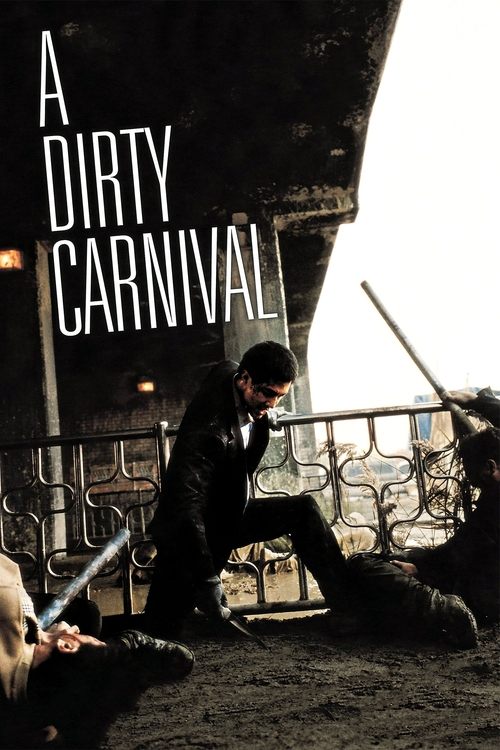
A Dirty Carnival
A raw, melancholic neo-noir steeped in rainy asphalt and visceral dread, capturing the tragic delusion of brotherhood through the image of a bloodstained knife hidden beneath a celebratory banquet.
A Dirty Carnival

A Dirty Carnival

비열한 거리

"A world without trust and mercy."

17 October 2006 South Korea 141 min 7.0 (230)

Director: Yoo Ha

Cast: Zo In-sung, Cheon Ho-jin, Namkoong Min, Lee Bo-young, Jin Goo

Drama Crime Action The Illusion of Loyalty & Inevitability of Betrayal Capitalist Commodification & Exploitation of Real Lives The Burden of Poverty & False Promise of Social Mobility The Double-Edged Nature of Vulnerability & Confession
Budget: $4,700,000
Box Office: $10,371,998

Overview

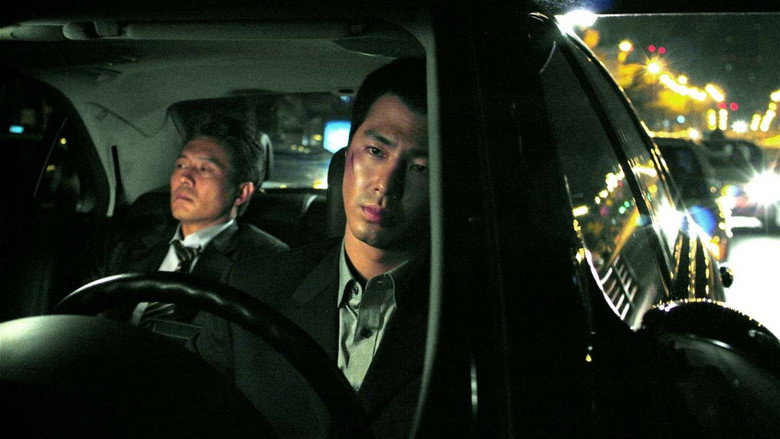
A Dirty Carnival (비열한 거리, 2006) is a South Korean neo-noir crime drama directed by Yoo Ha and starring Zo In-sung. The narrative follows Kim Byung-doo, a 29-year-old mid-level mobster struggling within a violent underworld hierarchy. Shackled by poverty, an ailing mother, and the responsibility of providing for his younger siblings and loyal subordinates, Byung-doo finds himself constantly passed over by his direct crime boss, Sang-chul. Desperate to secure financial stability and social dignity, Byung-doo seizes a high-risk opportunity offered by President Hwang, a wealthy corporate developer and syndicate patron, to perform a discreet contract killing that bypasses his own superiors.

As Byung-doo navigates the treacherous ascent up the criminal ladder, he reconnects with two figures from his youth: Min-ho, an aspiring film director seeking authentic inspiration for an upcoming gangster movie, and Hyun-joo, his childhood first love. In an effort to recapture a semblance of ordinary human warmth and clean identity, Byung-doo opens up his world to Min-ho, sharing intimate experiences and dark secrets under the assumption of unbreakable childhood friendship.

The story unfolds into a deconstruction of romanticized gangster tropes. Rather than celebrating machismo, honor, or loyalty, the film strips away cinematic glamour to reveal a Darwinian ecosystem where moral compromises, transactional relationships, and parasitic exploitation inevitably destroy the very ideals of family and brotherhood the characters claim to protect.
Core Meaning

Director Yoo Ha designed A Dirty Carnival as a scathing critique of ruthless capitalist exploitation, transactional human relations, and the myth of romanticized gangster honor (jopok mythology). The core message posits that modern capitalist society operates identically to the criminal underworld: individuals are valued solely for their utility, and loyalty is discarded the moment self-preservation or profit demands it.

By framing the underworld not as a separate deviant subculture but as a hyper-condensed microcosm of mainstream society—where real estate magnates, corporate developers, artists, and mob enforcers feed on one another—the film demonstrates how the vulnerable are exploited, drained of their resources, and discarded by systemic predators who maintain clean hands while others do their dirty work.

Thematic DNA

The Illusion of Loyalty & Inevitability of Betrayal 30%
Capitalist Commodification & Exploitation of Real Lives 25%
The Burden of Poverty & False Promise of Social Mobility 25%
The Double-Edged Nature of Vulnerability & Confession 20%

The Illusion of Loyalty & Inevitability of Betrayal

The film systematically deconstructs the romantic gangster code of uiri (loyalty/comradery). Byung-doo betrays his boss Sang-chul to survive; Min-ho betrays Byung-doo’s confidence for professional acclaim; Jong-soo betrays Byung-doo for power; and President Hwang manipulates them all. Loyalty is revealed to be a disposable currency.

Capitalist Commodification & Exploitation of Real Lives

A central thematic pillar is how mainstream society consumes underclass suffering. Min-ho represents the bourgeois artist who leeches off Byung-doo’s genuine trauma and criminal agony, turning real-life violence into a consumable, award-winning cinematic spectacle while evading moral culpability.

The Burden of Poverty & False Promise of Social Mobility

Byung-doo’s violent trajectory is propelled entirely by socio-economic desperation. His motivation is not sadistic cruelty but the mundane necessity of paying his mother’s medical bills and securing housing for his family. The film underscores how the marginalized are forced into self-destructive cycles merely to achieve basic subsistence.

The Double-Edged Nature of Vulnerability & Confession

In a ruthless world, authentic human emotion is fatal. Byung-doo’s downfall is not caused by tactical failure in combat, but by emotional longing—his desperate desire to be understood and loved leads him to confess his deepest sins to Min-ho during an intoxicated moment of honesty.

Character Analysis

Kim Byung-doo

Zo In-sung

Archetype: Tragic Antihero Key Trait: Emotional earnestness masked beneath lethal street brutality.

Motivation

Provide financial security for his family and achieve respect.

Character Arc

Evolves from a desperate, underappreciated enforcer into an ambitious boss, only to be destroyed by his fatal craving for genuine human connection.

President Hwang

Cheon Ho-jin

Archetype: Corrupt Mentor / Capitalist Patriarch Key Trait: Cold, pragmatic Machiavellianism.

Motivation

Maximize real estate profits and eliminate legal liabilities.

Character Arc

Remains steady as the untouchable apex predator; pulls strings behind the scenes while maintaining corporate legitimacy.

All 5 characters and cast

Symbols & Motifs

The Dining Table / Sharing Food (Sikgu)

Meaning:

In Korean, family (sikgu) literally translates to mouths eating together. The motif highlights the tragedy of Byung-doo's worldview: feeding someone does not prevent them from devouring you.

Context:

Byung-doo repeatedly defines brotherhood and gangster life through communal eating at the dining table with his subordinates.

The Mud and Rain (The Reedy Marsh Battle)

Meaning:

Unlike stylized action, the mud makes violence clumsy, exhausting, desperate, and filthy, symbolizing the inescapable moral mire engulfing everyone.

Context:

Used during the climactic turf war in an unpaved construction field submerged in mud, stripping away all cinematic grace.

The Film Camera / Clapperboard

Meaning:

Represents bourgeois voyeurism and exploitation by turning actual human blood and genuine agony into commercial entertainment and career prestige.

Context:

Featured through Min-ho's film production apparatus as he records and dramatizes Byung-doo's underworld life.

Old Pop Songs / Karaoke

Meaning:

These songs evoke a nostalgic yearning for innocence, romantic purity, and ordinary domestic peace that violent existence denies.

Context:

Byung-doo frequently sings classic Korean pop and trot ballads (such as Old Love and You Outside the Door) during karaoke sessions.

Fish / Raw Sashimi

Meaning:

Highlights the predatory food chain where big fish consume small fish without remorse.

Context:

Shown during the consumption of live or raw fish in luxury dining rooms during backroom criminal deals.

Memorable Quotes

세상에서 성공하려면 딱 두 가지만 알면 돼. 내게 필요한 사람이 누군지, 그 사람이 뭘 필요로 하는지.
— President Hwang

Context

Spoken during a private meeting with Byung-doo.

Meaning

Encapsulates the predatory, transactional philosophy of the film and sets Byung-doo's tragic descent in motion.

식구가 뭐냐? 같이 밥 먹는 입구멍이지. 내 입에 밥 들어갈 때 내 식구들 입에도 밥 들어가는 거, 그게 바로 건달이야.
— Kim Byung-doo

Context

Byung-doo explains his moral rationale to his subordinates.

Meaning

Reveals his self-justification: violence is merely labor done to feed his extended family.

All 4 quotes

Philosophical Questions

Can transactional loyalty ever coexist with authentic human affection?

The film explores whether relationships forged under conditions of economic survival and power hierarchy can withstand the pressure of conflicting self-interests.

Is artistic creation inherently predatory when it draws upon real human suffering?

Through Min-ho’s opportunistic exploitation of Byung-doo's confession, the film interrogates the ethical boundary between authentic artistic inspiration and parasitic exploitation.

Are individuals in violent systems morally autonomous, or merely disposable products of structural desperation?

Byung-doo’s actions constantly highlight the tension between personal moral agency and the socio-economic compulsions forcing underclass youths into self-destruction.

Alternative Interpretations

The Sociological Reading (Capitalism as the Ultimate Crime Syndicate): In this reading, President Hwang represents the upper tier of capital, Min-ho represents the cultural/media apparatus, and Byung-doo is the exploited working class. The film illustrates how capital and culture extract labor and life from the proletariat, dispose of them, and toast to mutual prosperity over their graves.

Full ending explanation

Cultural Impact

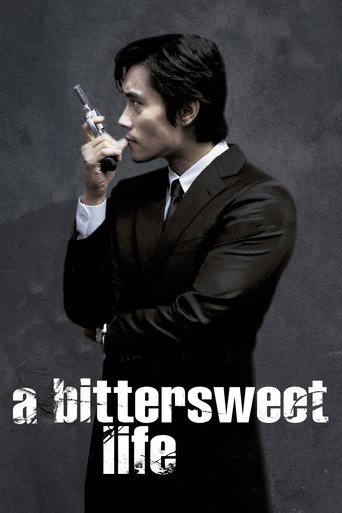
Released during the height of the Korean New Wave, A Dirty Carnival arrived when the South Korean film industry was saturated with both slapstick jopok comedies and hyper-stylized revenge thrillers (such as A Bittersweet Life). Yoo Ha’s film distinguished itself by rejecting both comedic trivialization and aesthetic romanticism.

The film was a solid box office success, attracting over 2 million admissions domestically and securing its place as one of the definitive modern Korean crime films. It exerted a lasting influence on subsequent South Korean crime cinema—paving the way for grounded, systemic mob masterpieces like Nameless Gangster: Rules of the Time (2012) and New World (2013) by cementing the depiction of mob violence as an extension of corporate real estate greed and structural inequality.

Audience Reception

Praise: Universally acclaimed for Zo In-sung’s tour-de-force performance, blending vulnerability with raw physical menace. The brutal, unsentimental action choreography—particularly the chaotic mud fight—is widely regarded as a high-water mark for realistic street-combat cinematography. Critics and audiences praised the biting meta-cinematic critique and the uncompromising bleakness of the narrative.

Criticisms: Some viewers noted pacing dips in the extended middle act, particularly around the romantic subplot involving Hyun-joo. A few critics felt the runtime was slightly long.

Controversial Elements: The extreme, unvarnished violence and the bleak, cynical ending without conventional moral retribution caused discomfort for viewers expecting a standard heroic redemption arc.

Overall Verdict: A seminal contemporary classic of Korean neo-noir that deconstructed the genre from within and remains one of the most honest depictions of organized crime ever produced in Asian cinema.

Interesting Facts

  • A Dirty Carnival forms the second installment of director Yoo Ha’s acclaimed thematic Street Trilogy, situated between Once Upon a Time in High School (2004) and Gangnam Blues (2015), all exploring systemic violence, masculine ambition, and social decay in South Korea.
  • Zo In-sung, previously regarded primarily as a romantic melodrama idol, underwent rigorous physical training to perform the film's gritty, unglamorous action sequences, earning widespread critical acclaim and the Best Actor award at the 2006 Korean Film Awards.
  • The iconic brawl in the mud required over a week of grueling shooting in heavy artificial rain and muddy fields, causing several actors and stuntmen to suffer minor injuries and skin infections due to the mud and sustained combat choreography.
  • Director Yoo Ha drew inspiration from his own observations of how the South Korean film industry romanticized organized crime during the early 2000s jopok comedy wave, intentionally turning the camera on the film industry itself to show its parasitic relationship with real underworld violence.

Easter Eggs

Film-Within-a-Film Metacommentary

Min-ho’s movie within A Dirty Carnival mirrors the actual production aesthetic and stylistic tropes of popular mid-2000s Korean gangster cinema, subtly mocking the genre's self-important cinematic embellishments.

Visual Parallels of Succession

When Jong-soo takes over Byung-doo’s place at the end of the film, his posture, suit, and seating arrangement beside President Hwang precisely replicate Byung-doo's earlier scenes with the boss, visually signaling the endless, interchangeable cycle of disposable mob enforcers.

The Karaoke Mirror

The specific trot songs chosen by Byung-doo during karaoke sessions reflect popular South Korean working-class anthems of unrequited love and alienation, contrasting sharply with the cold, modern high-rise aesthetics of corporate Seoul.

Frequently Asked Questions

Explore More About This Movie

Dive deeper into specific aspects of the movie with our detailed analysis pages

Comments (0)

Leave a comment

No comments yet. Be the first to share your thoughts!

Similar Movies