Skip to content
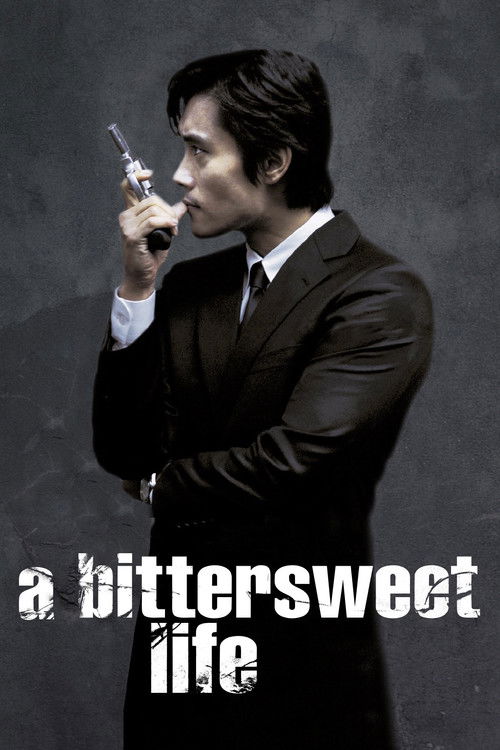
A Bittersweet Life
A sleek, rain-drenched neo-noir steeped in melancholic yearning and sudden brutality, where a solitary enforcer’s cold, crystalline existence shatters against the fleeting warmth of an impossible desire.
A Bittersweet Life

A Bittersweet Life

달콤한 인생

"When doing right goes very, very wrong."

01 April 2005 South Korea 119 min 7.4 (1,022)

Director: Kim Jee-woon

Cast: Lee Byung-hun, Kim Yeong-cheol, Shin Min-a, Kim Roi-ha, Lee Ki-young

Drama Crime Action The Awakening of Repressed Desire & Alienation Loyalty, Honor, and Betrayal The Absurdity and Futility of Vengeance Existential Isolation vs. Illusion (Maya) The Fragility of Hierarchical Power
Box Office: $7,600,000

Overview

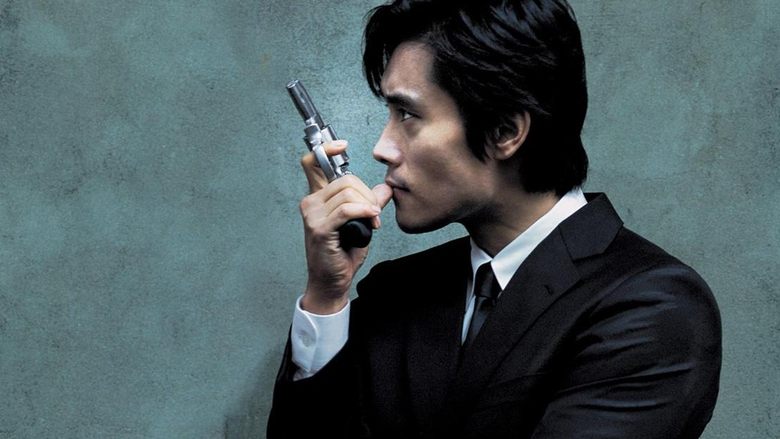
A Bittersweet Life (달콤한 인생), directed by Kim Jee-woon, centers on Kim Sun-woo (Lee Byung-hun), a high-ranking enforcer and hotel manager for crime boss Mr. Kang (Kim Yeong-cheol). Sun-woo is the epitome of cold perfection: immaculate, methodical, unquestioning in his loyalty, and detached from emotional entanglements. His structured life runs with absolute mechanical discipline, making him Kang's most trusted lieutenant in a world dictated by merciless criminal hierarchies.

The status quo fractures when Boss Kang tasks Sun-woo with a discreet, sensitive mission: surveil Kang’s young mistress, Hee-soo (Shin Min-a), whom Kang suspects of seeing another man. Sun-woo is given strict instructions to either eliminate the unfaithful lovers or notify Kang immediately. However, upon catching Hee-soo in the act, Sun-woo experiences a fleeting moment of empathy—or perhaps an unspoken, repressed fascination—and chooses to spare her and her lover on the condition that they sever ties forever.

This single deviation from unconditional obedience unleashes a catastrophic chain reaction. Interpreting Sun-woo’s mercy as personal betrayal and humiliation, Boss Kang orders Sun-woo’s brutal execution. Barely escaping alive, Sun-woo embarks on a relentless path of vengeance, tearing through the Seoul underworld to confront the mentor who cast him aside and seek an answer to an agonizing question.
Core Meaning

At its core, A Bittersweet Life is an existential meditation on human longing, repressed emotion, and the fragility of identity. Director Kim Jee-woon uses the conventions of the gangster noir to illustrate how an individual who lives an entirely sterile, controlled life can be completely undone by an ephemeral glimpse of beauty and human connection.

The director explores the tragic irony of self-awakening: the moment Sun-woo develops an autonomous heart and shows mercy, he seals his own destruction in a world that permits only cold obedience. The film conveys that desire and consciousness are 'bittersweet'—awakening to genuine emotion gives life its only authentic taste, yet that same awakening makes the harsh reality of an unachievable dream unbearable.

Thematic DNA

The Awakening of Repressed Desire & Alienation 30%
Loyalty, Honor, and Betrayal 25%
The Absurdity and Futility of Vengeance 20%
Existential Isolation vs. Illusion (Maya) 15%
The Fragility of Hierarchical Power 10%

The Awakening of Repressed Desire & Alienation

Sun-woo has spent his adult life emotionally dormant, serving as a lethal instrument for the syndicate. Hearing Hee-soo play the cello and seeing her gentle smile awakens a quiet, unspoken romantic longing. This inner stir destabilizes his entire reality, underscoring how loneliness can consume an individual once a spark of humanity is lit.

Loyalty, Honor, and Betrayal

The underworld operates on absolute obedience and transactional respect. Sun-woo gave seven years of flawless service to Boss Kang, yet a single unaligned act makes his loyalty void. The film examines the hypocrisy of patriarchal codes where 'respect' is merely masked paranoia and insecurity.

The Absurdity and Futility of Vengeance

As Sun-woo leaves a trail of blood to reach Kang, his quest is not driven by the desire to survive or seize power, but by an existential need for an explanation ('Why did you do this to me?'). The carnage resolves nothing and restores nothing, leaving behind only ruins.

Existential Isolation vs. Illusion (Maya)

Drawing on Buddhist parables of the mind's illusions, the film questions whether Sun-woo’s experience of romantic awakening and autonomy was ever tangible or merely a tragic daydream of a doomed man.

The Fragility of Hierarchical Power

Boss Kang’s vast empire collapses not due to outside syndicate wars, but because of his own insecurity over an unfaithful mistress and an enforcer whose heart he could not fully control.

Character Analysis

Kim Sun-woo

Lee Byung-hun

Archetype: Tragic Antihero / Fallen Enforcer Key Trait: Stoic, hyper-competent, melancholic.

Motivation

To understand why his lifetime of loyalty was erased and to avenge his ruined life.

Character Arc

Moves from a detached, emotionless executioner to a wounded soul seeking self-knowledge and retribution.

Mr. Kang (Boss Kang)

Kim Yeong-cheol

Archetype: Patriarchal Antagonist / Crime Boss Key Trait: Calculating, ruthlessly vain, insecure.

Motivation

Preserving absolute authority, pride, and control over his territory and mistress.

Character Arc

Degenerates from a composed, paternal mob boss into a paranoid, wounded tyrant driven by vanity.

All 5 characters and cast

Symbols & Motifs

The Cello and Classical Melody

Meaning:

Represents pure aesthetic grace, emotional vulnerability, and an untainted world far removed from Sun-woo’s violent reality.

Context:

Associated with Hee-soo's cello practice and musical performances throughout the film.

The Red Apple

Meaning:

Represents Sun-woo’s initial obsession with perfection, control, and cleanliness, as well as an allusion to the biblical forbidden fruit that sparks his fall.

Context:

Seen early in the film when Sun-woo cleans and cuts an apple with surgical precision.

The Window and Shadowboxing

Meaning:

Symbolizes his tragic self-absorption, internal battle, and yearning for vitality in an empty glass cage.

Context:

Shown through Sun-woo’s reflection in the glass hotel suite as he practices shadowboxing against the nighttime city skyline.

Mud, Rain, and the Grave

Meaning:

Symbolizes a visceral, agonizing rebirth—stripping him of his polished facade and reducing him to raw animal survival.

Context:

Used during the sequence where Sun-woo is buried alive by Mun-suk’s thugs and claws his way out of the rain-soaked earth.

The Desk Lamp / Dimly Lit Apartment

Meaning:

Illustrates the emotional warmth he craves but cannot inhabit.

Context:

Hee-soo’s warm, amber-lit home is framed in stark contrast to Sun-woo’s cold, monochromatic spaces.

The Wind in the Trees (Zen Allegory)

Meaning:

Symbolizes the turbulence of the human mind reacting to desire.

Context:

Frames the opening of the film as branches sway in the wind alongside the opening narration.

Memorable Quotes

어느 맑은 봄날, 바람에 이리저리 휘날리는 나뭇가지를 바라보며, 제자가 물었다. '스승님, 저것은 나뭇가지가 움직이는 겁니까, 바람이 움직이는 겁니까?' 스승은 제자가 가리키는 곳은 보지도 않은 채, 웃으며 말했다. '무릇 움직이는 것은 나뭇가지도 아니고 바람도 아니며, 네 마음뿐이다.'
— Lee Byung-hun / Master (Voiceover)

Context

Delivered as the opening voiceover parable accompanying the swaying tree branches.

Meaning

Establishes the philosophical theme of the film: external chaos is generated entirely by the internal stirring of human desire.

말해봐요, 나한테 왜 그랬어요? 7년 동안 당신 밑에서 개처럼 일했는데...
— Kim Sun-woo

Context

Spoken during Sun-woo's climactic standoff and confrontation with Boss Kang.

Meaning

Reveals Sun-woo’s core motivation: he does not crave power or money, only an explanation for his discarded devotion.

All 4 quotes

Philosophical Questions

Is true autonomy possible within a rigid societal or criminal structure, or does self-assertion inevitably lead to destruction?

The film demonstrates how a single independent moral choice disrupts hierarchical survival.

Why does human desire persist when the outcome is guaranteed to be tragic?

Sun-woo knows Hee-soo will never love him, yet the mere feeling gives him a purpose beyond mechanical obedience.

What is the root of human suffering: external circumstances or internal attachment?

Reflected in the Zen koan, Sun-woo’s suffering is born not of Boss Kang’s betrayal, but of his own newly awakened inner desires.

Alternative Interpretations

1. The Literal Revenge Narrative: The straightforward reading where Sun-woo is a victim of gang paranoia and retribution, carrying out a doomed vendetta against his corrupt superiors until mutual destruction.

Full ending explanation

Cultural Impact

A Bittersweet Life arrived in 2005 during the zenith of the Korean New Wave (Hallyu cinema explosion), standing alongside Park Chan-wook’s Vengeance Trilogy and Bong Joon-ho’s Memories of Murder as high-water marks of modern Korean auteur filmmaking.

The film redefined the Korean gangster (jopok) genre, which had previously been dominated by broad slapstick comedies or raw historical dramas. Kim Jee-woon transformed it into high-art neo-noir characterized by designer suits, architectural precision, philosophical weight, and existential melancholy.

Its international impact was broad: it cemented Lee Byung-hun’s global standing as an elite leading man, directly influenced contemporary action-noir cinema, and was officially remade into the popular Bollywood action film Awarapan (2007).

Audience Reception

A Bittersweet Life is regarded worldwide as a modern neo-noir masterpiece and a quintessential classic of Korean cinema.

Praised Elements:

  • Lee Byung-hun’s magnetic, emotionally nuanced, and physically demanding performance.
  • Dazzling cinematography, meticulous set design, and razor-sharp editing.
  • The integration of philosophical contemplation with explosive, expertly choreographed action set-pieces.

Points of Criticism and Controversy:

  • Some contemporary critics felt the film leaned on familiar gangster/revenge tropes seen in Hong Kong and French noir.
  • Graphic, unflinching violence and torture scenes were polarizing for casual viewers.
  • The sudden, almost anti-climactic assassination of Sun-woo by Eric Mun’s character at the very end caused notable debate.

Interesting Facts

  • Kim Jee-woon conceived the story by referencing philosopher Jacques Derrida's notion that 'even love that only looks suffers,' designing Sun-woo as a character whose agony stems from an unexpressed, silent gaze.
  • The film was screened Out of Competition at the 58th Cannes Film Festival in 2005, premiering in a late-night midnight screening slot that garnered international acclaim for its sleek style.
  • Cinematographer Kim Ji-yong worked closely with Kim Jee-woon and Lee Byung-hun to establish the distinct neon-gloss and desaturated noir contrast.
  • Lee Byung-hun underwent rigorous firearms and hand-to-hand combat training, performing the grueling scene where he digs himself out of a mud pit in pouring rain without a body double.
  • Actor Hwang Jung-min’s brief, psychotic performance as President Baek gained widespread critical acclaim in Korea, establishing his signature gritty intensity.
  • The Korean DVD release included a special feature where crew members playfully asked Kim Jee-woon direct questions about why he insisted on difficult or later-deleted creative choices.

Easter Eggs

Shinhwa's Eric Mun Cameo

Eric Mun (Mun Jung-hyuk) makes a silent, deadly cameo at the climax as Tae-goo, the brother of the arms dealer Sun-woo killed earlier, delivering the fatal final shots.

French Neo-Noir Influences

The film serves as a direct homage to Jean-Pierre Melville’s Le Samouraï (1967), with Sun-woo reflecting the hyper-disciplined, solitary hitman archetype perfected by Alain Delon.

Hong Kong Heroic Bloodshed

The final restaurant/lounge shootout heavily references the aestheticized ballistic violence of John Woo’s A Better Tomorrow and The Killer, blended with Park Chan-wook’s visceral brutality.

Zen Buddhist Sutras

The opening and closing narrations directly adapt Zen Buddhist koans regarding human perception, self-illusion, and attachment.

Frequently Asked Questions

Explore More About This Movie

Dive deeper into specific aspects of the movie with our detailed analysis pages

Comments (0)

Leave a comment

No comments yet. Be the first to share your thoughts!

Similar Movies