Skip to content
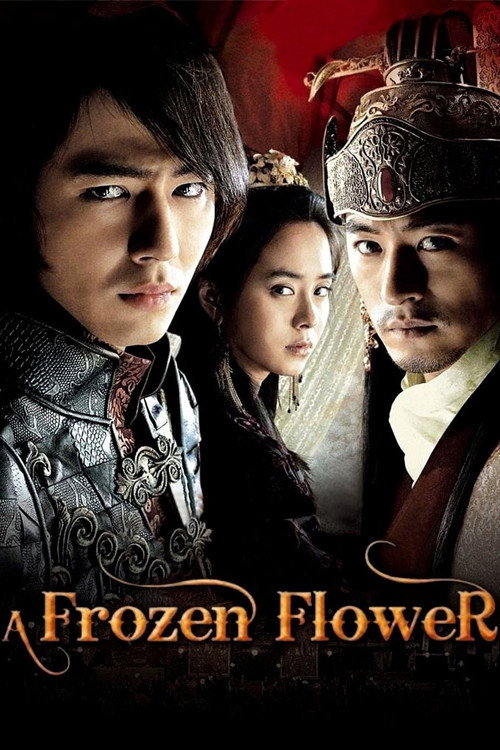
A Frozen Flower
A haunting historical erotic drama bathed in royal grandeur and tragic obsession, where forbidden passion fractures unyielding loyalty like delicate ice shattering over a burning flame.
A Frozen Flower

A Frozen Flower

쌍화점

"For his last love, fate led him to betray his first love."

30 December 2008 South Korea 133 min 6.9 (163)

Director: Yoo Ha

Cast: Zo In-sung, Ju Jin-mo, Song Ji-hyo, Shim Ji-ho, Lim Ju-hwan

Drama Forbidden Desire vs. Institutional Duty Obsessive Possession and Jealousy Identity, Personhood, and Awakening Political Fragility and Foreign Subjugation Love as a Destructive Force
Budget: $10,000,000
Box Office: $18,980,744

Overview

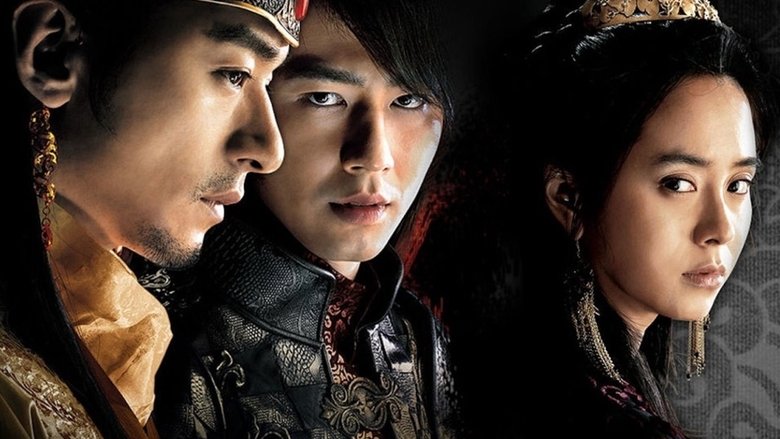
Set during the declining years of South Korea’s Goryeo Dynasty under the heavy political influence of the Mongol Yuan Dynasty, A Frozen Flower centers on a delicate love triangle within the royal court. The King of Goryeo, who harbored no romantic attraction toward women, formed an elite group of royal bodyguards known as the Kunryongwe. Among them, his most trusted commander and personal lover is Hong-lim. Facing immense geopolitical pressure from Yuan envoys and local counselors to produce a royal heir, the King devises a risky plan: he commands Hong-lim to secretly sleep with the Queen to father a child.

Though initially hesitant and driven purely by duty, Hong-lim and the foreign Yuan Princess-turned-Queen engage in nocturnal encounters arranged by the monarch. However, physical union unexpectedly ignites genuine heterosexual desire and romantic affection between Hong-lim and the Queen. As secret meetings continue beyond the King's original command, whispers of infidelity circulate through the imperial corridors. Caught between absolute loyalty to his sovereign and newfound love for the Queen, Hong-lim triggers a catastrophic chain of jealousy, political intrigue, and lethal vengeance within the palace walls.
Core Meaning

Director Yoo Ha utilizes the historical framework of Late Goryeo to explore the destructive tension between human desire and political/social duty. The film illustrates how absolute power attempts to control personal emotions—treating affection as a malleable political tool—only to be undone by the unpredictable nature of genuine passion. A Frozen Flower serves as a tragedy about identity and personal agency: Hong-lim spends his entire life as an extension of the King's will, yet his awakening to authentic romantic choice forces him to shatter his lifelong bonds, revealing that suppressing raw human nature under royal decree ultimately leads to mutual annihilation.

Thematic DNA

Forbidden Desire vs. Institutional Duty 30%
Obsessive Possession and Jealousy 25%
Identity, Personhood, and Awakening 20%
Political Fragility and Foreign Subjugation 15%
Love as a Destructive Force 10%

Forbidden Desire vs. Institutional Duty

The narrative contrasts royal obligation to the state with untamable sexual desire. Hong-lim is torn between his oath of absolute obedience to the King and his instinctual attraction to the Queen.

Obsessive Possession and Jealousy

The King’s love for Hong-lim devolves from protective affection into tyrannical control. His inability to share or accept Hong-lim's emotional departure triggers paranoia and violence.

Identity, Personhood, and Awakening

Raised inside the palace as a royal tool, Hong-lim lacks self-determination. His relationship with the Queen represents his first autonomous choice, allowing him to discover a distinct personal identity outside the King's influence.

Political Fragility and Foreign Subjugation

The pressure from the Yuan Dynasty demands a crown prince, framing the personal romantic conflict directly against the kingdom's survival and sovereignty.

Love as a Destructive Force

Far from ideal romanticism, love in the film acts as a corrupting catalyst that destroys trust, brotherhood, and order.

Character Analysis

Hong-lim

Zo In-sung

Archetype: Conflicted Guardian / Tragic Antihero Key Trait: Torn between sworn duty and dangerous desire.

Motivation

Balancing lifelong loyalty with genuine emotional awakening.

Character Arc

Evolves from an obedient, passive lover/guard into a self-aware man who asserts his own romantic choices, ultimately paying with his life.

The King

Ju Jin-mo

Archetype: Tragic Monarch / Obsessive Lover Key Trait: Intense emotional possessiveness masked by royal authority.

Motivation

Retaining absolute political control over Goryeo and exclusive possession of Hong-lim's heart.

Character Arc

Moves from a charismatic, visionary ruler trying to protect his nation into a grief-stricken, vengeful tyrant blinded by jealousy.

All 4 characters and cast

Symbols & Motifs

The Song Ssanghwajeom (쌍화점)

Meaning:

A real Goryeo-era folk song depicting clandestine romantic encounters in a dumpling shop, symbolizing hidden, transgressive desire breaking through rigid social decorum.

Context:

Sung during court performances, mirroring the taboo love affairs unfolding inside the palace walls.

The Painting of the Two Archers

Meaning:

Symbolizes the idealized, uncorrupted intimacy and pure bond shared between the King and Hong-lim before betrayal.

Context:

A painting commissioned by the King depicting himself and Hong-lim riding horses together, appearing throughout the film and in the bittersweet final shot.

The Geomungo / Geum (Instrument)

Meaning:

Represents artistic refinement and emotional harmony, which gradually distorts as jealousy consumes the monarch.

Context:

Played by the King during moments of palace leisure.

Embroidered Hairband / Sachet

Meaning:

Symbolizes stolen intimacy, emotional ownership, and tangible proof of secret betrayal.

Context:

Intimate gifts passed between characters, such as the Queen giving her hairband to Hong-lim.

Frozen Flower Metaphor

Meaning:

Represents beauty trapped in ice, signifying passions frozen under cold political duty that are destined to wither or break once unfrozen.

Context:

Serves as the overarching thematic metaphor of the narrative.

Memorable Quotes

단 한 번이라도 나를 정인이라 여긴 적이 있느냐?
— The King

Context

Spoken during the bloody final duel in the throne room.

Meaning

Exposes the King's ultimate vulnerability as a heartbroken man rather than a monarch, desperately seeking confirmation of Hong-lim's true feelings.

없었습니다.
— Hong-lim

Context

Hong-lim's blunt response to the King’s dying question.

Meaning

Delivers a crushing emotional blow that seals the tragedy, though Hong-lim's final dying gesture leaves the sincerity of this denial deeply ambiguous.

All 4 quotes

Philosophical Questions

Can authentic love exist under conditions of absolute authority and servitude?

Explored through Hong-lim's journey, questioning whether his initial loyalty and devotion to the King were genuine love or merely the product of lifetime indoctrination and absolute royal command.

Is sexual identity fixed, or can suppressed desire be awakened by forced circumstances?

Examined through Hong-lim's sudden awakening to heterosexual desire after being commanded to sleep with the Queen purely out of political duty.

Where does duty end and personal agency begin when loyalty requires sacrificing one's personhood?

Reflected in Hong-lim's struggle between maintaining his sworn oath to the King and asserting his newfound desire for autonomous personal identity.

Does possessive obsession inevitably destroy the very object of affection it seeks to retain?

Illustrated through the King's descent into tyrannical jealousy, demonstrating how his refusal to let go of Hong-lim ultimately causes both of their deaths.

Alternative Interpretations

There are three primary alternative readings of the film's climax and emotional dynamics:

Full ending explanation

Cultural Impact

Released in late 2008, A Frozen Flower arrived during a wave of bold, artistic Korean period cinema exploring taboo sexuality and political corruption. It ignited widespread public debate in South Korea regarding the boundaries of explicit content, full-frontal male nudity, and LGBTQ+ portrayals in mainstream commercial cinema. Internationally, it established director Yoo Ha as an auteur capable of blending high-octane period action with psychological romance. Furthermore, it functioned as an incubator for several young actors who went on to become major figures in Korean drama and film.

Audience Reception

A Frozen Flower was a commercial success that drew significant viewer and critical discussion across several dimensions:

  • Praised Aspects: Visual splendor, rich costume design, intense swordplay action, and strong emotional performances—particularly Ju Jin-mo's multi-layered portrayal of the heartbroken King.
  • Main Criticisms: Pacing issues in the second half and the high frequency/length of explicit sex scenes, which some critics felt approached gratuitousness.
  • Controversies: Graphic depictions of homosexual intimacy, violent castration, and royal taboo themes raised significant debate upon release.
  • Overall Verdict: A visually striking, emotionally intense historical melodrama that pushes cinema boundaries while delivering a tragic tale of obsession and betrayal.

Interesting Facts

  • This film was Zo In-sung's last major acting project before he enlisted for his mandatory military service in April 2009.
  • Top Hallyu star Song Joong-ki made his official film acting debut in A Frozen Flower as No-tak, one of the 36 Kunryongwe bodyguards.
  • Besides Song Joong-ki, other rising actors featured as members of the elite royal guard included Lim Ju-hwan, Shim Ji-ho, and No Min-woo.
  • Despite receiving a restrictive 18+ rating for explicit violence and graphic sexual encounters, the film attracted over 3.77 million theatergoers in South Korea, ranking among the top-grossing domestic films of 2008.
  • Actor Ju Jin-mo won Best Actor at the 45th Baeksang Arts Awards for his performance as the Goryeo King.
  • Viral behind-the-scenes footage revealed Zo In-sung breaking character immediately after intense romantic scenes, playfully wiping saliva off Song Ji-hyo's face and laughing with the crew.

Easter Eggs

Song Joong-ki’s First Line

Song Joong-ki was given a specific line during an action sequence ('Don't move!'), a detail fans frequently highlight as the starting point of his acting career.

Historical Basis

The film is loosely inspired by King Gongmin of Goryeo, his Yuan Dynasty wife Queen Noguk, and his personal guard unit Jaewidae, along with the court scandal involving Hong Ryun.

Literary Allusion

The original title Ssanghwajeom directly references an authentic medieval folk song preserved in the classic text Akhak Gwebeom, historically censored during the Joseon era for its sexually explicit nature.

The Bittersweet Final Painting Shot

The closing scene shows the painted portrait of the King and Hong-lim hunting together, acting as a dreamlike vision of what their relationship could have been in a world free from politics and betrayal.

Frequently Asked Questions

Explore More About This Movie

Dive deeper into specific aspects of the movie with our detailed analysis pages

Comments (0)

Leave a comment

No comments yet. Be the first to share your thoughts!

Similar Movies