
Skip to content
A Girl at My Door
A sun-drenched rural noir brimming with unspoken grief and desperate tenderness, where two broken souls cling to each other like drowning castaways navigating a deceptive, storm-churned sea.
A Girl at My Door
A Girl at My Door

도희야

"I'll do my best. I'll do anything."

22 May 2014 South Korea 119 min 6.9 (189)

Director: July Jung

Cast: Bae Doona, Kim Sae-ron, Song Sae-byuk, Kim Jin-goo, Son Jong-hak

Drama Systemic Complicity and Violence Against the Vulnerable Marginalization and the Policing of Female Queerness Isolation, Trauma, and Coping Mechanisms The Blurred Line Between Innocence and Survival Strategy
Budget: $300,000

A Girl at My Door — Ending Explained

⚠️ Spoiler Analysis

The film pivots on secrets, weaponized social prejudices, and tactical moral inversion:

  • The Nature of Young-nam’s Exile: Young-nam’s background is laid bare when her ex-girlfriend Eun-jung arrives. Young-nam’s sexuality was outed to police superiors in Seoul, leading to a quiet transfer to the countryside to avoid institutional embarrassment.
  • Yong-ha’s Blackmail: Yong-ha secretly witnesses Young-nam embracing Eun-jung. He weaponizes this discovery by accusing Young-nam of pedophilic predatory intentions toward Do-hee, triggering an altercation that leads to Young-nam’s arrest.
  • The Interrogation: Regional investigators exploit homophobia to treat Young-nam as a deviant. When questioned with an anatomically correct doll, Do-hee ambiguously hints at improper touching, resulting in Young-nam being stripped of her rank and incarcerated.
  • Do-hee’s Calculated Reversal: Do-hee’s apparent betrayal was a tactical move to buy time. Recognizing the authorities would never believe Young-nam, Do-hee returns home, intoxicates Yong-ha, wears revealing clothes, and orchestrates a situation where the police and village elders catch him attempting to assault her.
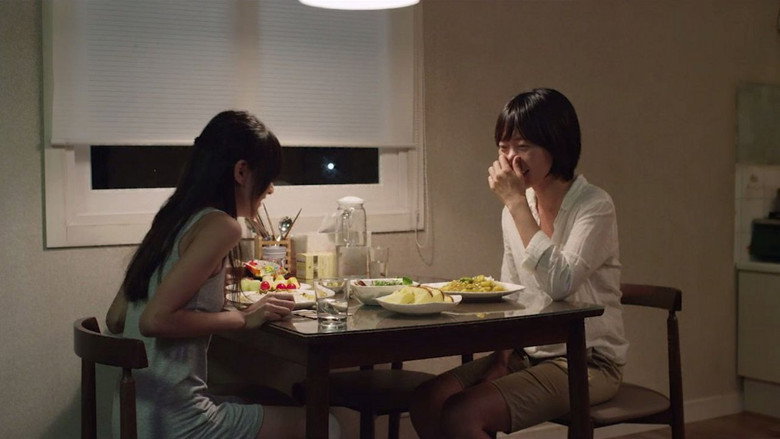
  • Resolution: Yong-ha is arrested for attempted sexual assault and child abuse, exonerating Young-nam. Discovering that Do-hee is slated for a juvenile welfare facility, Young-nam intercepts her on the road with the words 'Let’s go, together', and the two drive toward Seoul in the rain, bonded by mutual survival.

Alternative Interpretations

The film supports multiple critical readings regarding Do-hee's character and the central relationship:

  • Do-hee as a Traumatized, Sociopathic Manipulator: This interpretation posits that chronic domestic abuse warped Do-hee into a calculating Machiavellian figure who identifies Young-nam's vulnerabilities—alcoholism, isolation, and queerness—and frames Yong-ha to secure her own protection, leaving Young-nam tethered to an unpredictable minor.
  • A Desperate Act of Pure Survival and Mutual Salvation: Here, Do-hee’s calculated actions are viewed not as malice, but as the only rational recourse for an abandoned child facing a corrupt legal system. By turning Yong-ha's tactics against him, she saves them both, prompting Young-nam's unconditional empathetic rescue.
  • Ambiguous Queer/Maternal Co-Dependency: Critics highlight the ambiguous emotional boundaries between the leads. While Young-nam’s motives remain protective, Do-hee shows possessive fixation, clinging during baths and displaying jealousy, rendering their future shared life fraught and emotionally complicated.

Explore More About This Movie

Dive deeper into specific aspects of the movie with our detailed analysis pages

Similar Movies