Skip to content
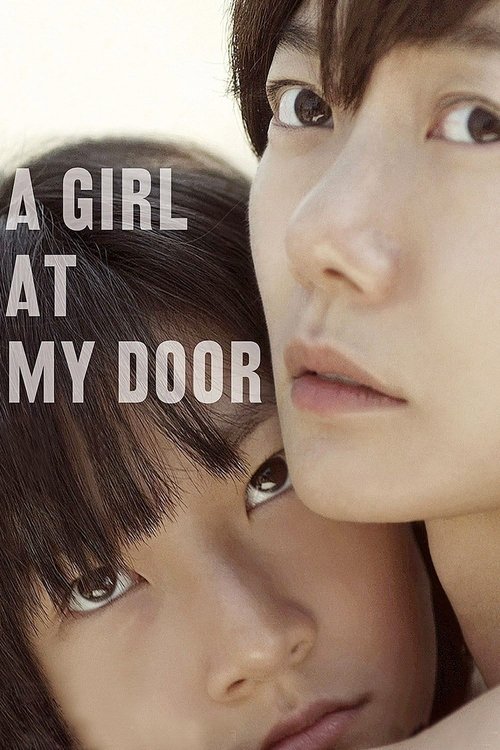
A Girl at My Door
A sun-drenched rural noir brimming with unspoken grief and desperate tenderness, where two broken souls cling to each other like drowning castaways navigating a deceptive, storm-churned sea.
A Girl at My Door

A Girl at My Door

도희야

"I'll do my best. I'll do anything."

22 May 2014 South Korea 119 min 6.9 (189)

Director: July Jung

Cast: Bae Doona, Kim Sae-ron, Song Sae-byuk, Kim Jin-goo, Son Jong-hak

Drama Systemic Complicity and Violence Against the Vulnerable Marginalization and the Policing of Female Queerness Isolation, Trauma, and Coping Mechanisms The Blurred Line Between Innocence and Survival Strategy
Budget: $300,000

Overview

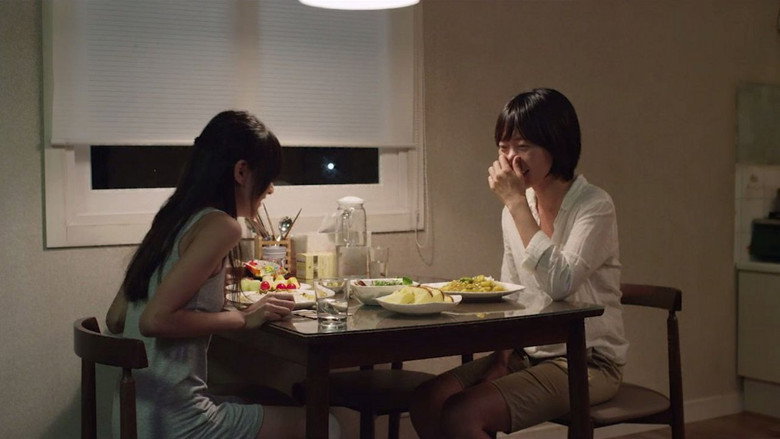
A Girl at My Door (도희야, Dohee-ya) marks the feature directorial debut of South Korean writer-director July Jung (Jung Joo-ri). The narrative centers on Lee Young-nam (Bae Doona), a reserved, capable police academy graduate transferred from the Seoul Metropolitan Police Agency to a sleepy, sunlit seaside hamlet in South Jeolla Province. Young-nam’s sudden relocation is framed as a quiet disciplinary exile following an unspecified domestic scandal in the capital. Haunted by unresolved trauma and isolation, she masks her inner torment behind an impassive professional demeanor while privately battling severe, secret alcoholism, pouring soju into transparent water bottles to survive each night.

Upon taking up her post as the local police station chief, Young-nam encounters Sun Do-hee (Kim Sae-ron), a quiet, bruised 14-year-old girl who is systematically ostracized and beaten by her classmates, her cruel step-grandmother, and her violent stepfather, Park Yong-ha (Song Sae-byeok). The village functions as a tight-knit, insular patriarchal community where Yong-ha is indulged because he organizes the migrant dock and fishing labor vital to the town’s seafood industry. While the local officers and elders avert their eyes from the domestic violence to preserve social equilibrium, Young-nam refuses to look away.

When Do-hee turns up soaked and shivering at Young-nam’s doorway after a brutal assault, the policewoman impulsively grants her shelter. What begins as a straightforward protective gesture gradually blurs personal boundaries. Do-hee forms a fierce, almost desperate attachment to Young-nam, while Yong-ha seethes at the disruption of his domestic authority. When an explosive incident reveals Young-nam’s suppressed personal identity, Yong-ha orchestrates a retaliatory legal counterattack, thrusting both women into a volatile spiral where moral certainties, survival instincts, and justice collide.

Core Meaning

Director July Jung conceived A Girl at My Door not merely as a social-issue film, but as an existential examination of profound loneliness, marginalized identities, and the moral compromises necessary for survival. Jung explores how patriarchal hegemony and provincial insularity enforce complicity: violence is ignored when economically convenient, yet difference—such as non-normative female sexuality or a child who refuses victimization—is met with immediate hostility.

The central message posits that in a society where institutional justice fails vulnerable bodies, genuine rescue demands mutual vulnerability rather than patronizing saviorism. Jung resists romanticizing either the protector or the victim; survival under oppression can compel an abused innocent to adopt the manipulative calculations of her oppressors. Ultimately, salvation is not legal or state-sanctioned, but personal—found when two outcasts choose to acknowledge and bear each other’s fractured humanity.

Thematic DNA

Systemic Complicity and Violence Against the Vulnerable 30%
Marginalization and the Policing of Female Queerness 25%
Isolation, Trauma, and Coping Mechanisms 25%
The Blurred Line Between Innocence and Survival Strategy 20%

Systemic Complicity and Violence Against the Vulnerable

The town represents an entrenched patriarchal hierarchy where the abuse of women, children, and undocumented migrant workers is normalized for economic convenience. Yong-ha's abuse is sheltered by local police and community elders because his labor brokerage sustains the regional seafood industry.

Marginalization and the Policing of Female Queerness

Young-nam’s lesbianism is treated as an unforgivable transgression by conventional society. The film examines how homophobia is weaponized: while Yong-ha’s proven domestic violence and exploitation of workers are tolerated, Young-nam’s sexuality is instantly seized upon by the community and the legal system to construct her as a predator.

Isolation, Trauma, and Coping Mechanisms

Both central characters bear deep psychological wounds. Young-nam numbs herself through chemical dependency and cold stoicism, while Do-hee suppresses trauma behind compliant smiles, sudden bouts of physical exuberance, and an obsession with self-preservation.

The Blurred Line Between Innocence and Survival Strategy

Rather than presenting Do-hee as a passive victim, the film demonstrates how extreme domestic abuse forces a child to master manipulation, duplicity, and ruthless calculation simply to stay alive, blurring ethical binaries.

Character Analysis

Lee Young-nam

Bae Doona

Archetype: Reluctant Guardian / Fallen Hero Key Trait: Stoic integrity plagued by debilitating inner loneliness

Motivation

To preserve her dignity, survive emotional exile, and protect Do-hee from systemic destruction.

Character Arc

Begins as an emotionally numb, high-functioning alcoholic cop exiled for her sexuality, attempting merely to serve out her one-year sentence without entanglement. Confronted by systemic abuse, her professional detachment erodes into active rebellion, and she finally embraces an unconditional, vulnerable maternal-protective bond.

Sun Do-hee

Kim Sae-ron

Archetype: Troubled Innocent / Cunning Survivor Key Trait: Hyper-vigilance masking an indomitable will to endure

Motivation

To escape physical and emotional annihilation and remain permanently beside Young-nam.

Character Arc

Evolves from a battered, silent village outcast into an agent of ruthless self-preservation who, recognizing Young-nam as her sole lifeline, takes dangerous, calculating steps to dismantle their persecutors.

All 5 characters and cast

Symbols & Motifs

Clear Water Bottles Filled with Soju

Meaning:

Represents the facade of sobriety and purity maintained before the outside world, masking self-destruction, internal decay, and coping with severe trauma.

Context:

Young-nam decants commercial soju into transparent plastic water bottles, drinking from them openly throughout the day in her car and at the police station.

The Rain and Coastal Water

Meaning:

Functions as both a destructive force that sweeps away fragile social order and an ambiguous cleansing ritual of rebirth and complicity.

Context:

Appears recurrently across key narrative shifts: the muddy roadside puddle splashing Do-hee, the downpour driving Do-hee to Young-nam’s door, the grandmother’s drowning, their shared bath, and the deluge during the closing escape.

The Police Uniform

Meaning:

Symbolizes institutional authority and an armor that shields personal vulnerability, yet also represents a suffocating construct that offers no defense once stripped away by societal prejudice.

Context:

Young-nam wears her pristine uniform to intimidate school bullies and assert dominance over Yong-ha, but is forcibly stripped of it when detained in a jail cell.

Body Bruises and Physical Scars

Meaning:

Physical testaments to relentless systemic violence that later transform into weaponized legal evidence engineered for self-preservation.

Context:

Inscribed across Do-hee's back and legs from beatings; she later strategically alters the context of bodily marks to trap her stepfather.

Do-hee’s Dance

Meaning:

Represents a yearning for bodily autonomy, untainted joy, and self-expression within an existence where her physical boundaries are routinely invaded.

Context:

Do-hee performs a strange, fluid physical dance alongside the rural roadside and in isolated private spaces.

Memorable Quotes

소장님, 저 버리지 마세요.
— Sun Do-hee

Context

Spoken in desperation during a vulnerable moment when Do-hee fears Young-nam will send her back to her abusive father.

Meaning

Articulates Do-hee’s existential terror of return and anchors the moral weight of Young-nam’s protective duty.

너는 괴물이 아니야.
— Lee Young-nam

Context

Young-nam reassures Do-hee after the girl witnesses the relentless cruelty of the adults around her.

Meaning

Affirms the girl’s fundamental humanity after Do-hee begins internalizing the idea that her very existence is cursed or deformed.

All 5 quotes

Philosophical Questions

Can ethical purity survive under systemic oppression?

The film explores whether a victim subjected to relentless violence can remain morally untainted, or if survival within a predatory environment inevitably demands adopting duplicity and cruelty.

Where does institutional law end and true moral justice begin?

Through Young-nam’s realization that rigid legal compliance fails to protect abused children or exploited laborers, the film asks whether extralegal intervention becomes a necessary moral obligation.

How does society construct the definition of a 'monster'?

Do-hee internalizes fears of being intrinsically deformed, but the narrative subverts this label by showing that the genuine monsters are socially condoned patriarchs and complicit institutional bystanders.

How It Ends

Alternative Interpretations

The film supports multiple critical readings regarding Do-hee's character and the central relationship:

Full ending explanation

Cultural Impact

Upon its 2014 release, A Girl at My Door stood out as one of the rare mainstream South Korean festival releases to feature an openly lesbian protagonist working inside a conservative state institution like the police. By showcasing how a capable officer's career is derailed by systemic homophobia, the film offered an incisive critique of prevailing social conservatism.

The narrative also brought critical attention to South Korea’s rural demographic crisis, spotlighting how peripheral farming and coastal villages depend on exploited, undocumented migrant laborers whose abuse is deliberately overlooked to sustain regional industries. The project established director July Jung as a major cinematic voice, earning her the Best New Director honor at the 2015 Baeksang Arts Awards and forging a creative partnership with Bae Doona that continued with Next Sohee (2022).

Audience Reception

The film received strong critical acclaim, particularly for the compelling performances and chemistry of Bae Doona and Kim Sae-ron. Critics such as Peter Bradshaw of The Guardian praised its atmospheric unease, comparing its claustrophobic tension to the early works of Roman Polanski, while commending July Jung for avoiding sensationalism in favor of grounded feminist social critique.

Minor criticisms were directed at the third act, with some reviewers arguing that the interrogation and framing sequences bordered on procedural contrivance and melodrama. Ahead of release, the film generated apprehension regarding scenes of boundary-crossing intimacy, such as the shared bath scene; however, commentators ultimately recognized that Jung navigated these dynamics with sensitivity and moral clarity to interrogate homophobic social paranoia.

Interesting Facts

  • July Jung wrote the script while studying at the Korea National University of Arts (K-Arts), where auteur Lee Chang-dong was a professor; after the script missed winning an internal competition, Lee personally contacted Jung to produce it.
  • Bae Doona signed on to star in the project without receiving an upfront acting fee, moved by the script's emotional resonance despite having recently starred in big-budget Hollywood productions like Cloud Atlas.
  • The film made its world premiere in the Un Certain Regard section at the 67th Cannes Film Festival in May 2014, earning a standing ovation.
  • Kim Sae-ron was only 13 years old during production and initially hesitated to take the role; July Jung directed her using metaphorical fables such as cat-and-mouse stories rather than explicit psychological deconstruction.
  • Despite its international festival run and recognized cast, the feature was produced on an independent micro-budget of approximately $300,000 USD.
  • Producer Lee Chang-dong sent the screenplay to Bae Doona while she was living in London; she read it in a single sitting and called back within three hours to accept the role.

Easter Eggs

Fable of the Cat and the Mouse

July Jung revealed in festival interviews that the dynamic between Do-hee and the adults was inspired by a childhood animal fable where a prey animal is driven to extreme predation to survive, reflecting how Do-hee mimics the cruelty of her oppressors.

The Ambiguous Death of the Step-Grandmother

The fatal scooter accident of Park Jum-soon tumbling off a cliff is framed with eerie narrative ambiguity, hinting at the unresolved possibility that Do-hee may have engineered or allowed the death, foreshadowing her subsequent ruthless scheme against Yong-ha.

Echoes of Lee Chang-dong's Poetry (2010)

Produced by Lee Chang-dong, the film carries direct thematic and stylistic parallels to Poetry, specifically regarding insular patriarchal communities covering up male sexual crimes amidst picturesque rural landscapes.

Frequently Asked Questions

Explore More About This Movie

Dive deeper into specific aspects of the movie with our detailed analysis pages

Comments (0)

Leave a comment

No comments yet. Be the first to share your thoughts!

Similar Movies