A Man Called Otto
A grumpy widower's monochromatic world is forcibly recolored by a vibrant new neighbor in this tear-jerking dramedy. It explores how grief can build walls, but intrusive kindness can shatter them, revealing that a heart too big is both a medical condition and a saving grace.
A Man Called Otto

A Man Called Otto

"Fall in love with the grumpiest man in America."

28 December 2022 Sweden 126 min ⭐ 7.8 (3,405)
Director: Marc Forster
Cast: Tom Hanks, Mariana Treviño, Cameron Britton, Mack Bayda, Manuel Garcia-Rulfo
Drama Comedy
Grief and the Paralysis of Loss The transformative Power of Community Found Family Corporate Greed vs. Human Dignity
Budget: $50,000,000
Box Office: $108,961,677

Overview

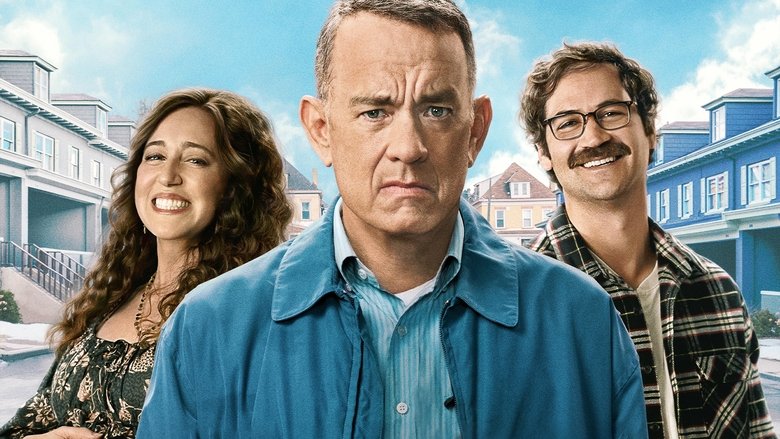
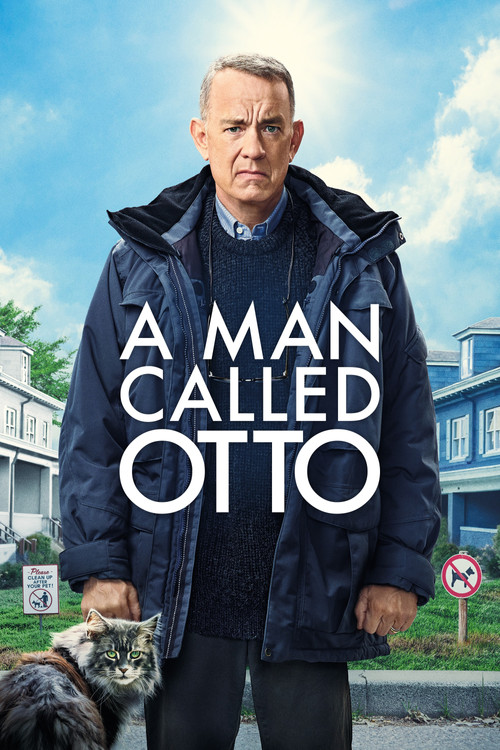
A Man Called Otto tells the story of Otto Anderson (Tom Hanks), a curmudgeonly 63-year-old widower living in a suburban Pittsburgh rowhouse. Following the death of his beloved wife Sonya and a forced retirement from a steel plant, Otto sees no further purpose in life. He spends his days strictly enforcing neighborhood rules and judging the perceived incompetence of those around him. His rigid routine is interrupted by his plan to commit suicide and join his late wife.

However, Otto's suicide attempts are repeatedly thwarted by the chaotic arrival of new neighbors across the street: a lively, pregnant Mexican woman named Marisol (Mariana Treviño), her husband Tommy, and their two daughters. Marisol's persistence and refusal to be intimidated by Otto's gruff exterior slowly force him to re-engage with the world. Through a series of flashbacks, the film reveals the tragic origins of Otto's bitterness and the deep love he held for Sonya.

As Otto reluctantly helps his neighbors—teaching Marisol to drive, taking in a transgender teen kicked out of his home, and saving a long-time friend from eviction by a predatory real estate company—he rediscovers a sense of community. The film balances dark humor with emotional depth, ultimately showing how a man who wanted to die learns to live again through the "idiots" who surround him.


Core Meaning

The core meaning of the film is that no man is an island, no matter how hard he tries to be. Director Marc Forster uses Otto's journey to demonstrate that shared suffering and communal reliance are not weaknesses, but the very essence of survival. The film posits that while grief is a solitary confinement, love is a breaking and entering. Ultimately, it suggests that a life of service to others—even if done grudgingly—is the antidote to despair.

Thematic DNA

Grief and the Paralysis of Loss 30%
The transformative Power of Community 30%
Found Family 20%
Corporate Greed vs. Human Dignity 20%

Grief and the Paralysis of Loss

Otto's grumpiness is a shield for profound sorrow. The film portrays grief not just as sadness, but as a loss of identity and utility. Without Sonya, who brought "color" to his black-and-white world, Otto cannot navigate the present. His obsession with rules and suicide attempts are efforts to control a world that feels empty.

The transformative Power of Community

The film argues that community is often messy, intrusive, and annoying, but essential. Otto is saved not by professional help or philosophical realization, but by the mundane needs of his neighbors (borrowing a ladder, bleeding a radiator). These small acts of service weave him back into the social fabric.

Found Family

Blood relations are secondary to the bonds formed through shared experience and kindness. Otto, estranged from the world, becomes a grandfather figure to Marisol's children and a father figure to Malcolm. The film redefines family as those who refuse to leave you alone when you want to isolate.

Corporate Greed vs. Human Dignity

The subplot involving the real estate firm Dye & Merica highlights the dehumanization of the elderly and vulnerable. The film contrasts Otto's rigid but personal code of ethics with the amoral, profit-driven actions of the corporation trying to evict his ailing neighbors.

Character Analysis

Otto Anderson

Tom Hanks (Truman Hanks as Young Otto)

Archetype: The Curmudgeon / Tragic Hero
Key Trait: Rigid adherence to rules

Motivation

Initially: To join his deceased wife Sonya. Later: To protect and help his incompetent but lovable neighbors.

Character Arc

Starts as a suicidal misanthrope seeking to end his pain by ending his life. Through forced interactions with Marisol, he transitions from a man preparing to die to a man busy living, eventually accepting his role as a community elder and grandfather figure.

Marisol

Mariana Treviño

Archetype: The Catalyst / The Nurturer
Key Trait: Relentless warmth

Motivation

To build a home for her family and connect with the people around her, refusing to take 'no' for an answer.

Character Arc

She arrives as a chaotic force and struggles to settle into a new country and neighborhood. She proves to be the unstoppable force to Otto's immovable object, eventually breaking down his walls and becoming his closest friend and confidante.

Sonya

Rachel Keller

Archetype: The Angel in the House / The Memory
Key Trait: Unconditional love

Motivation

To bring color and kindness into Otto's life.

Character Arc

Seen only in flashbacks, she remains a static ideal of goodness and light. Her arc serves as the backstory that humanizes Otto, explaining how a gentle young man became a bitter senior.

Symbols & Motifs

The Silver Quarter

Meaning:

It symbolizes fate, connection, and memory. It is the object that first connected Otto to Sonya when she dropped it at the train station, leading to their meeting.

Context:

Otto keeps the 1964 quarter as a sacred totem of his past. He violently confronts a hospital clown who tries to use it for a magic trick, showing his fierce protection of his memories with Sonya.

The Chevy vs. Ford Rivalry

Meaning:

Represents tribalism and stubborn adherence to tradition. It illustrates how petty differences can destroy relationships, but also serves as a metaphor for Otto's resistance to change.

Context:

Otto and his former friend Reuben fell out decades ago simply because Reuben bought a Toyota and then a BMW, violating Otto's strict 'American cars only' worldview.

The Gate

Meaning:

Symbolizes control and boundaries. Otto's obsession with whether the gate is open or closed reflects his desire to regulate his environment and keep the chaotic world out.

Context:

Every morning, Otto checks the neighborhood gate. It is the first thing he does, establishing his role as the unauthorized guardian of order. By the end, the gate remains, but Otto has learned to let people in.

Sonya's Coat

Meaning:

Represents warmth and lingering presence. It is a physical remnant of the love that once protected Otto.

Context:

Otto smells Sonya's coats in the closet to feel close to her. When he eventually gives one to Marisol, it signifies his acceptance of her into his inner circle and his willingness to move forward.

Memorable Quotes

My life was black and white before Sonya. She was the color.

— Otto Anderson

Context:

Otto explains his past to Marisol, finally opening up about why he is the way he is.

Meaning:

This is the emotional thesis of the film. It explains that Otto isn't just angry; he is grieving the loss of the only person who made the world vibrant and understandable to him.

You think your life is so hard because everybody's an idiot and you have to do everything on your own. But guess what? You can't. No one can.

— Marisol

Context:

Marisol confronts Otto after he refuses help and acts rudely, challenging his isolationist worldview.

Meaning:

This quote shatters Otto's delusion of self-reliance. It delivers the film's core message: interdependence is a necessity, not a weakness.

We're not 'Dying America', we're 'Dye & Merica'.

— Real Estate Agent

Context:

Otto mocks the name of the real estate company trying to evict his neighbors.

Meaning:

A satirical moment highlighting the disconnect between corporate branding and the reality of their predatory actions. Otto's mishearing is a Freudian slip that reveals the truth.

Philosophical Questions

Does life have value without a witness?

Otto feels his life is over because Sonya, the 'witness' to his existence, is gone. The film explores whether we exist for ourselves or through the eyes of those we love.

Is suicide a valid response to a completed life?

The film tackles the taboo subject of rational suicide in the elderly. Otto isn't mentally ill in a traditional sense; he feels his task is done. The film challenges this by showing that 'utility' isn't the only metric for a life's worth.

What do we owe our neighbors?

Otto believes in autonomy, but the film posits a philosophy of mutual obligation. It asks if we have a moral duty to intervene in the lives of others (like Marisol does with Otto) even when uninvited.

Alternative Interpretations

The 'Otto is Dead' Theory: Some viewers interpret the film's events as Otto's purgatory or a dying dream. Since his first suicide attempt involves hanging, some argue the subsequent 'interruptions' by neighbors are his mind processing his life's regrets and creating a fantasy of redemption before the end. However, the literal ending contradicts this.

The Political Allegory: Otto represents traditional, old-school America—rigid, industrial, rule-bound—while Marisol represents the new, diverse, and chaotic future. The film can be read as a reconciliation narrative where the 'Old Guard' must accept and teach the 'Newcomer' to ensure the survival of the community's values.

Cultural Impact

A Man Called Otto arrived at a post-pandemic moment when audiences were craving stories about human connection and the combating of isolation. While it did not reach the critical heights of the original Swedish film, it was a significant box office success for an adult-skewing drama, grossing over $113 million worldwide. It solidified the sub-genre of 'grumpy old man redeemed by community' (dad cinema). Culturally, it sparked discussions about male loneliness, the suicide epidemic among elderly men, and the importance of intergenerational friendships. It also reinforced Tom Hanks' status as 'America's Dad', proving his ability to make even an unlikable character sympathetic.

Audience Reception

Audience reception was overwhelmingly positive, contrasting with mixed critical reviews. On Rotten Tomatoes, it holds a 97% audience score. Viewers praised:

  • Emotional Resonance: Many reported crying multiple times, appreciating the respectful handling of grief.
  • Tom Hanks' Performance: Audiences enjoyed seeing him play against type as a grump, while still retaining his trademark heart.
  • Marisol's Character: Mariana Treviño was frequently cited as the standout, bringing necessary levity and warmth.

Criticisms (mostly from professional critics) focused on the film being formulaic and predictable compared to the Swedish original, with some feeling the suicide attempts were tonally jarring alongside the comedy.

Interesting Facts

  • Tom Hanks' youngest son, Truman Hanks, plays the younger version of Otto in the flashback sequences.
  • The film is a remake of the 2015 Swedish film 'A Man Called Ove', which was nominated for two Academy Awards.
  • The character of the neighbor was changed from Persian (Parvaneh) in the original story to Mexican (Marisol) to better fit the American setting.
  • Director Marc Forster and Tom Hanks purposely chose Pittsburgh as the filming location to capture the specific 'Rust Belt' aesthetic.
  • The cat in the film is a stray that Otto reluctantly adopts; in real life, the cat was a professional animal actor named Smeagol (and others).
  • Tom Hanks has stated he bought the rights to the remake because he identified with the grumpy archetype and wanted to explore it.
  • The film was released in a limited capacity in late December 2022 to qualify for awards, before expanding widely in January 2023.

Easter Eggs

Dye & Merica

The name of the predatory real estate company sounds phonetically like 'Dying America', serving as a subtle social commentary on the decay of community values and the rise of corporate greed.

The Book on the Nightstand

In some scenes, specific books can be seen that reference the original author Fredrik Backman or themes of the story, paying homage to the source material.

The 1964 Quarter

The coin is silver. 1964 was the last year US quarters were made of 90% silver, making it literally 'precious' and distinct from modern 'fake' currency, mirroring Otto's view on the past vs. present.

⚠️ Spoiler Analysis

Click to reveal detailed analysis with spoilers

Frequently Asked Questions

Explore More About This Movie

Dive deeper into specific aspects of the movie with our detailed analysis pages

Comments (0)

Leave a comment

No comments yet. Be the first to share your thoughts!