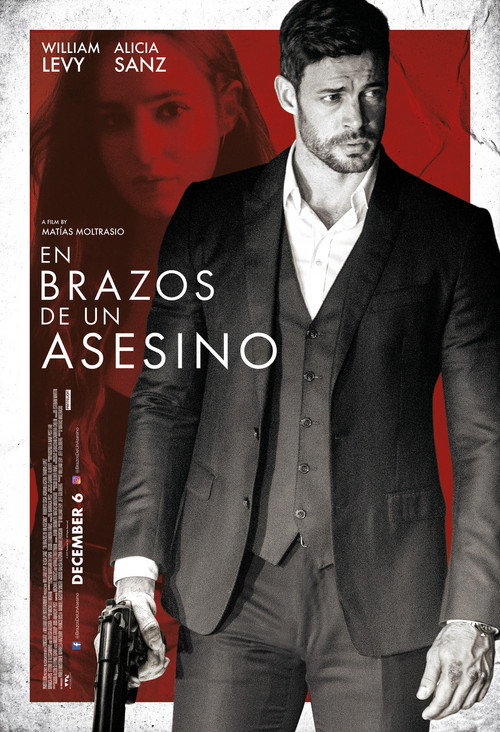
In the Arms of an Assassin
En brazos de un asesino
Overview
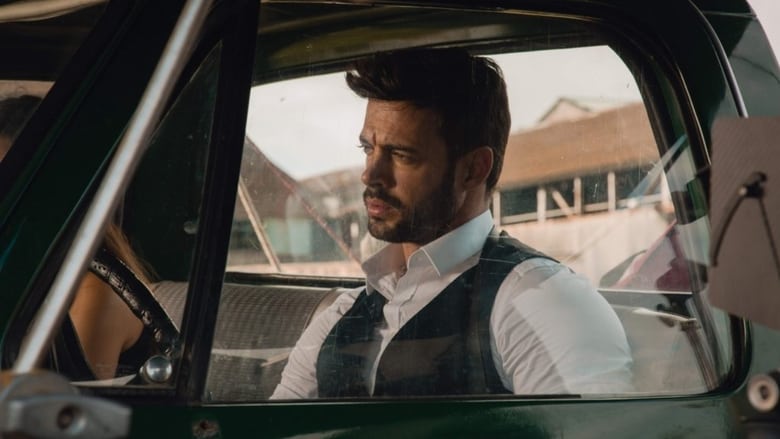
Victor Faust (William Levy) is a precise and ruthless assassin who prides himself on his lack of emotional attachments. While visiting the estate of the sadistic drug lord Javier Guzman (Roberto Sosa) to collect payment for a job, Victor encounters Sarai (Alicia Sanz), a young woman who has been held captive by Javier for nine years. Seizing a moment of chaos, Sarai hides in Victor's car, forcing him into a deadly dilemma: turn her in or help her escape.
Reluctantly, Victor agrees to transport her, but their escape triggers a violent manhunt. As they traverse the criminal underworld, the dynamic shifts from captor/captive to partners in survival. Victor battles waves of mercenaries sent by Javier, while Sarai proves she is no longer a victim but a survivor capable of violence. The journey uncovers Victor's mysterious ties to a secret organization and tests his resolve to remain unfeeling.
The film culminates in a bloody showdown where Victor must dismantle Javier's empire to ensure Sarai's safety, leading to a conclusion that challenges the possibility of a happy ending in their violent world.
Core Meaning
The film acts as a dark redemption fable, suggesting that even those conditioned to be unfeeling weapons (Victor) can have their humanity reawakened by the resilience of an innocent soul (Sarai). It explores the idea that true freedom requires not just physical escape, but the agency to choose one's own sacrifices.
Thematic DNA
Nature vs. Conditioning
Victor operates like a machine, conditioned by 'The Order' to suppress emotion. Sarai represents the raw, human will to survive. The film asks if Victor's nature can overcome his programming.
The Trauma of Captivity
Sarai's arc is defined by her transition from a helpless victim of sex trafficking to a woman reclaiming her power, often using the violence she learned from her captors against them.
Moral Ambiguity
The protagonist is a contract killer, yet he is the moral center compared to the cartel. The film asks the audience to sympathize with a murderer because he follows a 'code' unlike the chaotic evil of the antagonist.
Character Analysis
Victor Faust
William Levy
Motivation
Initially financial gain and professional pride; later, the protection of Sarai.
Character Arc
Starts as a solitary killer focused on money. Through protecting Sarai, he jeopardizes his standing with 'The Order' and discovers a capacity for self-sacrifice.
Sarai
Alicia Sanz
Motivation
Absolute freedom from Javier.
Character Arc
Begins as a terrified captive. She learns to wield a gun and make hard choices, evolving into a partner capable of holding her own in Victor's world.
Javier Guzman
Roberto Sosa
Motivation
Possession and control.
Character Arc
A static villain representing pure id and possession. His obsession with reclaiming Sarai leads to his destruction.
Symbols & Motifs
The Car
Represents a liminal space between captivity and freedom. It is the vessel where Sarai transitions from Javier's property to Victor's equal.
Sarai hides in the trunk/backseat, and much of their relationship development occurs within this confined space.
Victor's Suits
Symbolize his armor and detachment. He remains impeccably dressed even during violence, reflecting his attempt to keep the bloody reality of his job separate from his self-image.
Worn throughout the film, contrasting with the gritty environments he moves through.
Memorable Quotes
Interfering is not my business.
— Victor Faust
Context:
Victor says this early on when he sees Sarai's suffering but plans to walk away.
Meaning:
Defines his initial philosophy of detachment, which Sarai eventually breaks down.
Take me to the border.
— Sarai
Context:
Sarai holds a gun to Victor while hiding in his car.
Meaning:
The moment Sarai takes agency over her life, commanding the assassin rather than begging.
I hope I never see you again.
— Victor Faust
Context:
Spoken at the end when he sends her away to safety.
Meaning:
A paradox of love: he cares for her enough to banish her from his dangerous life.
Philosophical Questions
Can love exist without safety?
The film pairs romance with constant mortal peril, asking if love is sustainable when survival is the primary instinct.
Does the end justify the means?
Victor kills dozens to save one person. The film asks if his violence is justified by the innocence of the life he saves.
Alternative Interpretations
Some viewers interpret the ending not as a breakup, but as a temporary tactical retreat, consistent with the book series. Others view the entire film as a deconstruction of the 'Prince Charming' trope—Sarai's savior is a monster who kills for a living, suggesting that in her world, safety can only be found in the arms of a greater violence.
Cultural Impact
The film represents a crossover attempt by William Levy to move from soap operas to action cinema. It tapped into the popular 'Dark Romance' genre (popularized on platforms like Wattpad and TikTok), where dangerous men protect resilient women. While not a critical darling, it found a strong niche audience on streaming platforms, highlighting the demand for Latin-led action franchises that embrace stylized, R-rated content.
Audience Reception
Praised: Chemistry between Levy and Sanz, faithful adaptation of the book's tone, and the 'guilty pleasure' factor of the action.
Criticized: Weak dialogue, plot holes, and a low-budget feel in some action sequences.
Verdict: A hit for fans of the genre and the book, but dismissed by mainstream critics as a generic thriller.
Interesting Facts
- William Levy co-wrote, produced, and starred in the film to create better roles for Latinos.
- The movie is an adaptation of the book 'Killing Sarai' by J.A. Redmerski.
- Filmed entirely in the Dominican Republic.
- Alicia Sanz read the original book series to prepare for her character's mindset.
- The film was released in both English and Spanish markets, catering to Levy's telenovela fanbase.
Easter Eggs
Niklas
The appearance of Victor's brother Niklas is a direct setup for the book sequel Reviving Izabel, confirming the intent to build a franchise.
The Order
Mentions of the organization 'The Order' reference the broader lore of the book series, where assassins are trained from childhood.
⚠️ Spoiler Analysis
Click to reveal detailed analysis with spoilers
Frequently Asked Questions
Explore More About This Movie
Dive deeper into specific aspects of the movie with our detailed analysis pages
Comments (0)
No comments yet. Be the first to share your thoughts!