Skip to content
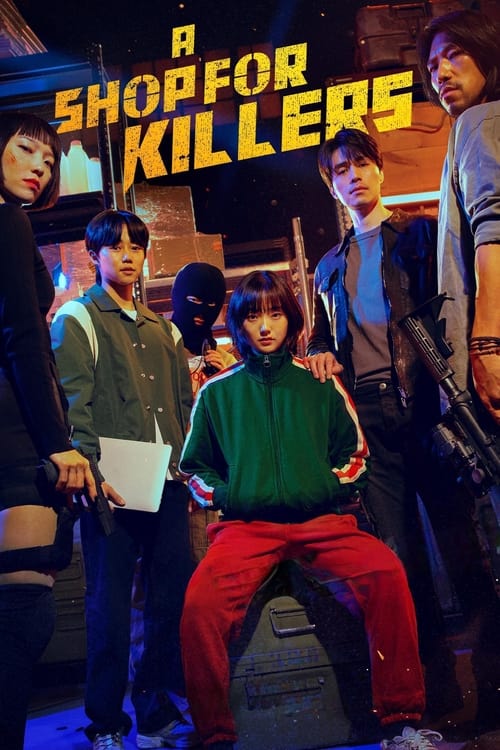
A Shop for Killers
A neo-noir tactical thriller steeped in icy adrenaline and fierce familial love, where a fortress of hidden sniper crosshairs and buried secrets becomes the crucible where a grieving girl builds armor from her uncle's haunting memories.
A Shop for Killers

A Shop for Killers

킬러들의 쇼핑몰

"His hidden past, her deadly inheritance."

17 January 2024 — 29 July 2026 South Korea 2 season 16 episode Returning Series 8.3 (192)

Cast: Lee Dong-wook, Kim Hye-jun, Geum Hannah, Min Kim, Lee Tae-young

Drama Action & Adventure Mystery Preparation as Love and Survival The Cycle of Mercenary Violence vs. Moral Boundaries Inherited Identity and Self-Actualization Trust, Betrayal, and Mercenary Morality Subjective Memory and Uncovering Truth

Overview

"A Shop for Killers" (킬러들의 쇼핑몰) is a South Korean action-mystery drama series created by Lee Kwon and Lee Eon-hee, based on Kang Ji-young’s novel The Murderer's Shopping Mall. Spanning two seasons, the show blends non-linear mystery, tactical close-quarters combat, dark web world-building, and an emotional story of survival.

The series centers on Jeong Ji-an (Kim Hye-jun), an ordinary college student whose life shatters when she receives news of the sudden death of her uncle, Jeong Jin-man (Lee Dong-wook), who raised her following the tragic loss of her parents. Upon returning to her childhood home, Ji-an uncovers that her quiet uncle ran Murthehelp, an underground dark-web marketplace supplying arms, tactical gear, surveillance, and body-disposal services to elite contract killers. Suddenly thrust into the crosshairs of mercenary syndicates, Ji-an must rely on the seemingly strange survival lessons Jin-man instilled in her throughout her youth.

Across its run, the series expands from a desperate siege inside an isolated compound into an international war against Babylon, a global mercenary corporation. Guided by a network of loyal allies—including Muay Thai instructor Pasin, S-class hitwoman So Min-hye, and hacker Brother—Ji-an transitions from a hunted survivor into a leader.
Core Meaning

The ultimate message of A Shop for Killers is that preparation is the highest form of love, and true survival requires claiming one's own agency.

Through Jin-man’s harsh, eccentric upbringing of Ji-an, the show reveals that warmth in a violent world is often disguised as cold discipline. Jin-man does not shield Ji-an from danger by hiding reality; instead, he equips her with the psychological fortitude, martial skills, and tactical awareness needed to stand ground against overwhelming malice. The complete narrative emphasizes that inheritance is not merely receiving a financial or physical legacy, but inheriting the strength to define one's own identity despite trauma.

Thematic DNA

Preparation as Love and Survival 30%
The Cycle of Mercenary Violence vs. Moral Boundaries 25%
Inherited Identity and Self-Actualization 20%
Trust, Betrayal, and Mercenary Morality 15%
Subjective Memory and Uncovering Truth 10%

Preparation as Love and Survival

In Season 1, Jin-man's unorthodox parenting (locking Ji-an in rooms, forcing her to observe blind spots, teaching her to shoot slingshots) appears neglectful or bizarre. As the siege unfolds, every odd lesson reveals itself as a life-saving tool. In Season 2, this theme evolves as Ji-an stops merely reacting to Jin-man’s lessons and begins anticipating threats independently, transforming his preparation into active leadership.

The Cycle of Mercenary Violence vs. Moral Boundaries

The series contrasts the mindless, mercenary violence of Babylon—personified by the psychopath Bale—with Jin-man’s strict ethical code for Murthehelp. While Babylon treats human life as collateral, Jin-man’s rules protect those who remain neutral. Across both seasons, characters must decide whether to consume or be consumed by this cycle.

Inherited Identity and Self-Actualization

Ji-an begins as a reluctant recipient of her uncle’s chaotic history. Over the course of the show, her journey shifts from wanting an ordinary civilian life to willingly accepting the mantle of Code Green CEO, choosing to protect those under her care.

Trust, Betrayal, and Mercenary Morality

The show continually tests the limits of loyalty. From childhood friend Jeong-min's covert betrayal to the unwavering allegiance of allies like Min-hye and Pasin, the series explores how genuine human connections can spark within an underworld ruled by monetary transactions.

Subjective Memory and Uncovering Truth

Through non-linear storytelling, the narrative revisits past events from multiple perspectives. Memories of trauma, family deaths, and Jin-man's mercenary past are recontextualized as new puzzle pieces are placed, demonstrating how incomplete knowledge skews reality.

Character Analysis

Jeong Ji-an

Kim Hye-jun

Archetype: Hero / Reluctant Successor Key Trait: Sharp observational intelligence and adaptability under fire.

Motivation

Initially to survive the night; evolves into protecting her uncle's allies and taking down Babylon.

Character Arc

Starts as a grieving college student confused by her uncle's reclusive behavior. Thrust into live-fire survival, she recalls Jin-man's training, learns to handle weapons, outsmarts veteran assassins, accepts the responsibilities of Code Green, and emerges in Season 2 as the confident CEO of Murthehelp fighting alongside her uncle.

Jeong Jin-man

Lee Dong-wook

Archetype: Mentor / Taciturn Antihero Key Trait: Calculated strategic foresight and stoic emotional restraint.

Motivation

Shield Ji-an from the mercenary underworld and eradicate Babylon's threat.

Character Arc

A former elite mercenary who turned against Babylon to protect his family. He fakes his death to test Ji-an's capability and flush out hidden traitors, returning in Season 2 to wage an open war against his rival Bale.

All 5 characters and cast

Symbols & Motifs

Code Green (그린코드)

Meaning:

The highest clearance code in Murthehelp, held exclusively by Jin-man and Ji-an. It symbolizes absolute ownership, authority, and lineage.

Context:

Crucially, Code Green mandates that if the holder is threatened, all other registered members of the marketplace must protect them or face total annihilation by the system.

The Slingshot (새총)

Meaning:

Symbolizes early tactical resourcefulness, patience, and spatial awareness before escalating to lethal firearms.

Context:

Given to young Ji-an by Jin-man during her youth.

Blind Spots (사각지대)

Meaning:

Acts as a metaphor for hidden threats in life, narrative misdirection, and psychological blind spots created by grief.

Context:

A recurring lesson taught by Jin-man ("You are not a dragonfly; you cannot see everything").

Red Lipstick & S-Class Weapons

Meaning:

Represents lethal elegance, hidden identity, and absolute professional competence within a hyper-masculine mercenary landscape.

Context:

So Min-hye’s visual signature.

The Underground Safehouse (Shopping Mall Bunker)

Meaning:

Represents Jin-man’s silent, subterranean efforts to construct an unassailable sanctuary for his niece.

Context:

Built beneath Jin-man’s rural home.

Memorable Quotes

잘 들어, 정지안.
— Jeong Jin-man

Context

Season 1, Episode 1 & repeated throughout S1/S2.

Meaning

The defining catchphrase of the series. Spoken by Jin-man during flashbacks whenever he delivers an essential tactical rule or survival instruction. It serves as Ji-an's mental trigger to access her training during mortal danger.

성불하십시오.
— Lee Sung-jo

Context

Season 1, Episode 1 and Episode 8 during the siege.

Meaning

Sung-jo’s morbid, ironic trademark phrase delivered right before or after executing a target with sniper fire.

All 5 quotes

Episode Highlights

Murthehelp

S1E1

Launches the series with a brutal military-grade assault on Ji-an's rural house. Introduces the non-linear structure and Jin-man's reported suicide.

Significance:

Establishes high stakes, introducing Ji-an’s reliance on her uncle’s past advice.

Jeong Jinman, Jeong Jinman, Jeong Jinman

S1E2

Reveals the four color-coded clearance tiers of Murthehelp (Red, Purple, Yellow, Green). Sniper Lee Sung-jo begins his assault.

Significance:

Explains the underground economy and defines the mechanics of the shop.

The Shopping Mall

S1E4

Ji-an and Jeong-min descend into the secret subterranean complex and meet Brother. S-class assassin So Min-hye arrives, engaging in elite close-quarters battles.

Significance:

Expands the physical scope of the fortress and solidifies Min-hye’s role as an ally.

Babylon

S1E6

Flashback episode exploring Jin-man’s dark backstory as a mercenary in Babylon, his deadly rivalry with Bale, and the murder of Ji-an’s parents.

Significance:

Explains the origin of the conflict and humanizes Jin-man’s reclusive preparations.

Listen Well, Jeong Ji-an

S1E8

Season 1 finale. Ji-an uses Code Green leverage to offer a bounty payout to surviving killers, bringing an end to the siege. In the final twist, Jin-man arrives back home alive.

Significance:

Completes Ji-an’s transition to CEO and sets up Season 2’s war.

Jinman, That Same Day

S2E1

Unveils how Jin-man faked his suicide using deep-cover mercenary tactics and survived Babylon’s trap.

Significance:

Re-aligns uncle and niece for an active war phase.

Counterstrike

S2E4

Jin-man rescues Ji-an via tactical helicopter extraction after Babylon's international forces close in on her village.

Significance:

Shifts the series dynamics from defensive siege survival to offensive counter-operations against Babylon.

Philosophical Questions

Can violence be ethically regulated?

Through Murthehelp's strict codes prohibiting unprovoked harm against neutrals, the series questions whether an ethical framework can exist within an illegitimate industry.

Is protective emotional distance a form of love or cruelty?

Jin-man's cold distance saved Ji-an's life but traumatized her youth, forcing viewers to ponder the trade-offs of survival parenting.

Are individuals bound to inherit their family's sins?

Ji-an never chose to be born into a mercenary war, raising the question of how one can break free from generational violence.

Alternative Interpretations

1. The Coming-of-Age Parable: Beyond the action tropes, critics interpret the show as a metaphor for parent-child separation. Jin-man's "death" forces Ji-an to step into adult responsibility, stop relying on authority, and make executive choices.

Full ending explanation

Cultural Impact

Evolution of K-Drama Action: A Shop for Killers represents a broader movement in Korean broadcasting towards concise, high-budget, movie-quality streaming originals (8-episode seasons on Disney+/Hulu) that forgo traditional melodrama for fast-paced action and tight writing.

Critical Acclaim: Season 1 was named one of The New York Times' Best International TV Shows of 2024 and included in TIME Magazine's Top K-Dramas of 2024.

Viewership Records: Upon releasing Season 2 in July 2026, the series broke records as the most-watched Korean Disney+ original globally on its premiere day, topping charts across South Korea, Taiwan, and Singapore.

Audience Reception

Praised Aspects:

  • Exceptionally tight action choreography, practical gunplay, and Muay Thai sequences.
  • Captivating onscreen chemistry between Lee Dong-wook and Kim Hye-jun.
  • Creative e-commerce dark-web world-building and colorful side characters (Min-hye, Pasin, Brother).

Criticisms:

  • Some viewers noted that repetitive non-linear flashbacks mid-season slightly disrupted pacing.
  • Season 1 ended on an abrupt cliffhanger that left key questions unanswered until Season 2.

Overall Verdict: Widely regarded as one of the best K-drama action thrillers of the 2020s, celebrated for delivering feature-film-quality action within a compelling character-driven framework.

Interesting Facts

  • Actress Kim Hye-jun had to undergo intensive tactical and physical training, almost quitting early in production due to the sheer physical toll of action scenes.
  • Actor Kim Min (Pasin) is a skilled martial artist who choreographed Muay Thai elements alongside the stunt team.
  • Geum Hae-na (Min-hye) trained for months in firearm handling and hand-to-hand combat to look convincingly like an S-class mercenary.
  • Director Lee Kwon modified Kang Ji-young’s original novel The Murderer's Shopping Mall substantially, adding extensive backstory for Jin-man and creating new drama-original mercenary characters for Season 2.
  • Scenes representing Ji-an's rural isolated house and surrounding mountain escape routes were shot in remote Korean terrain, requiring cranes and construction ladders just to haul camera gear to set.
  • Season 2 expanded locations to coastal ports in Busan, Tongyeong, and Sacheon.
  • Lee Dong-wook trained in practical military knife combat and firearms tactical reloads rather than flashy visual martial arts to emphasize Jin-man’s pragmatic mercenary past.

Easter Eggs

Companion Work Connection

Kang Ji-young, the author of The Murderer's Shopping Mall, also wrote The Killer's Shopping List (adapted into a 2022 K-drama). While tone and plots differ, both feature eccentric commerce combined with crime solving.

Dark Web Tiering Realism

The color-coded access system (Code Red, Purple, Yellow, Green) directly parodies real-world dark web access tiers and cryptographic permission clearance.

Jeolla Dialect Subversion

Sniper Lee Sung-jo speaks in a regional Jeolla dialect, contrasting his casual, friendly speech style with his horrific, cold-blooded killing methods.

Frequently Asked Questions

Explore More About This Movie

Dive deeper into specific aspects of the movie with our detailed analysis pages

Comments (0)

Leave a comment

No comments yet. Be the first to share your thoughts!

Similar Movies