Skip to content
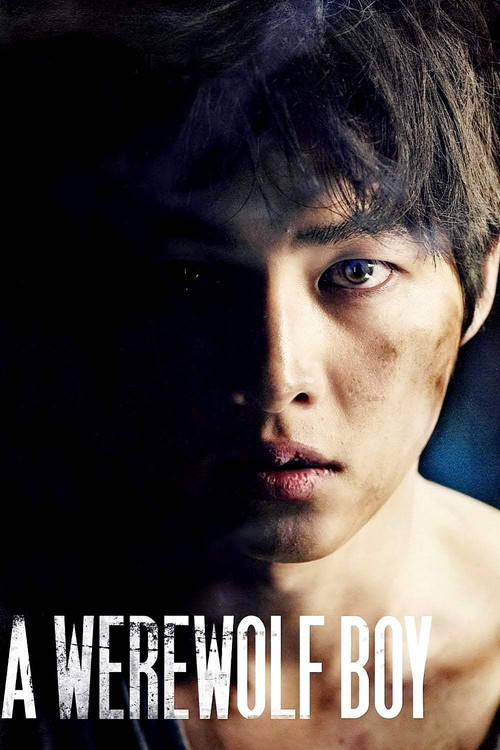
A Werewolf Boy
Enveloped in the golden nostalgia of a 1960s rural sanctuary, a fragile girl civilizes a feral youth whose unwavering loyalty transforms an untamable beast into an enduring monument of pure, unyielding devotion.
A Werewolf Boy

A Werewolf Boy

늑대소년

"Love was the first human language he'd ever learned."

31 October 2012 South Korea 122 min 7.7 (296)

Director: Jo Sung-hee

Cast: Song Joong-ki, Park Bo-young, Yoo Yeon-seok, Lee Young-ran, Jang Young-nam

Fantasy Romance Civilization vs. Primal Innocence Fidelity and the Burden of Promises The Irreversibility of Time and Aging Compassion as Healing

Overview

Set primarily in the rural South Korean countryside during the 1960s, A Werewolf Boy follows Kim Sun-yi, a sheltered teenage girl who relocates to an isolated country estate with her widowed mother and younger sister in hopes of recovering from a chronic respiratory illness. While adjusting to the slow pace of rural life, the family discovers a bedraggled, feral mute boy hiding in an outhouse on the property. Displaying canine instincts, immense physical strength, and a lack of socialized human behavior, the wild orphan is taken into their home and given the name Cheol-soo.

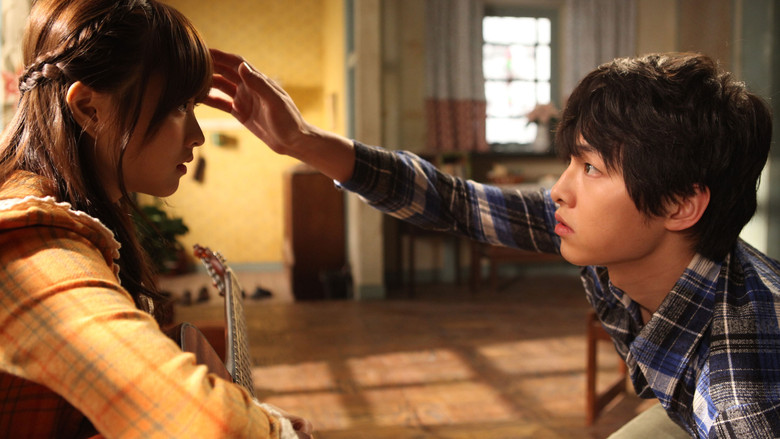
Initially irritated and unnerved by Cheol-soo's primal manners, Sun-yi discovers a canine obedience manual that inspires her to civilize him through patient training, rewards, and affectionate praise. Under her guidance, Cheol-soo learns to wash, dress, write, and practice restraint before eating. In turn, Cheol-soo develops fierce protective loyalty toward Sun-yi, transforming from a feared beast into a devoted companion and awakening Sun-yi's emotional warmth, purpose, and creative spirit.

Their idyllic rural seclusion is quickly destabilized by Hwang Ji-tae, the arrogant and entitled son of the family's deceased business associate. Ji-tae covets both the property and Sun-yi's hand in marriage, viewing Cheol-soo as a grotesque rival and a menace. As Ji-tae actively schemes to expose Cheol-soo's savage nature to the local villagers and military police, Cheol-soo's superhuman fury is pushed to the surface, threatening the fragile peace the young girl and feral boy have built together.

Core Meaning

At its core, A Werewolf Boy is an allegorical lament for purity, emotional fidelity, and innocence in a world governed by selfish pragmatism and societal conformism. Director Jo Sung-hee contrasts Cheol-soo's uncorrupted wildness with the calculated malice and moral decay of supposedly civilized people. While human beings easily move on, break promises, and compromise their convictions to fit into society, Cheol-soo embodies an absolute, timeless love unencumbered by social calculation or temporal passage. The film poignantly illustrates the bittersweet cost of human maturation—where survival often requires abandoning our most innocent, profound attachments.

Thematic DNA

Civilization vs. Primal Innocence 25%
Fidelity and the Burden of Promises 30%
The Irreversibility of Time and Aging 25%
Compassion as Healing 20%

Civilization vs. Primal Innocence

The film explores whether human socialization truly equals moral superiority. While Cheol-soo lacks language and etiquette, he operates on profound empathy, gentleness, and protective instinct. In stark contrast, Ji-tae embodies polished bourgeois society yet exhibits cruelty, entitlement, and violence. Sun-yi's process of taming Cheol-soo highlights how genuine humanity is cultivated through compassion rather than societal coercion.

Fidelity and the Burden of Promises

A central dramatic pillar of the narrative is the absolute weight of a single promise. When Sun-yi tells Cheol-soo to "Wait," he treats her command as a sacred covenant that spans almost five decades. His unwavering devotion serves as a profound foil to human fallibility and the natural tendency of people to forget the past as life moves forward.

The Irreversibility of Time and Aging

Through its framing device bridging the 1960s and the modern era, the film reflects upon the passage of youth and the physical decay of the body. While Sun-yi grows into an elderly woman burdened by the compromises of living a full life, Cheol-soo remains ageless and emotionally suspended in the moment she departed. This contrast creates a poignant meditation on nostalgia and lost time.

Compassion as Healing

Both protagonists enter the story fundamentally wounded: Sun-yi is physically ill and socially isolated, while Cheol-soo is an abused, feral castaway. Through mutual tenderness, Sun-yi finds a renewed will to live and engage with the world, while Cheol-soo gains dignity, language, and family. Empathy serves as a restorative force that transcends biological differences.

Character Analysis

Cheol-soo

Song Joong-ki

Archetype: The Feral Innocent / Noble Savage Key Trait: Unconditional devotion

Motivation

To earn Sun-yi's affection, protect her from every physical threat, and loyally obey her final command to wait for her return.

Character Arc

Transforms from a mute, terrified feral creature driven strictly by survival into an affectionate, domesticated young man capable of profound loyalty and heartbreaking self-restraint.

Kim Sun-yi

Park Bo-young (young) / Lee Young-ran (elderly)

Archetype: The Wounded Healer Key Trait: Compassionate vulnerability

Motivation

To survive her illness, protect Cheol-soo from societal hostility, and eventually confront her lingering guilt decades later.

Character Arc

Begins as an isolated, bitter teenage invalid who discovers empathy through nurturing Cheol-soo, only to be forced to abandon him, spending the rest of her life carrying the melancholic ghost of their youth.

All 4 characters and cast

Symbols & Motifs

The Dog Training Guidebook

Meaning:

Symbolizes the bridge between the wild and the domestic, as well as the transition from fear to affectionate discipline. It is through these behavioral guidelines that Sun-yi establishes mutual trust and emotional boundaries with Cheol-soo.

Context:

Sun-yi finds the abandoned manual and uses its commands—such as offering food, giving gentle head pats, and commanding "wait"—to tame Cheol-soo's aggressive dining habits and integrate him into family routines.

The Guitar and 'My Prince'

Meaning:

Represents artistic awakening, emotional vulnerability, and romantic longing. The melody acts as a sensory talisman that calms Cheol-soo's monstrous impulses and bonds them spiritually.

Context:

Sun-yi plays her acoustic guitar and sings the tender song "My Prince" while Cheol-soo sits quietly at her feet, mesmerized by her voice and touched by her vulnerability.

The Snowman

Meaning:

Symbolizes innocent play, ephemeral youth, and the patient preservation of shared memory across decades.

Context:

During their youth, Sun-yi and Cheol-soo build a snowman together; forty-seven years later, Cheol-soo rolls another giant snowman in the yard as Sun-yi drives away, proving he never abandoned their playful bond.

The Note 'Wait for me, I'll come back'

Meaning:

Represents the agonizing intersection of self-sacrifice and enduring hope. It is both a desperate command that saves Cheol-soo's life and an eternal shackle that confines him to the cottage.

Context:

Sun-yi writes the hasty message on a piece of paper and leaves it inside the barn when forcing Cheol-soo to run into the forest to save him from being shot.

Memorable Quotes

기다려.
— Kim Sun-yi

Context

Sun-yi uses this command repeatedly to teach Cheol-soo impulse control before meals, and later writes it on the note telling him to stay hidden.

Meaning

The formative command of restraint taught through dog training that ultimately evolves into the film's defining promise and eternal emotional shackle.

가지 마...
— Cheol-soo

Context

Sun-yi deliberately hits and throws stones at Cheol-soo to make him flee into the woods before the police find him; Cheol-soo grabs her arm and begs her not to leave.

Meaning

Cheol-soo's breakthrough into human speech, uttering his first words from a place of sheer desperation and heartbreak to prevent Sun-yi from abandoning him.

All 4 quotes

Philosophical Questions

Is unconditional loyalty a virtue or a form of emotional imprisonment?

The film highlights the heartbreaking tension between romantic fidelity and cruelty. Cheol-soo remains faithfully frozen in time, dedicating forty-seven years of solitude to honor a note scribbled by a child. This forces viewers to question whether eternal love is truly exalted if it requires extinguishing one's own future and autonomy.

What truly defines humanity—societal socialization or the capacity to love?

By showing civilized men committing acts of blackmail and brutality while the feral, wolf-like boy demonstrates restraint, loyalty, and empathy, the narrative questions whether modern civilization suppresses or cultivates genuine moral decency.

Can past guilt ever be resolved across the chasm of time?

Sun-yi's return to the cottage is driven by subconscious guilt over a life lived fully while leaving Cheol-soo behind. Cheol-soo's immediate forgiveness demonstrates that true love does not calculate debt, yet it leaves the mortal human with the lingering sorrow of irredeemable loss.

How It Ends

Alternative Interpretations

While generally interpreted as a romantic fantasy melodrama, A Werewolf Boy supports a compelling psychological reading where Cheol-soo represents Sun-yi's youthful, idealized id and a projection of pure innocence. In this view, Cheol-soo's feral, untamed devotion serves as Sun-yi's psychological coping mechanism against terminal illness, grief, and patriarchal oppression represented by Ji-tae. Sun-yi's eventual departure and return as an elderly woman symbolize the inevitable suppression of youthful romantic idealism in favor of pragmatic domestic reality.

Full ending explanation

Cultural Impact

Released in autumn 2012, A Werewolf Boy marked a major watershed moment in modern South Korean cinema. It broke domestic box office records by amassing over 6.6 million admissions and grossing over $46 million, making it the most commercially successful melodrama in Korean film history. The film firmly catapulted Song Joong-ki into elite Hallyu stardom, establishing his reputation for commanding physical acting and emotionally nuanced vulnerability, while cementing Park Bo-young as one of Korea's premier leading actresses.

Internationally, the film enjoyed widespread acclaim across Asian markets and major film festivals including the Toronto International Film Festival and Busan International Film Festival. It revitalized interest in nostalgic, mid-century romantic period pieces in Korean popular culture and inspired numerous stage adaptations, a best-selling novelization, and television homages that cemented the 'Gidaryeo' (Wait) motif as an enduring Korean pop-culture trope.

Audience Reception

A Werewolf Boy received widespread popular acclaim and strong critical notices, particularly for its poignant emotional resonance and exquisite lead performances. Song Joong-ki's nearly wordless performance garnered universal praise for its expressive physicality and expressive eye acting, while Park Bo-young was lauded for her radiant charisma and emotional range. Audiences responded intensely to the tearjerking climax, solidifying the film's standing as a quintessential cinematic weepie.

Minor criticisms were aimed at the cartoonish villainy of Hwang Ji-tae, the ambiguous and thinly explained scientific origins of Cheol-soo's condition, and the unapologetic melodrama of the narrative. The theatrical ending divided some viewers who found Sun-yi's departure heart-wrenching, prompting the director to release an expanded Director's Cut with an alternate reunion to soothe audience heartbreak.

Interesting Facts

  • To prepare for his demanding physical role, Song Joong-ki studied stray dogs on the streets and watched nature documentaries to faithfully capture canine gait, breathing, and body language.
  • Song Joong-ki cited Johnny Depp in Edward Scissorhands, Kodi Smit-McPhee and Chloë Grace Moretz in Let Me In, and Andy Serkis's motion-capture performance as Gollum in The Lord of the Rings as key inspirations for expressing emotion without spoken dialogue.
  • Director Jo Sung-hee originally drafted the screenplay during his student days at the Korean Academy of Film Arts (KAFA) before reworking it into his mainstream commercial debut.
  • The movie had its world premiere in the Contemporary World Cinema section at the 2012 Toronto International Film Festival before becoming the most successful Korean melodrama in box office history with over 6.6 million tickets sold.
  • Park Bo-young performed the acoustic song 'My Prince' herself, playing the guitar live on set, and the recording was subsequently released on the film's official soundtrack.
  • Due to intense audience demand for a happier conclusion, CJ Entertainment released a director's cut in Korean cinemas on December 6, 2012, featuring an extended running time and an altered final reunion.

Easter Eggs

Park Bo-young's dual role as both young Sun-yi and her modern-day granddaughter Eun-joo

Casting Park Bo-young as granddaughter Eun-joo in the modern framing sequence is not merely an economical choice; it provides visual continuity, showing that to the ageless Cheol-soo, Sun-yi's youth remains alive through bloodline and memory.

The Director's Cut alternate ending vision

In the theatrical re-release's alternate ending, the elderly Sun-yi (Lee Young-ran) is replaced by the young Sun-yi (Park Bo-young) during the reunion hug, literally depicting Cheol-soo's subjective perspective wherein the passage of five decades never altered her appearance.

Frequently Asked Questions

Explore More About This Movie

Dive deeper into specific aspects of the movie with our detailed analysis pages

Comments (0)

Leave a comment

No comments yet. Be the first to share your thoughts!

Similar Movies