Hotarubi no Mori e
蛍火の杜へ
Overview
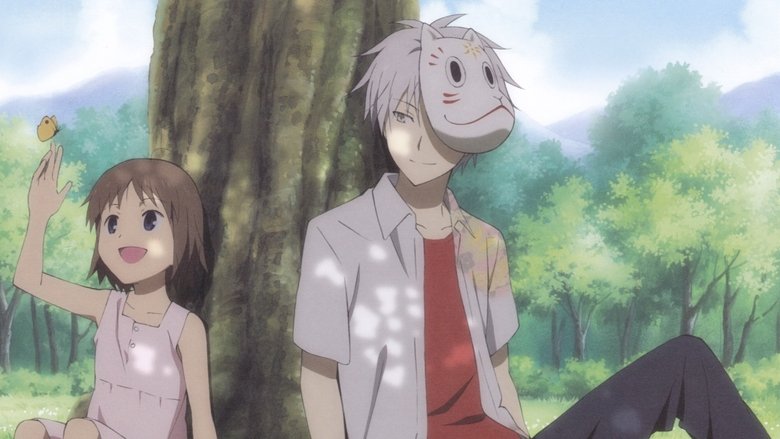
"Hotarubi no Mori e" tells the gentle and poignant story of Hotaru Takegawa, a young girl who gets lost in a forest inhabited by spirits (yokai) while visiting her grandfather. She is found by a mysterious young man named Gin, who wears a mask and informs her that he is a spirit who will disappear forever if he is ever touched by a human. This establishes the central, delicate rule of their relationship.
Over the years, Hotaru returns to the forest every summer to spend time with Gin. The film gracefully depicts the passage of time, showing Hotaru growing from a small child into a young woman, while Gin, being a spirit, ages very slowly. Their friendship deepens into a quiet, profound love, constantly shadowed by the bittersweet reality that they can never physically touch. They navigate their unique bond, sharing moments of joy and longing, all while struggling with the inherent limitations of their separate worlds.

Core Meaning
The core meaning of "Hotarubi no Mori e" revolves around the themes of transience, the preciousness of fleeting moments, and the acceptance of loss. The director, through this delicate narrative, conveys that relationships and life itself are ephemeral, much like the brief, beautiful light of fireflies ("hotarubi"). The film suggests that the value of a connection is not measured by its longevity but by its depth and the beauty of the shared memories. It explores the bittersweet nature of love that is destined to end, emphasizing that even with a known, inevitable separation, the time spent together is meaningful and should be cherished. The story is a powerful reminder to appreciate the present and find beauty in impermanence, ultimately accepting loss not as a tragedy, but as a natural part of life that allows one to move forward.
Thematic DNA
The Ephemeral Nature of Time and Existence
Time is a central theme, highlighted by the contrast between the ever-aging Hotaru and the near-ageless Gin. The film uses the passing of summers to mark Hotaru's rapid growth from child to teenager, emphasizing the fleeting nature of human life. Gin's existence is also transient, but in a different way; he is maintained by a fragile magic that can be broken in an instant. This theme, rooted in the Japanese concept of "mono no aware," explores the gentle sadness of passing things and the beauty found in their impermanence. The entire story serves as a metaphor for how precious moments are precisely because they don't last forever.
Forbidden Love and Connection Despite Barriers
The relationship between Hotaru and Gin is the heart of the film, a pure yet forbidden love defined by the single rule: they cannot touch. This physical barrier creates a profound sense of longing and intimacy that transcends physical contact. Their connection is built on shared time, conversation, and emotional support. The film explores how deep a bond can become even with significant limitations, suggesting that true love is not solely dependent on physical intimacy but on a deeper, spiritual connection. Their struggle highlights the pain and beauty of a relationship that is simultaneously fulfilling and incomplete.
Memory and Acceptance
The entire film is framed as Hotaru's nostalgic recollection of her summers with Gin. This structure emphasizes the power of memory in preserving what has been lost. After Gin's inevitable disappearance, Hotaru is left with only her memories and the warmth of their final embrace. The story's conclusion is not one of despair, but of mature acceptance. Hotaru learns to cherish the time she had with Gin and move forward with her life, carrying those precious memories with her. It suggests that while loss is painful, the memories of love provide strength and remain forever.
The Intersection of Human and Spirit Worlds
The film delicately portrays the coexistence of the human world and the supernatural world of yokai. The forest acts as a liminal space where these two realms can meet. Gin is a being caught between these worlds—a former human child saved by spirits, but now neither fully human nor fully yokai. This theme explores the idea of compromise and the inherent difficulties when two different worlds intertwine. Their relationship is a testament to the possibility of connection across these planes of existence, but also a somber acknowledgment of the rules that must govern such interactions.
Character Analysis
Hotaru Takegawa
Ayane Sakura
Motivation
Her primary motivation is to spend time with Gin. Each year, her life revolves around the anticipation of summer, when she can return to the forest. As she gets older, her motivation deepens into a desire for a future with him, even contemplating moving to the countryside after graduation to be near him, despite knowing their physical barrier is permanent.
Character Arc
Hotaru's arc is one of maturation and coming-of-age, defined by her relationship with Gin. She begins as an energetic and curious six-year-old child. As years pass, her playful affection blossoms into a deep, romantic love. She struggles with the painful limitations of their relationship but shows remarkable emotional maturity. Her journey culminates in the film's final moments, where, despite her profound grief, she accepts Gin's disappearance and cherishes their memories, demonstrating her growth into a young woman who can face loss and continue to live.
Gin
Koki Uchiyama
Motivation
Initially, his motivation is simply to exist and guard the forest. After meeting Hotaru, his motivation shifts to seeing her every summer. He finds joy and a reason for being in their shared time. Ultimately, his deepest desire is to be able to hold Hotaru, a yearning that is tragically fulfilled in his final moments.
Character Arc
Gin begins as a reserved and mysterious spirit, seemingly content with his solitary existence. His meeting with Hotaru gradually opens him up to human connection and emotion. While he appears to age very slowly, his emotional development is significant. He transitions from a protective, older-brother figure to Hotaru's loving partner. His arc is tragic; as his love for Hotaru grows, so does his longing for the one thing he can never do: touch her. His final act is one of ultimate love and fulfillment, as he experiences the human touch he craved in an embrace with Hotaru, even though it means his end.
Symbols & Motifs
Gin's Mask
The mask symbolizes Gin's non-human status and the barrier between him and the human world. Initially, it represents his mysterious and distant nature. As he grows closer to Hotaru, he occasionally removes it for her, signifying his trust and the deepening of their bond. In the end, when Gin disappears, the mask is the only physical object Hotaru has left of him, becoming a tangible memento of their intangible relationship. He also uses it as a way to "kiss" her, placing it on her face, which symbolizes their ability to find ways to express affection despite the physical barrier.
Gin wears the mask for the majority of the film, particularly in his first encounters with Hotaru. He states he wears it to look more like a spirit. A key scene involves Gin taking off the mask to show Hotaru his face. The most poignant use is when he invites her to the spirit festival and places the mask on her face, pretending to kiss it. After he vanishes, Hotaru clutches the mask in grief.
The Forest
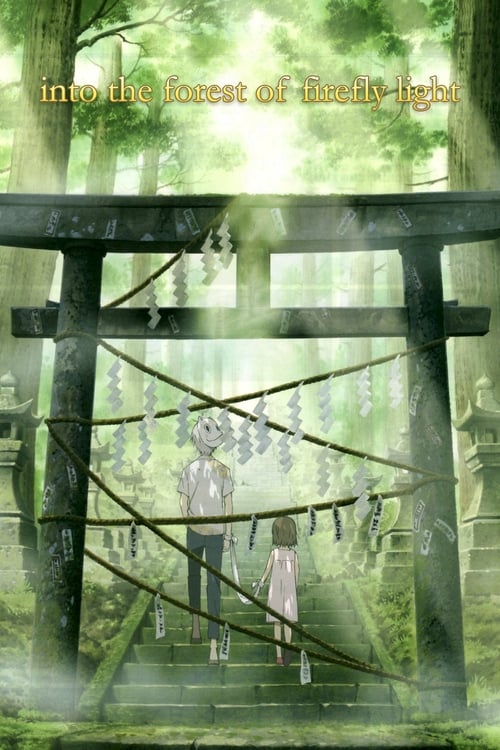
The forest is a magical, enchanted space that represents the spirit world and the boundary between the human and the supernatural. It is a timeless sanctuary where Hotaru and Gin's relationship can exist, separate from the normal flow of human life. It is both a place of wonder and a place of confinement for Gin, who cannot leave it. The lush, vibrant greenery symbolizes the life and magic of their bond.
The entire story, save for a few scenes of Hotaru in the city, takes place within the forest near her grandfather's home. It's where they first meet, where they spend all their summers playing, and where they ultimately part.
Fireflies (Hotarubi)
The fireflies, from which the film gets its title ("Into the Forest of Fireflies' Light"), symbolize the ephemeral and beautiful nature of Gin's existence and his love with Hotaru. Their light is fleeting, beautiful, and magical, but only lasts for a short time, perfectly mirroring the transient nature of their summers together and Gin's own fragile life, which disappears in a cascade of similar glowing particles.
Fireflies appear in the lush summer scenery of the forest. The most significant use of this symbol is at the very end. When Gin's body disintegrates, he vanishes into thousands of tiny, glowing lights that look like a swarm of fireflies, visually cementing the connection between his existence and their fleeting beauty.
The Passing of Summer
Summer represents the limited, precious time that Hotaru and Gin can spend together. It is a cycle of reunion and separation. For Hotaru, the anticipation of summer is what drives her through the rest of the year. For Gin, it is the only time he is not truly alone. The end of each summer is a small heartbreak, a prelude to their final, permanent separation, highlighting the theme that all good things are temporary.
The film's structure is built around Hotaru's annual summer visits. Montages show them playing through various summers as Hotaru visibly ages. The dialogue often references waiting for the next summer, and their final meeting happens at a summer festival held by the spirits.
Memorable Quotes
時間はいずれ二人を分かつでしょう。それでも、ね、それまでの間、ずっと一緒にいよう。
— Hotaru Takegawa
Context:
This is said by Hotaru as a young teenager, sitting with Gin by the water. It marks a shift in their relationship from a childhood friendship to a more conscious, romantic bond, where both are aware of the bittersweet reality of their future.
Meaning:
English Translation: "Time might separate us someday. But, until then, let's stay together." This quote encapsulates the film's core philosophy. It's a mature acknowledgment of their inevitable separation but also a powerful declaration of the intent to cherish the present moment. It reflects Hotaru's acceptance of their fate without letting it diminish the value of the time they have left.
来い、ホタル。やっとお前に触れられる。
— Gin
Context:
After Gin helps a human boy who snuck into the spirit festival, his body begins to disintegrate into light particles. He opens his arms to a shocked Hotaru and says this line, inviting her for their first and last embrace before he vanishes completely.
Meaning:
English Translation: "Come, Hotaru. I can finally touch you." These are Gin's final words. They are filled with tragic beauty and a sense of release. After a lifetime of being unable to experience human contact, his accidental touch of a human boy leads to his disappearance. Instead of fear or regret, he finds joy in his final seconds, as he can finally fulfill his deepest wish: to embrace Hotaru.
きっともう、夏を心待ちにはしないでしょう。胸が痛くて、涙があふれて。でもね、手に残るぬくもりも、夏の日の思い出も、私と一緒に生きてゆく。
— Hotaru Takegawa (Narration)
Context:
This is Hotaru's narration at the very end of the film, after Gin has disappeared. It's a reflection on her loss and the lasting impact Gin has had on her life, signifying her acceptance and maturation.
Meaning:
English Translation: "For now, I won't be able to look forward to the coming of summer. My chest hurts, my tears keep falling. However, the warmth that still remains in my hands, and the memories of the summers, will live on with me." This is part of Hotaru's final monologue. It perfectly captures the film's message of grieving while also holding onto cherished memories. It shows her profound sadness but also her resilience and her decision to carry the memory of Gin with her as she moves on with life.
Philosophical Questions
Can a connection be complete without physical intimacy?
The film's central conflict revolves around the prohibition of touch between Hotaru and Gin. Their entire relationship is built on conversation, shared experiences, and emotional support. "Hotarubi no Mori e" forces the audience to question the conventional definition of a complete relationship. It suggests that a profound, life-altering love can exist and flourish even in the complete absence of physical contact, arguing for a more spiritual or emotional definition of intimacy. However, it also poignantly acknowledges the deep human longing for touch, as this desire ultimately leads to the story's tragic and beautiful conclusion.
Is a finite, beautiful experience more valuable than a prolonged, mundane one?
Gin's existence before meeting Hotaru was presumably timeless and unchanging. Their summers together, though fleeting and destined to end, brought him immense joy and fulfillment. His final, joyful embrace—a moment of pure connection that costs him his existence—poses a question about the nature of a worthwhile life. The film seems to argue that a short life filled with profound love and cherished memories is more meaningful than an eternity of solitude. It champions the idea that the quality and depth of experiences, not their duration, are what give life its ultimate value.
How do we find meaning in inevitable loss?
From the beginning, the audience and the characters are aware that their story cannot have a conventional happy ending. The film is an exercise in anticipating and processing inevitable loss. It explores this question through Hotaru's emotional journey. The meaning she finds is not in preventing the loss, but in the memories created despite it. The film's conclusion suggests that meaning is found in acceptance and in the permanent, positive change that a person leaves on you. Gin's life and death give Hotaru a treasure of memories that shape her, and in that, his fleeting existence gains an eternal significance for her.
Alternative Interpretations
While the film's narrative is quite direct, some alternative readings and metaphorical interpretations have been discussed by viewers:
- Metaphor for Terminal Illness or Disability: One common interpretation views Gin's condition as an allegory for a terminal illness or a severe immunological disorder. His inability to be touched and his fragile existence mirror the life of someone who is physically vulnerable and isolated. The relationship then becomes a story about loving someone with a life-limiting condition, cherishing the time you have, and the inevitable pain of loss.
- Allegory for Long-Distance Relationships: The dynamic between Hotaru and Gin can be seen as an intensified metaphor for a long-distance relationship. They are separated by circumstance for most of the year and their time together is limited and precious. The physical barrier of not being able to touch represents the emotional and physical distance that many couples must endure, making their story a poignant exploration of love sustained by emotional connection alone.
- A Tale of Growing Up and Leaving Childhood Behind: Gin can be interpreted as a symbol of Hotaru's childhood magic and innocence. He exists in a timeless, magical forest, and their meetings are confined to her summer holidays—a time associated with youthful freedom. His disappearance, which occurs as Hotaru is on the cusp of adulthood, can symbolize the painful but necessary act of letting go of a cherished part of one's past in order to move forward and fully enter the adult world. His memory remains, but the magical reality of their time together is over.
Cultural Impact
"Hotarubi no Mori e" is a poignant work deeply rooted in Japanese cultural and folkloric traditions, particularly the concept of yokai (spirits or apparitions) and the sacredness of forests. Created by Yuki Midorikawa, whose work often explores the gentle, sometimes melancholy, interactions between humans and spirits, the film serves as a spiritual predecessor to her more famous series, "Natsume's Book of Friends."
Upon its release, the film was highly praised by critics and audiences for its emotional depth, simple yet beautiful art style, and its ability to tell a complete, impactful story in just 44 minutes. It received several awards, including the Jury Prize at the Scotland Loves Animation festival and the prestigious Animation Film Award at the Mainichi Film Awards, cementing its status as a critical success. Critics often compared its gentle, atmospheric storytelling to the works of Hayao Miyazaki and Makoto Shinkai, though it maintains a unique identity rooted in the shōjo manga tradition.
While not a blockbuster, the film has garnered a significant and enduring cult following within the anime community, celebrated for its bittersweet narrative that masterfully evokes the Japanese aesthetic of mono no aware—a gentle sadness and awareness of the transience of all things. Its focus on non-physical intimacy and the pain of longing resonated deeply with viewers, making it a frequently recommended title for those seeking a moving, character-driven story. It remains a beloved classic of the short film format in anime, demonstrating that a powerful emotional impact doesn't require a long runtime.
Audience Reception
"Hotarubi no Mori e" has been overwhelmingly well-received by audiences, who frequently describe it as a beautiful, poignant, and emotionally powerful film. A common point of praise is its ability to create a deep emotional connection to the characters and their relationship within a very short runtime of 44 minutes. Many viewers find the central romance to be pure, gentle, and profoundly moving, highlighting the unique intimacy developed without physical touch. The film's simple, yet elegant animation and serene soundtrack are also frequently commended for perfectly complementing the story's bittersweet and nostalgic tone.
The main point of criticism, though often framed as a testament to the film's success, is its brevity. Some viewers wished the story was longer, wanting more time to explore the world and the characters' relationship. The ending is almost universally described as heartbreakingly beautiful, leaving a lasting impact on viewers. While some critics found the ending abrupt, many audience members felt it was a fitting and powerful conclusion to the themes of transience and forbidden love. Overall, the audience verdict is that "Hotarubi no Mori e" is a must-watch for fans of romance and poignant, atmospheric storytelling, with the common warning to "prepare tissues."
Interesting Facts
- The film is based on a one-shot shōjo manga of the same name by Yuki Midorikawa, first published in July 2002.
- Yuki Midorikawa is also the creator of the highly acclaimed and thematically similar series "Natsume's Book of Friends" ("Natsume Yūjin-chō"). "Hotarubi no Mori e" is considered a starting point for the themes and atmosphere she would later explore in Natsume.
- The film was directed by Takahiro Omori and produced by the studio Brain's Base, the same director and studio behind the anime adaptation of "Natsume's Book of Friends".
- The film won the Jury Prize at the Scotland Loves Animation festival in 2011.
- It also won the Animation Film Award at the 66th Annual Mainichi Film Awards in Japan.
- The film's runtime is only 44 minutes, staying true to its origin as a short, self-contained story.
- Following the film's release, an additional short story from Gin's perspective, "Hotarubi no Mori e Tokubetsu-hen," was published in a new edition of the manga in 2011.
⚠️ Spoiler Analysis
Click to reveal detailed analysis with spoilers
Frequently Asked Questions
Explore More About This Movie
Dive deeper into specific aspects of the movie with our detailed analysis pages
Comments (0)
No comments yet. Be the first to share your thoughts!