A Whisker Away
泣きたい私は猫をかぶる
"The magic that brought us closer."
Overview
"A Whisker Away" follows Miyo Sasaki, a boisterous and seemingly cheerful middle school student who struggles with her family situation after her mother abandoned her. She harbors a deep crush on her classmate, the quiet and reserved Kento Hinode. Miyo's overt and often strange attempts to get his attention are consistently ignored or rebuffed.
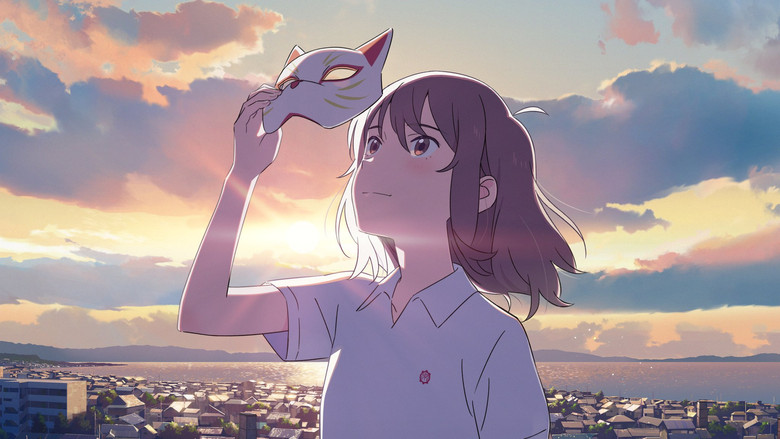
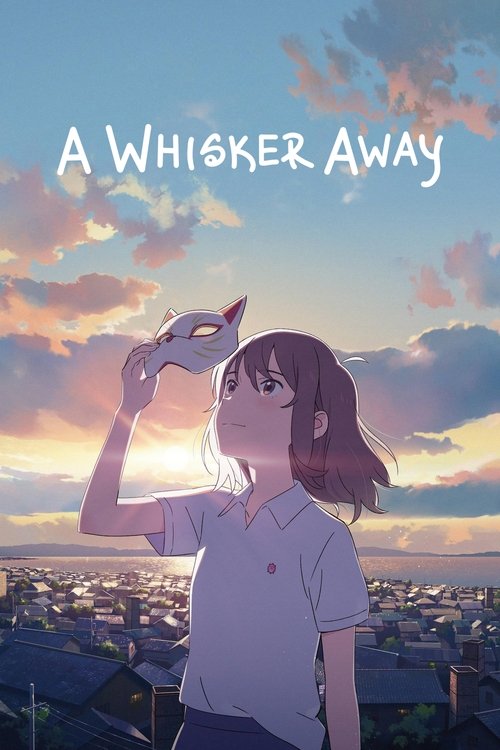
One day, she encounters a mysterious, large cat known as the Mask Seller, who gives her a magical Noh mask. By wearing it, she can transform into a beautiful white cat, whom Hinode names "Taro". As Taro, she is able to get close to Hinode, offering him comfort and listening to his troubles, something she feels she cannot do as herself. The ease and affection she experiences as a cat begin to feel more appealing than her difficult human life, leading her to question where she truly belongs.
This double life becomes complicated as the boundary between her human and feline selves starts to blur. Miyo is tempted by the Mask Seller to give up her humanity permanently to stay with Hinode as his beloved pet, a choice that has irreversible and dangerous consequences she doesn't fully understand.

Core Meaning
The core meaning of "A Whisker Away" revolves around the themes of self-acceptance, the danger of escapism, and the necessity of genuine communication. The film explores how bottling up emotions and hiding behind a facade—whether a cheerful personality or a literal cat mask—prevents true connection. Miyo's transformation is a powerful metaphor for depression and the desire to disappear from a painful reality. Ultimately, the film posits that true happiness and love cannot be found by running away from one's problems or identity, but by facing them head-on, learning to love oneself, and having the courage to express one's true feelings to others.
Thematic DNA
Escapism and Depression
Miyo's transformation into a cat is her primary method of escaping a painful home life—marked by her mother's abandonment and a strained relationship with her stepmother—and the social anxieties of school. This act is presented as a metaphor for depression and suicidal ideation, where abandoning her human form represents the ultimate escape from her suffering. The film portrays this escapism as a tempting but dangerous path that leads to losing one's identity. The cat world is filled with other humans who chose this escape and now regret it, warning Miyo that it's not a true solution.
Masks and True Identity
The film uses both literal and metaphorical masks to explore the theme of identity. Miyo wears a cheerful, energetic "mask" at school to hide her inner turmoil and loneliness. The magical Noh mask allows her to physically adopt another identity, one that she believes is more easily loved. The central conflict is her struggle to be loved for her true self, Miyo, rather than the idealized, silent companion she is as Taro the cat. The story emphasizes the importance of dropping these pretenses to form genuine connections.
Communication and Misunderstanding
A lack of honest communication drives the plot. Miyo is unable to express her feelings to Hinode in a way he can understand, resorting to bizarre antics. Hinode, in turn, is reserved and struggles to speak his own mind, both about his feelings for Miyo and his passion for pottery to his family. As a cat, Miyo can be near him, but cannot truly communicate with him. The film's resolution is achieved only when both characters find the courage to speak their true feelings directly, breaking the cycle of misunderstanding and rejection.
Adolescent Love and Rejection
The film is, at its surface, a story about a young girl's intense crush. It portrays the awkwardness, insecurity, and fear of rejection that accompany first love. Miyo's desperation to gain Hinode's affection leads her to make a rash, supernatural decision. The narrative explores the idea of wanting to be a different, perhaps simpler, version of oneself to be accepted by the person you admire. Hinode's eventual realization that he likes Miyo for her human eccentricities, not just her cute cat form, underscores the film's message about genuine connection.
Character Analysis
Miyo Sasaki (Muge)
Mirai Shida
Motivation
Her primary motivation is to be close to and loved by Kento Hinode. This desire is amplified by a deeper need to escape her unhappy family life and feelings of abandonment left by her mother. She believes that becoming a cat is the only way to receive the affection and connection she craves.
Character Arc
Miyo begins as an insecure and emotionally repressed teenager who hides her pain behind a loud, cheerful facade. Feeling unloved by her family and rejected by her crush, she uses the cat mask as a form of escapism. Through her experiences as Taro and the risk of losing her humanity forever, she learns that running away is not a solution. She confronts her feelings, reconnects with her family, and realizes she must be true to herself to find happiness. Her arc is about moving from self-rejection to self-acceptance and learning to communicate honestly.
Kento Hinode
Natsuki Hanae
Motivation
Hinode is motivated by a quiet passion for his grandfather's craft of pottery and a desire for a peaceful life. While initially reserved, his motivation shifts to protecting Taro, and later, saving Miyo once he learns the truth, driven by his burgeoning love for her and a sense of responsibility.
Character Arc
Hinode starts as a quiet, seemingly aloof boy who is annoyed by Miyo's advances. Through his interactions with Taro (Miyo as a cat), his gentle and caring nature is revealed. He is struggling to express his own passion for pottery against his family's expectations. His journey involves realizing his true feelings for Miyo and finding the courage to stand up for both her and his own dreams. He learns to speak his mind and reciprocate Miyo's feelings, moving from passive observer to active protector.
Mask Seller (Cat Storekeeper)
Koichi Yamadera
Motivation
His motivation is selfish and straightforward: to collect human lifespans by convincing them to permanently become cats. He targets those who wish to escape their lives, offering them a seemingly perfect alternative while hiding the true, permanent cost of the transaction.
Character Arc
The Mask Seller does not have a developmental arc; he is a consistent supernatural force. He acts as a catalyst for the plot, preying on the unhappiness of humans. He presents himself as a merchant offering a solution, but his true goal is to trick humans into becoming cats so he can steal their remaining lifespan to achieve immortality. He is less a purely evil villain and more of a sinister, playful spirit who exploits human weakness.
Symbols & Motifs
The Cat Masks
The Noh-style cat masks symbolize transformation, escape, and the loss of self. They offer a tempting way out of human problems by shedding one's identity and responsibilities. However, this escape comes at the cost of one's human life and connections. The mask represents the dangerous allure of becoming someone else to avoid pain, ultimately leading to a state of regret and limbo.
The Mask Seller, a mysterious supernatural entity, provides these masks to unhappy humans. Miyo receives one and uses it to become Taro. Later, the stepmother's cat, Kinako, uses Miyo's discarded human "face" (which takes the form of a mask) to become human. The climax takes place on a secret Cat Island, where many former humans are trapped after making a deal for a mask.
Pottery
Pottery symbolizes Hinode's inner passion, heritage, and his struggle with self-expression. It represents his connection to his late grandfather and his desire to pursue a path that his mother may not approve of. His quiet dedication to the craft reveals his true, sensitive nature, which he otherwise keeps hidden. It's a part of his authentic self that he only feels comfortable sharing with Taro (Miyo as a cat).
Hinode is often seen in his grandfather's pottery workshop. He confides his love for pottery and his frustrations to Taro. His decision to openly declare his intent to become a potter to his mother at the end of the film signifies his character's growth in self-acceptance and communication, mirroring Miyo's own journey.
Hinode Sunrise Attack
This is Miyo's signature, and rather aggressive, way of getting Hinode's attention, where she bumps him with her rear. It symbolizes her clumsy, over-the-top, and ultimately ineffective way of communicating her feelings as a human. It represents her desperate, unfiltered personality that she fears is unlovable. The fact that Hinode secretly found it charming shows that her true self was not as off-putting as she believed.
Miyo performs this move on Hinode multiple times at school, much to his apparent annoyance. In the film's closing credits, Hinode playfully does the move back to her, signifying his full acceptance and reciprocation of her quirky affections.
Memorable Quotes
You smell just like the sun.
— Kento Hinode
Context:
Hinode first says this to Taro (the cat) when she is comforting him. Later, after an incident at school, he notices the same scent on Miyo, which plants the seed of suspicion in his mind about her identity.
Meaning:
This quote is significant because Hinode says it to both Miyo as a human and as the cat, Taro. It's the key clue that helps him realize they are the same person. It symbolizes the innate, comforting essence of Miyo's true self that shines through regardless of the form she takes, suggesting that what he loves about her is intrinsic to her being.
I used to wish the world would end. Every single day.
— Miyo Sasaki
Context:
Miyo reflects on her past feelings of hopelessness, explaining the extent of her unhappiness that led her to seek escape through her transformation into a cat.
Meaning:
This line is a stark and honest confession of Miyo's deep depression, stripping away her cheerful facade. It reveals the true depth of her despair and provides crucial context for why she would be tempted to give up her humanity. It reframes her actions from a simple schoolgirl crush to a desperate act of self-preservation from overwhelming emotional pain.
Deep down she believes turning back will only bring her pain and suffering.
— Yoriko (as narrator/insight)
Context:
This is said as Miyo is considering giving up her human face permanently. Her friend, Yori, intuits the true, painful reasoning behind Miyo's desire to remain a cat.
Meaning:
This quote, spoken by Miyo's friend, articulates the core of Miyo's psychological conflict. It's not just that she enjoys being a cat; she genuinely believes her human life is irredeemably painful. It highlights the distorted perception that can accompany depression, where escape seems like the only logical choice over facing a reality perceived as nothing but negative.
Philosophical Questions
Is it better to be loved for an idealized version of yourself or risk rejection for who you truly are?
The film explores this question through Miyo's central dilemma. As Taro the cat, she receives unconditional affection from Hinode, but it's an affection directed at a simple, cute pet, not at her complex human self. She is loved, but she is not known. Her journey forces her to confront the fact that this idealized, easy love is ultimately unfulfilling because it requires the erasure of her true identity. The film's conclusion argues that authentic love, while riskier and more difficult, is the only path to genuine connection and self-worth.
To what extent does escapism become self-destructive?
Miyo initially uses her cat form as a temporary escape, a way to cope with daily pain. However, the film shows how this coping mechanism gradually becomes a trap. The line between her two selves blurs, and the escape becomes so tempting that she is willing to permanently sacrifice her identity, her future, and her relationships for it. The story illustrates that while escapism can offer temporary relief, relying on it can lead to a complete loss of self and an inability to function in the real world, making it a profoundly self-destructive act.
What does it mean to wear a 'mask' in society?
"A Whisker Away" uses the physical cat mask to explore the metaphorical masks people wear daily. Miyo pretends to be happy and energetic to hide her sadness and insecurity. Hinode acts aloof to hide his own uncertainties and passions. The film suggests that everyone wears some kind of mask to navigate social expectations and protect themselves from vulnerability. However, it also argues that these masks prevent true understanding and connection, and that personal growth requires the courage to reveal the true face underneath.
Alternative Interpretations
The most significant alternative interpretation of "A Whisker Away" centers on viewing the entire magical premise as a direct allegory for depression and suicide. In this reading, Miyo's decision to abandon her human face is not just a fantasy choice but a metaphor for giving up on life. The Mask Seller isn't simply a trickster; he represents the tempting finality of death, offering a permanent escape from emotional pain. The Cat Island is a form of limbo or afterlife, populated by souls who also chose to escape their human struggles and now live in a state of passive regret.
Another interpretation focuses on the film as a critique of unhealthy coping mechanisms. Miyo's transformation is an extreme form of avoidance. Instead of dealing with her trauma from her mother's abandonment and learning to navigate her social life, she literally becomes another creature to avoid confrontation and responsibility. The film can be seen as a cautionary tale about the dangers of creating an idealized fantasy to escape reality, arguing that true growth only comes from confronting and accepting the imperfections of one's life and self.
Cultural Impact
"A Whisker Away" was released globally on Netflix in June 2020, at a time when the COVID-19 pandemic had shuttered cinemas worldwide. This context made it one of the more prominent new anime films of the year for international audiences, bypassing a traditional theatrical run for an immediate streaming debut. The film was praised by many for its beautiful animation by Studio Colorido and its heartfelt, if somewhat conventional, story. However, it also received criticism. Some critics and viewers found the protagonist, Miyo, to be annoying and her behavior towards Hinode problematic, bordering on stalking. Others felt the plot was predictable and didn't fully explore the potential of its magical elements, drawing unfavorable comparisons to the works of Studio Ghibli, particularly 'The Cat Returns'.
Culturally, the film taps into deep-seated themes in Japanese folklore, such as transformation (hengeyōkai) and the spiritual world of cats. Its core message about masking emotions and the pressures of conformity resonates strongly within Japanese culture but also found a universal audience. The film's sensitive and metaphorical portrayal of depression and escapism was a significant point of discussion among viewers, with many interpreting Miyo's desire to become a cat as a powerful allegory for suicidal ideation. While not a groundbreaking masterpiece that redefined the genre, "A Whisker Away" stands as a thoughtful and visually charming entry in the modern anime landscape, contributing to the ongoing conversation about mental health in young adult narratives.
Audience Reception
Audience reception for "A Whisker Away" has been generally positive, though somewhat divided. Many viewers praised the film for its beautiful, high-quality animation by Studio Colorido, often highlighting the vibrant colors and detailed backgrounds. The charming premise and the emotional depth of its themes, particularly its metaphorical exploration of depression and the need for self-acceptance, resonated strongly with a large portion of the audience.
However, a common point of criticism was the character of Miyo. Some viewers found her behavior towards Hinode to be obsessive and irritating rather than endearing, which made it difficult to sympathize with her throughout the film. The plot was also cited by some as being predictable and following familiar anime romance tropes. While the magical elements were visually interesting, some felt the world of the cats could have been explored more deeply. Overall, audiences often see it as a sweet, visually appealing, and emotionally sincere film, even if it doesn't quite reach the heights of other modern anime classics.
Interesting Facts
- The film's original Japanese title is 'Nakitai Watashi wa Neko o Kaburu', which translates to 'Wanting to Cry, I Pretend to Be a Cat'. The phrase 'neko o kaburu' is a Japanese idiom for hiding one's claws or true nature, akin to 'a wolf in sheep's clothing'.
- The film's setting, the town of Tokoname, is a real city in Aichi Prefecture, Japan, famous for its pottery. Co-director Tomotaka Shibayama grew up there, and many of the film's locations are based on real places within the town.
- The movie was originally scheduled for a theatrical release in Japan but was canceled due to the COVID-19 pandemic. Netflix then acquired the worldwide distribution rights, releasing it globally on its platform in June 2020.
- The film was produced by Studio Colorido, a relatively new animation studio also known for "Penguin Highway" and the "Pokémon: Twilight Wings" YouTube series.
- The directors are Junichi Sato, famous for directing classics like 'Sailor Moon', and Tomotaka Shibayama, for whom this was his feature film directorial debut.
- The screenplay was written by Mari Okada, a prolific and highly regarded writer known for emotional and character-driven anime like 'Anohana: The Flower We Saw That Day'.
- The theme songs for the film, including "Ghost in a Flower," were performed by the popular Japanese rock duo Yorushika.
⚠️ Spoiler Analysis
Click to reveal detailed analysis with spoilers
Frequently Asked Questions
Explore More About This Movie
Dive deeper into specific aspects of the movie with our detailed analysis pages
Comments (0)
No comments yet. Be the first to share your thoughts!