My Hero Academia: Two Heroes
僕のヒーローアカデミア THE MOVIE ~2人の英雄~
"Who is your hero?"
Overview
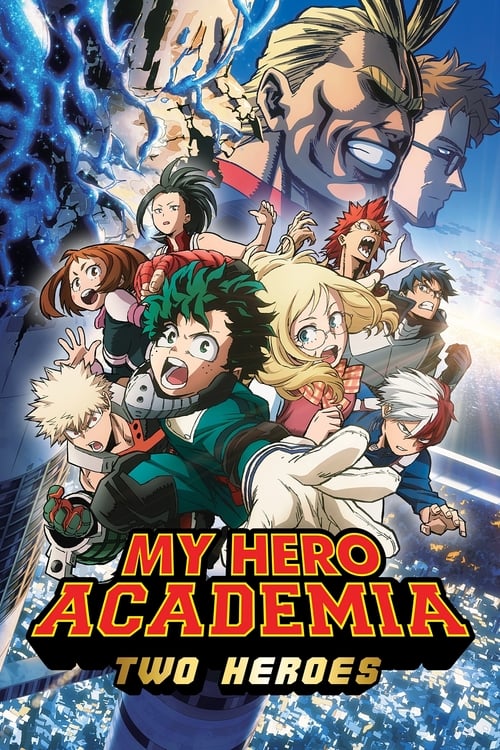
My Hero Academia: Two Heroes is an animated superhero film set within the popular My Hero Academia universe. The story takes place between the second and third seasons of the anime series. All Might, the world's greatest hero, is invited to I-Island, a massive man-made moving city where scientists research Quirks and develop cutting-edge hero technology. He brings his protégé, Izuku Midoriya (Deku), along for the trip.
Upon their arrival, they meet Melissa Shield, the daughter of All Might's former partner, Professor David Shield. Melissa, who is Quirkless like Deku once was, is a brilliant inventor herself. The festive atmosphere of the I-Expo is shattered when a group of villains, led by the formidable Wolfram, takes control of the island's security system, holding every hero hostage, including All Might. It's up to Deku, Melissa, and their visiting U.A. High classmates to outsmart the villains and save the day.
Core Meaning
The central message of My Hero Academia: Two Heroes revolves around the themes of legacy, self-sacrifice, and the true meaning of heroism. The film explores the anxiety of passing the torch to the next generation, as embodied by the declining power of All Might and Professor Shield's desperate attempts to preserve his friend's status as the "Symbol of Peace." It posits that true heroism isn't just about possessing a powerful Quirk, but about the courage to act, the willingness to help others, and the collaborative spirit of teamwork. Melissa's character, despite being Quirkless, exemplifies this by using her intellect and inventions to aid the heroes, reinforcing the idea that everyone has the potential to be a hero in their own way. Ultimately, the film is a celebration of the enduring spirit of heroism and the hope that lies in the future generation.
Thematic DNA
Passing the Torch and Legacy
A core theme is the transition of responsibility from one generation to the next. All Might's waning power and his mentorship of Deku are central to this. Professor David Shield's fear of All Might's decline drives him to desperate measures, symbolizing the difficulty the older generation faces in letting go. The film culminates in All Might and Deku fighting together, a literal and metaphorical passing of the torch, showing that the future is in capable hands.
The Nature of Heroism
The film delves into what it truly means to be a hero, beyond just having superpowers. Melissa Shield, despite being Quirkless, demonstrates immense bravery and resourcefulness, proving that heroism is about one's actions and heart. The students of Class 1-A also showcase this by working together, using their unique abilities in tandem to overcome obstacles, emphasizing that teamwork and selflessness are key components of heroism.
Friendship and Teamwork
The bonds between the characters are heavily emphasized. The long-standing friendship between All Might and David Shield is a key plot point. Furthermore, the teamwork exhibited by the students of Class 1-A is crucial to their success. They combine their diverse Quirks and strategic thinking to navigate the compromised security system and confront the villains, highlighting that unity is their greatest strength.
Science, Technology, and Quirks
Set on I-Island, a hub of scientific innovation, the film explores the intersection of technology and superpowers. Melissa's inventions, particularly the "Full Gauntlet" she gives to Deku, showcase how technology can enhance and support Quirks. This theme also presents a cautionary tale, as the villains exploit the island's advanced technology for their nefarious purposes, demonstrating the dual-edged nature of scientific advancement.
Character Analysis
Izuku Midoriya (Deku)
Daiki Yamashita
Motivation
Deku's primary motivation is to save everyone on I-Island and protect his friends and mentor. He is driven by his innate heroic spirit and the desire to live up to the legacy of One For All that All Might entrusted to him.
Character Arc
Deku arrives on I-Island somewhat in the shadow of his mentor, All Might. Throughout the film, he is thrust into a leadership role when the adults are incapacitated. He demonstrates growth in his strategic thinking and his ability to inspire his classmates. His arc culminates in him fighting alongside a weakened All Might, proving he is ready to shoulder the responsibilities of a future top hero.
Toshinori Yagi (All Might)
Kenta Miyake
Motivation
His motivation is to protect the innocent and maintain peace, even as his strength fades. He is also motivated by his deep care for Deku and his desire to see him succeed as his successor. A significant part of his motivation is also tied to his friendship with David Shield.
Character Arc
All Might's arc centers on his acceptance of his diminishing power and his faith in the next generation. He begins the film reminiscing about his past and confronting the harsh reality of his limits. By the end, after witnessing Deku and his friends' capabilities, he gains a renewed sense of hope and fully embraces his role as a mentor who has successfully passed on his ideals.
Melissa Shield
Mirai Shida
Motivation
Melissa is motivated by her love for her father and her admiration for heroes like All Might. She shares Deku's desire to help people and uses her scientific acumen to achieve that goal, wanting to support heroes through her inventions.
Character Arc
Melissa initially feels helpless due to being Quirkless in a world of heroes. Her arc is about discovering her own way to contribute to heroism. She proves that intelligence and technological skill are as valuable as a Quirk. She transitions from a worried bystander to an active and crucial participant in the mission, taking control of the security systems and directly aiding the heroes.
David Shield
Katsuhisa Namase
Motivation
His sole motivation is to save All Might from losing his power, believing that the world will lose its Symbol of Peace otherwise. This fear and desperation cloud his judgment, leading him down a misguided path.
Character Arc
David is a brilliant scientist who is haunted by the impending decline of his best friend, All Might. His arc is a tragic one, as his noble desire to help All Might leads him to make a terrible decision—staging a fake villain attack to retrieve a Quirk-amplifying device he created. He ultimately realizes the error of his ways and the true hope for the future lies not in preserving the past, but in trusting the next generation.
Wolfram
Rikiya Koyama
Motivation
Wolfram is motivated by a desire for power and chaos. He seeks to steal the Quirk amplification device to augment his own abilities. It is later revealed he is working in concert with All For One, aiming to crush the Symbol of Peace and demoralize society.
Character Arc
Wolfram's character does not have a significant developmental arc. He is introduced as the primary antagonist who hijacks David Shield's plan for his own destructive purposes. His power and cruelty escalate throughout the film, especially after he uses the Quirk amplification device and reveals a connection to All For One. He serves as the physical obstacle that the heroes must overcome through teamwork and combined strength.
Symbols & Motifs
The Full Gauntlet
The Full Gauntlet symbolizes the fusion of intellect and power, and the potential that lies in collaboration. It represents Melissa's ability to contribute to heroism despite being Quirkless and enables Deku to surpass his limits without self-destruction. It is a physical manifestation of the film's message that different kinds of strength can work together to achieve greater things.
Melissa gives the Full Gauntlet to Deku before the villain attack. He uses it throughout the mission to fight at 100% of his power without breaking his bones. The gauntlet is ultimately destroyed during the final battle, but it plays a pivotal role in their victory.
I-Island's Central Tower
The tower represents the pinnacle of human achievement in hero support technology, but also a point of vulnerability. The heroes' ascent of the tower mirrors their struggle to overcome the technologically superior villains. Reaching the top signifies reclaiming control and restoring order, both literally and thematically.
After the villains take over, Deku and his friends must climb to the top of the tower to access the central security system and deactivate it. Their journey up the tower is fraught with challenges and battles against the security robots and villains.
All Might's Waning Power
All Might's declining ability to maintain his muscle form symbolizes the inevitable end of an era and the fragility of even the greatest symbols. It creates a sense of urgency and underscores the theme of passing the torch to the next generation of heroes.
Early in the film, David Shield's tests reveal the severity of All Might's weakening Quirk. This knowledge is what motivates David's morally ambiguous actions. All Might's struggle to maintain his form during the final battle is a key dramatic element.
Memorable Quotes
Young man... you too can become a hero.
— All Might
Context:
The quote is part of the film's introductory sequence, which recaps Deku's origins and his first meeting with All Might, providing context for viewers who may be new to the franchise.
Meaning:
This iconic quote from the main series is revisited in the film's opening, encapsulating the foundational theme of My Hero Academia. It represents the moment Deku's dream was validated by his idol, setting him on his path. Its inclusion reinforces the film's focus on legacy and Deku's journey as All Might's successor.
Meddling when you don't need to... is the essence of being a hero.
— All Might
Context:
This line is also part of the thematic foundation of the series, often recalled when a character performs a selfless act of bravery. It underpins the motivation for Deku and his friends to defy the villains' lockdown and take matters into their own hands.
Meaning:
This quote defines the selfless, instinctual nature of a true hero. It speaks to the idea that heroes act not because they are told to, but because their bodies move on their own to help someone in need—a core principle that Deku embodies throughout the series and the film.
Go Beyond! PLUS ULTRA!
— All Might & Class 1-A Students
Context:
The phrase is shouted at multiple points during the film, particularly during intense battles. It is most prominent during the climactic final fight, where the characters must exceed their own limitations to defeat Wolfram.
Meaning:
This is the school motto of U.A. High and a recurring battle cry throughout the series. It signifies the constant need to push past one's limits to achieve greatness and save the day. In the film, it serves as a rallying cry that unites the characters in their fight against overwhelming odds.
Philosophical Questions
What is the true cost of being a 'Symbol of Peace'?
The film explores this question through All Might's physical decline and David Shield's psychological torment. It shows that maintaining such a symbol requires immense personal sacrifice from the hero and creates immense pressure on those around them. David's willingness to betray his principles to preserve the symbol suggests that the societal need for an unwavering pillar of hope can lead to moral compromises and ethical dilemmas. The film asks whether any single individual should be forced to carry such a burden and what happens when that symbol begins to fade.
Can heroism exist without power?
Two Heroes directly addresses this through the character of Melissa Shield. As a Quirkless individual in a world of superhumans, she initially feels sidelined from the world of heroes. However, the film demonstrates that her intellect, bravery, and technological creations are indispensable. She doesn't fight on the front lines, but her contributions are just as heroic. This challenges the series' own premise to an extent, suggesting that the qualities that define a hero—courage, ingenuity, and the desire to help—are not contingent on possessing a superpower.
Alternative Interpretations
While the film is largely a straightforward heroic narrative, some interpretations focus on the darker undertones of its premise. One reading views David Shield's actions not just as a misguided attempt to help a friend, but as a critique of a society that places an unhealthy reliance on a single, infallible symbol. His desperation reflects a systemic fear of change and an inability to accept the natural cycle of decline and succession. In this light, Wolfram's hostile takeover isn't just a villainous act, but the inevitable consequence of a system's rigidities being exploited.
Another perspective examines the film through the lens of technological anxiety. I-Island represents a utopia built on science, yet its own systems are easily turned against its inhabitants. This can be interpreted as a cautionary tale about over-reliance on technology for security and progress. Melissa's ultimate contribution coming from her ability to hack and control the system, rather than just invent, suggests that mastery and ethical oversight of technology are as important as its creation.
Cultural Impact
My Hero Academia: Two Heroes was released at a time when its parent series was achieving massive global popularity, capitalizing on the worldwide resurgence of superhero media dominated by American comic book films. The film itself acts as a bridge, blending classic Japanese shonen anime tropes with the aesthetics and narrative beats of Western superhero stories, evident in All Might's character design and the film's plot, which has been compared to action blockbusters like Die Hard.
Critically, the film was received positively, praised for its high-quality animation by Studio Bones, thrilling action sequences, and heartfelt character moments that captured the spirit of the source material. While some critics noted the plot was somewhat formulaic for a tie-in anime film, it was widely regarded as an excellent entry point for newcomers and a satisfying experience for existing fans. Its box office success in both Japan and North America demonstrated the franchise's significant international appeal and helped solidify anime films as a viable theatrical draw in the West. The movie's integration of its original characters and plot points back into the main manga canon, however minor, set a precedent for future films in the franchise and was appreciated by fans for making the story feel consequential.
Audience Reception
Audiences generally received My Hero Academia: Two Heroes with great enthusiasm. Fans of the series praised the film for capturing the charm, humor, and heart of the source material, often describing it as feeling like a high-budget, extended episode. The spectacular animation during the action sequences, especially the final collaborative fight between Deku and All Might, was a frequent point of acclaim. The opportunity to see more of All Might's backstory and him fighting alongside his successor was a major highlight for many viewers.
Criticisms, while less common, tended to focus on the film's predictable, self-contained plot, which is a common trait of anime franchise movies. Some viewers felt the villain, Wolfram, was somewhat generic and underdeveloped. The convenient way that almost all of Class 1-A happened to be on the exclusive island was also noted as a slightly contrived plot device, though often forgiven for the sake of enjoying the character interactions. Overall, the verdict was overwhelmingly positive, with audiences finding it to be a fun, action-packed, and emotionally satisfying cinematic experience that successfully celebrated the core themes of the series.
Interesting Facts
- The film is considered canon to the main storyline, taking place between the 'Final Exams' arc and the 'Forest Training Camp' arc.
- My Hero Academia creator Kōhei Horikoshi served as the chief supervisor for the film and was credited with the original story and character designs.
- The film had its world premiere at Anime Expo in Los Angeles on July 5, 2018, before its Japanese release.
- Two Heroes was a box office success, becoming Funimation's third-highest-grossing licensed film in the U.S. and Canada at the time of its release.
- The character of Melissa Shield has a connection to the main manga series, as she is mentioned as having helped All Might develop technology he uses in later arcs.
- Director Kenji Nagasaki has stated that the original author, Kōhei Horikoshi, is a big fan of American superhero comics, and that influence is particularly visible in the character of All Might and the film's opening sequence set in the U.S.
- Due to high demand from audiences, the film's initial limited theatrical run in North America was extended.
Easter Eggs
Young All Might's American adventures in the film's opening.
The opening scene shows a young All Might during his time as a hero in America. This sequence is a nod to the backstory established in the manga and provides a rare glimpse into the hero's prime, showcasing a different costume and fighting style. It serves as fan service and world-building, expanding on All Might's history before he became the Symbol of Peace in Japan.
Star and Stripe appears as a child.
During the opening scene in America, a small girl with pink hair is saved by All Might. This character is later confirmed in the manga to be a young Cathleen Bate, who would grow up to become the No. 1 Pro Hero in the United States, Star and Stripe, inspired by All Might's heroics on that day.
All Might's special move names.
The film humorously reveals that All Might named his signature "smash" attacks after American states and cities (e.g., Texas Smash, Detroit Smash) during his time studying abroad in the U.S. This provides a fun, canonical origin for his famous moves.
⚠️ Spoiler Analysis
Click to reveal detailed analysis with spoilers
Frequently Asked Questions
Explore More About This Movie
Dive deeper into specific aspects of the movie with our detailed analysis pages
Comments (0)
No comments yet. Be the first to share your thoughts!