Divorce Italian Style
A darkly comedic Sicilian satire simmering with morbid frustration, where a desperate husband's elaborate fantasies of freedom curdle into a meticulously planned, yet tragically absurd, reality.
Divorce Italian Style

Divorce Italian Style

Divorzio all'italiana

"He ordered marriage on the rocks with a twist... Italian Style!"

20 December 1961 Italy 104 min ⭐ 7.9 (506)
Director: Pietro Germi
Cast: Marcello Mastroianni, Daniela Rocca, Stefania Sandrelli, Leopoldo Trieste, Odoardo Spadaro
Crime Comedy
Satire of Law and Religion Patriarchy and Male Chauvinism Social Hypocrisy and Oppressive Mores Desire, Frustration, and Fantasy

Overview

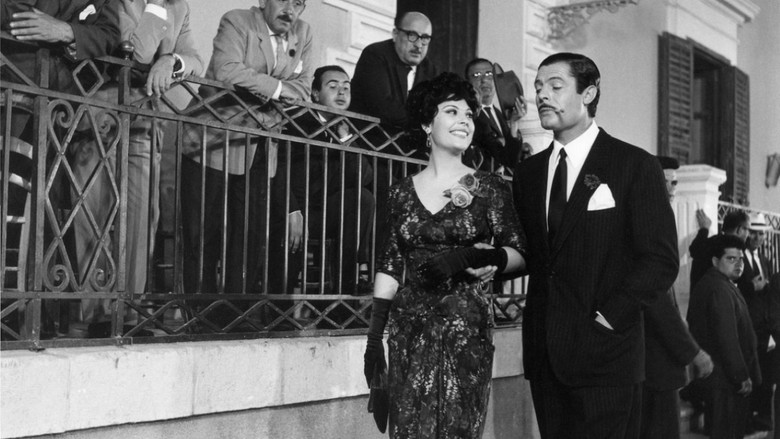
"Divorce Italian Style" (Divorzio all'italiana) is a 1961 black comedy directed by Pietro Germi. The film is set in the small Sicilian town of Agramonte, where divorce is illegal and deeply frowned upon by the Catholic Church. The protagonist, Baron Ferdinando Cefalù (Marcello Mastroianni), is an impoverished nobleman trapped in a stifling, loveless twelve-year marriage to the cloying and devoted Rosalia (Daniela Rocca).

Ferdinando, known as Fefè, is hopelessly infatuated with his beautiful, sixteen-year-old cousin, Angela (Stefania Sandrelli), who reciprocates his feelings. Unable to legally end his marriage, Fefè begins to fantasize about murdering his wife in a variety of elaborate and darkly humorous ways. His daydreams take a more concrete turn when he learns about the legal concept of an "honor killing." Realizing that murdering his wife in a feigned fit of rage after catching her in an adulterous act would result in a significantly lighter prison sentence, Fefè concocts a meticulous plan to find a lover for Rosalia, orchestrate their affair, and then commit his "crime of passion" to finally be free to marry Angela.

The film satirizes the hypocritical social mores, patriarchal attitudes, and archaic laws of 1960s Italy, particularly in the conservative south. Fefè's desperate and morally bankrupt scheme sets off a chain of absurd and unexpected events, highlighting the ridiculous lengths one might go to circumvent an oppressive system. The film is a key example of the "Commedia all'italiana" genre, blending sharp social critique with dark humor.

Core Meaning

The core meaning of "Divorce Italian Style" is a biting satire of the legal and social hypocrisy of 1960s Italy, particularly concerning marriage, divorce, and the concept of honor. Director Pietro Germi uses the darkly comedic premise of a man plotting to murder his wife as a more socially acceptable alternative to divorce to expose the absurdity of a society bound by archaic laws and rigid Catholic doctrine. The film critiques a patriarchal system where a man's honor is deemed more valuable than a woman's life, and where violence can be legally mitigated if framed as a "crime of passion." By making the protagonist's morally reprehensible plan seem like a logical, albeit extreme, solution to his marital woes, Germi highlights the profound flaws in the legal and religious institutions that governed Italian life, effectively forcing individuals into desperate and grotesque actions to achieve personal freedom. The film is a powerful commentary on how repressive societal norms can distort human desire and morality.

Thematic DNA

Satire of Law and Religion 35%
Patriarchy and Male Chauvinism 30%
Social Hypocrisy and Oppressive Mores 25%
Desire, Frustration, and Fantasy 10%

Satire of Law and Religion

The film is a searing critique of the Italian legal system and the influence of the Catholic Church in the 1960s, a time when divorce was illegal. The central premise revolves around the absurdity of the "honor killing" law (Article 587 of the Italian Penal Code at the time), which offered lenient sentences for murders committed to defend one's honor. Ferdinando's elaborate plot to murder his wife is presented as a more feasible option than obtaining a divorce, which underscores the law's illogical and unjust nature. The film also satirizes the hypocrisy of a society that publicly adheres to strict Catholic morals while privately engaging in deceit and sin, as seen in Ferdinando's church attendance while simultaneously plotting a murder.

Patriarchy and Male Chauvinism

"Divorce Italian Style" masterfully dissects the deeply ingrained patriarchy and male chauvinism of Sicilian society. Women are portrayed as possessions of men, expected to be submissive and chaste. Ferdinando's desire to dispose of his wife for a younger model, and the community's eventual acceptance of his actions, highlights a societal structure where male desires are prioritized. The film exposes the double standards applied to men and women; while men's infidelities are often overlooked, a woman's alleged transgression can lead to her death, for which her male killer is then celebrated. The lecherous behavior of the older men in the town towards young women further emphasizes this pervasive misogyny.

Social Hypocrisy and Oppressive Mores

The film delves into the hypocrisy of a society obsessed with appearances and reputation. The characters are constantly performing for the public eye, adhering to a strict code of conduct while harboring secret desires and frustrations. Ferdinando's meticulous planning of the murder is as much about public perception as it is about personal freedom; he needs the community to believe he is the wronged husband acting in a moment of passion. This theme is also explored through the town's collective reactions to scandals and their simultaneous fascination with lurid stories, such as the local screening of the controversial film "La Dolce Vita." The stifling atmosphere of the small town, where everyone knows each other's business, acts as a powerful enforcer of these oppressive social norms.

Desire, Frustration, and Fantasy

At its heart, the film is a study of repressed desire and the psychological toll of social and marital constraints. Ferdinando's frustration with his cloying wife and his lust for his young cousin manifest in a series of elaborate and violent daydreams. These fantasy sequences, which are both comical and disturbing, provide a window into his tormented psyche and highlight the absurdity of his situation. His obsession with Angela represents a longing for youth, vitality, and an escape from his monotonous existence. The film suggests that when natural desires are suppressed by an rigid society, they can fester and lead to grotesque and immoral actions.

Character Analysis

Ferdinando Cefalù (Fefè)

Marcello Mastroianni

Archetype: Antihero
Key Trait: Scheming

Motivation

Ferdinando's primary motivation is to escape his suffocating marriage to Rosalia and be with his beautiful young cousin, Angela. In a society where divorce is illegal, his desperation for freedom and his infatuation with Angela drive him to devise a morbid and elaborate plan to murder his wife under the guise of an "honor killing," which he believes will result in a minimal prison sentence.

Character Arc

Ferdinando begins as a lethargic, daydreaming nobleman, comically trapped in a marriage he despises. His character arc is one of descent into calculated amorality. Initially, his murderous thoughts are mere fantasies, a coping mechanism for his frustration. However, upon discovering the legal loophole of the "honor crime," his fantasies transform into a meticulous, real-world plan. He evolves from a passive sufferer into an active, manipulative schemer, orchestrating his wife's affair and murder. By the end, he achieves his goal of marrying his young cousin, but the final shot reveals he is now trapped in a new cycle of potential infidelity, suggesting his actions have brought him no true happiness or escape, but rather a deserved, ironic punishment.

Rosalia Cefalù

Daniela Rocca

Archetype: The Unwitting Victim
Key Trait: Devoted

Motivation

Rosalia's main motivation is her deep, if smothering, love and devotion to her husband, Ferdinando. She craves his affection and is desperate to please him, unaware that he finds her repulsive. Later, feeling neglected and pushed away by Ferdinando, she becomes vulnerable to the attentions of her old flame, Carmelo, seeking the affection her husband no longer provides.

Character Arc

Rosalia's arc is tragic. She starts as a devoted, albeit overbearing and cloying, wife who genuinely loves her husband, Ferdinando. She is initially oblivious to his loathing and his infatuation with Angela. As the film progresses, Ferdinando's manipulation pushes her into the arms of a former admirer, Carmelo. Her journey is one of being unknowingly victimized by her husband's cruel scheme. She is ultimately murdered by Ferdinando, her death celebrated by the town as a justified "honor killing," making her the ultimate victim of a patriarchal and hypocritical society.

Angela

Stefania Sandrelli

Archetype: The Femme Fatale / The Ingenue
Key Trait: Seductive

Motivation

Angela's motivation appears to be a youthful infatuation with her older, aristocratic cousin, Ferdinando. She is drawn to the romance and forbidden nature of their relationship. She passively waits for Ferdinando to free himself from his marriage so they can be together. The ending, however, suggests her motivations may also include a desire for social status and a fickle, pleasure-seeking nature.

Character Arc

Angela is initially presented as a beautiful, innocent, and pure object of Ferdinando's desire. She seems to be a willing, if naive, participant in their forbidden romance. For most of the film, she functions as the idealized prize that motivates Ferdinando's dark plot. However, her character arc takes a significant turn in the final moments of the film. After marrying Ferdinando, the closing shot reveals her seductively caressing the foot of the young boat pilot, showing that she is not the pure, innocent girl Ferdinando imagined. This twist recasts her as a more complex and potentially manipulative figure, suggesting the cycle of infidelity will continue and that Ferdinando has simply exchanged one trap for another.

Carmelo Patanè

Leopoldo Trieste

Archetype: The Pawn
Key Trait: Lovesick

Motivation

Carmelo's primary motivation is his long-held, unrequited love for Rosalia. When given the opportunity to reconnect with her, he eagerly pursues the affair, unaware that he is being carefully manipulated by Ferdinando. His actions are driven by genuine emotion, which makes his role as a pawn in the cynical plot all the more tragic and darkly comic.

Character Arc

Carmelo is a local painter and a former admirer of Rosalia. He is reintroduced into her life by Ferdinando, who sees him as the perfect pawn in his scheme. Carmelo's arc is that of an unwitting participant in a murder plot. He is manipulated by Ferdinando into rekindling his feelings for Rosalia, ultimately leading to their affair. He becomes a casualty of Ferdinando's plan when he is also implicitly dealt with after Rosalia's murder, serving his purpose as the convenient adulterer who justifies the "crime of honor."

Symbols & Motifs

Ferdinando's Daydreams

Meaning:

Ferdinando's elaborate and often violent fantasies of killing his wife symbolize his deep-seated frustration and the psychological pressure of his entrapped situation. They represent his only outlet for escape in a society that offers no legal or socially acceptable alternatives. The humorous and over-the-top nature of these daydreams serves to both lighten the dark subject matter and underscore the absurdity of his predicament.

Context:

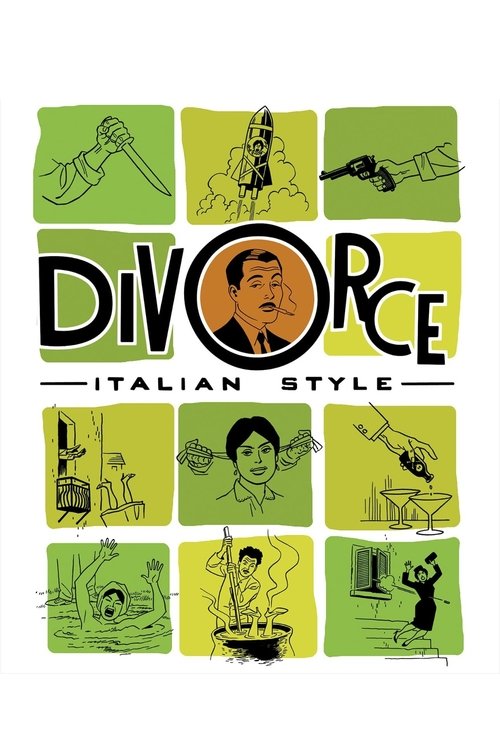
These fantasies are interspersed throughout the first part of the film. We see Ferdinando imagining his wife, Rosalia, being launched into space in a rocket, drowned in quicksand, and boiled in a cauldron. These visually creative sequences provide a stark contrast to the mundane and oppressive reality of his life in Agramonte.

The Decaying Cefalù Palace

Meaning:

The crumbling and once-grand Cefalù family palace symbolizes the decay of the old aristocracy and the traditional values they represent. It mirrors Ferdinando's own impoverished state and his feeling of being trapped by his lineage and circumstances. The dilapidated state of the palace reflects the moral and social decay of the world the characters inhabit.

Context:

The film is largely set within the walls of this decaying palace, where Ferdinando lives with his wife, parents, and other relatives. The physical confinement of the setting reinforces the sense of emotional and social entrapment experienced by the protagonist.

The Film 'La Dolce Vita'

Meaning:

The screening of Federico Fellini's "La Dolce Vita" in the town's cinema symbolizes the clash between modern, liberal ideas and the traditional, conservative values of Sicilian society. It also serves as a meta-reference, as Marcello Mastroianni, who plays Ferdinando, was the star of "La Dolce Vita." This creates a layer of irony, as the townspeople flock to see a film condemned by the church, showcasing their underlying hypocrisy.

Context:

There is a scene where the entire town, full of moralistic fervor, turns out to watch "La Dolce Vita," which had been deemed scandalous. Ferdinando uses the town's preoccupation with the film as an opportunity to further his own illicit plans, highlighting how public moralizing can mask private indiscretions.

Philosophical Questions

Can laws and societal norms truly suppress fundamental human desires, or do they merely force them into more destructive and hypocritical channels?

The film explores this question through its central premise. The absolute prohibition of divorce in 1960s Italy does not eliminate Ferdinando's desire to leave his wife; instead, it channels his frustration into a grotesque and murderous scheme. Pietro Germi suggests that when society provides no legitimate outlet for common human experiences like falling out of love, it forces individuals to become monstrous in their pursuit of freedom. Ferdinando's journey from a daydreaming, unhappy husband to a cold, calculating murderer illustrates how repressive social structures can corrupt morality and make the unthinkable seem logical.

What is the nature of 'honor,' and how is it constructed and weaponized by society?

"Divorce Italian Style" viciously satirizes the concept of honor as a social construct, particularly in a patriarchal context. The film demonstrates that honor is not an intrinsic moral quality but a matter of public reputation, dictated by the community. Ferdinando's plan relies entirely on manipulating this social code; he must create the public appearance of a dishonored husband to justify his crime. The law's leniency towards "crimes of honor" reveals a system where a man's reputation is valued more highly than a woman's life, exposing honor as a tool to enforce male dominance and control female sexuality.

Is true freedom attainable, or are we always moving from one form of entrapment to another?

This question is poignantly raised by the film's ironic ending. Ferdinando goes to extreme, immoral lengths to achieve what he believes is the ultimate freedom: marriage to his beloved Angela. He endures prison and social scrutiny, all for this idealized future. However, the final shot, revealing Angela's flirtation with the boatman, suggests that his newfound happiness is an illusion. He has not found freedom but has simply entered a new cycle of potential jealousy and marital strife. The film seems to argue that the idealized freedom we chase is often a fantasy, and that human relationships are inherently complex and fraught with the potential for entrapment, regardless of external circumstances.

Alternative Interpretations

While "Divorce Italian Style" is widely seen as a straightforward satire of Italian social mores, some alternative interpretations exist. One perspective views the film less as a social critique and more as a deep, cynical examination of the unchangeable, primal nature of human desire and dissatisfaction. In this reading, the specific Italian laws are merely a backdrop for a universal story about a man's foolish and unending quest for an idealized happiness that will always elude him. The ending, where the newly married Angela is already flirting with another man, supports this view. It suggests that Ferdinando hasn't escaped a trap but has merely exchanged one for another, implying that the true prison is his own insatiable and fickle desire, not the institution of marriage or the laws of Italy.

Another interpretation focuses on the film's commentary on class. Ferdinando is an impoverished aristocrat, and his dilapidated palace symbolizes a dying social order. His meticulous, almost bureaucratic, approach to planning the murder can be seen as a desperate attempt to assert control and reclaim a sense of aristocratic privilege in a world where his status is meaningless. His belief that his social standing as a "gentleman" will guarantee him a lighter sentence than a commoner highlights the ingrained class prejudices within the justice system he seeks to manipulate. This reading suggests the film is not just about gender and law, but also about the desperate machinations of a decaying upper class trying to maintain its advantages in a changing world.

Cultural Impact

"Divorce Italian Style" had a profound cultural impact both in Italy and internationally. Released in 1961, it arrived at a pivotal moment in Italian history, during the country's post-war economic boom. The film is a prime example of "Commedia all'italiana," a genre that used comedy and satire to critique the social and moral contradictions of a rapidly modernizing society still shackled by archaic traditions.

Its most significant contribution was its scathing and hilarious critique of Italian law, specifically the absence of legal divorce and the existence of the "crime of honor" defense, which provided drastically reduced sentences for killers who murdered an adulterous spouse to defend their family's honor. By presenting murder as a more viable option than divorce, the film exposed the absurdity and injustice of the legal system to a wide audience. This satirical commentary is credited with contributing to the public discourse that eventually led to the legalization of divorce in Italy in 1970 and the abolition of the honor crime defense in 1981.

The film was a massive international success, winning an Academy Award for Best Original Screenplay and earning nominations for Best Director and Best Actor for Marcello Mastroianni. It solidified Mastroianni's status as a global star, showcasing his comedic talents and deconstructing the "Latin Lover" persona he had cultivated in films like "La Dolce Vita." The film's title itself became a cultural touchstone, with the "...Italian Style" suffix being widely adopted to describe various aspects of Italian culture. It influenced numerous dark comedies and satires that followed, proving that humor could be a powerful tool for social and political commentary.

Audience Reception

Upon its release, "Divorce Italian Style" was a major critical and commercial success, both in Italy and internationally. Audiences were captivated by its audacious black humor and Marcello Mastroianni's brilliant comedic performance, which played against his established dramatic persona. The film's sharp satire of Italian customs, the legal system, and the Catholic Church resonated with viewers who recognized the hypocrisy being lampooned. It won numerous awards, including the Academy Award for Best Original Screenplay, cementing its popularity and critical acclaim.

While overwhelmingly praised, some critics and viewers were initially taken aback by the film's dark premise, finding the comedic treatment of uxoricide unsettling. There were reports that at early industry screenings, the humor did not land as intended, with some feeling the story was more suited to a serious drama. However, for the general public, the film's willy-nilly attitude towards its morbid subject matter was precisely what made the satire so effective and hilarious. Overall, audiences lauded the clever writing, the masterful direction, and Mastroianni's iconic performance, recognizing the film as a masterpiece of the "Commedia all'italiana" genre.

Interesting Facts

  • The film's title, "Divorce Italian Style," gave its name to the genre of "Commedia all'italiana" (Comedy Italian Style), which blended humor with sharp social commentary.
  • The screenplay won the Academy Award for Best Original Screenplay in 1963.
  • Actress Stefania Sandrelli, who played the 16-year-old Angela, was actually only 14 or 15 years old during filming.
  • Daniela Rocca, who played the homely wife Rosalia, was a former beauty queen in real life.
  • Despite being a comedy, initial private screenings for film industry figures reportedly received no laughs, as some felt the story was conceived as a drama.
  • The film satirizes a real Italian law, Article 587 of the penal code, which gave lighter sentences for "honor killings." This law was not repealed until 1981.
  • Marcello Mastroianni was not the first choice for the role of Ferdinando Cefalù.
  • The film contains a meta-joke where the characters go to the cinema to see "La Dolce Vita," which also starred Marcello Mastroianni.
  • In 2008, the film was included in the Italian Ministry of Cultural Heritage's list of 100 Italian films to be saved, recognizing its cultural significance.

Easter Eggs

The townspeople go to the local cinema to see the scandalous film "La Dolce Vita."

This is a significant in-joke and meta-reference, as Marcello Mastroianni, who plays Ferdinando in "Divorce Italian Style," was the lead actor in Federico Fellini's "La Dolce Vita" (1960). The scene winks at the audience and Mastroianni's international stardom, while also satirizing the town's hypocrisy as they publicly condemn the film's perceived immorality while eagerly flocking to see it.

⚠️ Spoiler Analysis

Click to reveal detailed analysis with spoilers

Frequently Asked Questions

Explore More About This Movie

Dive deeper into specific aspects of the movie with our detailed analysis pages

Comments (0)

Leave a comment

No comments yet. Be the first to share your thoughts!