Skip to content
Ahiru no Sora
A gritty coming-of-age sports drama depicting flightless ducks desperately flapping fractured wings beneath an indifferent, limitless open sky.
Ahiru no Sora

Ahiru no Sora

あひるの空

01 October 2019 — 30 September 2020 Japan 1 season 50 episode Ended 8.4 (189)

Cast: Yuki Kaji, Katsuyuki Konishi, Yuma Uchida, Chado Horii, Taku Yashiro

Drama Animation Overcoming Inherent Limitations and Genetic Predisposition Redemption, Guilt, and Rebuilding Identity The Reality of Failure and Unrewarded Effort Grief, Generational Legacy, and Maternal Bonds

Overview

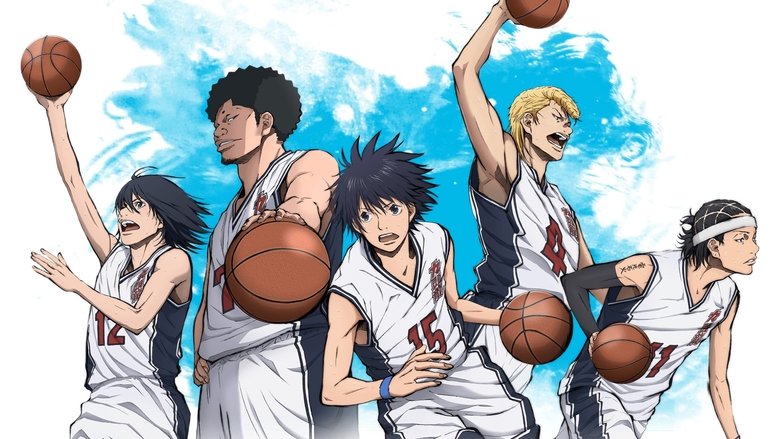
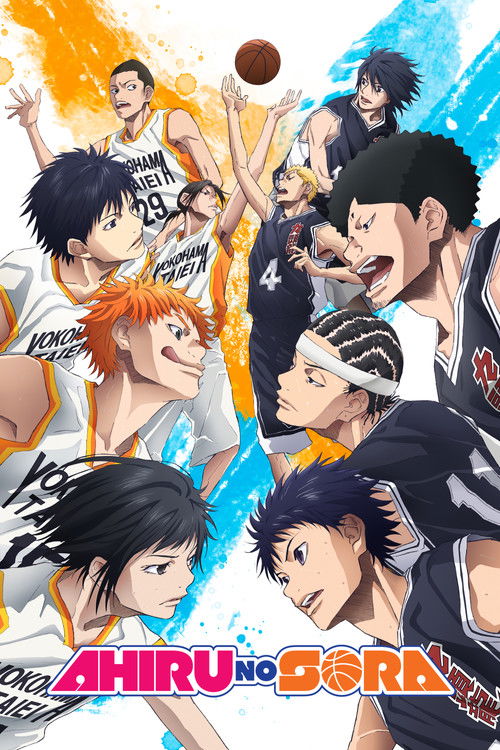
Ahiru no Sora is a grounded sports drama television anime based on the long-running manga by Takeshi Hinata. The story centers on Sora Kurumatani, an undersized high school freshman standing at only 149 cm (4'11") who has devoted his life to basketball to honor a promise made to his hospitalized mother, a former national team player. Entering Kuzuryu High School ("Kuzu High") in Kanagawa, Sora expects to join a thriving athletic program but instead finds the boys' basketball club commandeered by unmotivated delinquents led by twin brothers Momoharu and Chiaki Hanazono. Rather than succumbing to despair, Sora's unrelenting devotion ignites a spark among the troublemakers, slowly transforming a clubhouse of outcasts into a legitimate, functioning team.

As the roster expands to include skilled yet emotionally scarred players—such as scoring ace Kenji "Kite" Natsume and former middle school prodigy Kaname "Mokichi" Shigeyoshi—Kuzuryu High tests its mettle against formidable high school powerhouses like Kitasumi High, Shin Maruko, and Yokohama Taiei. Unlike conventional sports anime, the series intentionally eschews rapid victories and miraculous underdog triumphs; the team endures crushing defeats, internal discipline crises, suspensions, and real-world setbacks.

Across its 50-episode run, the narrative charts Kuzuryu High's painful evolution from a disorganized group of misfits into a cohesive unit. Alongside intense tactical gameplay, the series dedicates substantial narrative weight to personal hardships, academic hurdles, delinquent pasts, and the heartbreaking decline of Sora’s mother, presenting a realistic portrayal of youth where passion does not guarantee easy victory.
Core Meaning

The fundamental message of Ahiru no Sora is that genuine effort and passion possess intrinsic value regardless of outcome. In a world dictated by biological predispositions, societal labels, and unfair circumstances, one cannot control physical limits or inevitable heartbreaks. The true measure of human dignity lies in relentless perseverance—the refusal to surrender even when one is fundamentally unsuited for the arena or doomed to lose. Growth is forged through failure, accountability, and the daily grind of self-improvement.

Thematic DNA

Overcoming Inherent Limitations and Genetic Predisposition 30%
Redemption, Guilt, and Rebuilding Identity 25%
The Reality of Failure and Unrewarded Effort 25%
Grief, Generational Legacy, and Maternal Bonds 20%

Overcoming Inherent Limitations and Genetic Predisposition

Sora is physically disadvantaged in a sport dominated by height, while Momoharu lacks shooting touch, and Mokichi suffers from stamina deficits. The narrative explores how athletes innovate around insurmountable physical barriers through technique, positioning, and sheer willpower.

Redemption, Guilt, and Rebuilding Identity

The core Kuzuryu members discarded their potential to become delinquents. The series tracks their psychological rehabilitation as they confront the shame of past failures and re-earn self-respect and community trust.

The Reality of Failure and Unrewarded Effort

Hard work does not guarantee victory. Kuzuryu High repeatedly loses key games despite total dedication on the floor, examining how young athletes cope with the hollow aftermath of defeat and find the courage to continue.

Grief, Generational Legacy, and Maternal Bonds

Anchoring the dramatic core through Sora's relationship with his mother, Yuka. Sora transitions from playing merely to prove himself to an ailing parent to carrying forward her spirit after profound loss.

Character Analysis

Sora Kurumatani

Yuki Kaji

Archetype: The Resilient Underdog / Hero Key Trait: Unflinching optimism masking deep emotional vulnerability.

Motivation

Driven to fulfill his promise to his hospitalized mother and prove that height is not an absolute barrier to basketball excellence.

Character Arc

Starts as an overly optimistic shooter driven by a vow to his ailing mother. Experiences harsh reality checks regarding his physical limitations and the grief of losing his mother, evolving into a determined floor general and point guard.

Momoharu Hanazono

Yuma Uchida

Archetype: The Reluctant Captain / Reformed Rebel Key Trait: Intense loyalty and fierce defensive tenacity.

Motivation

Strives to overcome past shame, protect his teammates, and master defensive rebounding.

Character Arc

Abandoned basketball due to an inability to shoot and masked his insecurity through delinquency. Reclaims his passion under Sora's influence, becoming Kuzuryu’s defensive anchor and rebounding specialist who leads by physical sacrifice.

All 5 characters and cast

Symbols & Motifs

The Flightless Duck (Ahiru / あひる)

Meaning:

Represents Sora and the Kuzuryu squad—creatures with clumsy wings that were never biologically meant to soar high, yet strive to touch the sky through sheer effort.

Context:

Used as the overarching central metaphor for undersized and physically unsuited players competing against natural disadvantages.

Worn-Out Basketball Sneakers

Meaning:

Symbolizes the physical weight of maternal love, legacy, and the hundreds of thousands of practice shots taken in solitude.

Context:

Given to Sora by his hospitalized mother and worn constantly throughout his rigorous training routines.

Shaved Heads / Buzz Cuts

Meaning:

A traditional Japanese symbol of penitence, accountability, and a fresh start.

Context:

Embraced by the team following clubhouse misconduct and disciplinary sanctions to demonstrate total commitment to restarting their basketball careers.

The Rooftop Hoop

Meaning:

Symbolizes the raw, unrefined origins of their bond outside formal institutional approval.

Context:

The makeshift outdoor court where Sora first challenges Momoharu and Chiaki to earn the right to play.

The Cigarette / Lighter

Meaning:

Represents the delinquent past, self-sabotage, and stagnation that previously trapped the players.

Context:

Associated with the Hanazono brothers and their delinquent clique before basketball provides them with renewed purpose.

Memorable Quotes

背が低いことは、バスケットにおいて絶対に不利な要素ではあるけど、決して不能の要素じゃない!
— Sora Kurumatani

Context

Spoken in Episode 1 when Sora introduces his basketball philosophy and challenges the delinquents.

Meaning

Sets the foundational thesis of the series; Sora explicitly rejects biological determinism in sports.

逃げ出した過去は消せねえ。だけど、これからどうするかは自分で決められる。
— Momoharu Hanazono

Context

Stated during Episode 12 as Momoharu confronts his past basketball failures and commits to the team.

Meaning

Captures the core theme of redemption and accountability for the former delinquents moving past their self-loathing.

All 3 quotes

Episode Highlights

The Duck's Child

S1E1

Sora arrives at Kuzuryu High and issues a one-on-five challenge to the delinquent club members using pure shooting skill.

Significance:

Establishes Sora's mechanics, the team's dysfunctional starting point, and sets the narrative plot in motion.

The Troublesome Freshman

S1E7

Introduction of Kenji "Kite" Natsume and the revelation of Momoharu taking formal club responsibility.

Significance:

Brings the team's true offensive ace into the narrative fold and forces the delinquents to commit to non-violence.

Kaname Shigeyoshi

S1E18

Mokichi is confronted about his feigned medical retirement and chooses to re-enter competitive basketball.

Significance:

Solidifies Kuzuryu High’s starting five lineup with a vital inside center and power forward presence.

Light and Shadow

S1E24

The climax of the tense practice match against powerhouse Kitasumi High.

Significance:

Kuzuryu High loses despite pushing themselves to their absolute limits, demonstrating the severe consequences of stamina deficiency and lack of team experience.

Unfinished

S1E33

The boys' clubroom catches fire following an altercation involving delinquent associates, resulting in official club suspension.

Significance:

Strips the team of their official school standing, forcing them to regroup as an unofficial club and rebuild administrative trust from scratch.

The Best Lineup

S1E43

Kuzuryu battles powerhouse Yokohama Taiei in a high-stakes match.

Significance:

Demonstrates the immense tactical gulf between amateur high school squads and elite national-tier teams.

Bridge

S1E50

Sora processes the death of his mother, Yuka, cuts his hair, and joins the team to look toward the Kanagawa Interhigh Preliminaries.

Significance:

Concludes the first major anime adaptation arc with an emotional graduation into maturity and collective resolve.

Philosophical Questions

Does unrewarded effort retain value in an outcome-driven society?

Explored through Kuzuryu High's repeated competitive losses despite their exhaustive training, asserting that character formation and self-dignity are valuable independent of victory.

Can personal passion wash away the institutional and moral consequences of past mistakes?

Examined via the former delinquents who face suspensions, clubhouse fires, and administrative skepticism despite their newfound devotion to sport.

How should an individual balance familial duty against personal ambition when faced with inevitable grief?

Addressed through Sora’s struggle to balance court practice with visiting his dying mother, culminating in his psychological maturation after her loss.

Alternative Interpretations

One perspective views the series as an explicit anti-trope deconstruction of shōnen sports conventions, where Kuzuryu repeatedly loses to prove that willpower cannot bypass fundamentals or physiological limits. Alternatively, the series can be interpreted as a psychological exploration of youth trauma, in which basketball serves primarily as an emotional outlet for adolescents coping with domestic neglect, maternal grief, social ostracization, and personal guilt.

Full ending explanation

Cultural Impact

Debuting in an era dominated by the superhuman, stylized aesthetics of Kuroko's Basketball and the dynamic animation of Haikyu!!, Ahiru no Sora positioned itself as an intentionally old-school, realistic drama reminiscent of 1990s sports manga. It highlighted the social stigma surrounding high school delinquents (furyō) in Japan and their institutional marginalization within rigid athletic hierarchies. While the manga remains one of Kodansha’s all-time best-sellers with over 24 million copies in circulation, the anime's mixed visual execution limited its mainstream breakthrough.

Audience Reception

Critical and audience reception was polarized between narrative strength and visual execution:

  • Praise: Viewers widely praised the rich character writing, emotional depth, authentic basketball mechanics, and mature handling of grief and failure.
  • Criticism: The series received substantial criticism for Diomedéa's animation quality, specifically an over-reliance on static pans, sliding still frames during intense games, and pacing issues during matches.
  • Overall Verdict: Regarded as an emotionally compelling, authentic sports drama hindered primarily by production constraints.

Interesting Facts

  • The series was produced by studio Diomedéa as a continuous 50-episode run from October 2019 to September 2020 under chief director Keizou Kusakawa and director Shingo Tamaki.
  • Takeshi Hinata began the manga in Weekly Shōnen Magazine in December 2003, meaning the anime adaptation premiered nearly 16 years after the manga's initial debut.
  • In July 2020, original author Takeshi Hinata openly voiced dissatisfaction on Twitter regarding Diomedéa’s adaptation choices—specifically criticizing excessive still frames, poor animation in game sequences, and the inappropriate use of glowing eye trails that conflicted with the story's grounded realism.
  • The soundtrack was composed by Hiroaki Tsutsumi, incorporating rock elements and melancholic strings to complement the drama.
  • The cast featured established voice talent, including Yuki Kaji as Sora, Yuma Uchida as Momoharu, Katsuyuki Konishi as Chiaki, and Mamoru Miyano singing ending themes.

Easter Eggs

Slam Dunk Homages

The dynamic of a delinquent group taking up basketball and shaving their heads in penance directly pays stylistic homage to Takehiko Inoue's legendary series Slam Dunk.

Real NBA Strategy & Footwork

Accurately portrays modern basketball techniques, including pick-and-rolls, crossover step-backs, skyhooks, and full-court presses, mirroring authentic tactical playbooks.

The Pillows Connection

Iconic Japanese alternative rock band The Pillows performed the first opening theme ("Happy Go Ducky!"), reflecting the gritty, nostalgic early-2000s tone of the original manga.

Frequently Asked Questions

Explore More About This Movie

Dive deeper into specific aspects of the movie with our detailed analysis pages

Comments (0)

Leave a comment

No comments yet. Be the first to share your thoughts!

Similar Movies