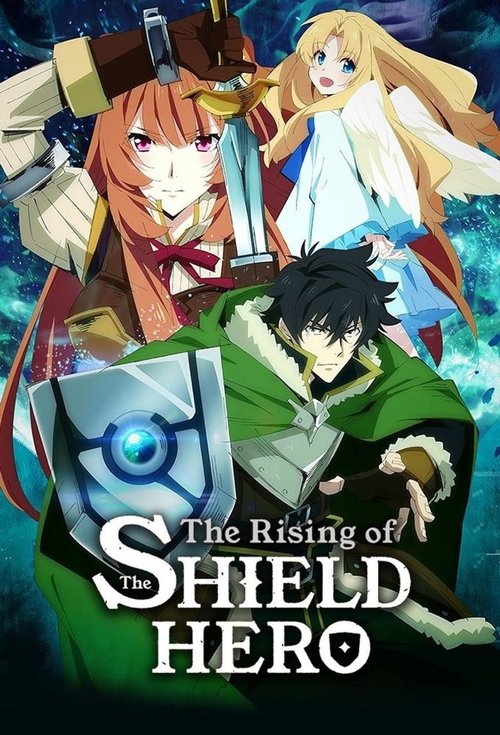
The Rising of the Shield Hero
盾の勇者の成り上がり
"Our regrets make us stronger."
Overview
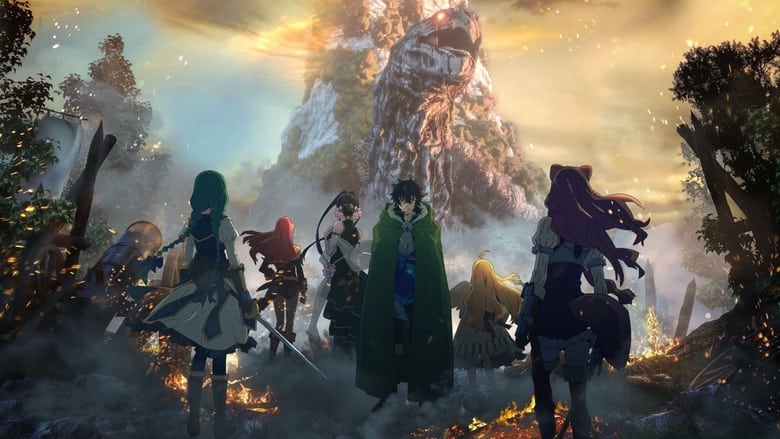
"The Rising of the Shield Hero" chronicles the harrowing journey of Naofumi Iwatani, an ordinary university student summoned to the fantasy kingdom of Melromarc as one of four Cardinal Heroes. Tasked with defending the world from apocalyptic monster invasions known as the Waves of Catastrophe, he is bestowed the Legendary Shield. However, his adventure takes a dark turn when he is betrayed by his sole companion, the princess, who falsely accuses him of assault. Stripped of his money, reputation, and trust in humanity, Naofumi becomes a cynical and reviled outcast.
Forced to survive alone, he purchases a demi-human slave girl, Raphtalia, and hatches a bird-like creature, Filo, to fight for him. As this unconventional party travels the land, Naofumi's cold heart slowly thaws through their unwavering loyalty and affection. He transitions from a bitter anti-hero focused on survival and revenge to a pragmatic protector who genuinely cares for the common people, often cleaning up the messes left by the other, more naive, Cardinal Heroes. The series follows Naofumi's party as they grow stronger, confront the Waves, navigate political intrigue, and uncover a deeper conspiracy that threatens not only their world but others as well.
Core Meaning
The core meaning of "The Rising of the Shield Hero" revolves around the resilience of the human spirit in the face of absolute despair and injustice. It explores the idea that true strength is not derived from offensive power or public acclaim, but from the will to protect others and the bonds of trust forged through shared hardship. The series posits that a hero is defined not by their title or abilities, but by their actions and their capacity to find hope and compassion even when the world has shown them nothing but cruelty. It is a profound exploration of how companionship and loyalty can redeem a soul hardened by betrayal and restore one's faith in others.
Thematic DNA
Betrayal and Injustice
This is the foundational theme of the series, established in the very first episode. Naofumi is betrayed by Princess Malty and the kingdom he was summoned to protect, being falsely accused of a heinous crime. This initial act of injustice shapes his entire worldview, turning him from an optimistic young man into a cynical, distrustful outcast. The theme is consistently reinforced by the prejudice he faces from the Church of the Three Heroes and the general populace, who have been culturally conditioned to despise the Shield Hero. His journey is a constant struggle against a system that is rigged against him, forcing him to operate outside of conventional morality to survive.
Redemption and Trust
Directly counterbalancing the theme of betrayal is the slow, arduous process of rebuilding trust. This is primarily explored through Naofumi's relationship with Raphtalia. Though he purchases her as a slave out of necessity, their bond evolves into one of deep, mutual trust and respect. Raphtalia's unwavering belief in Naofumi's innate goodness is the catalyst for his redemption, pulling him back from the brink of all-consuming hatred. He learns to trust again, not in society or institutions, but in the individuals who prove their loyalty, like Raphtalia, Filo, and later, Melty. This theme highlights the transformative power of genuine human connection in healing psychological wounds.
Prejudice and Social Hierarchy
The series delves into systemic discrimination, most notably through the treatment of demi-humans. In the kingdom of Melromarc, demi-humans are treated as second-class citizens, subjected to slavery and scorn by the human-supremacist society and its state religion. Naofumi, as an outcast himself and the historical champion of demi-humans, finds himself allied with the downtrodden. By saving and protecting a village of demi-humans, he directly challenges the kingdom's racist ideology. This theme criticizes societal structures built on prejudice and champions the idea of judging individuals by their character rather than their race or social standing.
The Nature of Heroism
"The Rising of the Shield Hero" deconstructs the traditional concept of a hero. The other three Cardinal Heroes—wielding the Spear, Sword, and Bow—act as if they are in a video game, prioritizing glory, fame, and leveling up while ignoring the collateral damage and the suffering of the populace. In contrast, Naofumi, the despised "Shield Hero," becomes a true hero to the people through his pragmatic actions. He protects villages, distributes medicine, and solves problems the other heroes create, demonstrating that heroism is about responsibility and tangible results, not flashy attacks or a celebrated reputation.
Character Analysis
Naofumi Iwatani
Kaito Ishikawa
Motivation
Initially, his motivation is pure survival and a burning desire for revenge against those who wronged him. This gradually shifts as he forms bonds with Raphtalia and Filo. His primary motivation becomes the protection of his party and, by extension, all innocent people threatened by the Waves and the world's political corruption. He is driven by a powerful sense of responsibility, often taking it upon himself to fix the catastrophic mistakes of the other Cardinal Heroes.
Character Arc
Naofumi's arc is one of the most dramatic in modern isekai. He begins as a cheerful, somewhat naive otaku, but the initial betrayal transforms him into a deeply cynical, pragmatic, and emotionally scarred individual. In the first season, his arc is about survival and learning to trust again through his bond with Raphtalia and Filo. As the series progresses, he transitions from an anti-hero motivated by spite and self-preservation to a true protector. He accepts the burden of being the Shield Hero, not for glory, but for the sake of the people he has come to care for. He remains cynical about the world's power structures but learns to distinguish between corrupt institutions and the innocent people caught within them, becoming a folk hero in the process.
Raphtalia
Asami Seto
Motivation
Her motivation is deeply rooted in her gratitude and devotion to Naofumi, who saved her from a life of misery. She declares herself his "sword," pledging to fight for him and protect him as he protects her. This motivation expands to include protecting their found family and the world Naofumi strives to save. She fights to create a world where tragedies like the one that befell her village won't happen again.
Character Arc
Raphtalia begins her journey as a traumatized, sickly child slave. Under Naofumi's care, she not only recovers physically but also finds the strength to overcome her past trauma. Her arc is about finding her own will and purpose. She evolves from a timid girl who fights out of necessity into a confident and powerful warrior who fights out of love and loyalty to Naofumi. She becomes his moral compass, constantly reminding him of his own humanity and preventing him from being consumed by his rage. In later seasons, her journey continues as she is chosen by the Vassal Katana, solidifying her status as a hero in her own right and an equal partner to Naofumi.
Filo
Rina Hidaka
Motivation
Filo's motivations are simple and pure: she loves her "Master," Naofumi, and wants to be useful to him. She is driven by a desire to pull the cart, fight enemies, and receive praise and affection in return. Her loyalty is uncomplicated and absolute, providing a stable, positive force in Naofumi's life that helps counterbalance his cynicism.
Character Arc
Hatched from an egg Naofumi buys, Filo starts as a simple animal companion. She quickly grows into a Filolial Queen, a rare and powerful monster species with the ability to shapeshift into a young, blonde, winged girl. Her arc is one of maturation, though she largely retains her cheerful, innocent, and sometimes gluttonous personality. She learns to become a reliable and formidable fighter for the party, serving as both its primary mode of transportation and a heavy hitter in battle. While her development is less complex than Naofumi's or Raphtalia's, her unwavering cheerfulness and simple affection provide crucial emotional support and levity for the often-grim party.
Symbols & Motifs
The Legendary Shield
The shield symbolizes Naofumi's core identity and role. Initially seen as a weak, purely defensive weapon, it represents his initial helplessness and status as an underdog. As the series progresses, the shield's true nature is revealed: its strength lies in its versatility and its power to protect. It comes to symbolize Naofumi's unique form of heroism—one based on defending the innocent and absorbing the pain of others rather than inflicting it.
The shield is Naofumi's constant companion and primary tool. Its various forms (like the Air Strike Shield, Shield Prison) reflect his growth and tactical ingenuity. It is the one thing that cannot be taken from him after his betrayal, representing his unbreakable will. The evolution of the shield mirrors Naofumi's own development from a passive victim to an active protector.
The Curse Series (Rage Shield)
The Rage Shield is the physical manifestation of Naofumi's hatred, cynicism, and pain born from his betrayal. It symbolizes the corrupting influence of rage and the temptation to give in to vengeance. While it grants him immense power, it comes at a great personal cost, threatening to consume his humanity. It represents the internal battle Naofumi fights between his desire for revenge and his duty to protect those he cares about.
The Rage Shield is unlocked during moments of extreme emotional distress, such as witnessing his friends in mortal danger. When activated, Naofumi is engulfed in dark flames and gains devastating abilities, but he also loses control and suffers a debilitating curse. His companions, particularly Raphtalia, are often the only ones who can pull him back from its influence, symbolizing how their trust saves him from his own inner darkness.
The Slave Crest
The slave crest is a magical seal that forces obedience. It symbolizes subjugation, control, and the deep-seated corruption within Melromarc society. However, in the context of Naofumi and Raphtalia, its meaning becomes more complex. For Naofumi, it is initially a tool born of his inability to trust anyone, guaranteeing Raphtalia cannot betray him. For Raphtalia, it represents her initial state of helplessness, but her continued loyalty, even after the crest is removed, transforms it into a symbol of a bond that transcends forced servitude into one of genuine, freely-given devotion.
Naofumi has the slave crest applied to Raphtalia in Season 1, Episode 2. While it functions as a tool of control, Naofumi never abuses it, and their relationship quickly evolves beyond that of master and slave. The crest becomes a poignant reminder of their dark beginnings and how far their relationship has developed, proving that true loyalty cannot be magically enforced but must be earned.
Memorable Quotes
I am your sword. No matter how rough the path, I will follow you.
— Raphtalia
Context:
Raphtalia says this in Season 1, Episode 4, "Lullaby at Dawn." After Naofumi is cheated in a duel with the Spear Hero and Malty tries to take Raphtalia away, she vehemently refuses, defending Naofumi and making this powerful vow, which is the first major crack in Naofumi's cynical armor.
Meaning:
This quote is the cornerstone of Raphtalia's identity and her relationship with Naofumi. It signifies her absolute, freely-given loyalty, solidifying their bond beyond that of master and slave. It is her declaration that she has found her purpose in fighting alongside him.
I see. Joining me was just a ruse to destroy me right here. It was all a lie! The smiles she showed me, and her acts of kindness, were all fake!
— Naofumi Iwatani
Context:
This is Naofumi's internal monologue in Season 1, Episode 1, "The Shield Hero," as he stands accused of sexual assault by Princess Malty. All his possessions have been stolen, and he is publicly shamed and exiled, setting the grim tone for his journey.
Meaning:
This line marks the exact moment of Naofumi's psychological break. It is the realization of the profound betrayal that shatters his optimism and trust, birthing the cynical and enraged Shield Hero that defines the majority of the first season. It's the origin point of his trauma.
Listen Raphtalia. [...] Your parents won't ever come back. But we can prevent other kids from going through what you did.
— Naofumi Iwatani
Context:
In Season 1, Episode 2, "The Slave Girl," Naofumi forces a terrified Raphtalia to confront the monster that killed her parents. He uses these words to steel her resolve, helping her overcome her fear and fight back for the first time.
Meaning:
This quote showcases Naofumi's unique, harsh-but-effective method of mentorship. Instead of offering empty comforts, he gives Raphtalia a tangible purpose for her anger and grief, channeling her trauma into a motivation to protect others. It's a key moment in her development from victim to warrior.
Episode Highlights
The Shield Hero
The inaugural episode establishes the series' core conflict. Naofumi is summoned, becomes the Shield Hero, and is almost immediately betrayed by Princess Malty. He is publicly humiliated, robbed, and falsely accused of assault. This episode is significant for its brutal and unflinching portrayal of the protagonist's fall from grace, setting a dark and compelling tone that differentiates it from other isekai series.
This episode is the crucible that forges Naofumi's character. The betrayal is the single most important event in the series, directly influencing his personality, motivations, and actions for the rest of the story. It establishes the themes of injustice and trust that are central to the entire narrative.
Lullaby at Dawn
Following a duel where Naofumi is cheated out of a victory against the Spear Hero, Malty tries to forcibly free Raphtalia. Instead of accepting, Raphtalia fiercely defends Naofumi, bites the Spear Hero, and declares her unwavering loyalty to the Shield Hero, vowing to be his sword. It is the first time anyone has shown faith in him since his arrival.
This is a major turning point in Naofumi's emotional arc. Raphtalia's declaration of loyalty is the first step in his healing process, planting the seed of trust that will eventually allow him to form meaningful bonds again. It solidifies their relationship as the emotional core of the series.
Naofumi's Triumphant Return
After Naofumi saves the kingdom from the Pope of the Three Heroes Church, Queen Mirelia Melromarc returns and exposes the conspiracy against him. She holds a public trial where Malty and King Aultcray are exposed for their crimes. Naofumi's name is officially cleared, and the truth of his heroism is revealed to the world.
This episode provides a massive sense of catharsis for both Naofumi and the audience. It resolves the primary injustice that has driven the plot for 20 episodes, allowing Naofumi's character to move beyond pure vengeance and fully embrace his role as a protector. It marks a fundamental shift in the series' status quo.
Guardians of Another World
During a Wave on the Cal Mira archipelago, Naofumi's party encounters a new, powerful set of enemies: L'Arc Berg, Therese, and Glass. After a grueling battle, it is revealed that they are not monsters of the Wave, but are in fact Heroes from another world, fighting to save their own world by destroying this one.
This episode dramatically expands the scope and stakes of the series. It reveals that the Waves are not a simple monstrous phenomenon but an interdimensional conflict between worlds, each with its own heroes. This sets up a complex moral dilemma and a major recurring conflict for future seasons.
A Conspiracy Linked
Naofumi and his party travel to a rural domain to help after one of the other heroes, Ren, slays a dragon but fails to dispose of the corpse, causing a plague. While there, Naofumi uncovers a plot by the Church of the Three Heroes to assassinate Princess Melty and frame him for it, revealing the church as a major antagonist.
This episode solidifies the Church as a primary antagonistic force and reveals the depth of the conspiracy against the Shield Hero. It showcases Naofumi's growth as a leader and problem-solver, as he must now contend with political and religious intrigue in addition to the Waves. It also forces him to form a reluctant alliance with the kingdom to protect Melty.
Philosophical Questions
Does the end justify the means?
The series constantly places Naofumi in situations where he must resort to morally ambiguous methods to achieve a greater good. He engages with slave traders, uses underhanded tactics in business, and employs fear and intimidation. The other heroes, who adhere to a more black-and-white code of justice, often cause more harm than good through their incompetence. The narrative forces the viewer to question whether Naofumi's pragmatic, and sometimes ethically questionable, actions are justified by the fact that he successfully protects people while the "righteous" heroes fail.
What is the true nature of justice versus revenge?
For much of the first season, Naofumi is driven by a desire for revenge against Malty and the King. The narrative explores the fine line between seeking justice for the wrongs committed against him and being consumed by personal vengeance. When he is finally given the power to execute his tormentors, he is faced with a choice. The series examines whether true justice is about punishment and retribution, or about rising above personal hatred to create a better future and prevent others from suffering the same fate.
Can trust be rebuilt after absolute betrayal?
The central psychological question of the series is whether a person can recover from a trauma that shatters their ability to trust others. Naofumi's journey is a case study in this process. The series explores how trust isn't rebuilt through grand gestures or apologies from society, but through the consistent, unwavering loyalty of individuals. Raphtalia's steadfast belief in him, even when he is at his worst, is what allows him to slowly lower his defenses and form new bonds, suggesting that healing from such a deep wound is possible only through genuine, earned connection.
Alternative Interpretations
The interpretation of "The Rising of the Shield Hero" is highly polarized, largely due to its controversial themes. One perspective, often labeled by critics as an "incel fantasy," posits that the series caters to a specific worldview of male persecution. In this reading, the false rape accusation is seen as a vehicle for misogynistic ideas, portraying women as inherently deceptive, and Naofumi's subsequent rise is a power fantasy for those who feel wronged by society.
Conversely, a more charitable interpretation views the series as a serious exploration of overcoming trauma and systemic injustice. From this viewpoint, the false accusation and slavery are not endorsements but rather extreme plot devices used to place the protagonist in the deepest possible despair to make his climb back to heroism more meaningful. Proponents of this view argue that the story is not about hating women, but about learning to trust again after a profound and specific betrayal, with Raphtalia and other female characters like Melty and the Queen serving as examples of virtuous and strong women. It's seen as a story about the failure of institutions (monarchy, religion) and the power of individual bonds to overcome them. The debate often centers on whether the narrative's execution is a nuanced exploration of dark themes or a clumsy and potentially harmful use of them for shock value.
Cultural Impact
"The Rising of the Shield Hero" made a significant impact on the isekai genre and the broader anime community upon its release. While the genre was already saturated with stories of overpowered protagonists in fantasy worlds, Shield Hero distinguished itself with a much darker, grittier premise. Its initial episodes sparked considerable controversy, particularly in Western audiences, for their handling of sensitive topics like false rape accusations and slavery. Critics argued that the false accusation plot point was insensitive and potentially misogynistic, while the protagonist's use of a slave companion, even if treated kindly, was morally questionable.
Despite, or perhaps partly because of, the controversy, the series garnered a massive and loyal following. Many viewers were drawn to its subversion of typical isekai tropes and sympathized with Naofumi's plight as a wronged underdog fighting against a corrupt system. His journey of overcoming social ostracism and finding a chosen family resonated deeply with audiences tired of flawless, generic heroes. The series became one of Crunchyroll's most popular shows, demonstrating a significant audience appetite for more complex and morally ambiguous protagonists. Its success reaffirmed the market for darker fantasy narratives within the isekai framework and influenced subsequent series to explore themes of betrayal and social injustice. However, it also left a legacy of debate about the responsible portrayal of sensitive themes in fiction.
Audience Reception
Audience reception for "The Rising of the Shield Hero" has been intensely divided yet overwhelmingly popular. The first season was a massive success, praised for its engaging story, compelling protagonist, and the satisfying emotional arc of Naofumi and Raphtalia's relationship. Viewers lauded it as a refreshing and dark take on the isekai genre. However, it was also met with significant criticism for its controversial themes of slavery and a false rape accusation, with some viewers finding their handling problematic.
The second season saw a notable decline in audience satisfaction. Fans and critics alike widely panned it for its rushed pacing, questionable adaptation choices that omitted key details from the light novels, and a perceived drop in animation quality. The Spirit Tortoise arc, in particular, was seen as a lackluster and confusing part of the story. The third season was generally received as an improvement over the second, with many feeling it was a "return to form" that refocused on the character-driven storytelling that made the first season popular, though it did not achieve the same level of universal acclaim. Despite the fluctuating quality between seasons, the series maintains a large and dedicated fanbase, as evidenced by the announcement of a fifth season.
Interesting Facts
- The original work was first published as a free web novel by author Aneko Yusagi before being adapted into a professionally published light novel series with an expanded storyline.
- The author, Aneko Yusagi, has stated that while the heroic characters are inspired by other stories, the villainous characters are often based on real, "unreasonable and violent people" they have met in their life.
- The scriptwriter for the anime, Keigo Koyanagi, was reportedly "bullied" into the job. While he was working on another anime, the CEO of the animation studio repeatedly gave him the light novels and told him to read them until he eventually found himself in pre-production meetings for the show.
- Director Takao Abo is not much of a gamer, so to accurately create the game-like UI and status magic visuals, he enlisted the youngest members of the animation staff to take the lead on their design.
- The characters from "The Rising of the Shield Hero" make guest appearances in the comedy crossover anime series "Isekai Quartet" starting from its second season.
Easter Eggs
Characters from "The Rising of the Shield Hero," specifically Naofumi, Raphtalia, and Filo, appear as transfer students in the second season of the anime "Isekai Quartet."
"Isekai Quartet" is a chibi-style crossover series featuring characters from several of Kadokawa Corporation's most popular isekai franchises, including "Overlord," "KonoSuba," "Re:Zero," and "Saga of Tanya the Evil." The inclusion of the Shield Hero cast serves as a fun crossover event and a nod to the series' immense popularity, placing them alongside other giants of the genre.
⚠️ Spoiler Analysis
Click to reveal detailed analysis with spoilers
Frequently Asked Questions
Explore More About This Movie
Dive deeper into specific aspects of the movie with our detailed analysis pages
Comments (0)
No comments yet. Be the first to share your thoughts!