Skip to content
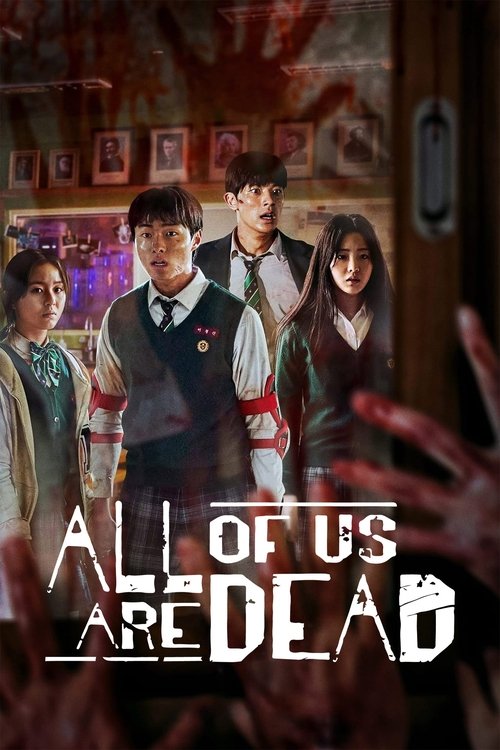
All of Us Are Dead
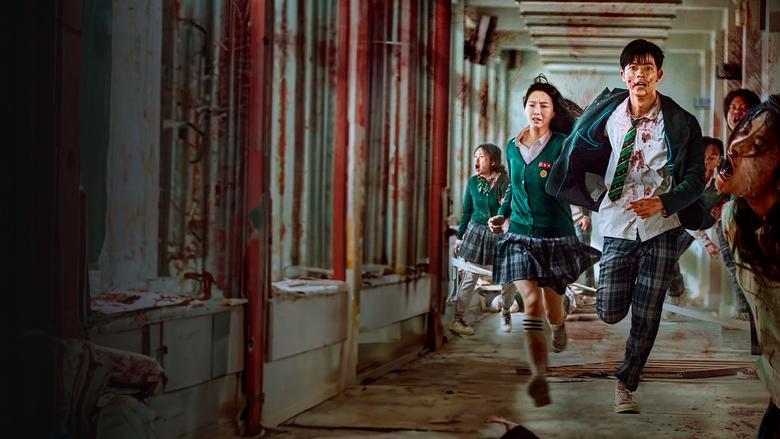
In a South Korean high school overrun by a relentless zombie outbreak, trapped students must fight for survival as adolescent innocence collides with primal horror and societal abandonment.
All of Us Are Dead

All of Us Are Dead

지금 우리 학교는

"Hope is the most painful torture for people who want to despair."

28 January 2022 — 28 January 2022 South Korea 2 season 12 episode Returning Series 8.3 (4,426)

Cast: Park Ji-hu, Yoon Chan-young, Cho Yi-hyun, Lomon, Yoo In-soo

Drama Sci-Fi & Fantasy Action & Adventure Institutional Abandonment and the Failure of Authority Bullying, Social Class, and Human Monstrosity Coming-of-Age, Grief, and Trauma The Spectrum of Humanity: Monstrosity vs. Hybridity ("Hambies")

Overview

All of Us Are Dead is a South Korean apocalyptic survival horror television series created by Chun Sung-il, Lee Jae-kyoo, and Kim Nam-su, based on the Naver webtoon Now at Our School by Joo Dong-geun. Set in the fictional city of Hyosan, the narrative unfolds when a high school science teacher's attempt to empower his bullied son inadvertently creates a mutated, highly contagious virus. Ground zero for the outbreak becomes Hyosan High School, trapping teenagers inside classrooms, science labs, and hallways as their peers rapidly transform into flesh-eating undead.

Deprived of cellular service, abandoned by adult authorities, and forced to improvise weapons from everyday classroom items, a core group of surviving students must navigate betrayal, grief, and romance while attempting to escape the crumbling building. The conflict escalates beyond the school grounds, consuming the entire city of Hyosan as the South Korean military declares martial law, struggles with quarantine protocols, and faces unprecedented viral mutations.

Across its run, the series broadens its scope from a localized high school horror story into a sprawling crisis involving government cover-ups, asymptomatic half-zombie "hybrids" (hambies), and the systemic failures of adult institutions to protect the young.

Core Meaning

The core message of All of Us Are Dead centers on the catastrophic failure of the adult generation and societal structures to safeguard young people, juxtaposed with the endurance of youth solidarity. Through the lens of a zombie outbreak, the creators critique hyper-competitive academic pressure, unchecked bullying, and institutional apathy in contemporary South Korea.

The Jonas Virus—born out of a desperate father's desire to weaponize fear into raw aggression—serves as a metaphor for a society that breeds violence through neglect and systemic oppression. Ultimately, the show asserts that while adults abandon responsibility under crisis, true humanity survives not through ruthless self-preservation, but through empathy, sacrificial love, and mutual support.

Thematic DNA

Institutional Abandonment and the Failure of Authority 30%
Bullying, Social Class, and Human Monstrosity 25%
Coming-of-Age, Grief, and Trauma 25%
The Spectrum of Humanity: Monstrosity vs. Hybridity ("Hambies") 20%

Institutional Abandonment and the Failure of Authority

Throughout the series, adults repeatedly fail the students. School administrators attempt to sweep severe bullying under the rug to protect the institution's reputation; politicians prioritize political optics over rescue missions; and the military ultimately abandons trapped children inside ground zero to contain the viral spread via carpet bombing.

Bullying, Social Class, and Human Monstrosity

The outbreak does not create human cruelty—it merely unmasks it. The pre-apocalypse social hierarchy of Hyosan High directly dictates survival behavior. Characters like Lee Na-yeon showcase how classist prejudice leads to moral monstrosity even before physical infection occurs.

Coming-of-Age, Grief, and Trauma

The series functions as a brutal coming-of-age story where teenagers are forced to mature overnight. Survival requires them to process the loss of parents, close friends, and first loves in real time, transforming adolescent crushes and petty rivalries into profound commitments to protect one another at all costs.

The Spectrum of Humanity: Monstrosity vs. Hybridity ("Hambies")

The introduction of half-zombies explores the moral duality of human nature. Driven by extreme willpower—whether revenge or protective empathy—the hybrid state illustrates that a person's inner character determines whether power becomes a force for destruction or protection.

Character Analysis

Nam On-jo

Park Ji-hu

Archetype: The Emotional Anchor / Reluctant Survivor Key Trait: Practical survival instincts coupled with deep emotional empathy

Motivation

To survive and ensure her friends stay alive.

Character Arc

Initially an average student overwhelmed by romantic confusion, On-jo transforms into the group's tactical logician, drawing on survival knowledge taught by her firefighter father. She endures the loss of her best friend, father, and love interest, ultimately becoming a resilient figure who keeps the memory of lost peers alive.

Lee Cheong-san

Yoon Chan-young

Archetype: The Selfless Hero / Sentinel Key Trait: Uncompromising loyalty and agility

Motivation

Protecting On-jo and his classmates regardless of personal cost.

Character Arc

Moves from a quiet, secretly smitten childhood friend into an unyielding leader willing to face lethal danger. His rivalry with Gwi-nam drives much of the tension, culminating in his ultimate sacrifice to lure the horde away and save his classmates during the military airstrike.

All 5 characters and cast

Symbols & Motifs

The Green School Uniform & Tracksuits

Meaning:

Symbolizes youth, conformity, and shared identity. As the bright green clothing becomes stained with dirt, sweat, and blood, it tracks the tragic corruption of adolescent innocence.

Context:

Worn by the students of Hyosan High throughout the outbreak as they fight to survive.

Nam-ra’s Earplugs / Headphones

Meaning:

Represents Choi Nam-ra’s self-imposed isolation from her peers due to intense parental pressure. Later, after her mutation, the earplugs symbolize her heightened, overwhelming senses and her constant battle to tune out the predatory urge to consume human flesh.

Context:

Used initially by Nam-ra to block out her classmates, and later to control her aggressive instincts as a half-zombie.

Nam So-ju’s Firefighting Ribbon & Whistle

Meaning:

Symbolizes selfless adult protection and parental duty. His equipment and professional rescue skills contrast sharply with the cowardice of politicians and military commanders.

Context:

Carried and used by On-jo's father during his relentless rescue mission to reach his daughter.

The Jonas Virus / Science Lab Hamster

Meaning:

Represents the dangerous consequences of human hubris and twisted paternal love. The hamster in Lee Byeong-chan's lab shows how small, ignored acts of violence can cascade into societal extinction.

Context:

Kept in a science room cage, its bite on student Kim Hyeon-ju acts as patient zero's vector.

The High School Rooftop

Meaning:

Symbolizes sanctuary, hope, and the desperate yearning for rescue. It is the ultimate boundary between the ground-level chaos of the undead horde and the sky from which help never comes.

Context:

Where surviving students gather, construct SOS signals, and face abandonment by military helicopters.

Memorable Quotes

Whether you're rich or poor, got good grades or bad ones, everyone's equal in an accident.
— Nam So-ju

Context

Spoken by On-jo's father during his frantic journey to save his daughter in Season 1, Episode 7.

Meaning

Highlights the central thesis of the show: crisis strips away artificial societal status, exposing basic human equality.

The strong are now ripping apart the weak. It happens all the time.
— Lee Byeong-chan

Context

Spoken by science teacher Byeong-chan explaining his radical biological experiment in Season 1, Episode 1.

Meaning

Captures his cynical view that society is fundamentally a predator-prey system.

All 5 quotes

Episode Highlights

Ground Zero

S1E1

Establishes the origin of the Jonas Virus via science teacher Lee Byeong-chan and student Kim Hyeon-ju's initial bite by an infected laboratory hamster.

Significance:

Triggers the rapid collapse of Hyosan High, setting the high-stakes survival pace.

The Class Divide

S1E3

Wealthy student Lee Na-yeon intentionally infects poor student Han Gyeong-su by wiping his open wound with zombie blood on a towel due to class prejudice.

Significance:

Demonstrates that human malice can be more terrifying than the virus, splintering the group's moral cohesion.

A New Breed

S1E5

Yoon Gwi-nam is mauled by zombies after killing the principal, but instead of turning mindless, he mutates into the show's first half-zombie (hambie).

Significance:

Reinvents the rules of the zombie genre, introducing immortal, conscious super-antagonists.

The Rooftop and Abandonment

S1E9

The surviving students finally reach the rooftop and light a signal fire, only for a military extraction helicopter to abandon them under emergency containment directives.

Significance:

Serves as the narrative climax of adult abandonment, shattering the kids' faith in state rescue.

The Sacrifice

S1E11

Nam So-ju reaches his daughter On-jo and sacrifices his life to let the kids escape. Later, Cheong-san fights Gwi-nam inside the construction building, sacrificing himself as military missiles obliterate Hyosan High.

Significance:

The emotional peak of the season, resulting in massive casualties and the destruction of the school.

The Aftermath

S1E12

The survivors reach the government quarantine camp. Months later, they sneak back to the ruined rooftop and reunite with Nam-ra, who reveals she is leading a community of fellow half-zombies.

Significance:

Concludes the initial Hyosan arc while expanding the world for future hybrid conflicts.

Philosophical Questions

Is survival worthwhile if it requires forfeiting basic human empathy?

Explored through Na-yeon's moral decay versus Cheong-san's sacrifices for his peers.

Can a society retain moral authority over its youth when it consistently fails to protect them?

Explored through the military airstrikes and government quarantine mandates that abandon trapped students.

What truly defines a monster—viral infection or inner malice?

Explored through the contrast between mindless zombies, human bullies, and benevolent hambies.

Alternative Interpretations

Some critics interpret the entire school outbreak as a literalized metaphor for South Korea's grueling college entrance exam (Suneung) culture, where students feel trapped in a meat-grinder environment where they must outcompete their peers to survive.

Full ending explanation

Cultural Impact

Released globally in January 2022, All of Us Are Dead became the second South Korean series (after Squid Game) to top Netflix’s global overall charts, logging over 474 million hours watched in its first 30 days.

The show tapped directly into post-COVID pandemic anxieties, quarantine trauma, and deep-seated South Korean societal frustrations over public safety failures. It solidified the global prominence of the "K-Zombie" subgenre alongside Kingdom and Train to Busan, praised for its hyper-fast infected pacing and deep character melodrama.

Audience Reception

All of Us Are Dead holds an 89% Fresh Critics Score and an 82% Audience Score on Rotten Tomatoes.

Praised aspects include exceptional long-take action sequences, high tension, zombie choreography, and emotional character chemistry—particularly between Su-hyeok and Nam-ra. Main criticisms focused on runtime bloat across 12 long episodes and repetitive, frustrating decisions made by specific antagonist characters.

Interesting Facts

  • Production built a full four-story, 100-meter-long replica of a South Korean high school from scratch to accommodate dynamic multi-angle and long-take camera shots.
  • The unique, bone-breaking movement of the zombies was choreographed by professional dancers and body-flexing artists who spent months training the stunt performers.
  • Cho Yi-hyun revealed in behind-the-scenes interviews that her kiss scene with Lomon took 17 takes because she had her eyes closed and could not locate his lips.
  • Actress Lee Yoo-mi shot All of Us Are Dead (playing the selfish bully Na-yeon) and Squid Game (playing the selfless Ji-yeong) around the same timeframe, demonstrating incredible acting range in polar-opposite roles.
  • Filming had to be suspended in August 2020 due to real-world COVID-19 outbreaks in South Korea, adding an unsettling real-life parallel for the cast and crew.

Easter Eggs

Reference to Train to Busan

In Episode 2, Cheong-san and his classmates explicitly mention the blockbuster zombie film Train to Busan, establishing that zombie pop culture exists within their universe.

Sewol Ferry Tragedy Parallels

Viewers and critics noted heavy thematic references to the 2014 Sewol Ferry disaster—specifically the scene where trapped students record farewell video messages on a camcorder for their families, echoing real-life footage recorded by trapped Danwon High School students.

Inverted Neon Cross

The opening scene of Episode 1 features an upside-down reflection of a red neon church cross in a rain puddle, visually establishing the subversion of divine protection and the arrival of apocalyptic evil.

Frequently Asked Questions

Explore More About This Movie

Dive deeper into specific aspects of the movie with our detailed analysis pages

Comments (0)

Leave a comment

No comments yet. Be the first to share your thoughts!

Similar Movies