Skip to content
House of the Dragon
A somber, tragic dark fantasy where repressed grief turns into fiery vengeance, like silver crowns melting in a furnace of emerald dragonfire.
House of the Dragon

House of the Dragon

"Win or die."

21 August 2022 — 26 July 2026 United States of America 3 season 26 episode Returning Series 8.4 (6,784)

Cast: Matt Smith, Steve Toussaint, Sonoya Mizuno, Fabien Frankel, Matthew Needham

Drama Sci-Fi & Fantasy Action & Adventure Internal Self-Destruction & Dysfunctional Family Dynamics Gender, Misogyny, and Patriarchal Power The Devastating Cost of Unchecked Power Duty, Prophecy, and Destiny vs. Personal Ambition Perception, Propaganda, and Narrative Truth

Overview

House of the Dragon is an epic fantasy drama set in Westeros nearly two centuries before the events of Game of Thrones. Adapted from George R. R. Martin's faux-history novel Fire & Blood, the series chronicles the peak and catastrophic downfall of House Targaryen—the dragon-riding dynasty that unified the Seven Kingdoms. At its opening, the realm enjoys unprecedented peace under the gentle rule of King Viserys I Targaryen. However, the absence of a male heir creates a volatile political vacuum, prompting Viserys to make the unprecedented decision to name his young daughter, Princess Rhaenyra, as his rightful successor.

This breach of patriarchal tradition fractures the royal court and sows seeds of deep personal animosity. Over two decades, political machinations, strategic marriages, and personal betrayals harden once-loving relationships into irreconcilable enmity—most notably between Rhaenyra and her childhood companion, Queen Alicent Hightower. Following King Viserys's death, the court splits into two fierce factions: the "Blacks," supporting Queen Rhaenyra, and the "Greens," supporting Alicent's firstborn son, King Aegon II.

What begins as silent whispers in castle corridors rapidly escalates into the "Dance of the Dragons"—a devastating civil war that pitting sibling against sibling and dragon against dragon. As alliances are forged across Westeros, the conflict unleashes unprecedented destruction, exposing the fragile nature of supreme power and burning the Targaryen empire down from within.
Core Meaning

The overarching message of House of the Dragon is captured in its opening thesis: "The only thing that could tear down the house of the dragon was itself." Creators Ryan Condal and George R. R. Martin constructed the narrative as a cautionary tragedy about the corrupting nature of absolute power, the systemic violence of patriarchal rule, and the inevitability of self-destruction when fear and pride eclipse empathy.

Across its run, the show demonstrates that vast power—symbolized by dragons—does not bring security; it merely magnifies human flaws and accelerates destruction. The series illustrates how political structures built on exclusion and rigid social norms force individuals into impossible compromises, turning love into bitterness and duty into tyranny.

Thematic DNA

Internal Self-Destruction & Dysfunctional Family Dynamics 30%
Gender, Misogyny, and Patriarchal Power 25%
The Devastating Cost of Unchecked Power 20%
Duty, Prophecy, and Destiny vs. Personal Ambition 15%
Perception, Propaganda, and Narrative Truth 10%

Internal Self-Destruction & Dysfunctional Family Dynamics

The narrative centers on how domestic grievances, sibling rivalries, and parental neglect rot an empire from within. The conflict is not driven by external monsters, but by intimacy weaponized—childhood affection turning into lifelong hostility between Rhaenyra and Alicent, and competitive insecurity driving Daemon and Aemond.

Gender, Misogyny, and Patriarchal Power

The show examines Westeros's deep-seated institutional misogyny. Rhaenyra's claim is endlessly questioned simply because she is a woman, while Alicent internalizes patriarchal demands, enforcing rules that oppress her to maintain her family's standing. Female leaders are consistently forced to choose between soft diplomacy (diminished as weakness) or lethal force (vilified as cruelty).

The Devastating Cost of Unchecked Power

Dragons serve as a clear allegory for weapons of mass destruction. While the Targaryens view them as proof of divine right, the show demonstrates that dragons are wild beasts that cannot be fully controlled once unleashed in anger.

Duty, Prophecy, and Destiny vs. Personal Ambition

Characters are trapped between personal desires and societal obligations. Viserys clings to Aegon the Conqueror's "Song of Ice and Fire" prophecy to justify his political choices, while Alicent sacrifices her youth for "duty". Prophecy acts both as a unifying vision and a source of misunderstanding.

Perception, Propaganda, and Narrative Truth

As Viserys famously notes, "The truth does not matter, only perception." The series explores how history is drafted through spin, rumor, and deliberate misinformation—from the bastardy rumors surrounding Rhaenyra's eldest sons to the political messaging used by Otto Hightower.

Character Analysis

Rhaenyra Targaryen

Emma D'Arcy / Milly Alcock

Archetype: Reluctant Heiress turned Tragic Sovereign Key Trait: Royal pride under persistent existential pressure

Motivation

To honor her father's mandate, fulfill the "Song of Ice and Fire" prophecy, and defend her children's rights.

Character Arc

Begins as an idealistically free-spirited princess named heir to the throne. Over decades of grief, loss, and betrayal, she matures into a cautious, strategic ruler striving to avoid realm-wide bloodshed, before ultimately embracing ruthless war when her children are targeted.

Daemon Targaryen

Matt Smith

Archetype: The Rogue Prince / Volatile Antihero Key Trait: Unpredictable lethality coupled with fiercely protective loyalty

Motivation

To prove his martial worth, defend the Targaryen bloodline, and earn genuine respect.

Character Arc

Evolves from an impulsive, chaotic prince seeking his brother's recognition into a formidable military commander and consort. Through intense visions and isolation at Harrenhal, he reconciles his chaotic ambitions with true loyalty to Rhaenyra's cause.

All 5 characters and cast

Symbols & Motifs

The Catspaw Dagger (Valyrian Steel Dagger)

Meaning:

Symbolizes the heavy burden of royal destiny, the secret legacy passed from monarch to heir, and the existential threat awaiting Westeros.

Context:

Inscribed with Aegon the Conqueror's "Song of Ice and Fire" prophecy, which glows when exposed to flame.

The Iron Throne & Viserys's Model of Valyria

Meaning:

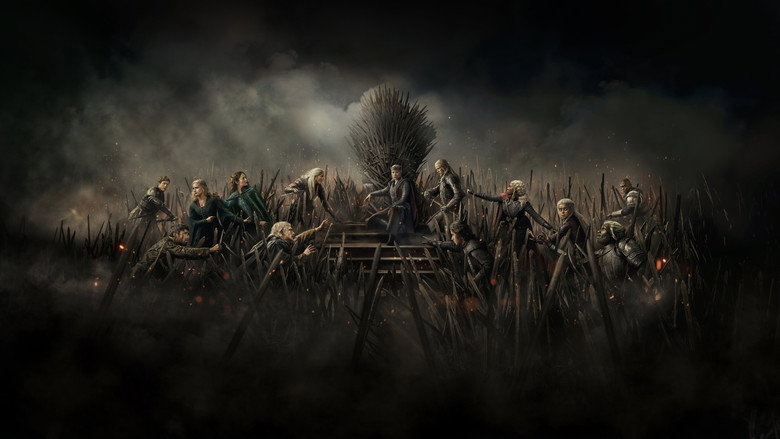
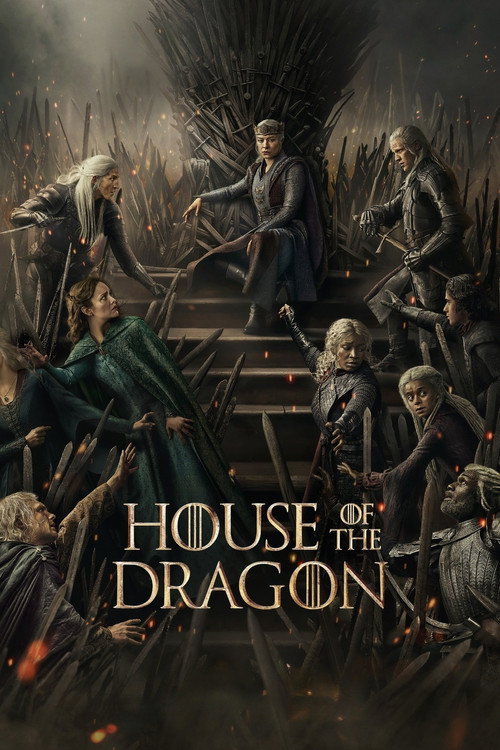
The sharp, dangerous Iron Throne visually represents the physical and psychological toll of ruling. In contrast, Viserys's stone model of Old Valyria represents a nostalgic longing for a golden past that blinds him to the crumbling state of his own household.

Context:

Occupied in the Red Keep's throne room and painstakingly crafted in King Viserys's private chambers.

Green vs. Black Garb

Meaning:

Costuming visually marks personal identity, factional loyalty, and the death of neutrality.

Context:

Green represents House Hightower's call to banners (the beacon of the Hightower glowing green for war), while Black and Red represent traditional Targaryen heraldry.

Dragon Eggs & Hatching Cradles

Meaning:

Dragon eggs represent bloodline purity, legitimacy, and potential power.

Context:

Placing an egg in a newborn's cradle signifies Targaryen identity, while unhatched or stolen eggs highlight dynastic instability.

The Targaryen Crowns

Meaning:

Viserys wears the elegant, golden crown of King Jaehaerys, symbolizing peace, diplomacy, and law. When Aegon II is crowned with Aegon the Conqueror's heavy Valyrian steel crown, it signifies militarism, conquest, and violent usurpation.

Context:

Worn by Targaryen monarchs during coronations and formal governance to denote their style of rule and legitimacy.

Memorable Quotes

The only thing that could tear down the house of the dragon was itself.
— Rhaenyra Targaryen

Context

Spoken by Rhaenyra Targaryen as narrator in Season 1, Episode 1 ("The Heirs of the Dragon").

Meaning

Sets the central theme of the entire series, framing the Targaryen civil war as a tragedy of self-destruction.

The truth does not matter, only perception.
— King Viserys I Targaryen

Context

Spoken by King Viserys I Targaryen in Season 1, Episode 3 ("Second of His Name").

Meaning

Captures the core political realpolitik of Westeros, where rumors and optical legitimacy carry more weight than facts.

All 6 quotes

Episode Highlights

The Heirs of the Dragon

S1E1

Establishes the political landscape, Queen Aemma's tragic birth scene, Viserys breaking tradition by naming Rhaenyra heir, and the introduction of Aegon's prophecy.

Significance:

Sets the foundation for the central succession conflict and introduces the underlying Targaryen prophecy.

Driftmark

S1E7

A pivotal turning point where young Aemond claims Vhagar, loses an eye in a brawl with his cousins, and Alicent draws blood from Rhaenyra.

Significance:

Permanently splits the family into Greens and Blacks and escalates personal animosity to a point of no return.

The Lord of the Tides

S1E8

Features King Viserys's harrowing final walk to the Iron Throne to defend Rhaenyra's heirs, a fragile final family dinner, and his tragic deathbed miscommunication with Alicent.

Significance:

Viserys's final actions and deathbed miscommunication directly trigger the usurping of the throne by the Greens.

The Black Queen

S1E10

Covers Rhaenyra learning of her father's death and her crown's usurpation; ends with Aemond's dragon Vhagar killing Prince Lucerys over Shipbreaker Bay.

Significance:

Formally ignites the open war between the Greens and Blacks.

The Red Dragon and the Gold

S2E4

Features the monumental Battle of Rook's Rest—the show's first full-scale dragon battle—resulting in the death of Princess Rhaenys and her dragon Meleys, and leaving King Aegon II critically burned.

Significance:

Marks the first full-scale dragon battle in the civil war, severely incapacitates King Aegon II, and shifts the balance of royal power to Aemond.

The Red Sowing

S2E7

Rhaenyra takes a major gamble by inviting lowborn Valyrian bastards ("dragonseeds") to claim riderless dragons, successfully raising smallfolk like Hugh Hammer and Ulf the White to dragonrider status.

Significance:

Dramatically alters dragon supremacy by weaponizing smallfolk as new dragonriders for the Blacks.

Salt and Sea, Fire and Blood

S3E1

Delivers the long-awaited Battle of the Gullet, a massive naval battle involving the Triarchy fleet, House Velaryon's navy, and dragonriders.

Significance:

Represents a catastrophic naval confrontation that impacts both factions' forces and trade routes.

Faceless Men

S3E6

Features critical land engagements, including Ser Criston Cole's ambush and death in battle, alongside the discovery of Dreamfyre's hidden dragon eggs at Harrenhal.

Significance:

Removes key commanders from the field and uncovers crucial Targaryen dragon eggs amidst shifting military fronts.

Philosophical Questions

Is power inherently corrupting, or does it simply reveal true character?

The series contrasts Viserys's gentle indecisiveness with Rhaenyra's gradual hardening and Aemond's cruelty, showing how absolute authority magnifies deep-seated flaws.

Can a peace built on systemic inequality and compromise ever last?

Viserys keeps the realm at peace for fifty years by ignoring tensions under the surface, but his refusal to address uncomfortable realities guarantees war after his death.

Do the ends justify the means when fulfilling a prophecy?

Rhaenyra and Viserys view their political survival as essential for protecting the world from an apocalyptic threat, forcing them to weigh moral choices against high-stakes destinies.

Alternative Interpretations

Feminist Allegory on Patriarchal Traps: One prominent reading views the show as a critique of patriarchal systems. Both Rhaenyra and Alicent are trapped by male authority figures (Viserys, Otto, Daemon), demonstrating how patriarchal structures force women into competition rather than collaboration.

Full ending explanation

Cultural Impact

House of the Dragon arrived at a crucial moment for prestige television. Following the divided reaction to the final season of Game of Thrones in 2019, HBO needed to prove that the Westeros franchise remained a viable television empire. The premiere drew nearly 10 million viewers, setting an HBO record for a series launch and proving the enduring appeal of Martin's universe.

Historically, the storyline draws heavily from The Anarchy (1135–1153)—a bitter English civil war fought between Empress Matilda and her cousin Stephen of Blois after King Henry I named his daughter heir, mirroring Viserys naming Rhaenyra. Culturally, the show revitalized public discussion around fantasy television, proving that political intrigue and character drama could resonate as strongly as high-budget dragon battles.

Audience Reception

Season 1: Received widespread critical acclaim (93% critical approval). Paddy Considine's performance as King Viserys was universally praised, with George R. R. Martin stating Considine's portrayal surpassed his original book character.

Season 2: Proved more polarizing among viewers (84% critical approval). While praised for visual spectacle and the Battle of Rook's Rest, it faced criticism for slow pacing, repetitive storylines, and deviations from book lore.

Season 3: Rebound in critical reception (88% critical approval), praising its return to faster pacing, intense naval and aerial action like the Battle of the Gullet, and darker character arcs.

Interesting Facts

  • HBO spent roughly $30 million on a pilot starring Naomi Watts set during the original Age of Heroes (titled Bloodmoon) before shelving it and greenlighting House of the Dragon instead.
  • In Season 1, Episode 8, when King Viserys drops his crown on his way to the throne, Matt Smith (Daemon) picked it up and placed it on Paddy Considine's head; director Geeta Patel kept the improvised moment.
  • To match George R. R. Martin's book vision more closely than Game of Thrones, prop designers added thousands of melted swords spreading down the dais steps, with some prop swords molded from other fantasy productions like The Witcher and Warcraft.
  • Producers intentionally forbade Milly Alcock and Emily Carey from interacting with Emma D'Arcy and Olivia Cooke during prep to prevent them from consciously copying performance choices.
  • The series relied on state-of-the-art stage technology—a giant curved LED screen wall paired with advanced motion gimbals ('V Stage')—to render real-time background lighting and environments for dragon-flying scenes.
  • Author George R. R. Martin publicly critiqued certain script deviations from Fire & Blood on his blog, warning against a 'butterfly effect' where cutting minor book characters could disrupt future major plotlines.

Easter Eggs

The Valyrian Steel Dagger Inscription

When heated, the blade reveals Valyrian runes reading: "From my blood come the prince that was promised..."—directly connecting the prequel to the events of Game of Thrones.

Dreamfyre's Eggs and Daenerys Targaryen

The three dragon eggs Daemon steals in Season 1 (and clutches introduced later) visually match the design of the three fossilized eggs Daenerys hatches in Game of Thrones, supporting the fan theory that Dreamfyre is their mother.

Balerion the Black Dread's Skull

The massive skull surrounded by candles in the Red Keep is the dragon ridden by Aegon the Conqueror, serving as a reminder of the dynasty's past greatness.

Cregan Stark Wielding 'Ice'

When Lord Cregan Stark appears at the Wall in Season 2, he wields "Ice"—the legendary Valyrian steel broadsword later used by Ned Stark in Game of Thrones.

Tapestry Opening Credits Sequence

The opening credits feature an evolving tapestry woven with blood threads, visually mapping out Targaryen history from Old Valyria down to the Dance of the Dragons.

Frequently Asked Questions

Explore More About This Movie

Dive deeper into specific aspects of the movie with our detailed analysis pages

Comments (0)

Leave a comment

No comments yet. Be the first to share your thoughts!

Similar Movies