Skip to content
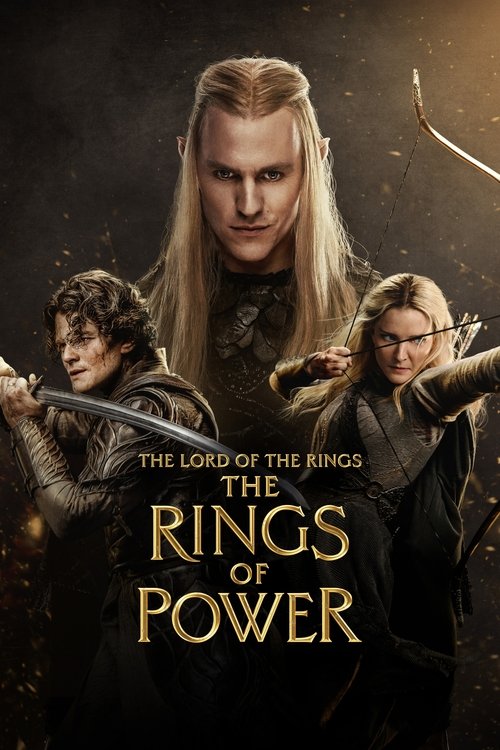
The Lord of the Rings: The Rings of Power
A grand high-fantasy epic drenched in tragic majesty and lingering dread, where the twilight glow of ancient realms mirrors the slow, intoxicating seduction of light yielding inexorably to encroaching shadow.
The Lord of the Rings: The Rings of Power

The Lord of the Rings: The Rings of Power

"Evil has had many names."

01 September 2022 — 03 October 2024 United States of America 3 season 24 episode Returning Series 7.2 (3,878)

Cast: Morfydd Clark, Robert Aramayo, Owain Arthur, Sophia Nomvete, Markella Kavenagh

Drama Sci-Fi & Fantasy Action & Adventure The Seduction of Good Intentions and Corruption of Pride Hubris, Mortality, and the Fear of Decay Fellowship, Unity, and Fractured Alliances Fate, Free Will, and Moral Choice

Overview

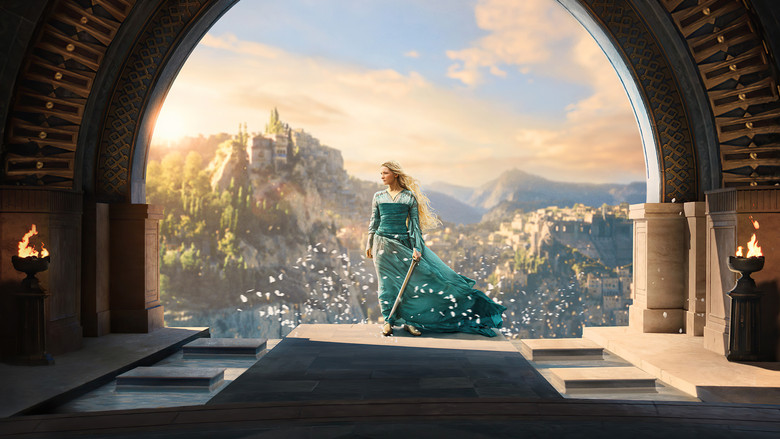
Set thousands of years before the events of J.R.R. Tolkien’s The Hobbit and The Lord of the Rings, The Lord of the Rings: The Rings of Power chronicles the fabled Second Age of Middle-earth. The series begins in a deceptive era of fragile peace, following the cataclysmic defeat of the Dark Lord Morgoth. While most leaders believe shadow has vanished forever, an intuitive few—led by the fierce Elven commander Galadriel—sense an ancient malice stirring in the dark corners of the world, gradually setting in motion an interconnected tapestry of destinies.

The overarching narrative spans diverse kingdoms and civilizations at the height of their splendor: the radiant Elven realms of Lindon and Eregion, the subterranean dwarven splendor of Khazad-dûm, the majestic island realm of Númenor, the wandering ancestral Harfoots in the wild, and the contested mortal borderlands. As the seasons progress, political intrigue, xenophobia, hubris, and the desperate desire to arrest time and decay leave these realms vulnerable to subtle manipulation.

Across its multi-season arc, the series charts the tragic forging of the titular Rings of Power—instruments born of noble intentions to preserve beauty and heal the land, yet weaponized by a rising darkness to bind, deceive, and dominate. The story explores how grand alliances fracture under deceit and pride, laying the groundwork for epic sieges, the catastrophic transformation of landscapes, and the enduring struggle between fading light and ascendant shadow.
Core Meaning

The core thesis of The Rings of Power explores how evil rarely triumphs through brute force alone, but rather through the seduction and corruption of good intentions. Showrunners J.D. Payne and Patrick McKay illustrate that pride, fear of mortality, grief, and the obsessive desire to "heal" or "preserve" the world without accepting natural loss are the exact fissures through which tyranny enters.

The series carries a fundamental message: true power lies not in dominating destiny or forging shortcuts to perfection, but in humility, fellowship, and standing steadfast in moral integrity even when darkness seems insurmountable.

Thematic DNA

The Seduction of Good Intentions and Corruption of Pride 35%
Hubris, Mortality, and the Fear of Decay 25%
Fellowship, Unity, and Fractured Alliances 20%
Fate, Free Will, and Moral Choice 20%

The Seduction of Good Intentions and Corruption of Pride

Central to the series across all seasons is how characters like Celebrimbor and Galadriel open the door to catastrophic deceit by believing their noble ambitions make them immune to evil. It evolves from Galadriel's vengeful blind spots in Season 1 into the psychological deception of Celebrimbor in Season 2 as Annatar crafts rings to "save" Middle-earth.

Hubris, Mortality, and the Fear of Decay

Explored through the Elves' terror of fading, the Dwarves' greedy pursuit of subterranean wealth (mithril), and Númenor’s deep-seated resentment of mortal fragility. Across seasons, this existential anxiety festers into political schisms and spiritual decay.

Fellowship, Unity, and Fractured Alliances

Demonstrated through the cross-cultural bond between Elrond and Durin IV, the solidarity among the Harfoots, and the fragile treaties between Men and Elves. The narrative continually tests whether disparate cultures can overcome historical grievances before division destroys them.

Fate, Free Will, and Moral Choice

Epitomized by the Stranger discovering his identity and purpose, and Adar’s tragic pursuit of an autonomous home for the Orcs ("Uruk"). Characters repeatedly discover that one's origin does not dictate morality—action and choice do.

Character Analysis

Galadriel

Morfydd Clark

Archetype: Tragic Warrior / Relentless Crusader Key Trait: Unyielding determination

Motivation

Avenging her fallen kin and eradicating Morgoth's lingering shadow.

Character Arc

Begins as a trauma-driven, vengeance-blinded commander whose obsession blinded her to the deception around her; over successive seasons, she matures from reckless arrogance into painful self-awareness, wisdom, and moral resolve.

Sauron / Halbrand / Annatar

Charlie Vickers

Archetype: Master Manipulator / Corrupting Tempter Key Trait: Psychological cunning

Motivation

Imposing absolute order and dominion under the guise of healing the world.

Character Arc

Introduced as Halbrand, a disguised "repentant" king adrift on the Sundering Seas, he navigates the halls of Númenor and Eregion, eventually adopting the angelic guise of Annatar ("Lord of Gifts") to exploit Celebrimbor’s artistic vanity and establish dominion over Middle-earth.

All 5 characters and cast

Symbols & Motifs

The Rings of Power

Meaning:

Instruments symbolizing the fusion of divine craft and corrupted ambition; physical manifestations of the desire to control nature and mortality.

Context:

Forged in the smithies of Eregion across the series, transitioning from instruments meant to preserve Elven life to tools designed to dominate and deceive Middle-earth.

Mithril

Meaning:

A radiant, miraculous ore representing salvation and healing for Elves, but also greed, peril, and the awakening of subterranean doom for Dwarves.

Context:

Mined deep within the caverns of Khazad-dûm, driving alliances and conflicts between Elves and Dwarves while risking catastrophic consequences below.

The White Tree of Númenor (Nimloth)

Meaning:

The falling white petals symbolize the spiritual health and moral standing of the island kingdom, warning of divine judgment and impending cataclysm.

Context:

Appears in the court of Númenor, shedding petals during moments of moral crisis and political division.

Ships and Stones (Light and Dark)

Meaning:

A metaphorical dichotomy representing moral orientation: a stone sinks because it gazes downward into darkness, while a boat floats because its gaze is fixed upon the light.

Context:

Introduced in the opening prologue dialogue between Finrod and young Galadriel in Valinor.

The Smith’s Hammer and Anvil

Meaning:

Motifs representing creation, transformation, sacrifice, and the literal and metaphorical forging of Middle-earth's fate.

Context:

Highlighted prominently in the forge scenes in Eregion and the workshops of Númenor and Khazad-dûm.

Memorable Quotes

Do you know why a ship floats and a stone cannot? Because the stone sees only downward... while the ship has a gaze fixed upwards, towards the sun.
— Finrod

Context

Spoken by Finrod to young Galadriel in Valinor during the prologue in Season 1, Episode 1 ("A Shadow of the Past").

Meaning

Sets up the series' opening philosophical metaphor regarding the nature of darkness, light, and spiritual perception.

Sometimes to find the light, we must first touch the darkness.
— Finrod / Galadriel

Context

Echoed throughout Galadriel's journey across Season 1, beginning in Episode 1 and revisited in Episode 8.

Meaning

A pivotal thematic mantra illustrating Galadriel's dangerous rationalization of her obsessive pursuit of vengeance.

All 5 quotes

Episode Highlights

A Shadow of the Past

S1E1

Introduces Second Age Middle-earth, Galadriel’s relentless pursuit of Sauron across frozen wastes, and the arrival of the meteor-bound Stranger.

Significance:

Establishes the visual grandeur of the world and sets the core storylines and character journeys into motion.

Udûn

S1E6

A nonstop battle episode in the Southlands where Adar's forces clash with Númenor's expeditionary force, culminating in the triggering of the mountain trench mechanism.

Significance:

Results in the catastrophic eruption of Mount Doom, permanently altering Middle-earth's geography and creating the realm of Mordor.

Alloyed

S1E8

Resolves major season mysteries by revealing Halbrand's true identity as Sauron and confirming the Stranger as an Istari.

Significance:

Concludes with the fateful forging of the Three Elven Rings (Narya, Nenya, and Vilya) in Eregion.

Where the Stars are Strange

S2E2

Sauron adopts his fair form as Annatar, the "Lord of Gifts," to ensnare Lord Celebrimbor in psychological deception.

Significance:

Initiates the expansion of ring-making beyond the Elves to craft Rings of Power for Dwarves and Men.

Doomed to Die

S2E7

Depicts the brutal Siege of Eregion reaching its devastating peak as Celebrimbor’s sanity unravels amid illusions.

Significance:

Marks the tragic fall of the Elven craft sanctuary to the converging forces of Adar and Sauron.

Shadow and Flame

S2E8

The Season 2 finale delivering the tragic martyrdom of Celebrimbor, the awakening of the Balrog in Khazad-dûm, and Sauron claiming the Nine Rings.

Significance:

Fully solidifies the Stranger's identity as Gandalf and accelerates Sauron's military and spiritual dominion across Middle-earth.

Philosophical Questions

Can good ends justify dangerous means?

Celebrimbor and Galadriel consistently gamble with perilous forces, questioning whether attempting to preserve beauty and light through tainted methods inevitably births greater evil.

Is identity determined by origin or by deliberate moral choice?

Explored through the Stranger and Halbrand—examining whether beings endowed with immense cosmic power are bound to pre-set destinies or defined by their conscious moral actions.

How does the fear of death corrupt civilization?

Númenor’s tragic trajectory reveals how mortality, rather than being accepted as a natural gift, turns poisonous when societies prioritize eternal earthly power over humility.

Alternative Interpretations

The narrative invites multiple interpretive lenses:

Full ending explanation

Cultural Impact

Developed amidst the peak of the streaming platform wars, Amazon Studios sought a marquee, global fantasy franchise to rival landmark series like HBO’s Game of Thrones and House of the Dragon.

The show cast actors of diverse racial and ethnic backgrounds as Elves, Dwarves, Harfoots, and Númenóreans (such as Sophia Nomvete as Princess Disa and Ismael Cruz Córdova as Arondir), breaking from historical fantasy casting conventions and receiving praise for inclusivity alongside initial online culture-war backlash.

While Season 1 polarized Tolkien purists over compressed timelines and mystery-box pacing despite critical praise for visual scale and score, Season 2 achieved stronger critical momentum for its darker, sharper narrative focus on Sauron’s deceit in Eregion.

Audience Reception

Audiences for Season 1 were divided between awe at the series' sheer visual splendor and frustration over slower pacing and reliance on "mystery boxes" surrounding the identities of Sauron and the Stranger.

With Season 2, viewers and critics noted a substantial leap in dramatic tension, pacing, and emotional stakes, largely propelled by Charlie Vickers' and Charles Edwards' performances in Eregion and the action during the siege.

Overall, the series is recognized as a visually breathtaking, ambitious enterprise that successfully evolved from an uneven world-building prologue into a gripping, tragic psychological drama worthy of Second Age scale.

Interesting Facts

  • Amazon acquired the television rights from the Tolkien Estate in 2017 for $250 million, committing to a multi-season production estimated at over $1 billion across its run, making it the most expensive television series ever produced.
  • Season 1 was filmed across the rugged landscapes of New Zealand, but beginning with Season 2, Amazon relocated the entire production to the United Kingdom (Surrey, Berkshire) and the Canary Islands for economic and logistical centralization.
  • The showrunners worked within strict legal bounds, drawing primarily from the Appendices of The Lord of the Rings and The Hobbit rather than The Silmarillion or Unfinished Tales, requiring them to creatively synthesize canonical Second Age landmarks with new original characters and compressed timelines.
  • Composer Bear McCreary wrote individual musical themes for every realm and culture, while Academy Award-winning film composer Howard Shore composed the main title theme.
  • Rather than relying entirely on CGI, the production prioritized extensive practical suits, animatronics, and intricate silicone prosthetics for the Orcs and creatures to maintain visceral realism.

Easter Eggs

Tolkienian Linguistic Callbacks

The Stranger's dialogue echoes iconic lines such as "When in doubt, always follow your nose" and "From shadow you came, to shadow you will return", cementing his literary legacy.

The Palantír Visions

In Númenor, the seeing stone shows the historical prophetic vision of the Great Wave drowning the island, referencing Tolkien's Akallabêth mythology and Tolkien’s real-life recurring dream of Atlantis.

The Balrog’s Deep Roots

The presence of the Balrog (Durin's Bane) beneath Khazad-dûm directly foreshadows the eventual doom of Moria depicted in The Fellowship of the Ring.

The Swan-Ships of Lindon and Valinor

The prologue features pearl-white Elven ships sailing toward the Undying Lands, mirroring classic Tolkien illustrations of the Straight Road.

Frequently Asked Questions

Explore More About This Movie

Dive deeper into specific aspects of the movie with our detailed analysis pages

Comments (0)

Leave a comment

No comments yet. Be the first to share your thoughts!

Similar Movies