
All Your Faces
Je verrai toujours vos visages
Overview
"All Your Faces" (Original Title: "Je verrai toujours vos visages") is a 2023 French drama film directed by Jeanne Herry. The film delves into the complex and emotionally charged world of restorative justice, a practice introduced in France in 2014 that allows dialogue between victims and offenders of crimes in a secure environment. The narrative is structured around two parallel processes.
The first follows a group session involving three victims of violent robberies (Grégoire, Nawelle, and Sabine) and three men convicted of similar offenses (Nassim, Issa, and Thomas). Although their specific cases are not linked, they meet over several months, supervised by professional mediators and volunteers, to discuss the impact of the crimes and the motivations behind them. The second storyline focuses on the individual journey of Chloé, a survivor of incestuous sexual abuse, as she prepares for a mediated confrontation with her brother and abuser, Benjamin, who has recently been released from prison.
Through these intertwined stories, the film offers a profound and nuanced exploration of healing, accountability, and the potential for human connection in the aftermath of profound trauma. It meticulously portrays the delicate and often difficult conversations that unfold, highlighting the anger, fear, hope, and eventual understanding that can emerge from such encounters.

Core Meaning
The core meaning of "All Your Faces" revolves around the transformative and healing power of dialogue. Director Jeanne Herry wanted to explore the concept of restorative justice not as a panacea for crime, but as a vital process for humanizing the judicial system. The film suggests that by creating a space for genuine communication between victims and offenders, society can begin to repair the deep wounds caused by violence. It posits that understanding the 'other'—whether it's a victim understanding the circumstances that led to a crime or an offender confronting the real human impact of their actions—is a crucial step towards individual and collective healing. The title, "I Will Always See Your Faces," underscores the indelible mark that these encounters leave on participants, signifying both the haunting memory of trauma and the profound recognition of shared humanity that can lead to forgiveness and reconciliation.
Thematic DNA
Restorative Justice and Healing
This is the central theme of the film. It showcases the restorative justice process as a mechanism for healing that goes beyond punitive measures. Through the group sessions and Chloé's individual preparation, the film demonstrates how structured dialogue can help victims reclaim their agency and offenders develop empathy and take responsibility for their actions. It portrays healing not as a simple outcome but as a complex, arduous, and deeply personal journey for each character.
Empathy and Understanding
The film powerfully illustrates how empathy can be fostered even in the most unlikely of circumstances. By placing victims and offenders in the same room, the narrative breaks down stereotypes and forces them to see the humanity in one another. Victims come to understand the backgrounds and motivations of the offenders, while offenders are confronted with the devastating and lasting impact of their crimes, moving beyond abstract notions of wrongdoing to the tangible pain of another person.
Trauma and Memory
The film's original title, "I Will Always See Your Faces," directly points to the lasting impact of trauma. The narrative explores how the memory of a crime haunts both victims and perpetrators, shaping their lives long after the event. For the victims, it's about living with fear and psychological scars. For the offenders, it can be a source of shame and a barrier to reintegration. The restorative process is shown as a way to confront these memories and potentially reframe their meaning.
The Power of Speech
Words are the primary tool for healing in the film. The act of speaking one's truth, of being heard and acknowledged, is shown to be profoundly cathartic. The structured environment of the sessions, often using a talking stick to ensure everyone gets a turn to speak without interruption, emphasizes the importance of verbal expression in processing trauma and anger. The film is a testament to the idea that dialogue, however difficult, is essential for resolving conflict and fostering reconciliation.
Character Analysis
Chloé Delarme
Adèle Exarchopoulos
Motivation
Her primary motivation is to stop living in the shadow of her trauma. She wants to be able to move forward with her life without the constant fear and pain associated with her brother's memory and his recent release from prison. She seeks not necessarily forgiveness, but closure and the reassertion of her own power.
Character Arc
Chloé begins as a young woman deeply wounded by the childhood sexual abuse she suffered at the hands of her brother, Benjamin. Her arc is one of confronting her past to reclaim her future. Initially hesitant and fearful, she goes through the painstaking process of preparing for a face-to-face meeting with him, guided by the mediator Judith. Her journey is about finding her voice and defining the terms of her own healing, culminating in a powerful and emotionally charged confrontation.
Judith
Élodie Bouchez
Motivation
Judith is motivated by a deep belief in the potential for healing and understanding through dialogue. She is driven to help people navigate their trauma and find a path towards reconciliation, both with others and themselves.
Character Arc
Judith is a dedicated and empathetic professional who facilitates the restorative justice sessions. Her arc is less about personal transformation and more about her steadfast commitment to the difficult process of mediation. She navigates the intense emotions of both victims and offenders with skill and compassion, representing the institutional and humanistic belief in the power of this process. Her own motherly concern is subtly implicated in her work with Chloé.
Nawelle
Leïla Bekhti
Motivation
Initially, her motivation is to confront the type of person who terrorized her and express her pent-up rage. As the sessions progress, her motivation evolves into a deeper need to understand and process what happened to her so she can move past the stifling fear and anger that control her life.
Character Arc
A victim of a violent shop robbery, Nawelle is initially consumed by anger and a desire for retribution. Her journey through the group sessions is about processing this rage. At first, her expressions of fury seem overwrought, but as she shares her experience, it becomes clear it's a manifestation of her deep trauma. Through listening to the offenders' stories, her perspective begins to shift from pure anger towards a more complex understanding of the situation, allowing her to begin healing.
Grégoire
Gilles Lellouche
Motivation
He enters the process seeking to understand the 'why' behind the crime and to confront the type of individuals who violated his home and his sense of security. He is motivated by a desire to overcome the feeling of helplessness that has plagued him since the incident.
Character Arc
Grégoire is a man deeply affected by a home invasion that happened while he was with his daughter. He feels unmanned and is consumed by a cold, simmering anger. His arc involves confronting his feelings of powerlessness and guilt. The sessions provide him an outlet to express his rage but also to hear the perspectives of offenders, which challenges his hardened views and opens a path to letting go of his anger.
Symbols & Motifs
The Circle
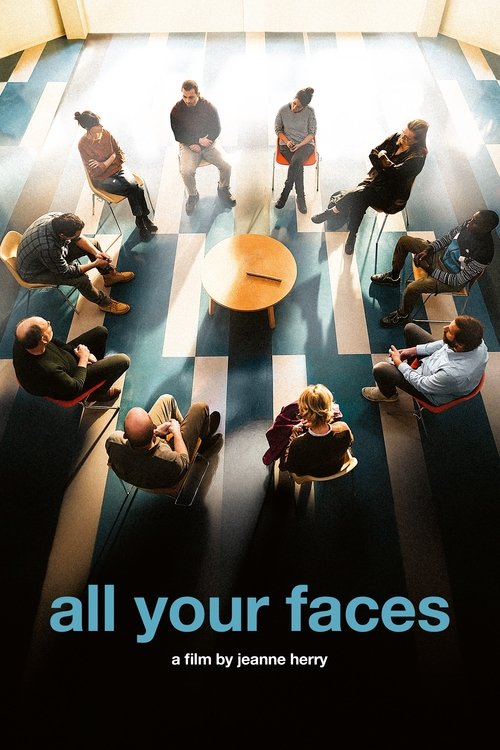
The circular arrangement of chairs in the group therapy sessions symbolizes equality, community, and the non-hierarchical nature of the restorative justice process. It creates a space where every voice is meant to be heard equally, without the formal, confrontational setup of a courtroom.
This is the primary setting for the group dialogues between victims and offenders. The camera often moves within or around the circle, capturing the faces and reactions of each participant, reinforcing the idea of a shared, interconnected experience.
The Talking Stick
The wooden baton used in the group sessions symbolizes the right to speak and the responsibility to listen. It ensures that the dialogue remains structured and respectful, giving power and voice to the person holding it while compelling others to engage in active listening.
The baton is passed between participants during the meetings. The physical act of taking the baton signifies a person's readiness to share their story or perspective, and it is a key element in moderating the intense emotional exchanges.
The Face
Referenced directly in the title, the face represents memory, trauma, and humanity. For victims, the perpetrator's face is a haunting image of their trauma. For perpetrators, seeing the victim's face transforms them from an anonymous target into a human being they have harmed. The process is about being able to see each other's faces and recognize a shared humanity beyond the labels of 'victim' and 'offender'.
This is a recurring motif throughout the film, both literally in the intense close-ups on the actors' faces during emotional testimony, and figuratively in the dialogue where characters discuss the memories of faces from the crimes.
Philosophical Questions
Can true healing occur without punishment?
The film directly engages with this question by contrasting the traditional punitive justice system with a restorative one. It suggests that while punishment may address the legal transgression, it often fails to heal the emotional and psychological wounds of both victims and offenders. The film explores healing as a process of acknowledgement, dialogue, and understanding, proposing that this can be more reparative for individuals and society than retribution alone.
What is the nature of forgiveness?
"All Your Faces" presents a nuanced view of forgiveness. It's not depicted as a simple or required outcome of the restorative process. Instead, the film explores forgiveness of others and, importantly, of oneself. For characters like Chloé, the goal is not necessarily to forgive her abuser but to free herself from the hold of her trauma. For the offenders, the journey involves seeking a way to forgive themselves and believe in their capacity for change. The film suggests forgiveness is a complex, personal journey, and dialogue is a means to make that journey possible.
Can empathy bridge the divide between victim and perpetrator?
The film's central hypothesis is that it can. By orchestrating controlled encounters, the narrative tests the limits and possibilities of empathy. It shows how hearing personal stories—of a victim's lingering fear or an offender's chaotic upbringing—can dissolve abstract labels and build a bridge of shared humanity. It doesn't suggest this is easy or always successful, but it powerfully affirms the potential of empathy to transform relationships and foster a deeper understanding of the human condition.
Alternative Interpretations
While the film is largely presented as a hopeful exploration of restorative justice, some interpretations question its optimistic portrayal. One could argue that the film presents an idealized version of the process, where breakthroughs and moments of connection are more common than they might be in reality. The structure, especially in the group setting where victims and offenders are not directly linked to the same crime, has been noted as a potential dilution of the core concept of restorative justice, making the emotional resolutions somewhat less direct.
Another perspective could focus on the film's potential to be seen as a form of social propaganda for a specific judicial policy. While sensitive, it unequivocally champions the benefits of the system. A more critical reading might question whether the film adequately explores the potential failures, risks, or ethical complexities of such emotionally vulnerable encounters, such as the potential for re-traumatization of victims. The film focuses heavily on the successes and emotional catharsis, leaving less room to explore instances where the process might not work or could even be detrimental.
Cultural Impact
"All Your Faces" arrived at a time of significant social and political polarization, offering a powerful counter-narrative focused on dialogue, empathy, and reconciliation. The film brought the relatively unknown practice of restorative justice in France to a much wider audience, sparking public conversation about its purpose and efficacy. By eschewing a documentary style for a realistic, character-driven drama, director Jeanne Herry made the abstract concept of restorative justice tangible and deeply human.
Critically, the film was very well-received in France and internationally, earning an average rating of 4.1 out of 5 stars on AlloCiné based on 35 reviews and a 100% positive score on Rotten Tomatoes from 7 critics. Critics praised its powerful ensemble cast, nuanced script, and sensitive direction, hailing it as one of the most important French films of the year. The film's success, including its César Award win for Adèle Exarchopoulos and numerous nominations, cemented its status as a significant work in contemporary French cinema. It serves as a compelling cinematic argument for the value of communication and understanding in a world increasingly defined by division and conflict.
Audience Reception
Audiences largely embraced "All Your Faces," captivated by its powerful performances and emotionally gripping subject matter. The film was praised for its realistic and sensitive handling of the difficult topic of restorative justice, with many viewers finding it both thought-provoking and deeply moving. The strength of the ensemble cast, particularly the performances by Adèle Exarchopoulos, Gilles Lellouche, and Leïla Bekhti, was frequently highlighted as a key reason for the film's impact. Viewers found the film to be an intense and sometimes draining experience due to its heavy emotional content, but ultimately a rewarding one that fosters empathy and offers a hopeful perspective on healing and reconciliation. The main point of criticism, though minor, was from some who felt the film's structure, particularly the use of two parallel but distinct restorative processes, could be slightly disjointed at times. Overall, the verdict was overwhelmingly positive, with audiences recognizing it as a significant and necessary film.
Interesting Facts
- The film explores the practice of restorative justice, which was officially introduced into the French criminal justice system in 2014.
- Director Jeanne Herry wrote the screenplay with specific actors in mind for the roles.
- The ensemble cast includes many well-known faces of French cinema, including the director's mother, Miou-Miou, who plays Sabine, a victim of a mugging.
- The film received nine nominations at the 49th César Awards, with Adèle Exarchopoulos winning for Best Supporting Actress.
- This is Jeanne Herry's first film to surpass one million admissions in France.
- The film draws parallels to South Africa's post-apartheid Truth and Reconciliation Commission, focusing on social healing through dialogue on a smaller scale.
- Critics have compared the film's intense, dialogue-driven, single-room drama to classics like "Twelve Angry Men".
⚠️ Spoiler Analysis
Click to reveal detailed analysis with spoilers
Frequently Asked Questions
Explore More About This Movie
Dive deeper into specific aspects of the movie with our detailed analysis pages
Comments (0)
No comments yet. Be the first to share your thoughts!