
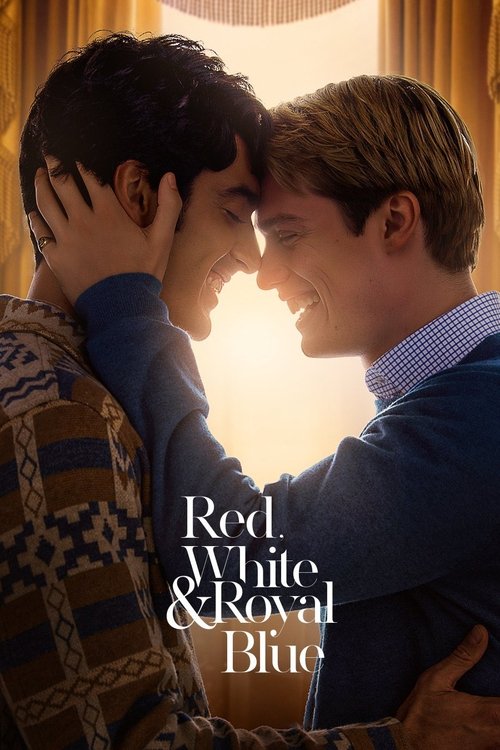
Red, White & Royal Blue
A vibrant romantic comedy that blossoms into a heartfelt global affair, painted with the bold strokes of enemies-to-lovers passion against a backdrop of political pageantry.
Red, White & Royal Blue

Red, White & Royal Blue

"Love who you want. It's good foreign policy."

27 July 2023 United States of America 121 min ⭐ 8.0 (1,434)
Director: Matthew López
Cast: Taylor Zakhar Perez, Nicholas Galitzine, Uma Thurman, Clifton Collins Jr., Rachel Hilson
Comedy Romance
Duty vs. Desire Public vs. Private Self Tradition vs. Progress LGBTQ+ Representation and Acceptance

Overview

"Red, White & Royal Blue" follows the story of Alex Claremont-Diaz, the charismatic and ambitious son of the first female President of the United States, and Prince Henry, a handsome and reserved British royal. Their long-standing feud comes to a head at a royal wedding, resulting in a disastrous and highly publicized altercation involving the wedding cake. To smooth over diplomatic relations and prevent a media crisis that could impact his mother's re-election campaign, Alex and Henry are forced into a staged friendship for the public eye.

What begins as a begrudging PR stunt soon evolves into a genuine connection as they are forced to spend time together and communicate. Through witty text exchanges and late-night phone calls, they discover they have more in common than they initially thought, and their animosity gives way to a secret romance. Their relationship deepens, forcing them to navigate the complexities of their high-profile lives, family expectations, and the potential international scandal their love could ignite.

As their feelings for each other grow, Alex and Henry must decide if their love is worth the risk of upending two nations and challenging centuries of tradition. The film explores their journey of self-discovery, coming out, and fighting for their right to love each other openly, all while under the intense scrutiny of the world.


Core Meaning

"Red, White & Royal Blue" is a modern fairy tale that champions the transformative power of love in the face of duty, tradition, and public expectation. Director Matthew López aimed to create a heartfelt and optimistic queer romance that presents a hopeful vision of acceptance on a global stage. The film's core message is that love can transcend political divides and rigid conventions, advocating for authenticity and the courage to live truthfully, even in the most scrutinized of circumstances. It explores the idea that personal happiness and national identity are not mutually exclusive and that embracing love in all its forms can lead to a more inclusive and progressive future.

Thematic DNA

Duty vs. Desire 35%
Public vs. Private Self 30%
Tradition vs. Progress 20%
LGBTQ+ Representation and Acceptance 15%

Duty vs. Desire

The central conflict revolves around Alex and Henry's struggle to reconcile their personal feelings with their public responsibilities. Henry is bound by the traditions and expectations of the British monarchy, which demand a certain public image, while Alex feels the pressure to maintain a perfect facade for his mother's political career. Their romance forces them to question these obligations and ultimately choose to pursue their own happiness.

Public vs. Private Self

The film delves into the challenge of maintaining an authentic self while living under constant public scrutiny. Both protagonists have carefully constructed public personas that hide their true feelings and vulnerabilities. Their relationship becomes a private sanctuary where they can be themselves, but the eventual leaking of their romance forces them to merge their private and public lives, confronting the world with their true identities.

Tradition vs. Progress

"Red, White & Royal Blue" contrasts the rigid, tradition-bound world of the British monarchy with the more progressive, albeit still politically charged, environment of the American first family. Henry's struggle to be accepted by the Crown symbolizes the conflict between outdated conventions and the push for a more inclusive and modern society. The public's eventual support for the couple represents a victory for progress.

LGBTQ+ Representation and Acceptance

A core theme is the importance of positive and mainstream representation of LGBTQ+ relationships. The film portrays a queer love story with the same depth, humor, and romance typically afforded to heterosexual couples in the rom-com genre. It also tackles the personal and public aspects of coming out, particularly for those in the public eye, and celebrates the power of acceptance from family and society.

Character Analysis

Alex Claremont-Diaz

Taylor Zakhar Perez

Archetype: The Charismatic Hero
Key Trait: Ambitious

Motivation

Initially, Alex is motivated by his desire to help his mother win re-election and carve out his own political legacy. This shifts as his primary motivation becomes fighting for his relationship with Henry and creating a world where they can be together openly and without fear.

Character Arc

Alex begins as a confident, ambitious, and somewhat impulsive political wunderkind focused on his mother's career and his own future. His journey is one of self-discovery, as his unexpected feelings for Henry force him to confront his own bisexuality and re-evaluate his priorities. He evolves from someone driven by public perception and political maneuvering to a man willing to risk everything for love and personal authenticity.

Prince Henry

Nicholas Galitzine

Archetype: The Reluctant Royal
Key Trait: Dutiful

Motivation

Henry's primary motivation is to uphold his duty to the Crown while protecting his heart from the pain of a love he believes is impossible. As the story progresses, his motivation becomes to break free from these constraints and build an authentic life with Alex, challenging the very institution he represents.

Character Arc

Prince Henry starts as a reserved, seemingly aloof figure, burdened by the immense pressure and traditions of the British monarchy. Trapped in a gilded cage, he is closeted and deeply private. Through his relationship with Alex, he finds the courage to defy the expectations of his family and the Crown, embracing his true identity and fighting for his right to love. He transforms from a dutiful but unhappy prince to a brave and open man.

President Ellen Claremont

Uma Thurman

Archetype: The Mentor/Supportive Parent
Key Trait: Pragmatic

Motivation

Her primary motivation is to win her re-election campaign. However, this is intertwined with a fierce protective instinct for her son. Ultimately, her motivation is to support Alex and ensure he can be both happy and true to himself, while still navigating the political landscape.

Character Arc

President Claremont is portrayed as a powerful and pragmatic leader, initially concerned about the political fallout from her son's actions. Her arc is one of balancing her roles as a president and a mother. When Alex comes out to her, she transitions from a political strategist to a deeply supportive and accepting parent, offering him love and wise counsel, prioritizing his happiness over potential political repercussions.

Zahra Bankston

Sarah Shahi

Archetype: The Loyal Enforcer
Key Trait: Sharp-witted

Motivation

Zahra is motivated by her unwavering loyalty to President Claremont and the success of her administration. Her goal is to mitigate any and all scandals, which puts her in direct conflict with Alex's burgeoning and risky romance. However, her loyalty extends to Alex's well-being, driving her to help him in the end.

Character Arc

Zahra is President Claremont's sharp-witted and no-nonsense Deputy Chief of Staff. Initially, she is purely focused on damage control and keeping Alex in line. While she remains fiercely professional, she develops a begrudging affection and protectiveness for Alex and Henry's relationship, eventually becoming a key ally in their efforts to stay connected and navigate the crisis when their romance is leaked.

Symbols & Motifs

The Wedding Cake

Meaning:

The destruction of the opulent, multi-tiered wedding cake symbolizes the disruption of tradition and the rigid, formal expectations of the monarchy. It represents the chaotic and unexpected nature of Alex and Henry's relationship, which literally and figuratively shatters the pristine facade of royal decorum.

Context:

At the royal wedding reception early in the film, a heated argument between Alex and Henry leads to them toppling over and destroying the massive, expensive wedding cake, creating an international incident that forces them into their fake friendship.

Alex's Childhood Home Key

Meaning:

The key to Alex's family home in Texas symbolizes his authentic self and his connection to his roots, away from the political spotlight of Washington D.C. It represents a place of genuine belonging and love. When Alex gives the key to Henry, it signifies a deep level of trust and an invitation into his true, private life.

Context:

Alex gifts his key necklace to Henry as their relationship deepens. In the final scene, after President Claremont wins re-election, Alex and Henry use the key to enter the Austin house together, signifying their choice to build a future on their own terms, grounded in genuine love rather than public duty.

Henry's Signet Ring

Meaning:

The signet ring is a powerful symbol of Henry's royal heritage, duty, and the weight of his lineage. When he gives it to Alex, it's a significant gesture of trust and a sign that he is willing to share the burden of his identity with him. It represents a merging of his duty and his heart.

Context:

After being forced to distance himself from Alex, Henry gives Alex his signet ring as a promise and a tangible connection between them, even when they are apart.

The Colors Red, White, and Blue

Meaning:

The colors in the title represent the fusion of their two worlds: the American flag (red, white, and blue) and the British Union Jack (red, white, and blue). They symbolize the union of two powerful nations through an unexpected romance, suggesting that love can create new alliances and bridge cultural and political divides.

Context:

The title itself, and the color palettes often used in the film's marketing and key scenes, constantly evoke the national identities of the two protagonists and the diplomatic implications of their relationship.

Memorable Quotes

History, huh? Bet we could make some.

— Alex Claremont-Diaz

Context:

After Henry expresses a desire for their love to be part of the history of his life, Alex says this line, turning a moment of personal vulnerability into a shared mission. It marks their commitment to fighting for their relationship publicly.

Meaning:

This quote encapsulates the film's optimistic and rebellious spirit. It's a defiant statement that Alex and Henry's love is not just a personal affair but a world-changing event that can challenge and rewrite historical norms. It signifies their decision to be pioneers for a more accepting future rather than victims of tradition.

The truth is, every queer person has the right to come out on their own terms and on their own timeline.

— Alex Claremont-Diaz

Context:

Alex makes this statement in a public speech after his and Henry's private emails are leaked to the press. He addresses the world not only to confirm their relationship but also to condemn the act of outing them.

Meaning:

This line is a powerful and direct statement on the ethics of coming out. It underscores a central theme of the film: the violation of privacy that Alex and Henry experience and the universal right of LGBTQ+ individuals to control their own narratives without being forced into the open.

I will not trade one prison for another.

— Prince Henry

Context:

Henry says this to Alex during a heated and emotional confrontation after he has been ghosting him. He is explaining why he believes their relationship cannot work, fearing the public life that would come with it.

Meaning:

This quote powerfully conveys Henry's deep-seated fear and the immense pressure he feels. It articulates his belief that a public life with Alex under the scrutiny of global politics would be just as suffocating as his closeted life within the monarchy. It's a moment of profound vulnerability and a key obstacle in their relationship.

If anyone sees you leave this hotel, I will Brexit your head from your body.

— Zahra Bankston

Context:

Zahra says this to Henry after discovering him in Alex's hotel room, emphasizing the absolute secrecy required to prevent a diplomatic and media disaster. Her creative and topical threat is both funny and deadly serious.

Meaning:

This quote is a prime example of Zahra's character: fiercely protective, intimidating, and hilariously sharp-tongued. It provides a moment of comic relief while also demonstrating the high stakes of Alex and Henry's secret and the lengths to which the staff must go to protect it.

Philosophical Questions

Can true love genuinely overcome the weight of tradition and political duty?

The film poses this question through the central conflict between Alex and Henry's love for each other and the immense pressures of their public roles. It explores whether personal happiness can, and should, take precedence over inherited responsibilities and national expectations. The narrative ultimately answers in the affirmative, suggesting that love is a powerful enough force to inspire change, challenge centuries-old institutions, and redefine what it means to serve one's country. The public's eventual embrace of the couple serves as a testament to this optimistic viewpoint.

To whom does a public figure's life belong: the individual or the public?

"Red, White & Royal Blue" delves into the intense scrutiny faced by public figures and their families. The leak of Alex and Henry's private correspondence raises questions about privacy, media ethics, and the public's perceived right to know everything about the lives of those in power. The film argues for the individual's right to a private life and the autonomy to define their own narrative, particularly in the deeply personal matter of their sexuality and relationships.

What is the role of modern monarchy in a progressive world?

Through the character of Prince Henry and his conflict with his grandfather, King James III, the film questions the relevance and rigidity of monarchical traditions in the 21st century. It critiques an institution that would prioritize an outdated image over the happiness and well-being of its own family members. Henry's decision to embrace his identity and his relationship with Alex, supported by the public, suggests a path forward for such institutions: adapt and become more inclusive, or risk becoming truly irrelevant.

Alternative Interpretations

While the film is largely received as a straightforward, uplifting romantic comedy, some interpretations view it through a more critical lens. One perspective is that the film presents a sanitized and idealistic vision of politics and monarchy that borders on fantasy. It sidesteps the deeper, more complex realities of global politics and institutional homophobia, opting for a fairytale ending where public opinion and entrenched traditions are swayed with relative ease. This reading suggests the film is more of a wish-fulfillment narrative than a realistic portrayal of the challenges such a couple would face.

Another interpretation focuses on the target audience, with some arguing that while the film centers on a gay relationship, its narrative structure, aesthetic, and romantic tropes are primarily designed to appeal to the established, predominantly straight female audience of the romance genre. From this viewpoint, the film's success lies in its ability to package a queer story in the highly conventional and marketable format of a classic rom-com, making it palatable to a broad audience but potentially sacrificing some of the nuances of queer experience.

Cultural Impact

"Red, White & Royal Blue" made a significant cultural impact upon its release, primarily by bringing a mainstream, high-profile LGBTQ+ romance into the popular rom-com genre, a space traditionally dominated by heterosexual narratives. The film was praised for providing a joyful and optimistic queer love story that avoids the tragic tropes often associated with LGBTQ+ cinema. It resonated strongly with audiences, particularly younger viewers and fans of the source novel, who celebrated its positive representation and the palpable chemistry between the leads.

The movie's release was timely, arriving at a moment of increased debate around LGBTQ+ rights and representation in media. By portraying the son of a U.S. President and a British Prince in a loving relationship, the film offered a form of escapist fantasy rooted in a hopeful, more inclusive political reality. Its immense popularity on Amazon Prime Video, quickly becoming the platform's number one movie worldwide and driving a surge in new subscriptions, demonstrated a strong market appetite for such stories. This success sends a clear message to Hollywood about the commercial viability and cultural demand for well-produced, mainstream queer narratives. The film has been frequently discussed on social media, solidifying its place in contemporary pop culture as a landmark romantic comedy.

Audience Reception

Audience reception for "Red, White & Royal Blue" was overwhelmingly positive. The film quickly garnered a passionate fanbase, particularly among admirers of the source novel and viewers craving more LGBTQ+ representation in the romantic comedy genre. On review aggregation sites, its audience score significantly surpassed its critical score, with Rotten Tomatoes showing a 94% audience rating. Fans widely praised the compelling chemistry between leads Taylor Zakhar Perez and Nicholas Galitzine, which was often cited as the movie's greatest strength. Many viewers celebrated the film as a faithful and loving adaptation of the book, appreciating its humor, heart, and joyful tone. It was lauded for being a feel-good, escapist romance that provides a positive and affirming queer love story. The primary points of criticism from some viewers, especially devoted fans of the novel, centered on the necessary omission of certain subplots and characters (like Alex's sister, June) due to the time constraints of a feature film. Some also found certain elements, like the depiction of politics or Uma Thurman's accent, to be overly simplistic or campy. Despite these minor critiques, the overall verdict from the audience was that the film is a charming, heartwarming, and important entry in the rom-com genre.

Interesting Facts

  • The film is based on the bestselling 2019 novel of the same name by Casey McQuiston.
  • This is the feature film directorial debut for Matthew López, who is a Tony Award-winning playwright known for "The Inheritance".
  • To prepare for their roles, actor Taylor Zakhar Perez (Alex) constantly referred to both the script and the original book on set. In contrast, Nicholas Galitzine (Henry) intentionally did not read the book before filming, wanting to base his performance solely on the script's interpretation of the character.
  • Filming took place in England between June and August 2022.
  • Uma Thurman, who plays President Ellen Claremont, adopted a distinctive Texas accent for the role which became a point of discussion among critics and viewers.
  • The film quickly became the #1 movie on Prime Video globally upon its release and is reportedly one of the streaming service's top three most-watched romantic comedies of all time.
  • The film's success led to a significant surge in new memberships for Amazon Prime.
  • The film ends with a dedication, "For Kristy," which is a tribute to star Taylor Zakhar Perez's older sister, Kristy Lopez, who passed away before the film's premiere.

⚠️ Spoiler Analysis

Click to reveal detailed analysis with spoilers

Frequently Asked Questions

Explore More About This Movie

Dive deeper into specific aspects of the movie with our detailed analysis pages

Comments (0)

Leave a comment

No comments yet. Be the first to share your thoughts!