The Way He Looks
A tender coming-of-age romance where gentle emotions bloom in a world perceived through sound and touch, painting a heartfelt picture of first love's awakening.
The Way He Looks

The Way He Looks

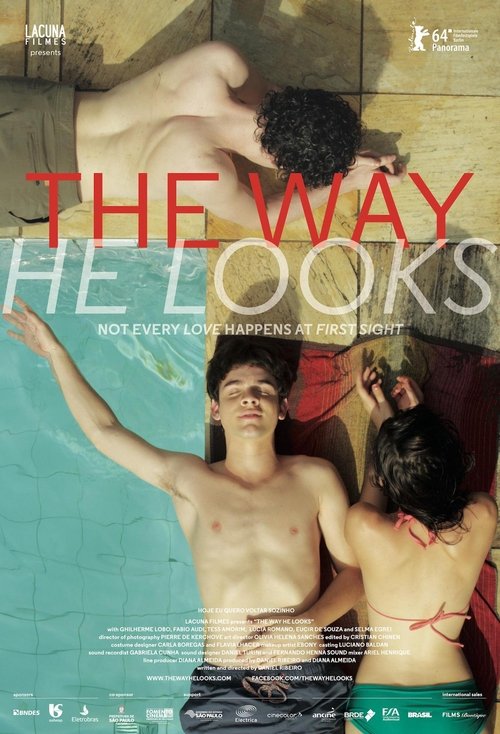
Hoje Eu Quero Voltar Sozinho

"Not every love happens at first sight"

10 April 2014 Brazil 96 min ⭐ 8.0 (961)
Director: Daniel Ribeiro
Cast: Ghilherme Lobo, Fábio Audi, Tess Amorim, Lúcia Romano, Eucir de Souza
Drama Romance
Search for Independence First Love and Sexual Discovery Friendship and Jealousy Disability and Perception
Box Office: $1,207,841

Overview

"The Way He Looks" (originally "Hoje Eu Quero Voltar Sozinho") is a Brazilian coming-of-age film that delicately explores the life of Leonardo, a blind teenager striving for independence. His world is largely defined by his protective mother, his loyal best friend Giovana, and the daily routine of school where he endures casual bullying. Leonardo yearns for new experiences and dreams of studying abroad to escape his sheltered life.

The arrival of a new student, Gabriel, disrupts Leonardo's predictable life. Gabriel's easy-going and accepting nature quickly forges a strong bond between the two boys. As their friendship deepens, Leonardo starts to experience feelings he's never had before, leading to a journey of self-discovery regarding his sexuality and his desire for a deeper connection. This burgeoning romance complicates his lifelong friendship with Giovana, who feels increasingly left out, creating a tender and emotional triangle that the three must navigate.

Core Meaning

The central message of "The Way He Looks" is a universal exploration of first love and the journey toward self-acceptance and independence. Director Daniel Ribeiro uses Leonardo's blindness not as a tragedy, but as a lens to examine how we connect with others beyond visual attraction. The film suggests that true affection transcends physical sight, rooted instead in emotional connection, touch, and mutual understanding. It's a story about emancipation—Leonardo's struggle is not just about discovering his homosexuality, but about breaking free from the limitations imposed on him by his disability and his overprotective family. The film champions the idea that everyone, regardless of physical ability or sexual orientation, deserves the freedom to discover who they are and to experience love.

Thematic DNA

Search for Independence 35%
First Love and Sexual Discovery 30%
Friendship and Jealousy 20%
Disability and Perception 15%

Search for Independence

Leonardo's primary struggle is his quest for independence from his overprotective parents, particularly his mother. He feels smothered by their constant worry and yearns to do things on his own, like walking home by himself or pursuing an exchange program abroad. This theme is central to his character arc, as his relationship with Gabriel empowers him to assert his autonomy and take control of his own life.

First Love and Sexual Discovery

The film tenderly portrays the universal experience of first love through the burgeoning romance between Leonardo and Gabriel. For Leonardo, this is intertwined with the discovery of his own homosexuality. His blindness adds a unique dimension, as his attraction is based on personality, voice, and touch rather than sight. The narrative focuses on the sweetness, uncertainty, and excitement of these new feelings in a sensitive and natural way.

Friendship and Jealousy

The lifelong bond between Leonardo and his best friend Giovana is a cornerstone of the film. The arrival of Gabriel introduces tension and jealousy into their relationship, as Giovana feels she is being replaced. The film explores the complexities of friendship, the pain of feeling left out, and the eventual maturation of their bond as they all learn to navigate their new dynamic.

Disability and Perception

"The Way He Looks" challenges preconceived notions about disability. Leonardo's blindness is a part of his identity, but it does not define him. The film critiques how able-bodied people often impose limitations on those with disabilities. Gabriel treats Leonardo as an equal and capable individual, contrasting with the overprotective nature of his mother and the cruelty of his bullies, highlighting how others' perceptions can be more limiting than the disability itself.

Character Analysis

Leonardo (Leo)

Ghilherme Lobo

Archetype: The Innocent Hero
Key Trait: Yearning for Independence

Motivation

His primary motivation is to gain independence from his overprotective family and to be seen as a capable individual rather than just a blind person. He also yearns for the normal teenage experiences he feels he's missing out on, particularly his first kiss and a real romantic connection.

Character Arc

Leonardo begins as a sheltered and somewhat passive teenager, frustrated by his dependence on others. Through his friendship and subsequent romance with Gabriel, he gains confidence, learns to stand up to his parents and bullies, and actively pursues his own happiness and independence. He evolves from wanting to escape his life to embracing it, culminating in him proudly holding Gabriel's hand in public.

Gabriel

Fábio Audi

Archetype: The Catalyst
Key Trait: Accepting and Empathetic

Motivation

Gabriel is motivated by a genuine desire for friendship and connection. He is drawn to Leonardo's personality and is unphased by his blindness. He seeks to understand Leonardo and share experiences with him, which naturally blossoms into romantic affection.

Character Arc

Gabriel enters the story as a kind and open-minded new student. He remains a consistently supportive and accepting force throughout the film. His arc is less about personal change and more about how his presence facilitates growth in Leonardo and challenges the dynamic between Leonardo and Giovana. He learns to navigate his feelings for Leonardo and acts on them, helping to break down Leonardo's emotional walls.

Giovana (Gi)

Tess Amorim

Archetype: The Loyal Best Friend
Key Trait: Loyal but Insecure

Motivation

Her motivation is rooted in her deep, long-standing affection for Leonardo. Initially, there's a hint of romantic interest, but her primary drive is to protect and maintain her central role in his life. She has to learn that true friendship means allowing him to grow, even if it changes their relationship.

Character Arc

Giovana starts as Leonardo's devoted, slightly possessive best friend and guide. When Gabriel arrives, she struggles with jealousy and the fear of being replaced. Her arc involves learning to share her best friend and understanding that Leonardo's world is expanding. She matures from a place of insecurity to becoming a true supporter of Leonardo and Gabriel's relationship.

Symbols & Motifs

Gabriel's Sweatshirt

Meaning:

Gabriel's sweatshirt symbolizes comfort, intimacy, and the tangible presence of his affection for Leonardo. It becomes a sensory link to Gabriel when he is not there.

Context:

After Gabriel leaves his sweatshirt at Leonardo's house, Leonardo puts it on. He lies in bed, smelling it and feeling its texture, allowing him to feel close to Gabriel through his other senses. This act is a private, intimate moment of him acknowledging his deep feelings.

The Bicycle

Meaning:

The bicycle represents freedom, trust, and overcoming perceived limitations. For Leonardo, riding a bike seems impossible, but the act of doing so signifies a major step in his journey toward independence and the trust he shares with Gabriel.

Context:

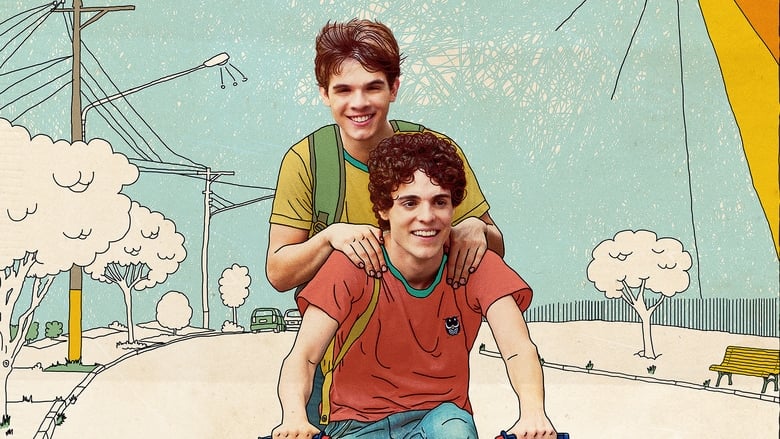
Early in the film, Leonardo mentions that riding a bike is impossible for him. The final scene shows Leonardo riding a bike with Gabriel on the back, guiding him. This powerful image encapsulates his newfound confidence and the complete trust that has formed between them.

Lunar Eclipse

Meaning:

The lunar eclipse serves as a moment of shared, intimate experience that transcends sight. It symbolizes a unique way of 'seeing' and connecting, highlighting how a profound experience can be shared without visual perception.

Context:

Gabriel takes Leonardo to 'watch' a lunar eclipse, describing the celestial event to him in detail. This scene emphasizes their growing bond and Gabriel's willingness to share the world with Leonardo in a way that is meaningful to him, strengthening their connection beyond the physical.

Memorable Quotes

Mãe, pra mim é sempre escuro.

— Leonardo

Context:

Leonardo says this during an argument with his mother after he comes home late by himself. She is worried about him being out alone in the dark, and he retorts with this line to make her understand that her fears are based on a sighted person's perception of the world, not his.

Meaning:

Translated as "Mom, for me it's always dark," this line is a powerful assertion of Leonardo's reality and his frustration with his mother's overprotection. It highlights the fundamental difference in their perspectives and underscores his argument for greater independence, as the dangers she associates with darkness are his constant reality.

Eu nunca beijei ninguém.

— Leonardo

Context:

Leonardo confides this to Giovana at the beginning of the film while they are lounging by the pool. They are discussing their romantic inexperience, and this line establishes Leonardo's core desire for a romantic connection and his insecurity about achieving it.

Meaning:

This translates to "I've never kissed anyone." This simple, vulnerable confession encapsulates Leonardo's teenage angst and feelings of isolation. It's a universal sentiment of wanting to experience a rite of passage, made more poignant by his fear that his blindness makes him undesirable.

Philosophical Questions

What is the basis of love and attraction?

The film directly challenges the primacy of sight in romantic attraction. Leonardo has never seen anyone, so his affection for Gabriel develops from other sensory inputs: the sound of his voice, the comfort of his presence, the feel of his touch, and the intellectual and emotional connection they share. This prompts the audience to question how much of conventional attraction is based on societal beauty standards and visual cues versus deeper, non-visual qualities. It posits that love can be 'blind' in the most literal sense, originating from a place of pure emotional and personal compatibility.

To what extent do the perceptions of others define our limitations?

"The Way He Looks" explores the idea that personal limitations are often imposed externally. Leonardo is physically capable of much more than his mother believes. The bullies mock him and his classmates initially isolate him based on their perception of his disability. It is only when Gabriel treats him as an equal, without preconceived limitations, that Leonardo truly begins to flourish and test the boundaries of his independence. The film argues that our potential is often constricted not by our own abilities, but by the limiting and protective lenses through which others see us.

Alternative Interpretations

While the film is largely straightforward, some interpretations focus more heavily on the metaphorical aspects of Leonardo's blindness. One reading suggests that his blindness is a metaphor for the universal uncertainty and 'blindness' of first love. All teenagers, regardless of sight, navigate the confusing and often non-visual cues of attraction and affection. In this view, Leonardo's physical condition merely externalizes the internal state of every adolescent discovering romance for the first time.

Another perspective downplays the romance and focuses on the film as a platonic love story between three friends learning to adapt to change. From this angle, the central conflict is not just about Leonardo's romantic awakening but about the evolution of a childhood friendship. The film becomes an exploration of how friendships must be renegotiated and redefined as individuals mature and form new, intense connections. The happy ending is not just the union of a couple, but the successful preservation and rebalancing of the trio's bond.

Cultural Impact

"The Way He Looks" received widespread critical acclaim both in Brazil and internationally for its gentle, positive, and sensitive portrayal of gay youth and disability. At the time of its release, it was seen as a significant step forward in Brazilian cinema for presenting a story about LGBT characters that was not centered on tragedy, prejudice, or sex, but on universal themes of love and self-discovery. By choosing a middle-class suburban setting, the film also broke away from the common international portrayal of Brazil being focused on favelas and violence.

The film was celebrated by audiences for its heartwarming and relatable story, winning numerous audience awards at film festivals worldwide. It resonated with young queer audiences by providing a hopeful and empowering narrative. The casting of a non-blind actor in the lead role did spark some discussion about representation in film, a conversation that continues to be relevant today. Ultimately, the film's success helped to increase the visibility of both LGBT and disability narratives in mainstream cinema, and its tender, universal approach has made it a beloved film within the queer cinema canon.

Audience Reception

Audience reception for "The Way He Looks" was overwhelmingly positive. Viewers frequently praise the film for its sweetness, charm, and heartfelt portrayal of first love. The chemistry between the three lead actors is consistently highlighted as a major strength, making the central relationships feel authentic and engaging. Many viewers found the story to be a refreshing and uplifting departure from more tragic or dramatic LGBTQ+ narratives, appreciating its positive and hopeful tone. The sensitive handling of both Leonardo's blindness and his burgeoning sexuality was also widely commended. Points of minor criticism are rare, though some found the plot to be slightly predictable and the characters, particularly the bullies, a bit too simplistic. Overall, audiences embraced it as a tender, universal, and feel-good coming-of-age story.

Interesting Facts

  • The film is an expanded feature-length version of a 2010 short film titled "Eu Não Quero Voltar Sozinho" ("I Don't Want to Go Back Alone").
  • The three main actors, Ghilherme Lobo, Fábio Audi, and Tess Amorim, all reprised their roles from the original short film.
  • Ghilherme Lobo, the actor who plays the blind protagonist Leonardo, is not actually blind. He researched for the role by visiting institutes for the blind and learning Braille.
  • "The Way He Looks" won two prestigious awards at the 64th Berlin International Film Festival: the FIPRESCI Prize for best feature in the Panorama section and the Teddy Award for best LGBT-themed feature film.
  • The film was Brazil's official submission for the Best Foreign Language Film category at the 87th Academy Awards.
  • Director Daniel Ribeiro was inspired to create a blind gay character to explore the idea that sexuality is not based on sight. He wanted to tell a story where a character who has never seen a man or a woman still falls in love with another man.

⚠️ Spoiler Analysis

Click to reveal detailed analysis with spoilers

Frequently Asked Questions

Explore More About This Movie

Dive deeper into specific aspects of the movie with our detailed analysis pages

Comments (0)

Leave a comment

No comments yet. Be the first to share your thoughts!