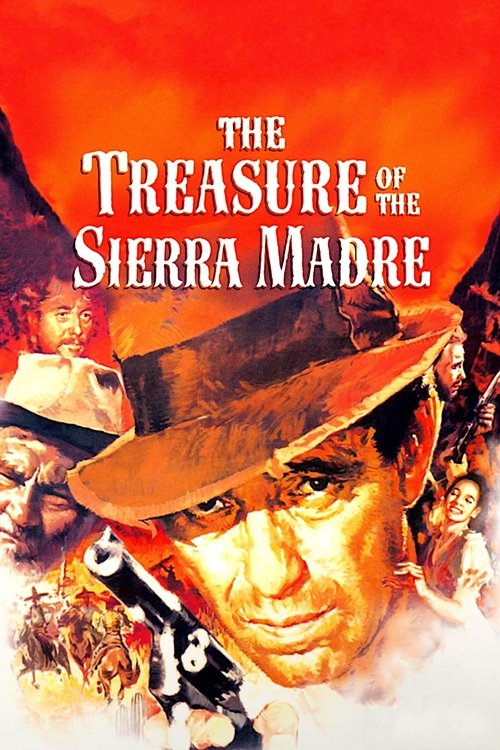
The Treasure of the Sierra Madre
"The nearer they get to their treasure, the farther they get from the law."
Overview
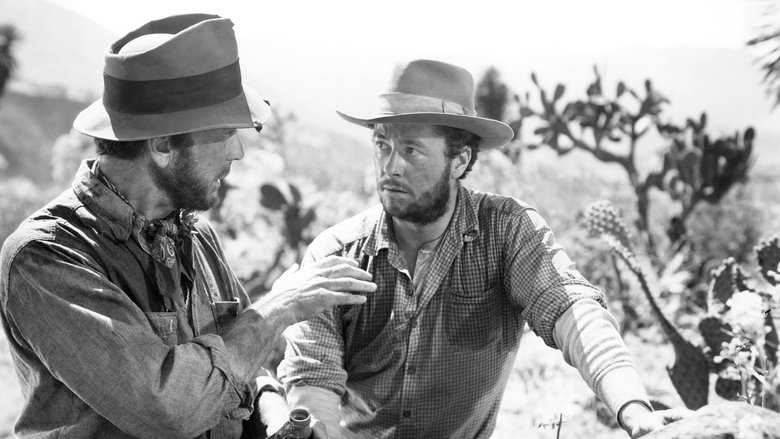
"The Treasure of the Sierra Madre" follows two down-on-their-luck Americans, Fred C. Dobbs (Humphrey Bogart) and Bob Curtin (Tim Holt), who are struggling to survive in 1920s Tampico, Mexico. After being cheated out of their wages, they cross paths with an old, experienced prospector named Howard (Walter Huston). Howard's tales of searching for gold ignite a spark of hope and ambition in the two younger men.
Pooling their meager resources, including a small lottery win, the trio embarks on a perilous journey into the remote and dangerous Sierra Madre mountains. They face harsh conditions and the constant threat of bandits, but their determination pays off when they finally discover a rich vein of gold. As they accumulate wealth, the psychological toll of their newfound fortune begins to surface.
The film masterfully charts the erosion of trust and the rise of paranoia among the men, particularly in Dobbs. Their initial camaraderie dissolves into suspicion and hostility, as the corrupting influence of the gold transforms them. The narrative builds to a tense and dramatic climax where their greed and internal conflicts collide with external threats, leading to an ironic and unforgettable conclusion about the nature of wealth and humanity.
Core Meaning
At its core, "The Treasure of the Sierra Madre" is a powerful fable about the corrupting influence of greed on the human soul. Director John Huston uses the quest for gold not merely as an adventure plot, but as a lens to examine the deterioration of character under the immense pressure of wealth and suspicion. The film posits that it is not the gold itself that is evil, but the lust for it that awakens the darkest aspects of human nature, such as paranoia, violence, and betrayal. Ultimately, the film delivers a deeply ironic message about the futility of materialism; the treasure, so arduously gained and fiercely protected, ends up as worthless dust blown away by the wind, suggesting that the true cost of the journey was the loss of the men's humanity, a price far greater than any amount of gold.
Thematic DNA
Greed and Avarice
This is the central theme of the film, exploring how the desire for wealth can utterly corrupt individuals. Fred C. Dobbs's character provides a chilling case study in this moral decay. He begins as a down-on-his-luck but seemingly decent man who claims he'd be satisfied with a modest share. However, as the gold piles up, his greed intensifies, leading to consuming paranoia, treachery, and ultimately his own destruction. The film illustrates Howard's warning that gold changes men's souls, showing how it transforms camaraderie into suspicion and friendship into violent conflict.
Paranoia and Mistrust
Directly stemming from greed, paranoia systematically destroys the partnership between the three prospectors. As soon as the gold is discovered, the men become suspicious of one another. They divide the gold dust meticulously each night, hiding their shares and sleeping with one eye open. Dobbs, in particular, descends into a state of madness, convinced that Curtin and Howard are plotting to kill him for his portion. This theme is powerfully depicted through tense dialogues and Bogart's increasingly unhinged performance, highlighting how the fear of loss can be as destructive as the desire for gain.
Human Nature and Morality
The film presents a cynical yet complex view of human nature. It contrasts the three main characters' responses to the temptation of wealth. Howard, the seasoned prospector, has witnessed the corrupting power of gold before and maintains a philosophical detachment, valuing wisdom and life over riches. Curtin struggles with his conscience, representing a moral middle ground. Dobbs, however, succumbs entirely to his basest instincts. Through their interactions and fates, the film poses profound questions about whether avarice is an inherent flaw in humanity or a product of circumstance.
Irony and Fate
A sense of cosmic irony pervades the film, culminating in its famous ending. After all the hardship, betrayal, and death, the gold—the very object that drove the men to madness—is mistaken for sand by bandits and scattered by the wind. The final scene, where Howard and Curtin burst into laughter at the cruel absurdity of their fate, encapsulates this theme. It suggests that their entire destructive quest was for nothing, a bitter joke played by fate. This ironic conclusion underscores the film's message about the ultimate worthlessness of material wealth when compared to life and morality.
Character Analysis
Fred C. Dobbs
Humphrey Bogart
Motivation
Initially, his motivation is simple survival and a desire to escape poverty. However, this quickly morphs into an insatiable greed. He doesn't just want enough to live on; he wants it all and becomes terrified of losing it. His primary motivation becomes the selfish acquisition and protection of his gold at any cost.
Character Arc
Dobbs undergoes a complete moral and psychological disintegration. He begins as a sympathetic, down-on-his-luck American just looking for a break. The prospect of gold awakens a deep-seated greed that slowly consumes him. His initial declarations of modesty give way to obsessive paranoia and a violent possessiveness over his share. He becomes increasingly isolated, suspicious, and irrational, eventually attempting to murder his partner, Curtin. His arc is a tragic descent from a flawed everyman into a monster, culminating in his pathetic death at the hands of bandits, completely undone by the very wealth he sought to possess.
Howard
Walter Huston
Motivation
Howard is motivated by the thrill of the prospect and a desire for enough money to live out the rest of his days comfortably. Unlike Dobbs, he has a clear limit to his desires. He is also motivated by a sense of professional pride in his prospecting skills and, later, by a genuine desire to help the native villagers, showcasing his humanity.
Character Arc
Howard's character is largely static, representing wisdom, experience, and a philosophical perspective that the younger men lack. He has been on this path before and understands the dangerous effect gold has on men's souls. While he is eager to find gold, he is not consumed by it. His arc is less about personal change and more about reaffirming his worldview. In the end, he finds a different kind of wealth: the respect and honor of the villagers he helps, choosing community over lost treasure. He ends the film with laughter, accepting the absurdity of their failed quest with grace and wisdom.
Bob Curtin
Tim Holt
Motivation
Curtin is motivated by a dream of a better life, perhaps settling down and buying a fruit orchard. He wants wealth not for its own sake, but for the stability and happiness it might bring. His motivations are grounded in tangible, wholesome dreams, which helps him resist the corrupting influence of the gold more effectively than Dobbs.
Character Arc
Curtin serves as the moral center of the trio. He is younger and more idealistic than Dobbs, and while he is tempted by the gold, he never fully loses his sense of right and wrong. He consistently tries to be the voice of reason against Dobbs's escalating paranoia. His arc is one of disillusionment and learning; he witnesses the absolute worst of human nature in Dobbs but survives with his integrity intact. He is deeply affected by the ordeal but emerges wiser, choosing to fulfill his promise to Cody's widow rather than lament the lost gold.
Symbols & Motifs
Gold
The gold dust represents more than just wealth; it is a powerful symbol of temptation and the corrupting force of greed. Its physical form—dust—is significant, as it is easily scattered and lost, symbolizing the ephemeral and ultimately worthless nature of the material riches the men sacrifice everything for.
The entire plot revolves around the search for, acquisition of, and protection of the gold. The weight of the bags of gold dust mirrors the growing weight on the characters' consciences. Its eventual dispersal by the wind in the final scene is the ultimate punchline to the film's tragic fable.
The Mountain (Sierra Madre)
The mountain is a symbol of the harsh, indifferent forces of nature and the arduous challenges of the quest. It is a primal setting, far from civilization and its laws, where the true nature of the men is revealed. Howard speaks of the mountain almost as a living entity, suggesting they have "wounded" it and must "close her wounds," personifying it as a force that ultimately reclaims what was taken from it.
The physical struggle to travel through and survive in the Sierra Madre parallels the internal, psychological struggles of the characters. The isolation of the location intensifies their paranoia. In the end, the mountain, through a gust of wind, takes back the gold, restoring a natural, moral order.
The Lottery Ticket
The winning lottery ticket symbolizes fate and chance. It is the random stroke of luck that enables the entire enterprise, suggesting that the men's journey is set in motion by forces beyond their control. It represents a moment of pure, unearned hope before the toil and corruption begin.
Dobbs buys a fraction of a lottery ticket from a young boy (played by a very young Robert Blake). Just when they are about to give up on their dream of prospecting, Dobbs discovers his ticket is a winner, providing the final funds needed for their expedition. This event serves as the catalyst for the entire plot.
Memorable Quotes
Badges? We ain't got no badges. We don't need no badges. I don't have to show you any stinking badges!
— Gold Hat (Alfonso Bedoya)
Context:
This is said during the tense confrontation when the bandits, led by Gold Hat, claim to be 'Federales' (mounted police). When Dobbs demands to see their badges as proof of their authority, Gold Hat delivers this sneering, now-famous retort before the encounter erupts into a gunfight.
Meaning:
This iconic line, often misquoted, has become legendary in cinematic history. It perfectly encapsulates the bandits' lawlessness and contempt for authority. They are not beholden to any rules or civilization; they are a force of nature in this wild territory, making their own law with their guns.
Ah, as long as there's no find, the noble brotherhood will last. But when the piles of gold begin to grow... that's when the trouble starts.
— Howard
Context:
Howard says this in the flophouse in Tampico, before they have even embarked on their journey. He is explaining the harsh realities of prospecting to Dobbs and Curtin, warning them of the psychological dangers that are far greater than the physical ones.
Meaning:
This line serves as the film's thesis statement, delivered early on by the wise Howard. It foreshadows the entire trajectory of the plot, predicting that the discovery of wealth will inevitably lead to conflict and the dissolution of their partnership. It speaks to the universal theme of how greed corrodes human relationships.
Conscience. What a thing. If you believe you got a conscience, it'll pester you to death. But if you don't believe you got one, what can it do to you?
— Fred C. Dobbs
Context:
Dobbs mutters this to himself after shooting Curtin and leaving him for dead. He is wrestling with the guilt of his actions, trying to convince himself that he can escape the psychological torment by simply denying its source. This moment highlights his internal battle as he slides fully into villainy.
Meaning:
This quote provides a chilling insight into Dobbs's deteriorating psyche. He is actively trying to rationalize his malevolent thoughts and actions by dismissing the very concept of a conscience. It marks a significant point in his descent into amorality, as he attempts to sever ties with the part of himself that knows he is doing wrong.
Philosophical Questions
Is greed an inherent part of human nature or a corruption of it?
The film explores this question through its three main characters. Dobbs's rapid descent suggests that greed is a dormant beast within, easily awakened by opportunity. Howard's wisdom and resilience, however, imply that experience and self-knowledge can temper these base instincts. Curtin exists between these two poles, struggling with temptation but ultimately holding onto his moral compass. The film doesn't provide a definitive answer but rather presents a spectrum of human responses, suggesting that while the potential for greed may be universal, succumbing to it is a matter of individual character and choice.
What is the true value of wealth?
"The Treasure of the Sierra Madre" relentlessly questions the intrinsic value of material wealth. The characters sacrifice their safety, their humanity, and their lives for gold dust. The ultimate irony is that this 'treasure' is lost to the wind, returning to the earth as worthless dirt. In the end, Howard finds true value in the respect and community of the Indian village, and Curtin finds purpose in fulfilling a promise to a dead man's family. The film powerfully argues that real wealth lies in human connection, honor, and wisdom, not in a pile of glittering metal.
Alternative Interpretations
While the film is widely seen as a straightforward morality tale about greed, some alternative interpretations exist. One perspective views the film through a Marxist lens, influenced by B. Traven's novel. Howard's speech about the value of gold being derived from the labor required to obtain it is a direct nod to the labor theory of value, a key concept in Marxist economics. From this viewpoint, the story isn't just about individual moral failing but a critique of the capitalist pursuit of wealth, which inevitably pits men against each other and alienates them from their labor and humanity. Dobbs's destruction is the logical end of a system that prioritizes profit over people.
Another interpretation focuses on the film as a psychological drama about masculinity in crisis. The three men are adrift, without purpose or connection in a post-war world. Their quest for gold can be seen as a desperate attempt to assert their virility and worth in a world that has rendered them obsolete. The wilderness of the Sierra Madre becomes an arena where their primal instincts are unleashed. Dobbs's paranoia is not just about gold but about his status and power relative to the other men. The absence of female characters further heightens this focus on a purely masculine world, where the competition for dominance, symbolized by gold, becomes the sole driving force.
Cultural Impact
"The Treasure of the Sierra Madre" was released in 1948 to widespread critical acclaim, though it was not a major box office success initially, likely due to its dark, cynical themes and lack of a traditional hero or love story. Over time, however, its stature has grown immensely, and it is now considered a landmark of American cinema. In 1990, it was selected for preservation in the United States National Film Registry by the Library of Congress for being "culturally, historically, or aesthetically significant."
The film's influence on cinema has been profound. Its gritty realism, complex psychological exploration, and willingness to feature an unsympathetic protagonist were groundbreaking for the era. The on-location shooting in Mexico lent an unprecedented authenticity that would influence countless future films. Filmmakers like Stanley Kubrick, Sam Peckinpah, Steven Spielberg, and George Lucas have cited it as a major influence; the look of Fred C. Dobbs is often noted as an inspiration for Indiana Jones. Paul Thomas Anderson's "There Will Be Blood" also draws thematic and character inspiration from Huston's film. The movie's unflinching study of greed has become a cinematic touchstone, referenced and homaged in everything from the Stone Roses song "Fools Gold" to episodes of "The Simpsons".
The film's most famous line, "Badges? We don't need no stinking badges!", has transcended the film to become an enduring part of pop culture, frequently parodied and quoted. The movie remains a powerful and timeless exploration of human nature's darker side, a classic that continues to resonate with audiences and filmmakers alike.
Audience Reception
Upon its release, "The Treasure of the Sierra Madre" was met with widespread critical acclaim, with reviewers praising John Huston's direction, the powerful screenplay, and the superb performances, particularly by Humphrey Bogart and Walter Huston. Despite the critical success and multiple Academy Awards, the initial box office performance was modest. Audiences of the time found the film's tone to be exceptionally grim and cynical. The lack of a conventional hero (with Bogart's Dobbs being a particularly dark protagonist), the near-total absence of female characters, and the bleak, ironic ending made it a tough sell for a mainstream audience accustomed to more optimistic Hollywood fare.
However, over the decades, its reputation has grown immensely among audiences and cinephiles. It is now widely regarded as a masterpiece. Viewers praise its psychological depth, its timeless themes, and Bogart's daring performance. The main point of criticism, even today, can be its slow, deliberate pacing in the first act before the prospecting begins. Nevertheless, the overwhelming consensus is that it is a masterwork of storytelling and a classic exploration of human fallibility.
Interesting Facts
- The film was one of the first major Hollywood productions to be shot extensively on location outside the United States, primarily in Mexico, which adds to its authenticity.
- Director John Huston cast his own father, Walter Huston, in the role of Howard. Walter went on to win the Academy Award for Best Supporting Actor for his performance. John Huston won for Best Director and Best Screenplay, marking the first time a father and son won Oscars for the same film.
- Humphrey Bogart, concerned about playing such an unsympathetic character, was initially hesitant. His performance as the paranoid Fred C. Dobbs is now considered one of the best and bravest of his career, though he was not nominated for an Academy Award.
- The famous line "We don't need no stinking badges!" is ranked on the American Film Institute's list of 100 greatest movie quotes.
- B. Traven, the author of the novel on which the film is based, was a notoriously reclusive figure whose true identity has long been a subject of mystery and speculation.
- John Huston has a brief cameo in the beginning of the film. He is the man in the white suit whom Dobbs repeatedly pesters for money.
- During production in Mexico, a local newspaper falsely accused the film of portraying the country in a negative light, leading to a temporary government shutdown of the production until the matter was cleared up with the President of Mexico.
- Tim Holt, who plays Curtin, was a decorated war hero, having served as a B-29 bombardier in the Pacific during World War II.
- Due to a vitamin deficiency and other health issues, Humphrey Bogart had lost a significant amount of hair and wore a wig throughout the filming.
Easter Eggs
Director John Huston's Cameo
In the opening scenes in Tampico, Fred C. Dobbs repeatedly begs for money from a well-dressed American in a white suit. That American is played by the film's director, John Huston. This type of director cameo was a playful signature in some filmmakers' work.
Appearance by Tim Holt's Father
In a brief, uncredited appearance, actor Jack Holt, the real-life father of star Tim Holt (Bob Curtin), appears as one of the down-on-their-luck men in the Tampico flophouse early in the film. This adds a small, intergenerational touch, especially notable in a film where the director's father had such a major role.
⚠️ Spoiler Analysis
Click to reveal detailed analysis with spoilers
Frequently Asked Questions
Explore More About This Movie
Dive deeper into specific aspects of the movie with our detailed analysis pages
Comments (0)
No comments yet. Be the first to share your thoughts!