Skip to content
Alya Sometimes Hides Her Feelings in Russian
A pastel-tinted romantic comedy steeped in playful deceit and vulnerability, where unvoiced affections drift between languages like private confessions veiled behind a frosted glass window.
Alya Sometimes Hides Her Feelings in Russian

Alya Sometimes Hides Her Feelings in Russian

時々ボソッとロシア語でデレる隣のアーリャさん

03 July 2024 — 18 September 2024 Japan 2 season 13 episode Ended 8.0 (250)

Cast: Sumire Uesaka, Kohei Amasaki, Wakana Maruoka, Yukiyo Fujii, Saya Aizawa

Animation Comedy Masks, Public Personas, and Vulnerability Language and Covert Communication Independence vs. Interdependence Familial Legacy and Identity

Overview

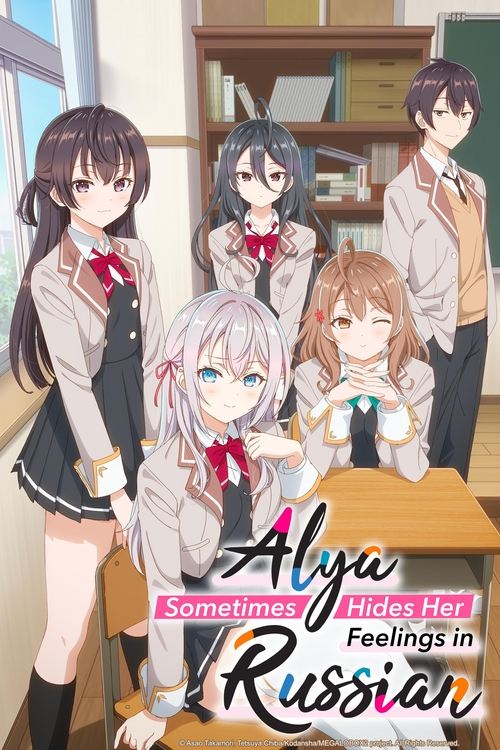
Alya Sometimes Hides Her Feelings in Russian (Tokidoki Bosotto Russia-go de Dereru Tonari no Alya-san, commonly abbreviated as Roshidere) is a romantic comedy anime series produced by studio Doga Kobo, based on the light novel series written by SunSunSun and illustrated by Momoco. Set at the prestigious Seiren Private Academy, the series chronicles the everyday interactions and high-stakes social rivalries between Alisa "Alya" Mikhailovna Kujou, an exceptionally talented and aloof Japanese-Russian student council member, and Masachika Kuze, a seemingly unmotivated classmate who sits beside her.

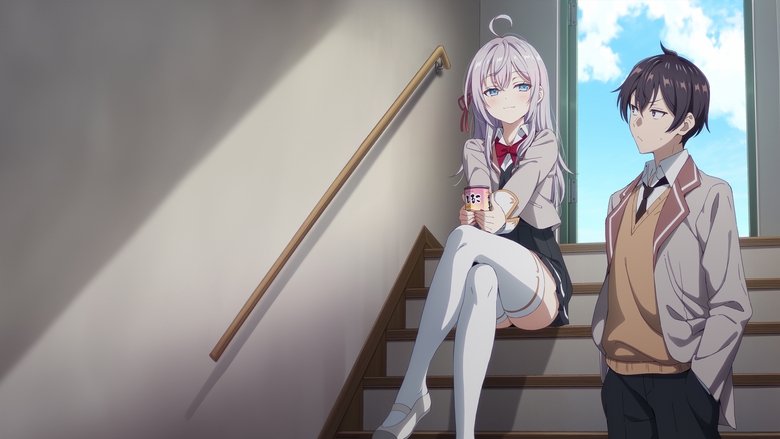
While Alya regularly projects a strict, unapproachable "solitary princess" persona to her peers, she secretly vents her fondest, most flirtatious thoughts toward Masachika by whispering them in Russian under the assumption that he cannot understand a word. Unbeknownst to her, Masachika is secretly fluent in Russian, having learned the language during childhood, but chooses to keep a poker face to spare her severe embarrassment while secretly delighting in her candid vulnerability.

As their dynamic shifts from lighthearted classroom banter to collaborative ambition, the story broadens into a strategic high school power struggle. Alya decides to run for Student Council President, recruiting Masachika as her campaign partner and running mate. This ambition pushes them directly into political opposition against Yuki Suou—the academy's beloved model candidate who conceals deep-rooted familial ties with Masachika—forcing both protagonists to navigate their social personas, latent traumas, and hidden feelings on a public stage.


Core Meaning

The core thesis of the series explores the gap between social perfection and emotional honesty. Through the comedic premise of language barriers and private personas, the series illustrates how individuals construct rigid facades—whether the pristine "solitary princess" armor Alya wears or the detached, slacker persona Masachika uses to hide his talents—out of fear of rejection, failure, or interpersonal vulnerability. The narrative demonstrates that genuine connection and self-actualization occur when people find the courage to lower their defenses and place authentic trust in one another.

Thematic DNA

Masks, Public Personas, and Vulnerability 30%
Language and Covert Communication 25%
Independence vs. Interdependence 25%
Familial Legacy and Identity 20%

Masks, Public Personas, and Vulnerability

The entire narrative revolves around dual identities. Alya maintains an icy, independent standard in public while expressing heartfelt warmth only in a foreign tongue; Masachika masks his former brilliance and inner conflict beneath an unbothered slacker exterior. The progression of the show tests these facades during moments of political and personal crisis.

Language and Covert Communication

Russian operates as an emotional sanctuary—a linguistic filter through which feelings can be articulated without immediate social repercussions. The asymmetric awareness between the two leads creates a unique tension where communication is simultaneous confession and dramatic irony.

Independence vs. Interdependence

Alya begins with an individualistic mindset, believing relying on others is a sign of weakness or an unfair burden. Partnering with Masachika forces her to learn that true leadership and mutual affection require leaning on someone else's strengths and accepting support.

Familial Legacy and Identity

Explored through Masachika and Yuki's estranged family history, the series contrasts the burdensome expectations of lineage and parental pressure with the personal freedom to choose one's own identity and companions.

Character Analysis

Alisa "Alya" Mikhailovna Kujou

Sumire Uesaka

Archetype: The Tsundere / The Solitary Ice Princess Key Trait: Severe public pride coupled with impulsive, affectionate confessions in Russian.

Motivation

To prove her capability by winning the Student Council presidency on merit while navigating her budding feelings for Masachika.

Character Arc

Evolves from a rigid perfectionist who alienates peers with unyielding self-reliance into an empathetic leader willing to show weakness and depend on Masachika's campaign guidance.

Masachika Kuze

Kohei Amasaki

Archetype: The Reluctant Prodigy / Slacker Hero Key Trait: A deadpan poker face masking acute perception and bilingual fluency.

Motivation

To shield Alya's dignity and elevate her to the presidency, while keeping his family secrets and Russian fluency concealed.

Character Arc

Starts as a disinterested slacker avoiding effort due to past family trauma, but gradually reclaims his strategic intellect and confidence to act as Alya's indispensable political backing.

All 5 characters and cast

Symbols & Motifs

The Russian Language

Meaning:

Symbolizes Alya's guarded inner world, intimacy, and unadulterated emotional truth. It acts as a safety valve for romantic sentiments she cannot bear to voice in Japanese.

Context:

Used during intimate or impulsive moments in the classroom and beyond when Alya whispers confessions, praises, and playful jabs under the assumption Masachika cannot decipher them.

The Seiren Academy Student Council

Meaning:

Represents societal hierarchy, expectations of excellence, and the battleground where social status and leadership are tested.

Context:

Functions as the central structural institution and political arena where candidates clash and personal ambitions collide.

The Adjoining Desks

Meaning:

Represents the liminal space between public aloofness and private intimacy, where their whispered dynamic unfolds.

Context:

The physical classroom seating arrangement between Alya and Masachika that facilitates their side conversations and close proximity.

Childhood Memories / Nostalgia

Meaning:

Symbolize lost innocence, lingering emotional debt, and the origins of Masachika's protective instincts.

Context:

Appears throughout recurring flashbacks depicting Masachika's past encounter with a Russian-speaking young girl at a playground.

Memorable Quotes

И меня тоже выбирай.
— Alisa Mikhailovna Kujou

Context

Whispered quietly in Russian after discussing school partnerships in Season 1, Episode 1.

Meaning

Translates to "And choose me too." Establishes the fundamental premise of the entire series: Alya reveals her deep romantic interest through her native tongue, assuming Masachika remains oblivious.

Милашка.
— Alisa Mikhailovna Kujou

Context

Muttered during routine classroom scolding as Masachika slumps over his desk in Season 1, Episode 1.

Meaning

Translates to "Cutie / So cute." Sets the comedic irony where her stern Japanese exterior is instantly undercut by private Russian endearments.

All 3 quotes

Episode Highlights

Alya Hides Her Feelings in Russian

S1E1

Establishes the foundational dynamic between Alya and Masachika, revealing Masachika's secret bilingualism and the comedic tension governing their daily interactions.

Significance:

Introduces the central narrative hook and premise of covert communication that drives the romantic dynamic.

And So They Met

S1E3

Details the backstory of how Masachika learned Russian in his childhood through a mystery girl.

Significance:

Frames his emotional attachment to the language and his empathy for Alya.

Spilled Emotion

S1E4

Introduces the complex sibling relationship between Masachika and Yuki.

Significance:

Sets up the family dynamics and establishes Yuki as a formidable rival rather than a romantic interest.

The Student Council

S1E6

Transitions the plot from pure slice-of-life romantic banter toward student council politics.

Significance:

Solidifies Alya's ambitions to become president and her recruitment of Masachika as her partner.

Hypnosis

S1E9

A comedic detour exploring psychological inhibitions and unfiltered feelings among the cast.

Significance:

Highlights character dynamics and comedic relationships outside formal political debates.

An Unexpected Turn

S1E11

Sets the stage for the political debates, pushing Alya through acute self-doubt.

Significance:

Highlights the critical necessity of Masachika's strategic backing and emotional support.

Chin Up and Face Forward

S1E12

Culminates in a tense battle of wits and public speaking against Yuki's campaign in the season finale.

Significance:

Solidifies Alya and Masachika's formal partnership as running mates and marks Masachika's active return to the academy spotlight.

Philosophical Questions

Can authentic intimacy exist when built on asymmetric knowledge and intentional concealment?

Explored through Masachika's secret understanding of Alya's Russian confessions, where one party harbors full knowledge of the other's unspoken feelings without disclosing it.

How much of an individual's identity is defined by familial expectations versus self-chosen purpose?

Examined through the contrasting paths of Masachika and Yuki, balancing aristocratic household burdens against personal autonomy.

Is self-reliance a virtue, or does rigid independence become an obstacle to genuine connection and collaborative achievement?

Reflected in Alya's journey as she confronts the limits of her solitary perfectionism and learns to embrace interdependence.

Alternative Interpretations

The "Strategic Facade" Interpretation: Some critics view the school election arc not just as a standard high school drama, but as a deliberate political satire reflecting modern social media persona management, where public policy and competence take a backseat to charisma, curated image, and rhetorical spectacle.

Full ending explanation

Cultural Impact

Roshidere debuted during a renaissance of character-driven light novel romantic comedies in mid-2024. The series leveraged modern multi-platform marketing, capitalizing on short-form video popularity (TikTok/YouTube Shorts) featuring Alya's animated Russian quips and the novelty of a bilingual tsundere lead.

By mid-2024, the light novel franchise crossed 5 million copies in circulation. The anime drew broad domestic and international viewership on platforms like Crunchyroll and ABEMA, sparking lively cultural discourse among bilingual anime fans regarding Russian localization, accents, and dub adaptations.

Audience Reception

Critical Praise: Critics and viewers commended Doga Kobo's character animation, expressive character designs by Yuhei Murota, and the witty, fast-paced chemistry between Masachika and Alya. Sumire Uesaka's vocal versatility in performing episodic ending theme covers was widely applauded.

Common Criticisms: Reviewers noted pacing imbalances where early romantic-comedy slice-of-life momentum abruptly shifted into bureaucratic student council politics. Some audience members found episodic filler elements (such as the hypnosis episode) disruptive to the core emotional progression.

Overall Verdict: Regarded as a visually polished, highly entertaining rom-com that elevated familiar tropes through a clever bilingual dynamic and engaging cast chemistry.

Interesting Facts

  • Sumire Uesaka, who voices Alya, majored in Russian studies at Sophia University in Tokyo and is widely known for her passion for Russian language and culture, having previously voiced Alya across drama CDs and promotional trailers.
  • For the Crunchyroll English dub, voice actress Sarah Natochenny was cast as Alya; Natochenny is of Russian descent and grew up speaking Russian natively.
  • Every single episode of Season 1 features a different ending theme song, consisting of famous Japanese pop and anime track covers performed entirely by Sumire Uesaka in character as Alya.
  • The first season was directed and written by Ryota Itoh at Doga Kobo, featuring character designs and chief animation direction by Yuhei Murota.
  • The anime was originally slated for an April 2024 broadcast but was delayed to July 2024 to refine visual quality; following Season 1, Season 2 was announced with Hiroshi Haraguchi stepping into the director's chair.

Easter Eggs

Bocchi the Rock! Cast Parallels

Voice actresses Yoshino Aoyama and Ikumi Hasegawa, who voice supporting peers Nonoa and Sayaka in the series, famously starred together as Hitori Gotoh and Ikuyo Kita in Bocchi the Rock!.

Classic J-Pop/Anime Song Homages

The individual ending themes pay homage to anime culture and classic J-Pop hits, reimagined as Russian-accented character covers performed by Sumire Uesaka.

Otaku Culture Satire

Masachika and Yuki frequently reference modern otaku subculture tropes, gacha game mechanics, and light novel clichés in their casual banter.

Frequently Asked Questions

Explore More About This Movie

Dive deeper into specific aspects of the movie with our detailed analysis pages

Comments (0)

Leave a comment

No comments yet. Be the first to share your thoughts!

Similar Movies