Skip to content
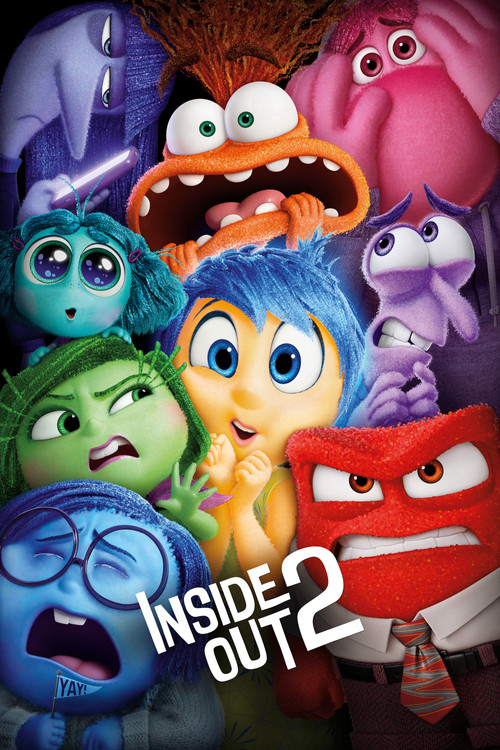
Inside Out 2
A turbulent, heart-swelling coming-of-age journey through the seismic tremors of adolescence, where fragile identity is forged like glass in a kaleidoscopic storm between radiant childhood innocence and the suffocating whirlwind of future uncertainty.
Inside Out 2

Inside Out 2

"Make room for new emotions."

11 June 2024 United States of America 97 min 7.5 (6,880)

Director: Kelsey Mann

Cast: Amy Poehler, Maya Hawke, Kensington Tallman, Liza Lapira, Tony Hale

Animation Family Comedy Adventure Identity Formation and Self-Compassion The Anatomy and Limits of Anxiety The Pitfalls of Toxic Positivity and Emotional Suppression Belonging, Peer Pressure, and Social Insecurity The Bittersweet Loss of Childhood Innocence
Budget: $200,000,000
Box Office: $1,698,863,816

Overview

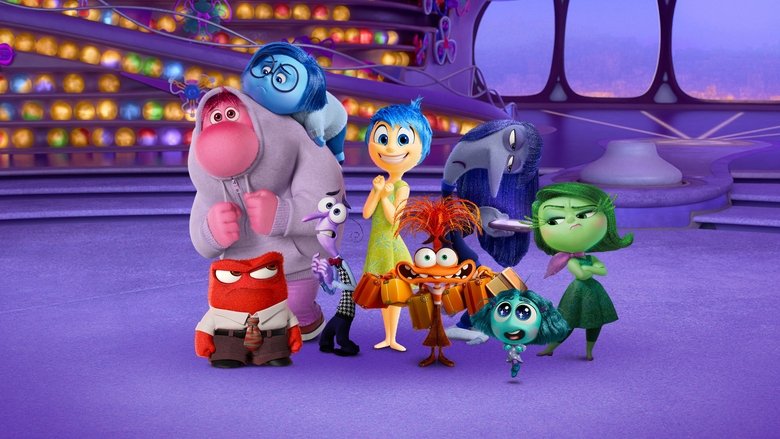
Inside Out 2 returns to the inner workings of Riley Andersen’s mind as she turns 13 years old and prepares to enter high school. Living comfortably under the balanced management of Joy, Sadness, Anger, Fear, and Disgust, Headquarters has settled into an era of stability. Joy has created a new mechanism to construct Riley’s "Sense of Self"—a glowing, crystalline structure assembled exclusively from Riley’s brightest and most positive memories, casting Riley as a fundamentally good person.

However, this tranquility is shattered overnight when the glowing red "Puberty" alarm blares, triggering an invasive demolition crew that drastically upgrades the emotional console. Soon after, four new emotions arrive to steer Riley through the social perils of teenage life: Anxiety, Envy, Ennui, and Embarrassment. When Riley attends an elite weekend ice hockey camp that could determine her social and athletic future, the original crew and the newcomers clash violently over how best to ensure her survival.

Believing that Riley requires a total identity overhaul to avoid social rejection, Anxiety usurps control, banishes the core emotions from Headquarters, and attempts to rebuild Riley’s sense of self from scratch. The film follows Joy and the original crew on an arduous Odyssey through the deepest, uncharted regions of the mind to recover Riley's identity before the weight of Anxiety’s curated perfectionism causes Riley to break down completely.

Core Meaning

The core message of Inside Out 2 is that true selfhood and emotional maturity cannot be built on curated perfection, toxic positivity, or fear of failure; it requires accepting the full, messy mosaic of every human experience.

The film explores the universal transition of adolescence when a child begins asking, "Am I good enough?" It highlights that anxiety, while born from an instinct to protect, becomes self-destructive when attempting to script an unwritten future. Ultimately, authentic growth requires offering unconditional compassion to our entire self rather than selectively erasing mistakes or anxieties.

Thematic DNA

Identity Formation and Self-Compassion 35%
The Anatomy and Limits of Anxiety 25%
The Pitfalls of Toxic Positivity and Emotional Suppression 20%
Belonging, Peer Pressure, and Social Insecurity 10%
The Bittersweet Loss of Childhood Innocence 10%

Identity Formation and Self-Compassion

Revealed through the construction of the "Sense of Self." Joy buries Riley's flaws while Anxiety attempts to program her through catastrophic thinking. The climax reveals identity is not a single binary affirmation ("I am good" or "I am flawed"), but an ever-evolving sum of conflicting experiences, mistakes, and virtues.

The Anatomy and Limits of Anxiety

Revealed through Anxiety's role as a hyper-vigilant protector obsessed with anticipating future threats rather than a malicious villain. Depictions of catastrophizing and the climactic panic attack show how obsessively attempting to control the future paralyzes the present.

The Pitfalls of Toxic Positivity and Emotional Suppression

Revealed through Joy’s habit of launching negative memories to the "Back of the Mind." Joy is forced to confront her own hypocrisy and recognize that suppressing negative experiences is just as harmful as relentless worry, as true resilience requires facing mistakes directly.

Belonging, Peer Pressure, and Social Insecurity

Revealed through Riley's struggle upon entering high school, where she feels torn between her childhood friends Bree and Grace and the older varsity player Val Ortiz, exploring how teenage insecurity leads to abandoning authentic bonds to fit in.

The Bittersweet Loss of Childhood Innocence

Revealed when Joy laments that growing up might naturally involve feeling less joy, capturing the melancholic realization that childhood simplicity must yield to the complex, turbulent waters of adulthood.

Character Analysis

Joy

Amy Poehler

Archetype: The Caregiver / Protagonist Key Trait: Relentless optimism, maternal devotion.

Motivation

To keep Riley happy, protected, and feeling like a fundamentally good person.

Character Arc

Learns that she cannot micromanage Riley’s identity or enforce unceasing positivity, ultimately embracing emotional humility.

Anxiety

Maya Hawke

Archetype: The Shadow Protector / Well-Intentioned Antagonist Key Trait: Hyper-vigilance, manic planning, frantic speed.

Motivation

To prepare Riley for every conceivable future threat and guarantee high school success.

Character Arc

Progresses from an overzealous strategist to an overwhelmed, panicked entity, ultimately learning to yield control and trust.

All 5 characters and cast

Symbols & Motifs

The Sense of Self (Belief System Strings)

Meaning:

Symbolizes how personal beliefs and memory orbs weave together to construct internal identity.

Context:

Located beneath Headquarters, where glowing strings rooted in Riley's memories rise to form a flower-like core identity structure.

The "Back of the Mind" / Memory Chute

Meaning:

A literal metaphor for psychological repression and denial that eventually creates an avalanche of unresolved emotional baggage.

Context:

A mechanical slingshot system Joy uses to shoot unpleasant or embarrassing memories out of sight.

The Jar / Vault

Meaning:

Symbolizes "bottling up" primary feelings, hiding emotional vulnerabilities, and compartmentalizing distress.

Context:

A literal glass jar and vault where Anxiety locks away Joy and the original core emotions.

The Sar-Chasm

Meaning:

Represents passive-aggressive defense mechanisms used by adolescents to hide genuine vulnerability.

Context:

A physical canyon that opens in Riley's mind whenever she speaks sarcastically, warping vocal echoes into mocking quips.

The Whirlwind / Panic Attack Console

Meaning:

Represents the blinding sensory overload and physical detachment of an acute panic attack.

Context:

A blinding, orange kinetic vortex created at the control console when Anxiety moves frantically and becomes trapped by her own speed.

Anxiety's Armchair and Chamomile Tea

Meaning:

Symbolizes the healthy practice of grounding, acknowledging worries, and helping overactive anxieties rest.

Context:

Given to Anxiety by Joy in Headquarters at the end of the film to help her de-escalate and relax.

Memorable Quotes

Maybe that’s what happens when you grow up. You feel less joy.
— Joy (Amy Poehler)

Context

Spoken softly while standing atop a mountain of discarded bad memories in the Back of the Mind.

Meaning

Captures Joy's darkest introspection and the bittersweet reality that childhood simplicity and effortless happiness fade during puberty.

Of course I’m delusional! Do you know how hard it is to stay positive all the time when all you folks do is complain, complain, complain?!
— Joy (Amy Poehler)

Context

Joy breaks down and yells at Anger, Fear, and Disgust after they question her impractical plans.

Meaning

A rare, cathartic burst of anger that exposes the exhaustion caused by compulsory optimism and toxic positivity.

All 5 quotes

Philosophical Questions

Can identity be consciously curated, or must it be organically accepted?

Explored through Joy's and Anxiety's failed attempts to engineer Riley's personality by filtering out painful memories, demonstrating that manufactured self-concepts collapse and true identity requires integrating contradictions and flaws.

Is anxiety an inherent pathology or an evolutionary necessity?

Explored by framing Anxiety as an adaptive protector against future threats, showing that the goal of emotional health is not eradicating anxiety, but preventing it from hijacking the present.

What is the true cost of emotional maturity?

Explored through Joy's realization that developing complex social awareness and moral nuance inevitably diminishes the unblemished, simple joy of childhood.

Alternative Interpretations

The film can be interpreted through multiple critical frameworks:

Full ending explanation

Cultural Impact

Released during a widespread youth mental health crisis marked by surging adolescent anxiety and burnout, Inside Out 2 gave families, educators, and clinicians a concrete visual language to discuss imposter syndrome, catastrophic thinking, and panic attacks.

Its historic $1.7 billion box office performance revitalized the theatrical industry, reaffirmed Pixar's creative standing, and turned Maya Hawke's Anxiety into an enduring cultural and social media touchstone.

Audience Reception

Inside Out 2 earned widespread critical and commercial acclaim, holding a 91% Certified Fresh rating on Rotten Tomatoes and an "A" CinemaScore.

Critics and audiences universally praised the depiction of Riley's panic attack as one of cinema's most accurate portrayals of acute anxiety, along with Maya Hawke's standout vocal performance. Minor criticisms noted narrative similarities to the original's mind-journey structure and limited screen time for Envy, Ennui, and Embarrassment.

Interesting Facts

  • The film marked the feature directorial debut of longtime Pixar story artist Kelsey Mann and grossed $1.699 billion worldwide, becoming the highest-grossing animated film of all time.
  • Director Kelsey Mann originally scripted up to nine new emotions, including Guilt, Shame, Schadenfreude, and Jealousy, before streamlining them.
  • Pixar collaborated with psychological advisors Dr. Dacher Keltner and Dr. Lisa Damour to ensure accurate clinical depictions of adolescent anxiety and panic.
  • Kensington Tallman took over voicing Riley, while Tony Hale and Liza Lapira replaced Bill Hader and Mindy Kaling as Fear and Disgust.
  • Inside Out 2 became the fastest animated film to cross the $1 billion mark in history, achieving the milestone in 19 days.
  • Maya Hawke cried during her Zoom audition for Anxiety from a Disney park hotel room due to her deep personal connection to the character.

Easter Eggs

Vault Door ACXIII

The mind vault door is marked with ACXIII, which is the Roman numeral representation of CalArts' famous classroom A113.

4*Town Poster

A reunion concert poster for the fictional boy band 4*Town from Pixar's Turning Red (2022) is visible on Riley’s bedroom wall.

Origami Bing Bong

An origami figure of Bing Bong sits on Joy's bedside table in Headquarters, fulfilling her promise from the first film that he would not be forgotten.

Hockey Jersey Numbers

Riley wears jersey #28 on the Foghorns (marking Pixar's 28th feature film) and #15 at camp (referencing the original Inside Out as Pixar's 15th feature).

Bloofy and Lance Slashblade

Parodies of childhood media, featuring Bloofy in 2D preschool style (referencing Blue's Clues and Dora the Explorer) and Lance in low-poly PS2 video game rendering.

Mount Crushmore

A landmark in Imagination Land spoofing Mount Rushmore, carved with the faces of teenage boys Riley has had crushes on.

Deep Dark Secret Reveal

In a post-credits scene, the vault's hooded colossus finally reveals Riley's secret: she burned a hole in the family rug and hid it.

Frequently Asked Questions

Explore More About This Movie

Dive deeper into specific aspects of the movie with our detailed analysis pages

Comments (0)

Leave a comment

No comments yet. Be the first to share your thoughts!

Similar Movies