Skip to content
American Horror Story
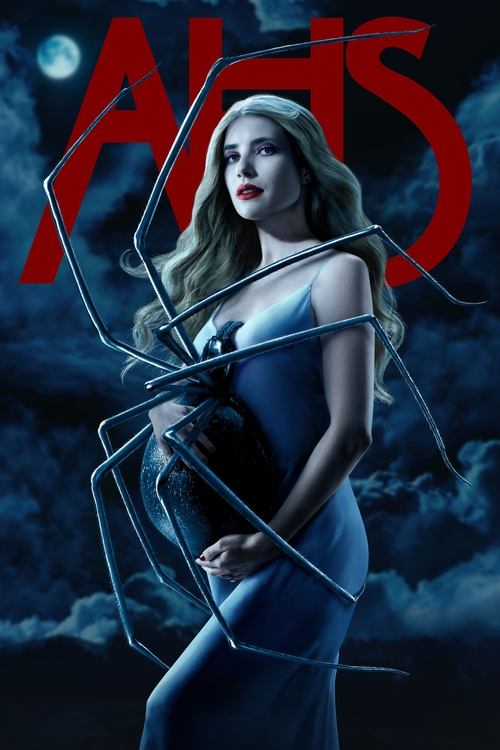
A grand-guignol psychological horror steeped in primal dread, morbid desire, and tragic heartbreak, American Horror Story unfurls like a venomous, velvet-lined carnival mirror reflecting the grotesque underbelly of the American Dream.
American Horror Story

American Horror Story

"What to suspect when you're expecting."

05 October 2011 — 24 April 2024 United States of America 13 season 145 episode Returning Series 8.1 (6,140)

Cast: Sarah Paulson, Evan Peters, Denis O'Hare, Lily Rabe, Kathy Bates

Drama Sci-Fi & Fantasy Mystery The Monstrosity of Humanity and Institutional Oppression The Cost of Ambition, Vanity, and the Fear of Aging Otherness, Ostracization, and Found Family Purgatory, Spatial Trauma, and the Trapping of the Soul Societal Breakdown and the Weaponization of Fear

Overview

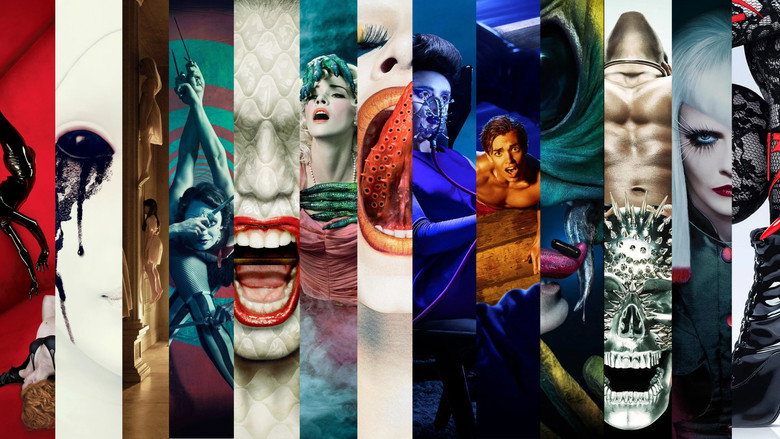
Created by Ryan Murphy and Brad Falchuk, American Horror Story revolutionized 21st-century genre television by reintroducing and revitalizing the seasonal anthology format. Rather than following a single serialized storyline from year to year, each season operates as a distinct narrative universe complete with its own period setting, thematic fixation, unique sub-genre of horror, and claustrophobic central location—ranging from cursed suburban estates and draconian psychiatric institutions to 1950s carnival sideshows, art-deco death traps, and secluded summer camps.

Despite the constant shifting of time periods and narrative boundaries, the series maintains a singular creative identity through a core ensemble repertory cast. Actors including Sarah Paulson, Evan Peters, Jessica Lange, Kathy Bates, Lily Rabe, Denis O'Hare, Angela Bassett, and Frances Conroy continually rotate across radically divergent archetypes, transforming from tragic victims in one season into ruthless tormentors in the next.

Over its extended run, the overarching tapestry reveals subtle, interwoven threads that gradually bridge seemingly standalone narratives into a shared mythological cosmos. The series constructs a sprawling panorama of American cultural mythos, marrying urban folklore, historical horrors, supernatural dread, and biting social satire into an ever-evolving examination of societal dysfunction.
Core Meaning

Across its diverse settings and genres, American Horror Story posits that the most monstrous atrocities are never supernatural anomalies, but rather systemic manifestations of human cruelty, prejudice, and moral failure. The ghosts, demons, vampires, and extraterrestrial entities function as atmospheric distillations of genuine American trauma: systemic racism, misogyny, homophobia, media sensationalism, religious hypocrisy, political polarization, and the ruthless pursuit of wealth, fame, and eternal youth. Through its camp, transgressive, and tragic lens, the series argues that society consistently creates, ostracizes, and abuses its own "monsters," trapping humanity within inescapable, self-inflicted cycles of purgatorial torment.

Thematic DNA

The Monstrosity of Humanity and Institutional Oppression 30%
The Cost of Ambition, Vanity, and the Fear of Aging 25%
Otherness, Ostracization, and Found Family 20%
Purgatory, Spatial Trauma, and the Trapping of the Soul 15%
Societal Breakdown and the Weaponization of Fear 10%

The Monstrosity of Humanity and Institutional Oppression

Centralized in the series maxim that "All monsters are human," this theme demonstrates how authoritative structures—the asylum system (Asylum), the medical and dental establishment (Murder House, Red Tide), religious orthodoxy, and state apparatuses—inflict vastly more carnage than demonic apparitions.

The Cost of Ambition, Vanity, and the Fear of Aging

Explored across Coven, Hotel, Double Feature: Red Tide, and Delicate, characters routinely barter their souls, bodies, and children for youthful relevance, supreme artistic talent, or Hollywood fame, only to discover that the pursuit of immortality hollows out the spirit.

Otherness, Ostracization, and Found Family

Most prominently examined in Coven, Freak Show, Hotel, and NYC, societal outcasts—whether disabled performers, ostracized witches, queer subcultures, or marginalized minorities—seek shelter among one another while battling internal power struggles and external extermination.

Purgatory, Spatial Trauma, and the Trapping of the Soul

Across Murder House, Hotel, Roanoke, and 1984, geography becomes a spiritual prison where unresolved guilt and sudden violent death bind spirits to an eternal, localized hell loop.

Societal Breakdown and the Weaponization of Fear

Dominant in Cult and Apocalypse, the series explores how modern anxiety, fringe ideology, media manipulation, and political polarization can be harnessed by megalomaniacs to dismantle democracy and ignite global catastrophe.

Character Analysis

Lana Winters

Sarah Paulson

Archetype: The Hero / Survivor / Relentless Truth-Seeker Key Trait: Indomitable resilience

Motivation

Exposing systemic injustice and immortalizing her own survival.

Character Arc

In Asylum, Lana begins as an ambitious closeted journalist unjustly committed to Briarcliff. After surviving harrowing torture, conversion therapy, and the serial killer "Bloody Face," she escapes, exposes institutional depravity, and executes her serial-killer son. Reappearing in Roanoke and Cult, she stands as television's ultimate enduring celebrity survivor.

Cordelia Goode / Foxx

Sarah Paulson

Archetype: The Underestimated Prodigy / Righteous Leader Key Trait: Selfless empathy

Motivation

Protecting her coven and proving worthy of spiritual leadership.

Character Arc

In Coven, Cordelia begins as an insecure, abused daughter subjugated by her toxic mother Fiona. By blinding herself to attain the "Second Sight," she rises through the Seven Wonders to become Supreme Witch. In Apocalypse, she leads the global magical front against the Antichrist, making the ultimate sacrifice to ensure world salvation.

All 4 characters and cast

Symbols & Motifs

The Black Latex/Rubber Suit

Meaning:

Represents hidden sexual perversion, anonymous predatory violence, shame, and the physical manifestation of domestic trauma.

Context:

Introduced in Murder House and recurring as an echo in subsequent seasons.

The Dominant Red Hair and Coven Garb

Meaning:

Symbolizes magical autonomy, matrilineal supremacy, and the tension between ancient witchcraft and contemporary haute couture.

Context:

Used in Coven and Apocalypse through sleek black high-fashion tailoring and vibrant hair colors.

The Jukebox and "The Name Game"

Meaning:

Symbolizes the fragile, fractured psyche seeking sanctuary from unbearable physical and psychological torment.

Context:

Appears in Asylum through the asylum jukebox and the sudden musical hallucination sequence.

The Cursed Physical Threshold

Meaning:

Symbolizes irreversible damnation and the entrapment of unresolved guilt.

Context:

The physical boundaries of Murder House, the Hotel Cortez, and Camp Redwood serve as barriers separating the mortal world from the realm of the trapped dead.

The Black Pill ("The Muse")

Meaning:

Symbolizes the predatory ruthlessness of artistic elitism.

Context:

In Double Feature: Red Tide, the chem-lab pill divides humanity into pure creative geniuses or flesh-eating "Pale People."

Clown Masks and Smiles

Meaning:

Distorts childhood innocence into an instrument of societal terror and political manipulation.

Context:

Exemplified by Twisty in Freak Show and Kai's cultists in Cult.

Memorable Quotes

All monsters are human.
— Sister Jude (Jessica Lange)

Context

Season 2: Asylum, Episode 10 ("The Name Game"), spoken during a moment of profound clarity.

Meaning

Encapsulates the entire philosophy of the television series: the terrors engineered by everyday humans far exceed the darkness of supernatural phantoms.

If you look in the face of evil, evil's gonna look right back at you.
— Sister Jude (Jessica Lange)

Context

Season 2: Asylum, Episode 13 ("Madness Ends"), Jude's warning to Lana Winters delivered during their earliest confrontation.

Meaning

Illustrates how hunting monsters risks corrupting the hunter's own soul.

All 6 quotes

Episode Highlights

Pilot / Murder House

S1E1

Establishes the seasonal anthology paradigm and introduces the Harmon family to the cursed residence.

Significance:

Lays the foundational architecture and tone for the entire franchise.

Smoldering Children

S1E10

Violet discovers her own rotting corpse hidden in the crawlspace after committing suicide mid-season.

Significance:

Anchors the series' ghost lore and purgatory rules: death is invisible to those who refuse to acknowledge it.

The Name Game

S2E10

Balances demonic possession, Nazi experiments, and lobotomy with an iconic, candy-colored musical hallucination number.

Significance:

Establishes the series' signature tonal balance of horror and camp while marking major shifts in character arcs.

Madness Ends

S2E13

Concludes the Briarcliff storyline as Lana Winters achieves public acclaim, confronts the past, and ends the Bloody Face legacy.

Significance:

Cements Lana Winters' legendary survival arc and completes Sister Jude's trajectory toward grace.

The Seven Wonders

S3E13

Showcases the trials of the Seven Wonders to find the true successor to the coven's throne.

Significance:

Crowns Cordelia Goode as the Supreme Witch and defines the magical canon of Coven.

Orphans

S4E10

Traces the tragic story of Pepper from Elsa Mars' carnival troupe to her institutionalization at Briarcliff Manor under Sister Jude.

Significance:

Serves as the first explicit canonical bridge linking separate seasons into a confirmed shared universe.

Chapter 6

S6E6

Concludes the true-crime TV docudrama "My Roanoke Nightmare" and sends both the real participants and their actor counterparts back to the house during the Blood Moon.

Significance:

Executes a mid-season format twist that transforms the series into a found-footage bloodbath.

Return to Murder House

S8E6

Madison Montgomery and Behold Chablis investigate the origins of Michael Langdon at the original Harmon estate.

Significance:

Serves as a direct crossover uniting Season 1 and Season 3, bringing emotional closure to original ghosts.

Final Girl

S9E9

Brings the massacre at Camp Redwood to a climax, balancing camp slasher homage with character redemption.

Significance:

Deconstructs 1980s slasher cinema tropes while delivering emotional closure to its trapped spirits.

Requiem 1981/1987 (Part 2)

S11E10

Presents a somber meditation on the devastating impact of the AIDS epidemic in New York City.

Significance:

Departs from traditional camp and gore to deliver a poetic, allegorical tragedy.

Philosophical Questions

What defines true monstrosity?

The show repeatedly contrasts biological outcasts or supernatural specters with sadistic human institutions, asking whether evil is born of metaphysical malice or mundane societal intolerance.

Can a soul achieve genuine redemption after unforgivable sin?

Through characters like Sister Jude, Delphine LaLaurie, and Tate Langdon, the narrative interrogates whether self-punishment and repentance can erase profound harm.

Is human ambition inherently self-destructive?

Whether pursuing physical beauty (Coven, Delicate), ultimate artistry (Red Tide), or political dominion (Cult), characters consistently sacrifice their humanity to attain worldly acclaim.

Is history an inescapable cycle of trauma?

As demonstrated by the temporal loops and repeating generational violence across seasons, the series asks whether humanity is doomed to replay its worst historical crimes.

Alternative Interpretations

The series can be engaged through multiple distinct critical frameworks:

  • The Hallucinatory Trauma Lens: Supernatural occurrences (such as the aliens and demonic entities in Asylum) can be viewed as dissociative psychological coping mechanisms created by victims of extreme institutional trauma to process severe abuse.
  • The Sociopolitical Allegory: Each season operates as a direct mirror to specific systemic failures throughout American history: Asylum critiques mid-century homophobia and institutional psychiatry; Coven examines intersectional feminism and racial oppression; Cult dissects post-2016 demagoguery; and NYC allegorizes the terror of the 1980s AIDS epidemic.
  • The Postmodern Camp Deconstruction: The series functions as a loving, self-aware critique of cinema tropes—merging exploitation, soap opera melodrama, and high art into an intentional pastiche of American pulp.

Full ending explanation

Cultural Impact

Debuting in 2011 alongside The Walking Dead, American Horror Story demonstrated that graphic, atmospheric horror could capture massive mainstream ratings and critical prestige. Its triumph single-handedly revived the seasonal anthology structure, paving the way for series such as True Detective, Fargo, The Haunting of Hill House, and The White Lotus.

Furthermore, the series famously served as a showcase for veteran actresses—most notably Jessica Lange, Kathy Bates, Angela Bassett, and Frances Conroy—garnering 16 Primetime Emmy Awards and challenging Hollywood ageism. Phrases, gifs, and aesthetics from Coven and Hotel became foundational to 2010s internet culture, Tumblr aesthetics, and fashion iconography.

Audience Reception

Critics and audiences universally applaud the acting caliber of the repertory ensemble cast, particularly the performances of Jessica Lange, Sarah Paulson, and Evan Peters. The franchise has received widespread acclaim for its high production design, bold costuming, narrative fearlessness, and evocative musical scores.

Conversely, recurring criticisms across its run focus on erratic plotting, mid-season narrative bloat, over-stuffed subplots, and finales that struggle to resolve competing storylines cleanly. Despite polarizing tonal shifts between gritty psychological terror and exaggerated camp, it remains an influential landmark of 21st-century cable television.

Interesting Facts

  • Ryan Murphy and Brad Falchuk devised the seasonal reset to avoid narrative exhaustion and because Jessica Lange initially hesitated to commit to a multi-year broadcast television contract without guaranteed role turnover.
  • Evan Peters required full-body lubrication just to squeeze into the signature black Rubber Man suit during Season 1.
  • While filming Coven as the mute butler Spalding, Denis O'Hare refused to speak out loud on set for months, communicating strictly through physical gestures with cast and crew.
  • Naomi Grossman endured three hours of prosthetic application daily to transform into the microcephalic character Pepper for Asylum and Freak Show.
  • The real exterior and pilot interior of Season 1's haunted house is the historic Rosenheim Mansion in Los Angeles, which frequently became a target for trespassing fans.
  • For Hotel, Lady Gaga worked directly with costume designer Lou Eyrich, bringing archive pieces from Alexander McQueen and Thierry Mugler to shape The Countess's vampire aesthetics.
  • Due to the relentlessly grim subject matter of Asylum, Zachary Quinto frequently played the banjo in full Bloody Face costume between takes to cheer up fellow cast members.

Easter Eggs

The Columbine / April 5th Tribute

In Murder House, Tate's library massacre is dated April 5, 1994—the date of Kurt Cobain's suicide, an icon of Tate's grunge subculture.

Boston Red Sox Easter Egg

The victims of Tate's high school shooting share surnames with the 1986 Boston Red Sox roster (e.g., Boggs, Greenwell, Gedman), an homage placed by co-creator Brad Falchuk.

The Campfire Coffee Can

In Hotel, Liz Taylor stores Donovan’s cremated remains in a vintage "Campfire Gold" coffee tin—the identical brand advertised by Elsa Mars in a flashback in Freak Show.

The Montgomery Lineage

Dr. Charles Montgomery (Murder House), who performed a botched abortion on The Countess (Hotel), shares a surname and magical lineage with Hollywood starlet-witch Madison Montgomery (Coven).

The Real-Life True Crime Cameos

Real historical serial killers check into the Hotel Cortez for March's "Devil's Night" dinner party (Jeffrey Dahmer, John Wayne Gacy, Aileen Wuornos, and Richard Ramirez).

Frequently Asked Questions

Explore More About This Movie

Dive deeper into specific aspects of the movie with our detailed analysis pages

Comments (0)

Leave a comment

No comments yet. Be the first to share your thoughts!

Similar Movies