Skip to content
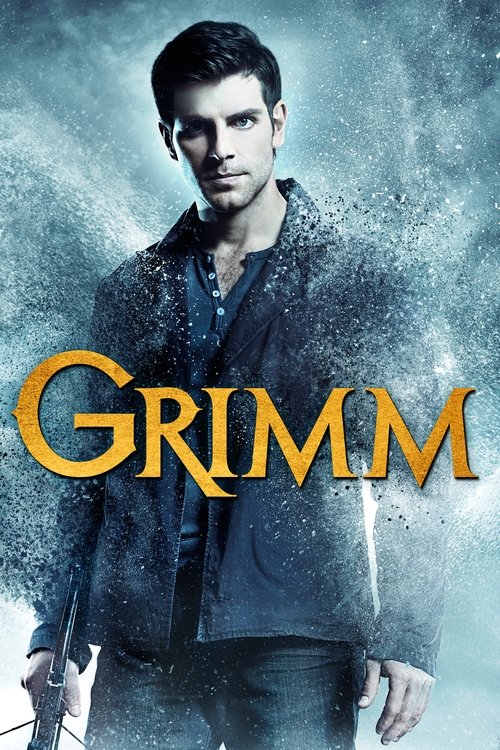
Grimm
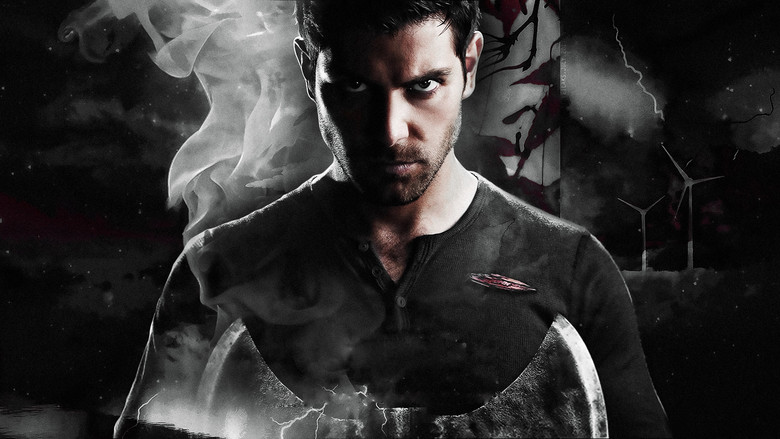
Drenched in the mossy, rain-soaked shadows of the Pacific Northwest, Grimm weaves an atmospheric urban fantasy where ancestral dread gives way to deep camaraderie, shining like a lantern held steady against the ancient monsters lurking behind everyday human faces.
Grimm

Grimm

"Mortal. Danger."

28 October 2011 — 31 March 2017 United States of America 6 season 122 episode Ended 8.3 (3,618)

Cast: David Giuntoli, Silas Weir Mitchell, Russell Hornsby, Sasha Roiz, Reggie Lee

Drama Sci-Fi & Fantasy Mystery Breaking Generational Cycles & Deconstructing Prejudice Chosen Family and Inter-Species Solidarity Duality of Human Nature: The Monster Within Justice, Law, and Vigilantism The Burden and Corruption of Power

Overview

Grimm follows Nick Burkhardt, a Portland homicide detective whose ordinary life is upended when his dying aunt reveals his bloodline: he is a "Grimm," the latest in an ancient lineage of guardians endowed with the supernatural sight to perceive "Wesen"—mythological creatures living in secret among ordinary humans. While historical Grimms operated as merciless, dogmatic executioners of Wesen, Nick breaks centuries of tradition by striving to uphold justice through the law, distinguishing between peaceful creatures and predatory threats while forming unconventional alliances.

As the narrative expands, Nick gathers a devoted inner circle consisting of his human police partner Hank Griffin, a reformed vegan "Blutbad" (wolf-like creature) named Monroe, a knowledgeable "Fuchsbau" apothecary named Rosalee Calvert, and Sergeant Drew Wu. Together, they navigate a hidden society fraught with internal clan rivalries, ancient feudal politics governed by corrupt European Royal Families, extremist uprising factions like Black Claw, and clandestine resistance movements fighting for global Wesen balance.

Over its six seasons, Grimm transitions from an episodic crime procedural rooted in classic folklore into a serialized supernatural saga. The overarching arc chronicles how an isolated hunter reshapes his inherited destiny, evolving his role from a feared lone enforcer into the leader of a diverse, chosen family capable of confronting apocalyptic forces and systemic tyranny.

Core Meaning

The core philosophical message of Grimm is that destiny and heritage do not dictate morality; empathy and conscious choice define humanity. Across generations, Grimms and Wesen were locked in an unending cycle of inherited hatred, prejudice, and bloodshed. Through Nick Burkhardt’s conscious refusal to act as a blind executioner, creators David Greenwalt, Jim Kouf, and Stephen Carpenter argue that bridging deep-seated cultural divides requires dismantling dogmatic traditions, choosing justice over vengeance, and building bridges across historical divides. True power lies not in solitary biological dominance, but in chosen community, inter-species solidarity, and mutual protection.

Thematic DNA

Breaking Generational Cycles & Deconstructing Prejudice 30%
Chosen Family and Inter-Species Solidarity 25%
Duality of Human Nature: The Monster Within 20%
Justice, Law, and Vigilantism 15%
The Burden and Corruption of Power 10%

Breaking Generational Cycles & Deconstructing Prejudice

In Season 1, Nick encounters Wesen conditioned to fear him on sight due to centuries of Grimm atrocities. By refusing to kill Monroe simply for being a Blutbad, Nick initiates a shift that challenges centuries of prejudice. As the show progresses, this theme tackles systemic radicalism (such as the pureblood hate group Wesenrein in Season 4 and the fascist Black Claw uprising in Season 5), emphasizing that evil stems from ideological hatred rather than biological species.

Chosen Family and Inter-Species Solidarity

Nick begins as an isolated hunter with a dying aunt. Over time, the "Scooby Gang" of humans, Blutbaden, Fuchsbau, Hexenbiest, and Grimms becomes a formidable, unified unit. The climax of the series reaffirms that the collective bond among former enemies is the only force capable of defeating ancient, existential evils.

Duality of Human Nature: The Monster Within

Wesen live double lives, shifting between ordinary domestic identities and beastly aspects (woging). Characters constantly grapple with their predatory impulses versus their ethical choices—most notably Monroe suppressing his feral cravings, Renard wrestling with his royal and Zauberbiest lineage, and Juliette’s transformation into a destructive Hexenbiest.

Justice, Law, and Vigilantism

Nick operates at the intersection of constitutional law (as a Portland detective) and archaic tribal law (as a Grimm). The narrative explores the tension between legal due process and vigilante execution, examining the ethical compromises necessary when human law is inadequate to prosecute supernatural crimes.

The Burden and Corruption of Power

Examined through the Royal Families’ obsession with blood purity, Juliette’s intoxication with hexenbiest sorcery, Adalind’s journey through power loss and recovery, and Sean Renard’s political ambitions, demonstrating how power warps morality unless tethered to accountability.

Character Analysis

Nick Burkhardt

David Giuntoli

Archetype: The Reluctant Hero / Reformer Key Trait: Unwavering moral compass and empathetic restraint.

Motivation

Initially seeks to protect his loved ones and keep his sanity; evolves into safeguarding cross-species peace and dismantling corrupt supernatural institutions.

Character Arc

Evolves from a bewildered Portland detective struggling with frightening visions into a wise, confident, and compassionate leader who unifies Wesen and humans.

Monroe

Silas Weir Mitchell

Archetype: The Reluctant Mentor / Reformed Outsider Key Trait: Fierce loyalty masked beneath eccentric, neurotic charm.

Motivation

Starts wanting only isolation and peace; evolves into an active protector of his chosen family and community.

Character Arc

A reformed, vegetarian Blutbad who lives a quiet life restoring antique clocks; becomes Nick’s closest ally, bridging two historically warring worlds, marrying Rosalee, and standing up against extremist purists.

All 5 characters and cast

Symbols & Motifs

Aunt Marie’s Trailer & The Ancient Grimm Books

Meaning:

Symbolizes the recorded history of encounters between humanity and the Wesen world, initially representing weapons of war and later evolving into a tool of cultural understanding and medical/mythological research.

Context:

The trailer serves as a sanctuary of knowledge, inherited wisdom, and physical weapons used by Nick and his team throughout their investigations.

The Seven Keys & The Crusaders' Map

Meaning:

Symbolizes the heavy weight of historical secrecy and the dangerous quest for an ancient relic (the healing stick/staff piece) that can either save or destroy life.

Context:

Artifacts forged by seven Grimm ancestors during the Crusades that lead to the hidden treasure in Germany.

The Woge (The Transformation)

Meaning:

Serves as a visual motif for hidden truths, emotional vulnerability, primal instinct, and the masks people wear in civil society.

Context:

The involuntary or emotional shifting of a Wesen’s face into its true beastly form throughout the series.

The Spice Shop (Calvert / Tea & Spice Shop)

Meaning:

Symbolizes healing, alchemy, domestic balance, and the synthesis of human science and Wesen herbal lore.

Context:

Run initially by Freddy Calvert and then Rosalee, it acts as the intellectual war room and research hub for the group.

Opening Literary / Fairytale Epigraphs

Meaning:

Frames modern urban crimes within timeless archetypal fables, underscoring that human and supernatural conflicts are enduring universal stories.

Context:

Every episode begins with a quote from folklore, literature, or myth displayed on screen.

Memorable Quotes

There once was a man who lived a life so strange, it had to be true. Only he could see what no one else can—the darkness inside, the real monster within, and he's the one who must stop them. This is his calling. This is his duty. This is the life of a Grimm.
— Series Opening Voiceover / Mission Statement

Context

Opening voiceover monologue setting the tone for the series premise.

Meaning

Encapsulates the central premise, lonely responsibility, and thematic burden carried by the protagonist throughout the series.

OUR quadruple homicide, Monroe.
— Nick Burkhardt (to Monroe)

Context

Spoken during a case discussion between Nick and Monroe in Season 2, Episode 13 "The Face Off".

Meaning

Highlights the dark humor and the blurring boundary between Nick's identity as an upright police detective and his vigilantism as a Grimm working with a Blutbad.

All 5 quotes

Episode Highlights

Pilot

S1E1

Establishes the mythology, Nick's discovery of his lineage, his first encounter with the dying Aunt Marie, and his unexpected partnership with Monroe, reimagining "Little Red Riding Hood" in modern Portland.

Significance:

Introduces the fundamental lore, tone, and character dynamics of the entire series.

Woman in Black

S1E22

The Season 1 finale introduces Nick's thought-to-be-dead mother, Kelly Burkhardt, a master Grimm; Hank begins seeing terrifying glimpses of Wesen, and Juliette is scratched by Adalind's poisoned cat, falling into a coma.

Significance:

Radically accelerates the overarching serialized narrative and deepens the supernatural stakes.

Bad Moon Rising

S2E3

Hank experiences severe trauma following Wesen encounters; Nick finally reveals his Grimm identity and the truth about Wesen to Hank.

Significance:

Establishes Hank as a core confidant and permanently expands the inner investigative team.

Blonde Ambition

S3E22

Culminates Monroe and Rosalee’s inter-species wedding; Adalind disguises herself as Juliette through dark magic to strip Nick of his Grimm powers, and Trubel defends the group by beheading an assassin.

Significance:

Completely subverts Nick’s core identity and sets up the dramatic conflicts entering Season 4.

Tribunal

S4E10

Monroe is abducted and put on trial by the Wesenrein (a purist hate organization) for marrying an inter-species partner (Rosalee) and allying with a Grimm. The entire squad discards protocol to assault the compound.

Significance:

Represents the series' strongest anti-hate statement and solidifies the group's unconditional solidarity.

Headache / Cry Havoc

S4E21

Juliette fully embraces her ruthless Hexenbiest persona, burning Aunt Marie's iconic trailer and betraying Nick's mother Kelly to the Royals, leading to Kelly's decapitation. Trubel shoots Juliette with a crossbow to save Nick.

Significance:

Destroys foundational series elements and ends an entire era of the show.

The Beginning of the End

S5E21

Black Claw launches an all-out war across Portland; Hadrian’s Wall is attacked, Meisner is executed by Renard, and Nick uses the newly uncovered mystical wooden stick to heal mortal wounds and fight off legions of Black Claw operatives in his loft.

Significance:

Escalates the conflict to total urban warfare and showcases the power of the mystical artifact.

The End

S6E13

The series finale. Zerstörer wipes out Nick’s entire team before Nick, aided by the ancestral spirits of his mother and Aunt Marie, destroys the entity. Time snaps back to the moment of Nick's return through the portal with everyone alive, followed by a 20-year flash-forward showing Nick's adult children (Kelly and Diana) continuing the Grimm chronicles alongside Monroe and Rosalee's triplets.

Significance:

Concludes the series, delivers thematic resolution on family and lineage, and establishes the next generation of protectors.

Philosophical Questions

Is morality defined by nature or nurture?

Explored through Wesen biological instincts (such as Blutbaden predation or Hexenbiest ruthlessness) versus conscious ethical restraint, as seen in Monroe’s vegetarianism and Rosalee’s recovery from addiction.

Can institutional systems of justice accommodate the unexplainable?

Nick constantly grapples with the limits of constitutional law, questioning whether standard criminal statutes can legitimately prosecute supernatural coercion or if extrajudicial action becomes an unavoidable necessity.

Does ancestral legacy bind the individual, or can history be actively rewritten?

The series interrogates whether inherited historical animosities can be broken through individual moral agency and deliberate reconciliation.

Alternative Interpretations

The Series Finale as a Psychological / Crucible Test: In the finale ("The End"), Nick watches every member of his adopted family and team brutally murdered by Zerstörer before being pulled back through the portal to find them alive. Many viewers and critics interpret the massacre not as a literal physical event, but as an existential vision / spiritual trial designed to test Nick’s willingness to surrender the mystical staff, resolved when he invokes the strength of his ancestral bloodline.

Full ending explanation

Cultural Impact

Grimm debuted in fall 2011 alongside ABC's Once Upon a Time, marking a cultural resurgence of dark fairy tale reinterpretations in American television. Developed in the wake of Supernatural, The X-Files, and Buffy the Vampire Slayer, Grimm carved out a distinctive niche by fusing classic police procedural formulas with grounded creature mythology and Pacific Northwest gothic aesthetics.

While early critical reception was lukewarm—critics initially viewed it as a formulaic network procedural—the series steadily gained critical praise from Season 2 onward as it leaned heavily into complex world-building, serialized political intrigue, and ensemble chemistry. The show left a lasting legacy on Oregon’s film production infrastructure and proved that genre television could thrive on Friday nights through sustained DVR and international broadcast viewership.

Audience Reception

Audience reception across the series reflects steady evolution: Season 1 earned praise for its mood and Monroe despite a formulaic start; Season 2 served as a breakout year with serialized world-building and Hank discovering the truth; Season 3 represented the peak ensemble dynamic; Season 4 offered a darker tone with strong acclaim for the Wesenrein arc alongside polarization over Juliette's villain turn; Season 5 expanded the scope but divided viewers on the Nick/Adalind romance; and Season 6 delivered an action-packed, emotional finale despite criticism of its rushed 13-episode pacing.

Audiences heavily praised the chemistry and warmth of the core ensemble (particularly the bromance between Nick and Monroe, and the Monroe/Rosalee dynamic), creative folklore world-building, and Sgt. Wu's comedic timing and arc. Main points of criticism and controversies centered on Juliette’s memory loss and rapid descent into villainy, the controversial transition of Adalind from villain to romantic lead, and rushed resolutions to subplots like the Seven Keys, the Royal Families, and Black Claw due to the truncated final season.

Interesting Facts

  • Unlike many productions that use Vancouver or Atlanta as doubles, Grimm was shot on location across the Portland metropolitan area, utilizing Forest Park, the Columbia River Gorge, and Mount Hood, contributing nearly $300 million directly into the Oregon economy.
  • Over 1,000 regional actors from the Pacific Northwest theatrical community were cast in principal speaking roles, and roughly 200 returned for recurring guest parts.
  • Lead actor David Giuntoli (Nick Burkhardt) and co-star Bitsie Tulloch (Juliette Silverton / Eve) began dating while filming in Portland and later married in real life.
  • When Claire Coffee (Adalind Schade) became pregnant during Season 4, the showrunners incorporated it directly into the narrative, creating the plotline where Adalind becomes pregnant with Nick's child.
  • The creature transformations blended prosthetic makeup designed by Oscar-winning artist Barney Burman with digital facial VFX mapped by local Portland studio Hive-FX.
  • Co-creator David Greenwalt was previously co-executive producer on Buffy the Vampire Slayer and co-creator of Angel.
  • NBC originally slated Grimm on Friday nights—historically notorious as a graveyard for genre television—yet it ran for 123 episodes due to a loyal fan base and strong delayed-viewing ratings.

Easter Eggs

Germanic Wesen Nomenclature

Most Wesen species names are derived from literal or compound German words: Blutbad ("blood bath"), Fuchsbau ("fox burrow" / "foxhole"), Hexenbiest ("witch beast"), Zauberbiest ("magic/wizard beast"), and Bauerschwein ("farmer pig").

The "Room Number" Easter Egg

Throughout the series, room numbers, house addresses, or apartment identifiers frequently correspond directly to the season and episode number being filmed (e.g., Room 406 appearing in Season 4, Episode 6).

Opening Epigraph Lore

Nearly every episode begins with an epigraph from traditional European fairy tales or global mythology. The background art behind the quote foreshadows key props, locations, or creatures in that specific episode.

Pop Culture and Literature Guest Appearances

The series frequently adapted regional and non-European folklore as Wesen variants, including the Latin American La Llorona, the Filipino Aswang, Native American Mishipeshu, and European holiday folklore like Krampus.

Frequently Asked Questions

Explore More About This Movie

Dive deeper into specific aspects of the movie with our detailed analysis pages

Comments (0)

Leave a comment

No comments yet. Be the first to share your thoughts!

Similar Movies