The Originals
A gothic supernatural saga where千年 old family vows clash with modern betrayals, painting New Orleans in shades of loyalty, power, and the eternal ache for redemption.
The Originals

The Originals

"Always and forever."

03 October 2013 — 01 August 2018 United States of America 5 season 92 episode Ended ⭐ 8.6 (3,474)
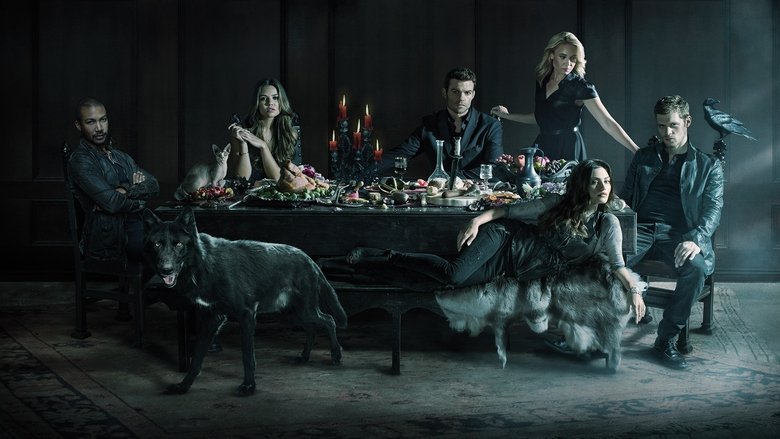
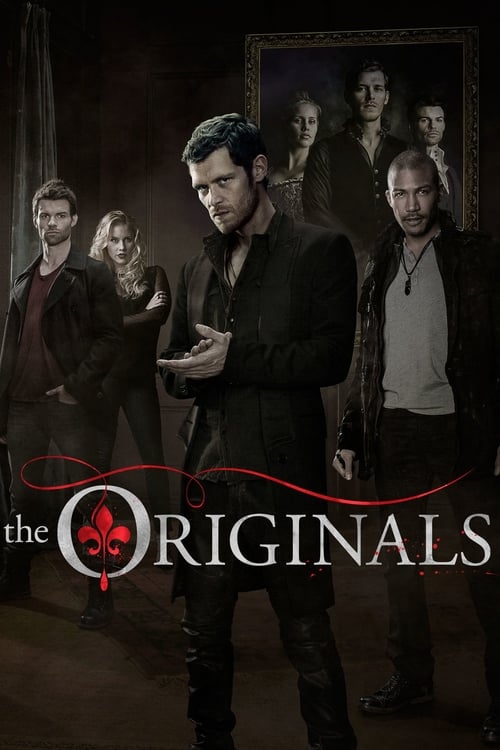
Cast: Joseph Morgan, Daniel Gillies, Charles Michael Davis, Phoebe Tonkin, Danielle Campbell
Drama Sci-Fi & Fantasy Mystery
Family and Loyalty Redemption and Morality Power and Control The Burden of the Past

Overview

"The Originals," a spin-off of "The Vampire Diaries," delves into the turbulent lives of the world's first vampires, the Mikaelson siblings. The series centers on the volatile hybrid Klaus, the noble Elijah, and the fiery Rebekah as they return to their ancestral home of New Orleans, a city they helped build centuries ago. Upon their return, they find it under the iron-fisted rule of Klaus's charismatic and powerful protégé, Marcel Gerard.

What begins as Klaus's quest to reclaim his throne evolves into a complex and sprawling saga of power struggles between vampires, witches, werewolves, and humans. The narrative is propelled by the unexpected revelation that werewolf Hayley Marshall is pregnant with Klaus's child, a miraculous tribrid-to-be who represents both a vulnerability and a potential source of redemption for the ancient family. Across its five seasons, the series explores the Mikaelsons' blood-soaked history, their dysfunctional dynamics, and their eternal vow of "Always and Forever," testing whether the bonds of family can withstand ancient rivalries, new threats, and their own self-destructive natures in the supernatural melting pot of the French Quarter.
Core Meaning

At its heart, "The Originals" is an exploration of the redemptive power of family and the idea that no one is truly beyond saving. The series posits that the deepest wounds are often inflicted by those we love most, yet that same love is the only force potent enough to heal them. It examines the cyclical nature of violence and trauma, as the Mikaelsons, monsters of their own and others' making, confront the legacy of their past. The birth of Hope Mikaelson serves as the catalyst, shifting the family's eternal quest for power towards a new, more profound purpose: protecting the next generation and finding a path to humanity, no matter the cost. The ultimate message is that true power lies not in immortality or dominance, but in love, loyalty, and the willingness to sacrifice for family.

Thematic DNA

Family and Loyalty 40%
Redemption and Morality 30%
Power and Control 20%
The Burden of the Past 10%

Family and Loyalty

The central theme of the series is the complex and often contradictory nature of family, encapsulated by the Mikaelson vow: "Always and Forever." This promise is both a source of immense strength and a recurring curse. The siblings frequently betray and harm one another in pursuit of their own desires, yet they unite ferociously against any external threat. The series explores whether family is defined by blood or by choice, as seen in Klaus's relationship with his adopted son Marcel and the alliances formed between different factions. The theme evolves from a possessive, toxic co-dependence to a genuine, sacrificial love, culminating in Klaus's ultimate act to save his daughter, Hope.

Redemption and Morality

"The Originals" is fundamentally a story about Klaus Mikaelson's journey from a paranoid, tyrannical villain to a self-sacrificing antihero. His path to redemption is the series' main arc, driven by the unconditional love of his daughter and the unwavering faith of his siblings, particularly Elijah. The show constantly blurs the lines between good and evil, forcing its characters—and the audience—to question their morality. Each character, from the noble Elijah to the vengeful Marcel, is capable of both great compassion and horrific cruelty, suggesting that redemption is a continuous, often painful choice rather than a final destination.

Power and Control

The series is a constant chess game for control of New Orleans. Power dynamics shift relentlessly between the vampires, witches, and werewolves. Klaus's initial motivation is to reclaim the power he believes is his by right from Marcel. However, the show deconstructs this notion of power, revealing its fleeting and corrupting nature. Marcel's rule, built on strict laws and community, contrasts with Klaus's desire for dominance through fear. Ultimately, the series suggests that true power isn't about ruling a city, but about having a family and a home to fight for.

The Burden of the Past

As thousand-year-old beings, the Mikaelsons are haunted by their history. Their past sins, lost loves, and family traumas constantly resurface to affect their present. Old enemies and resurrected parents frequently return to exact revenge, forcing the siblings to confront the consequences of their long lives. The narrative uses flashbacks extensively to illustrate how their past actions and relationships shaped the deeply flawed individuals they are today, emphasizing the idea that one can never truly escape their history, only learn to live with it or die trying.

Character Analysis

Niklaus Mikaelson

Joseph Morgan

Archetype: The Antihero
Key Trait: Volatile

Motivation

Initially, Klaus is motivated by a desire for absolute power and control, believing it will protect him from his enemies and fill the void of his traumatic past. He wants to be king of New Orleans because it's his creation. This motivation shifts entirely to the protection and love of his daughter, Hope. His every major decision in the later seasons is driven by the need to ensure her safety and happiness, a goal that ultimately eclipses his own desire for survival.

Character Arc

Klaus begins as the villainous Original Hybrid, defined by paranoia, rage, and a lust for power stemming from a millennium of being hunted by his father and rejected for his werewolf heritage. His arc across the five seasons is a slow, arduous journey toward redemption. The catalyst for his change is the impending birth of his daughter, Hope. Initially seeing her as a means to power, he gradually develops a deep, unconditional love for her. This love forces him to confront his demons, make alliances, and learn to trust. He evolves from a tyrant who daggered his siblings to a leader who unites them. His final act is the ultimate sacrifice: absorbing a dark entity to save Hope and dying to protect his family, completing his transformation from villain to martyr.

Elijah Mikaelson

Daniel Gillies

Archetype: The Mentor / The Noble Sibling
Key Trait: Honorable

Motivation

Elijah's primary motivation is the redemption of his brother, Niklaus, and the preservation of the Mikaelson family unit. He believes that if he can save Klaus, he can save them all and atone for their centuries of monstrosity. This singular focus defines his actions, leading him to make both honorable and terrible choices in the name of family loyalty. His purpose is so intertwined with Klaus's that when Klaus's journey ends, so does his.

Character Arc

Elijah starts as the impeccably dressed, noble, and diplomatic brother, whose entire existence is dedicated to finding redemption for Klaus. He believes in the sanctity of their "Always and Forever" vow above all else. His arc is one of disillusionment and redefinition. He learns that his nobility is often a facade for his own monstrous nature and that his unwavering devotion to Klaus has enabled much of his brother's cruelty. The trauma of his past, particularly his role in creating the vampire race, weighs heavily on him. In the end, with Klaus having finally achieved redemption by choosing to sacrifice himself for Hope, Elijah sees his own life's purpose as complete and chooses to die by his brother's side, finding peace not in his own morality, but in the completion of their shared journey.

Hayley Marshall-Kenner

Phoebe Tonkin

Archetype: The Protector / The Reluctant Queen
Key Trait: Protective

Motivation

Hayley's initial motivation is to find her roots and learn about her werewolf lineage. This quickly evolves into an unwavering, fierce maternal instinct to protect her daughter, Hope, from the countless threats she faces. She is also driven by a deep desire to secure a safe and respected place for her werewolf pack in the city, fighting for them to be treated as equals rather than a subjugated faction.

Character Arc

Hayley is introduced in "The Vampire Diaries" as a tough, lone werewolf searching for her biological family. Her arc in "The Originals" is one of finding and building a family of her own. Initially a pawn in the witches' plans, her pregnancy with Klaus's child places her at the center of New Orleans' supernatural politics. She grows from a fiercely independent outsider into the powerful Alpha of the Crescent wolf pack and a formidable hybrid. Her development is defined by her role as Hope's mother; she transforms into a relentless protector, willing to do anything to keep her daughter safe. She bridges the gap between the werewolves and the Mikaelsons, finding her place as both a Labonair alpha and an honorary Mikaelson before ultimately sacrificing her life to save Hope in the final season.

Marcel Gerard

Charles Michael Davis

Archetype: The Usurper King / The Prodigal Son
Key Trait: Charismatic

Motivation

Marcel's core motivation is the protection of his city and his chosen family of vampires, particularly the young witch Davina, whom he adopted. Having built a community with its own rules, his primary goal is to maintain that order and keep his people safe from outside threats, including the Mikaelsons. His actions are driven by a deep-seated love for New Orleans and a belief that he can rule it more justly than Klaus ever could.

Character Arc

Marcel is introduced as the charismatic but ruthless king of New Orleans, Klaus's former protégé and rival. Born a slave in the 1800s, he was adopted and raised by Klaus, which created a complex father-son dynamic of love, resentment, and betrayal. His arc is about forging his own identity and legacy separate from the Mikaelsons. He transitions from the primary antagonist of Season 1 to a complicated ally. He builds his own family of vampires, demonstrating that loyalty can be chosen, not just inherited by blood. His journey culminates in him becoming an Upgraded Original Vampire, powerful enough to defeat the Mikaelsons, yet he ultimately chooses coexistence over annihilation, eventually finding his own version of 'happily ever after' with Rebekah.

Symbols & Motifs

New Orleans

Meaning:

The city of New Orleans symbolizes home, legacy, and a contested prize. For the Mikaelsons, it's the home they built and were forced to abandon, representing their lost glory and the family they once were. For Marcel, it's the kingdom he forged from the ashes, a sanctuary for his chosen family. The constant struggle for control of the French Quarter is a physical manifestation of the characters' internal struggles for belonging and identity.

Context:

The city is the central setting for the entire series. Its unique culture of music, magic, and revelry provides a vibrant, atmospheric backdrop for the supernatural politics. The control of key locations like the French Quarter, the cemeteries (domain of the witches), and the bayou (home to the werewolves) signifies the shifting power balances throughout all five seasons.

The White Oak Stake

Meaning:

The White Oak Stake is the ultimate symbol of mortality and vulnerability for the otherwise indestructible Original vampires. It represents the one thing they fear: a final, irreversible death. It is a constant reminder that despite their immense power, they are not beyond destruction, often at the hands of each other.

Context:

The stake, or fragments of it, appears throughout the series as a major threat. It is the weapon their father Mikael uses to hunt them. In the final season, it becomes a tool of sacrifice, as Klaus and Elijah use it to destroy the Hollow and themselves, transforming the symbol of their greatest fear into the means of their ultimate redemption.

Fleur-de-lis

Meaning:

The fleur-de-lis symbolizes royalty, heritage, and the ruling class of New Orleans. It is visually associated with the Mikaelsons and their legacy as the founders of the city's supernatural community, as well as with Marcel's subsequent reign as 'King' of the Quarter.

Context:

The symbol is prevalent in the architecture and design of the French Quarter set pieces. It is often seen on gates, jewelry, and other decorative elements within the Mikaelson compound and Marcel's territory, visually reinforcing the themes of royalty, legacy, and the fight for control of the city.

Always and Forever

Meaning:

This vow is the central motto and symbol of the Mikaelson family's bond. It represents their pledge to stand by each other through anything. However, it also symbolizes a toxic codependency, a promise that has often been used to justify betrayal, cruelty, and the exclusion of outsiders. It is both a declaration of unbreakable loyalty and a curse that binds them to their dysfunctional cycle.

Context:

The phrase is spoken by the Mikaelson siblings in pivotal moments of unity and crisis throughout all five seasons. Elijah, in particular, champions this vow as the family's guiding principle. The meaning of the vow evolves over the series, culminating in the finale where Elijah chooses to die with Klaus, giving the phrase its ultimate, tragic meaning.

Memorable Quotes

Family is power, Niklaus. Love, loyalty; that's power. This is what we swore to one another a thousand years ago... Always and forever.

— Elijah Mikaelson

Context:

This is said multiple times in various forms, but most notably in Season 1, as Elijah tries to convince Klaus to embrace his impending fatherhood and reclaim New Orleans not as a tyrant, but as a family.

Meaning:

This quote is the central thesis of the entire series. It defines the Mikaelson family's core belief system and their greatest strength. Elijah speaks these words to remind Klaus of their foundational vow, asserting that their bond is more powerful than any enemy or personal ambition.

We are the demons lurking in shadow. We are the savage villains in fairy tales told to children. But for our family, we are the monsters that mothers warn their children about.

— Klaus Mikaelson

Context:

This line is part of a monologue where Klaus is explaining the harsh realities of their existence and the lengths he is willing to go to ensure his family's survival against their myriad enemies.

Meaning:

This quote encapsulates Klaus's self-awareness of his monstrous nature. He doesn't deny his villainy but frames it as a necessary evil for the protection of his family. It highlights his 'us against the world' mentality and his willingness to be the villain for those he loves.

The pain may fade, but scars serve as a reminder of our suffering and make the bearer all the more resolved never to be wounded again.

— Klaus Mikaelson

Context:

Klaus says this while reflecting on past betrayals and the nature of survival. It's a moment that contextualizes his behavior, showing it stems from deep-seated pain rather than pure malice.

Meaning:

This quote reveals the philosophy behind Klaus's paranoia and cruelty. His past traumas (scars) are not just memories but justifications for his defensive and often aggressive actions. It's a key insight into his fear of vulnerability and his resolve to maintain control at all costs.

We lived without hope, but we will never die. We are the definition of cursed, always and forever.

— Rebekah Mikaelson

Context:

This is said during a moment of despair, reflecting on the endless cycle of suffering the Mikaelson siblings inflict upon each other and the world, even as they are bound to face it together.

Meaning:

Rebekah's quote offers a tragic counterpoint to Elijah's idealistic view of their family vow. She highlights the curse of their immortality—an endless existence filled with pain, loss, and brokenness, from which they can never escape. It speaks to the deep weariness and sorrow that underpins their power.

I will not be a casualty of your war. I will not be your pawn. And if you force my hand, I will show you what a real monster looks like.

— Hayley Marshall

Context:

Hayley directs this threat towards Klaus, making it clear that despite his power, her maternal protective instincts make her an equally formidable opponent. It sets the tone for her role as a powerful hybrid and alpha who will not be underestimated.

Meaning:

This quote marks a pivotal moment in Hayley's transformation from a victim of circumstance to a powerful player in her own right. It signifies her refusal to be controlled by the Mikaelsons or any other faction, establishing her as a fierce and independent force fighting for her child and her people.

Episode Highlights

Always and Forever

S1E1

The series premiere effectively re-establishes the world from Elijah's perspective. It sets up the central conflict: the Mikaelsons' return to New Orleans, the discovery of Hayley's pregnancy, and the introduction of Marcel Gerard as the city's formidable king.

Significance:

This episode lays the entire foundation for the series. It establishes the core themes of family, legacy, and power, and introduces the key players and their initial motivations, kicking off the central struggle for control of the French Quarter.

From a Cradle to a Grave

S1E22

In a devastating season finale, Hayley gives birth to Hope but is killed by the witches who then take the baby to be sacrificed. The Mikaelsons, along with a newly-turned hybrid Hayley, fight to save the child. Klaus makes the heartbreaking decision to send Hope away with Rebekah to keep her safe.

Significance:

This episode solidifies Klaus's transformation towards redemption. His choice to protect his daughter over seeking power is a monumental shift in his character. It also establishes Hope's importance as the series' emotional core and introduces the threat of the Mikaelsons' resurrected parents.

The Bloody Crown

S3E22

After being bitten by an upgraded Marcel, Klaus is put on 'trial' for his centuries of atrocities. In a stunning act of sacrifice, Klaus endures Marcel's judgment to act as a tether, keeping his poisoned siblings alive in a magical slumber while Hayley searches for cures.

Significance:

This episode completely upends the show's status quo, effectively defeating the Mikaelsons and putting Marcel in total control. Klaus's sacrifice is a testament to his character growth, and the five-year time jump that follows sets a new stage for Season 4.

The Feast of All Sinners

S4E13

To save Hope from the all-powerful spirit known as The Hollow, the Mikaelson siblings divide the entity and absorb it into themselves. The ritual's consequence is that they must separate from each other, forever, to keep The Hollow from reforming. Elijah has his memories of his family erased to ensure he won't seek them out.

Significance:

This finale shatters the family's "Always and Forever" vow in the most tragic way possible. It demonstrates their ultimate growth, as they sacrifice their cherished togetherness for the sake of Hope. It provides a poignant, seemingly definitive ending for their story before the final season.

When the Saints Go Marching In

S5E13

In the series finale, Klaus absorbs The Hollow from Hope, planning to sacrifice himself to destroy the entity for good. After a series of emotional goodbyes, Elijah reveals he intends to die with his brother, stating his life's purpose of redeeming Klaus is complete. The two brothers stake each other, ending their lives together.

Significance:

This episode provides the definitive conclusion to the Mikaelson brothers' thousand-year journey. It completes Klaus's redemption arc and brings a tragic, poetic finality to their vow of "Always and Forever." The finale prioritizes emotional closure and the themes of sacrifice and family over a simple victory.

Philosophical Questions

Can true redemption be achieved, regardless of past atrocities?

The series explores this question primarily through Klaus. For centuries, he is an unrepentant monster. The birth of his daughter, Hope, forces him to confront his capacity for unconditional love, which becomes the catalyst for his transformation. The show continually asks if his acts of love and sacrifice for his daughter can outweigh a thousand years of murder and betrayal. The finale suggests that redemption is possible, not through being forgiven by the world, but through the transformative power of love and self-sacrifice for family.

Are we defined more by the family we are born into or the family we choose?

This is a central conflict in the series. The Mikaelsons are bound by their blood vow of "Always and Forever," a bond that is both their greatest strength and a toxic curse. This is contrasted with Marcel Gerard, who was born a slave and disowned, yet built his own powerful family from the vampire outcasts of New Orleans. His loyalty to his chosen family often puts him at odds with the Mikaelsons' blood-above-all creed. The series suggests both are forms of family are equally valid and powerful, each demanding immense loyalty and sacrifice.

Is immortality a gift or a curse?

Through the eyes of the Mikaelsons, especially Rebekah, the series portrays immortality as a profound burden. While they possess incredible power, they are doomed to watch mortal loved ones die and are trapped in a cycle of their own emotional turmoil for centuries. Rebekah's deepest desire is to live a simple, human life with love and family. The show posits that an endless life without hope or the ability to truly grow and change is the definition of being cursed.

Alternative Interpretations

One significant alternative interpretation revolves around the series finale. The dominant reading sees Klaus and Elijah's mutual sacrifice as the ultimate act of redemption and brotherly love, bringing their thousand-year journey to a poetic close. However, a more critical interpretation views Elijah's decision to die with Klaus as a final act of codependency. From this perspective, Elijah's entire identity was so consumed by his brother's redemption that he could not conceive of an existence without that purpose, making his choice less about honor and more about an inability to live for himself. His death becomes a tragedy of a life spent in service, rather than a noble end.

Another interpretation questions the nature of Klaus's redemption itself. While the show presents his love for Hope as the force that redeems him, some viewers argue that his final act doesn't erase a millennium of unforgivable atrocities. In this reading, his sacrifice is not a moment of absolute redemption but simply the only fitting end for a character of such immense destructive capacity. It is less about him becoming a hero and more about him finally taking responsibility for the evil he represents by removing it from the world.

Cultural Impact

"The Originals" emerged as a successful spin-off of the wildly popular "The Vampire Diaries," proving the franchise's world-building capacity. Created by Julie Plec, the series distinguished itself from its teen-romance-focused predecessor by adopting a more mature, darker tone centered on family dynamics and gothic tragedy. It shifted the narrative from a high school setting to the atmospheric, historically rich backdrop of New Orleans, weaving the city's unique culture and lore into its supernatural politics.

Critics initially gave the show mixed reviews, with some finding it inaccessible to newcomers due to its dense mythology inherited from TVD. However, audience reception was consistently and overwhelmingly positive throughout its run, with fans praising the complex characters, particularly Joseph Morgan's portrayal of Klaus Mikaelson, and the focus on intricate family relationships over love triangles. The show cultivated a dedicated fanbase and maintained strong ratings for The CW.

The series' legacy is its deep exploration of an antihero's redemption, setting a high bar for character development within the genre. The success of "The Originals" and its nuanced handling of adult themes demonstrated the viability of expanding a television universe. This paved the way for a third installment, "Legacies," which focuses on Klaus's daughter, Hope Mikaelson, cementing the Mikaelson family saga as a cornerstone of the popular TVD universe.

Audience Reception

Audience reception for "The Originals" was overwhelmingly positive throughout its five-season run, often surpassing the critical reception of its parent show in later years. Viewers praised its darker, more mature tone and its focus on complex family dynamics rather than the teen romance that dominated "The Vampire Diaries." The character of Klaus Mikaelson, as portrayed by Joseph Morgan, was consistently singled out for acclaim, with audiences captivated by his journey from villain to anti-hero.

The first three seasons are generally considered the strongest, lauded for their tight plotting, compelling villains, and high emotional stakes. Seasons 4 and 5 received slightly more mixed, though still largely positive, feedback. Some viewers found the time jumps and the introduction of The Hollow as a less personal antagonist to be weaker points. The series finale was polarizing but generally well-regarded. While many found the deaths of Klaus and Elijah to be a fittingly tragic and poetic conclusion to their story, a vocal segment of the audience was heartbroken and critical of the decision to kill off the two central characters. Despite debates over the ending, the series as a whole is held in high esteem by its fanbase as a successful and emotionally resonant spin-off.

Interesting Facts

  • The series was created by Julie Plec, who also co-created its parent show, "The Vampire Diaries".
  • The first season's premiere episode, "Always and Forever," retells the events of the backdoor pilot (which aired as a Season 4 episode of "The Vampire Diaries") but from Elijah's point of view instead of Klaus's.
  • Joseph Morgan (Klaus) met his wife, Persia White, on the set of "The Vampire Diaries." She later appeared in Season 3 of "The Originals" as the witch Vincent Griffith's ex-wife, Eva Sinclair.
  • Despite being set in New Orleans, the majority of the series was filmed in Conyers, Georgia.
  • Charles Michael Davis, who plays Marcel, initially auditioned for the role of Stefan Salvatore on "The Vampire Diaries."
  • A web series titled "The Originals: The Awakening" was released during Season 2, exploring the character of Kol Mikaelson's backstory in 1914 New Orleans.

Easter Eggs

Caroline Forbes's gifted ballgown to Hope.

In a Legacies episode, Hope wears a stunning blue ballgown to the Miss Mystic Falls pageant. Lizzie Saltzman reveals the dress was a gift to her mother, Caroline, from Klaus Mikaelson. This is a direct callback to "The Vampire Diaries" Season 3, where Klaus gave Caroline the same dress to wear to his family's ball, a key moment in their popular romance.

Katherine Pierce's Portrait

During a brief visit to Mystic Falls in Season 5, a portrait of Katherine Pierce from the 1800s is visible in a display case at the Salvatore Boarding School, a direct reference to the iconic villain and doppelgänger from "The Vampire Diaries."

Gas Leaks at St. Anne's Church

The excuse of a "gas leak" to clear humans out of a supernatural hot spot was a running gag in "The Vampire Diaries." "The Originals" adopted this, frequently using the same excuse to close down St. Anne's Church when witch-related activities were taking place inside.

Kol's "Hello, Brother" Greeting

In one scene, Kol Mikaelson greets Klaus with the line "Hello, brother." This is an iconic line from "The Vampire Diaries," famously used by Damon Salvatore as his standard, often sarcastic, greeting to his brother Stefan.

The Other Side

After the Harvest Girls are resurrected, the witch Genevieve mentions the collapse of "The Other Side," the supernatural purgatory for ghosts. This was a major, catastrophic plot point in Season 5 of "The Vampire Diaries," directly linking the timelines and consequences of events between the two shows.

⚠️ Spoiler Analysis

Click to reveal detailed analysis with spoilers

Frequently Asked Questions

Explore More About This Movie

Dive deeper into specific aspects of the movie with our detailed analysis pages

Comments (0)

Leave a comment

No comments yet. Be the first to share your thoughts!