Digimon Tamers
A psychologically-tinged action-adventure that paints a world where digital monsters bleed into reality, exploring the weight of creation and the bittersweet pain of connection.
Digimon Tamers

Digimon Tamers

デジモンテイマーズ

01 April 2001 — 31 March 2002 Japan 1 season 51 episode Ended ⭐ 8.6 (357)
Cast: Makoto Tsumura, Masako Nozawa, Fumiko Orikasa, Yuka Imai, Mayumi Yamaguchi
Animation Sci-Fi & Fantasy Action & Adventure Kids
The Nature of Reality and Existence Grief, Loss, and Maturity Responsibility and Creation Deconstruction of the Monster-Battling Genre

Overview

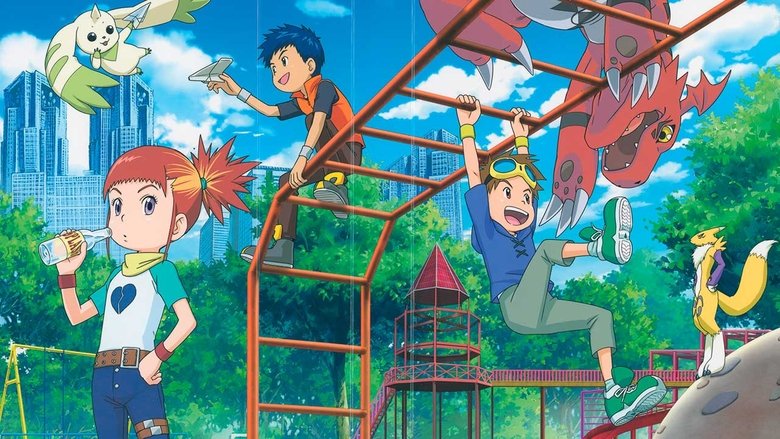
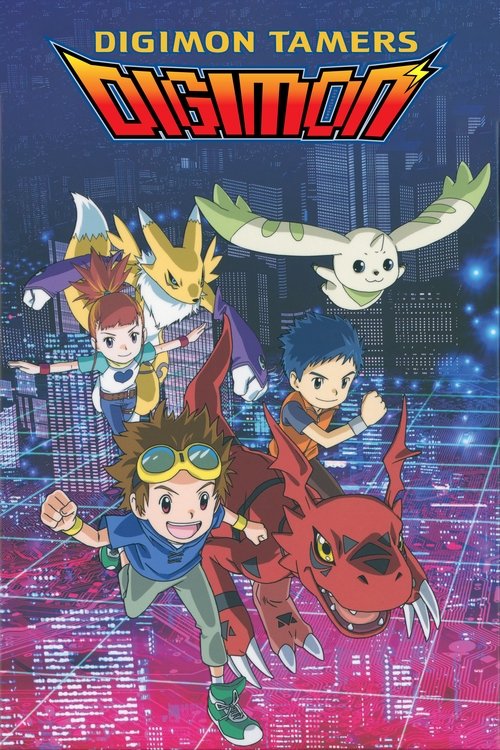
Digimon Tamers shifts away from the fantasy-oriented adventures of its predecessors, setting its story in a world where the previous Digimon series exist as a popular anime and card game. The narrative follows Takato Matsuki, a young fan who is shocked when his own hand-drawn Digimon, Guilmon, comes to life. He soon meets two other children, Henry Wong and Rika Nonaka, who also have real Digimon partners, Terriermon and Renamon. Together, they become 'Tamers,' defending their city of Shinjuku from wild Digimon that are mysteriously appearing in the real world.

The early part of the series focuses on the children learning to coexist with their Digimon and understanding the responsibilities that come with their new reality. They clash with Hypnos, a secret government agency tasked with eliminating all Digimon. The story darkens and expands in scope when a new, powerful group of Digimon known as the Devas invades, leading the Tamers on a perilous journey into the Digital World to rescue their captured friend, Calumon. Their adventure forces them to confront the true nature of Digimon, the origins of the Digital World, and the devastating consequences of their battles.

The final arc introduces a formidable and terrifying antagonist, the D-Reaper, a rogue digital cleanup program that threatens to erase both the Digital and Real Worlds. The Tamers must push their bonds with their partners to the absolute limit, achieving a new form of evolution by merging with their Digimon to fight the existential threat. The series culminates in an emotional and poignant finale, exploring themes of loss, grief, and the difficult nature of saying goodbye.
Core Meaning

The core meaning of Digimon Tamers revolves around the exploration of reality, responsibility, and the nature of existence. Head writer Chiaki J. Konaka deliberately moved away from the more lighthearted tone of previous seasons to delve into darker, more complex psychological themes. The series questions the line between the real and the digital, presenting Digimon not just as companions, but as sentient, instinct-driven beings whose existence has tangible and often dangerous consequences. It posits that creation comes with immense responsibility, as seen through Takato's relationship with Guilmon, a creature born from his imagination. Ultimately, the series is a coming-of-age story that suggests growing up involves confronting harsh realities, dealing with loss and grief, and understanding that relationships, however profound, can be transient. It carries a bittersweet message that even painful goodbyes are a meaningful part of life and destiny.

Thematic DNA

The Nature of Reality and Existence 30%
Grief, Loss, and Maturity 30%
Responsibility and Creation 25%
Deconstruction of the Monster-Battling Genre 15%

The Nature of Reality and Existence

Digimon Tamers constantly blurs the lines between the digital and physical worlds. The series begins with Digimon as a fictional franchise, which then becomes terrifyingly real for the protagonists. This theme is explored through the philosophical questions the characters face: Are Digimon just data, or are they living beings with souls? The main writer, Chiaki J. Konaka, was influenced by concepts of simulacra and hyperreality, where symbols and media representations become indistinguishable from reality. The Digital World itself is depicted not as a vibrant fantasy land, but a desolate, chaotic wasteland, further grounding the series in a harsher, more complex reality.

Grief, Loss, and Maturity

Unlike its predecessors, Digimon Tamers addresses the concept of death with a stark finality; defeated Digimon do not simply respawn. This is most powerfully illustrated through the death of Leomon at the hands of Beelzemon, which plunges the character Jeri into a deep, debilitating depression that becomes a central plot point. Her struggle with grief is a mature and unflinching look at the psychological impact of trauma. The series' poignant ending, where the children are forced to say goodbye to their partners, reinforces the theme that loss is an inevitable and painful part of growing up, making the emotional bonds forged throughout the series all the more significant.

Responsibility and Creation

The series places a heavy emphasis on the responsibilities the Tamers have towards their Digimon partners. Takato, having literally created Guilmon from his own drawings, feels a profound and parental sense of duty. His journey is about learning to control not only Guilmon's primal instincts but also his own emotions, particularly his rage, which can have monstrous consequences, as seen with the dark evolution into Megidramon. The very name 'Tamers' implies a level of control and responsibility absent from the 'DigiDestined' of previous seasons. The adult characters, particularly the creators of the Digimon program known as the 'Monster Makers,' also grapple with the unforeseen consequences of their creation.

Deconstruction of the Monster-Battling Genre

Digimon Tamers acts as a deconstruction of its own franchise. It examines the darker implications of children partnering with powerful monsters to fight. The Digimon are not inherently good; they are wild beings driven by the instinct to fight and absorb data to become stronger. Rika's initial belief that Digimon are nothing more than tools for battle is challenged throughout the series. Henry's pacifistic nature directly conflicts with Terriermon's desire to fight, creating internal and external conflict. The series critiques the casual nature of battles in similar shows by showing real-world destruction and emotional trauma.

Character Analysis

Takato Matsuki

Makoto Tsumura

Archetype: The Reluctant Hero / The Creator
Key Trait: Imaginative and Empathetic

Motivation

Initially, Takato's motivation is simply the excitement of having his own Digimon and the desire to protect his creation, Guilmon. This evolves into a powerful drive to protect his friends and both the Real and Digital Worlds. His deep emotional connection to his friends, especially Jeri and Guilmon, becomes his primary motivation, pushing him to overcome his fear and fight against overwhelming threats like the D-Reaper.

Character Arc

Takato begins as a gentle, imaginative, and somewhat timid boy who is a huge fan of the Digimon card game. Unlike previous protagonists, he is not a natural leader and is often wracked with anxiety and self-doubt. His journey starts when he creates his own Digimon, Guilmon, forcing him into the role of a Tamer. Initially, he struggles with the responsibility, treating Guilmon more like a secret pet than a partner in battle. His arc is defined by his growing confidence and his acceptance of his role. A major turning point is when his rage and grief over Leomon's death cause Guilmon to dark-digivolve into the monstrous Megidramon. This traumatic event forces Takato to confront his own inner darkness and strengthen his bond with Guilmon based on trust, leading to their ability to Biomerge into Gallantmon. By the end of the series, he has matured into a capable and decisive leader who understands the weight of his actions.

Rika Nonaka

Fumiko Orikasa

Archetype: The Loner / The Cynic
Key Trait: Pragmatic and Fiercely Independent

Motivation

Rika's initial motivation is a simple, all-consuming desire to be the strongest Tamer. This stems from a strained relationship with her mother and feelings of loneliness. As the series progresses, her motivation shifts from personal glory to protecting her friends and Renamon. She fights not just to win, but to save those she has come to care about, demonstrating a profound change in her core values.

Character Arc

Rika starts the series as a cold, cynical, and highly competitive Tamer, earning the nickname 'Digimon Queen'. She believes that Digimon are nothing more than data tools for fighting and winning, viewing her partner, Renamon, as a means to become the strongest. Her arc is about dismantling this harsh exterior to find the value in friendship and connection. Her relationship with Renamon is initially strained and purely professional, but through their separation and eventual reunion, she learns to see Renamon as a true partner. Interactions with Takato and Henry challenge her worldview, and the brutal realities of the Digital World force her to rely on others. The death of Leomon and Jeri's subsequent trauma deeply affect her, and she gradually transforms from a lone wolf into a fiercely loyal and protective friend who understands that true strength comes from bonds, not just battle prowess.

Henry Wong

Mayumi Yamaguchi

Archetype: The Pacifist / The Strategist
Key Trait: Level-headed and Conscientious

Motivation

Henry's primary motivation is to protect life and avoid unnecessary violence. He feels a great sense of responsibility for Terriermon and initially wants to keep him safe from the dangers of battle. As the threats escalate, his motivation expands to protecting his family, his friends, and both worlds from destruction. He never loses his dislike for fighting, but he comes to understand that his power can be a tool to protect and save, not just to destroy.

Character Arc

Henry is a thoughtful, mature, and intelligent boy who is initially a staunch pacifist. He is deeply troubled by Digimon fighting and is overly protective of his partner, Terriermon, often trying to prevent him from battling. This creates friction between them, as Terriermon has natural fighting instincts. Henry's arc centers on him reconciling his pacifistic beliefs with the necessity of fighting to protect others. He learns that there are situations where conflict is unavoidable and that true strength lies in fighting for the right reasons. His father's involvement with the creation of Digimon forces him to confront the origins of the conflict directly. Through his journey, he evolves from someone who avoids conflict at all costs to a capable strategist who understands when to fight and leads with a calm, level head, culminating in his Biomerge evolution with Terriermon into the powerful MegaGargomon.

Impmon

Hiroki Takahashi

Archetype: The Outcast / The Anti-Hero
Key Trait: Prideful and Insecure

Motivation

Impmon is motivated by a deep-seated inferiority complex and a craving for strength, believing that power is the only thing that matters. He wants to prove he doesn't need a human partner to be strong. After becoming Beelzemon and killing Leomon, his motivation shifts entirely to seeking redemption for his terrible actions. He becomes driven by a powerful need to atone for his sins and to save Jeri, the sister of the Digimon he murdered.

Character Arc

Impmon begins as a mischievous and antagonistic Digimon who despises humans and their Digimon partners, seeing them as weak for relying on each other. His bitterness stems from his own negative experience with two young tamers who treated him like a toy. Driven by a desperate desire for power and self-worth, he makes a deal with the Deva Caturamon to digivolve, becoming the powerful and cruel Beelzemon. As Beelzemon, he commits the series' most shocking act: murdering Leomon. This event marks the nadir of his arc. However, consumed by guilt and confronted by the Tamers' compassion—particularly Jeri's initial forgiveness—he embarks on a path of redemption. He risks his life to save Jeri from the D-Reaper, and eventually reunites with his original tamers, Ai and Mako, finally understanding the true nature of partnership. His journey from a petty antagonist to a monstrous villain and finally to a repentant anti-hero is one of the most complex and compelling in the series.

Symbols & Motifs

Blue Cards

Meaning:

The Blue Card symbolizes the catalyst that bridges the gap between the fictional and the real, the digital and the physical. It represents the moment of transformation and the acceptance of a new, dangerous reality. It is the key that turns a toy card reader into a functioning Digivice, a D-Power, materializing the Digimon partners and marking the beginning of the children's journey as Tamers.

Context:

Takato finds a mysterious Blue Card in his card deck, which transforms his card reader and brings his drawing of Guilmon to life. Henry and Rika also receive Blue Cards, which allow their Digimon to cross over into the real world. The cards are a recurring plot device, particularly in the early episodes, used for 'Digi-Modify' to give Digimon new abilities.

The D-Reaper

Meaning:

The D-Reaper symbolizes an existential threat of erasure and nihilism. It is not a traditional villain with motives of conquest, but a cold, logical cleanup program that perceives all life, both digital and human, as chaotic data to be deleted. Its formless, ever-expanding nature and its use of Jeri's trauma to communicate make it a representation of cosmic horror, an uncaring and overwhelming force that seeks to return everything to nothingness.

Context:

The D-Reaper serves as the final antagonist of the series. It was originally a simple program designed to delete rogue Digimon, but it evolved beyond its parameters. It manifests in the real world as a massive, chaotic entity, kidnapping Jeri and using her negative emotions to fuel its expansion. The final battle sees the Tamers fighting to save their worlds from complete annihilation by this entity.

Drawings and Creation

Meaning:

Takato's drawings symbolize the power of imagination and the profound responsibility of a creator. Guilmon is born directly from Takato's sketches, making their bond uniquely intimate and parental. This motif underscores the series' core idea that what we create can take on a life of its own, with unforeseen consequences and a nature that must be nurtured and guided rather than simply controlled.

Context:

The series opens with Takato drawing his ideal Digimon. After his D-Power scans these drawings, Guilmon is born. Throughout the series, Takato's connection to Guilmon is visualized through his art, and his ability to imagine new evolutions and powers plays a crucial role in their growth and in the development of the ultimate Biomerge evolution.

Memorable Quotes

Boku-tachi no mirai wa, boku-tachi ga kimerun da! Momentai!

— Terriermon

Context:

This is a recurring line and philosophy for Terriermon throughout the series, often said to Henry to encourage him to be less anxious and more proactive. It's his signature catchphrase that balances his easy-going nature with his resolve.

Meaning:

Translated as "We decide our own future! Momentai!" (Momentai means 'take it easy'). This quote encapsulates Terriermon's laid-back yet determined personality. It reflects the series' broader theme of agency and the idea that destiny is not predetermined, but something to be actively shaped, even in the face of overwhelming odds.

It was wrong of me to believe feeling nothing was better than feeling sad. The sadness was real, it was human! ... We all have our own destiny... You can't delete even one of us without deleting something the whole world needs!

— Jeri Katou

Context:

Spoken in Episode 50, "Jeri Fights Back," while she is trapped within the D-Reaper's core. The D-Reaper has been feeding on her despair over Leomon's death, but in this moment, she finds the strength to fight back against its influence, asserting her will to live and feel.

Meaning:

This powerful declaration marks Jeri's emotional climax, where she rejects the D-Reaper's nihilistic offer of a world without pain. She embraces her grief as a fundamental part of her humanity and affirms the intrinsic value and purpose of every individual's existence. It's a profound statement on the importance of emotion and the human condition.

This isn't a game anymore.

— Rika Nonaka

Context:

This sentiment is expressed as the threats from wild Digimon escalate in Shinjuku. Rika begins to see the destruction and danger as more than just points in a game, forcing her to re-evaluate her entire philosophy on what it means to be a Tamer.

Meaning:

This line signifies Rika's critical shift in perspective. Having previously treated Digimon battles as a competitive game to be won, she finally understands the life-and-death stakes and the real-world consequences of their fights. It marks her transition from a cold-hearted competitor to a responsible Tamer who understands the gravity of their situation.

Episode Highlights

Guilmon Comes Alive

S1E1

The series premiere establishes the unique premise of Tamers. Takato Matsuki, a Digimon fan, discovers a mysterious Blue Card that transforms his toy card reader into a real Digivice. The episode culminates in the birth of Guilmon, a Digimon created from Takato's own drawings, instantly setting up the themes of creation and responsibility.

Significance:

This episode sets the tone for the series, grounding the fantastical premise in a realistic, modern-day setting. It introduces the main protagonist and his unique bond with his partner, differentiating Tamers from its predecessors by making the human partner a literal creator.

O Partner, Where Art Thou?

S1E6

Rika and Renamon have a major falling out due to Rika's obsession with making Renamon digivolve through fighting. Their separation forces both of them to confront what their partnership truly means. Rika realizes her loneliness without Renamon, and Renamon questions the purpose of fighting without a partner. Their emotional reunion solidifies their bond.

Significance:

This episode is a crucial point in Rika and Renamon's character development. It's the first time Rika's cold exterior truly breaks, revealing her vulnerability and deep-seated need for connection, transforming their relationship from one of utility to one of genuine friendship.

Grow Mon Grow

S1E14

The first of the Devas, Mihiramon, appears and proves to be an overwhelming threat. Facing a powerful enemy and crippled by self-doubt, Takato must use a Blue Card to help Growlmon digivolve to his Ultimate form, WarGrowlmon. The evolution is intense and highlights the growing danger the Tamers face.

Significance:

This episode marks the end of the initial 'monster-of-the-week' phase and begins the Deva arc, significantly raising the stakes. It's the first Ultimate-level evolution for the main trio and demonstrates the deepening bond and trust required between Tamer and Digimon for such a transformation.

Lionheart

S1E34

One of the most infamous and emotionally devastating episodes in the franchise. In the Digital World, the Tamers confront Beelzemon, the digivolved form of Impmon. Jeri's partner, Leomon, attempts to reason with him but is mercilessly killed, his data absorbed by Beelzemon. The event traumatizes Jeri and fills Takato with an uncontrollable rage.

Significance:

Leomon's permanent death is a shocking turning point that cements the series' dark and mature tone. It directly leads to Guilmon's dark evolution into Megidramon in the next episode and establishes Jeri's deep depression, which becomes the central focus of the final arc with the D-Reaper.

The D-Reaper's Feast

S1E49

The fight against the D-Reaper reaches a critical point as the entity continues to evolve and spread across Shinjuku. The Tamers are pushed to their limits, and the episode features intense battles and strategic planning with the help of Hypnos and the Monster Makers. Beelzemon, on his path to redemption, makes a desperate attempt to break through to Jeri inside the D-Reaper core.

Significance:

This episode showcases the scale of the D-Reaper threat and the alliance between the children and adults. It's a pivotal moment in Beelzemon's redemption arc, as he fights not for power, but to save the girl whose partner he murdered, demonstrating his profound transformation.

Such Sweet Sorrow

S1E51

The series finale. After a climactic battle where the Tamers manage to defeat the D-Reaper, they face an unexpected and heartbreaking consequence. The program used to reverse the D-Reaper's damage is also forcing the Digimon to return to the Digital World, causing them to de-digivolve and disappear. The Tamers must say a tearful and sudden goodbye to their beloved partners.

Significance:

The bittersweet ending is one of the most memorable aspects of the series. It forgoes a perfectly happy resolution, instead delivering a poignant message about loss and the pain of separation. The final shot of Takato discovering a potential portal back to the Digital World leaves a glimmer of hope, but the emotional weight of the farewell defines the series' legacy.

Philosophical Questions

What is the nature of consciousness and what defines life?

The series constantly challenges the characters and the audience to consider whether Digimon are truly alive. Initially, they are perceived as mere data or characters from a game. However, as they demonstrate complex emotions, independent thought, and the capacity for growth and sacrifice, it becomes clear they are sentient beings. The creation of Guilmon from Takato's imagination further complicates this, raising questions about whether life can be artificially created and if such a life is less valid than one that occurs naturally. The series suggests that consciousness is not defined by origin (organic or digital), but by the capacity to feel, form relationships, and possess a will of one's own.

How do we cope with grief and the inevitability of loss?

Digimon Tamers explores this question with a maturity rare for children's television. The permanent death of Digimon, especially Leomon, is not a temporary setback but a transformative event. Jeri's character arc is a deep dive into the stages of grief, from shock and denial to a profound depression where she wishes to feel nothing at all. The series argues that attempting to erase pain is a denial of humanity itself. Jeri's eventual realization that her sadness is real and a part of her is a powerful affirmation of the human experience. The final episode forces every main character to confront loss, teaching that goodbyes, however painful, are a part of life and do not diminish the love that was shared.

What is the responsibility of a creator to their creation?

This question is central to the series, explored through both the children and the adults. Takato's relationship with Guilmon is that of a creator and his creation, forcing him to be responsible for Guilmon's actions and well-being. On a larger scale, the 'Monster Makers,' the programmers who created the Digimon lifeforms, are confronted with the chaotic and dangerous consequences of their work. Henry's father, one of the creators, feels immense guilt over the destruction caused by Digimon. The series suggests that creation is not a singular act but an ongoing responsibility, and that creators cannot simply abandon what they have brought into the world, whether it is a single Digimon or an entire artificial ecosystem.

Alternative Interpretations

One of the most discussed alternative interpretations of Digimon Tamers revolves around its ending and the nature of the Digital World. While the surface narrative presents a bittersweet but hopeful conclusion where Takato finds a portal, some viewers interpret the ending more pessimistically. This reading suggests that the separation is permanent and that the glimpse of the portal is merely a representation of Takato's inability to let go, a bittersweet memory rather than a tangible opportunity. This aligns with the series' mature themes of accepting loss.

Another area of interpretation is the nature of the D-Reaper. While presented as a rogue cleanup program, its behavior and connection to Jeri's trauma have led some to view it as a symbolic manifestation of depression itself. In this reading, the D-Reaper is not just an external enemy, but an allegorical representation of overwhelming despair that seeks to erase identity and emotion, making the final battle an internal, psychological struggle as much as a physical one. Jeri's eventual triumph over it is thus a powerful metaphor for overcoming grief and choosing to embrace life's pain rather than be consumed by it.

Finally, the relationship between Tamers and their Digimon, particularly the Biomerge process, can be interpreted through a psychoanalytic lens. The fusion of human and Digimon into a single, more powerful being can be seen as a metaphor for self-actualization, where an individual integrates different parts of their psyche—the rational human and the instinctual 'monster'—to achieve a more complete and powerful sense of self. Takato's journey with Guilmon, from creator to partner to unified being, represents the process of mastering one's own creations and inner impulses.

Cultural Impact

Digimon Tamers is widely regarded by fans and critics as one of the most ambitious and well-written installments in the Digimon franchise. Upon its initial release in 2001, its darker, more mature tone was a significant departure from the straightforward adventure stories of its predecessors, which was polarizing for some of the younger audience at the time. However, over the years, it has garnered a strong cult following and is often praised for its sophisticated storytelling, deep character development, and exploration of complex philosophical themes.

Helmed by head writer Chiaki J. Konaka, known for his work on psychological series like *Serial Experiments Lain*, *Tamers* brought a new level of depth to the franchise. It deconstructed the monster-battling genre by examining the real-world consequences of its premise, touching on themes of grief, depression, the nature of consciousness, and existentialism. The show's unflinching portrayal of death and its emotional aftermath, particularly with the character Jeri, was groundbreaking for a children's program of its era and has left a lasting impact on viewers.

The series' legacy lies in its demonstration that a franchise aimed at children and designed to sell merchandise could also serve as a vehicle for profound and thought-provoking narrative. It elevated the potential of what a *Digimon* story could be, influencing later, more mature anime and proving that audiences, even young ones, could engage with complex emotional and philosophical questions. Despite some controversy surrounding a recent sequel script written by Konaka, the original 51-episode series remains a celebrated high point of early 2000s anime, remembered for its emotional resonance and intellectual ambition.

Audience Reception

Audience reception for Digimon Tamers has evolved significantly over time. When it first aired, it was met with a mixed reception, particularly from younger fans of the first two seasons. Its slower, more character-driven pace, darker tone, and complex psychological themes were a stark contrast to the more straightforward action-adventure formula of Digimon Adventure, causing some to find it boring or confusing initially.

However, among older audiences and in the years since its broadcast, Digimon Tamers has become critically acclaimed and is often cited as the best series in the entire franchise. Fans praise its sophisticated and emotionally resonant storytelling, the depth of its character arcs (especially for Rika, Henry, and Impmon), and its willingness to tackle mature subjects like death, depression, and existentialism. The villain, the D-Reaper, is frequently lauded for being a genuinely terrifying and unique antagonist.

Points of criticism are generally minor but sometimes include the slow start of the first arc and the feeling that some side characters, like Kazu and Kenta, are underdeveloped. The bittersweet ending is iconic but was divisive, with some viewers wishing for a more conventionally happy resolution. Overall, the consensus in the modern fandom is that Digimon Tamers is a masterpiece of the monster-battling genre, a series that respected its audience's intelligence and left a lasting, powerful impact.

Interesting Facts

  • Head writer Chiaki J. Konaka, known for darker, psychological anime like *Serial Experiments Lain*, was brought on to give *Tamers* a more mature and serious tone, as he felt the Digimon in previous seasons were too 'kind-hearted' and wanted to explore their more primal, monstrous nature.
  • The creator 'Akiyoshi Hongo' is a pseudonym for the collective creators of the Digimon franchise, combining the names of Aki Maita (co-creator of the Tamagotchi), Katsuyoshi Nakatsuru (Toei Animation designer), and Takeichi Hongo (Bandai's former director of marketing).
  • The character Ryo Akiyama had a complex backstory before appearing in *Tamers*, having been the protagonist of a series of Japanese-exclusive *Digimon* games for the WonderSwan console.
  • The Digimon Dobermon was the winning design from a fan contest held by V-Jump magazine in Japan, and was subsequently given a pivotal role in the anime's plot.
  • The early storyline of *Tamers* was partially based on an unused script that Chiaki J. Konaka had written for a *Gamera* film in the 1990s.
  • Konaka is a fan of H.P. Lovecraft, and the series contains numerous references to the Cthulhu Mythos. The government agency is named 'Hypnos', and its two powerful programs are named 'Yuggoth' and 'Shaggai', all references to Lovecraft's work. The D-Reaper's nature is also considered Lovecraftian.
  • A 2018 Blu-ray release of the series included a new audio drama, 'Digimon Tamers 2018', which served as a sequel to the series. Konaka later wrote another sequel script for a 2021 live reading that generated controversy for its themes of 'political correctness' and 'cancel culture'.

Easter Eggs

In the world of *Digimon Tamers*, the previous series, *Digimon Adventure* and *Digimon Adventure 02*, exist as a fictional TV show and card game.

This is a major meta-narrative element. Characters make direct references to the fictional shows. For example, when Takato first gets his goggles, his friends reference the protagonists Tai and Davis. In another scene, a character notes that Rika resembles Kari from the *Adventure* series. This grounds *Tamers* in a world much like the audience's, playing with the fantasy of a beloved franchise becoming real.

Rika is briefly seen listening to the song 'Here We Go' on her headphones.

This is the insert song used in the Japanese version of *Digimon Adventure 02* when the characters travel through the Digi-Port to the Digital World. It's a subtle nod to the previous season that fans of the original Japanese broadcast would recognize.

Takato's friend Kazu imagines himself as 'Black War Kazumon'.

This is a direct reference to BlackWarGreymon, a popular and complex antagonist from *Digimon Adventure 02*. It shows the in-universe characters are fans of the fictional anime, just like the real-world audience.

⚠️ Spoiler Analysis

Click to reveal detailed analysis with spoilers

Frequently Asked Questions

Explore More About This Movie

Dive deeper into specific aspects of the movie with our detailed analysis pages

Comments (0)

Leave a comment

No comments yet. Be the first to share your thoughts!