
Navillera
나빌레라
"While your legs are strong and your head is clear, do what you have always wanted to do."
Overview
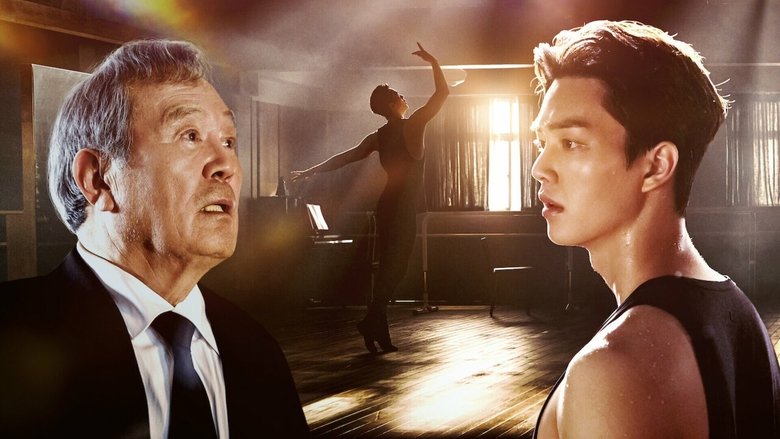
"Navillera" tells the deeply moving story of Shim Deok-chul, a 70-year-old retired postman who decides to pursue his lifelong, secret dream of learning ballet. His decision is met with surprise and resistance from his family, who believe it's an undignified pursuit for a man his age. At a local ballet studio, he meets Lee Chae-rok, a gifted but struggling 23-year-old dancer. Chae-rok is on the verge of giving up due to financial hardships and personal emotional wounds.
Initially reluctant, Chae-rok is tasked with teaching Deok-chul, and in exchange, Deok-chul becomes his manager, ensuring he eats well and stays focused. This unlikely arrangement blossoms into a profound intergenerational friendship. Deok-chul’s unwavering passion and gentle wisdom slowly break down Chae-rok’s hardened exterior, reigniting his love for ballet. In turn, Chae-rok provides Deok-chul with the guidance and encouragement to take flight. Together, they navigate societal judgment, physical limitations, and personal demons, proving that it's never too late to chase a dream and that support can come from the most unexpected of places.
Core Meaning
The core meaning of "Navillera" is a powerful and tender assertion that it is never too late to pursue a dream. The series champions the idea that passion and the desire for self-fulfillment have no age limit. Through the journey of a septuagenarian learning ballet, the creators convey a message of hope, courage, and the importance of living without regrets. It explores the idea that life isn’t about waiting for the end but about soaring, even just once. The series also highlights the transformative power of intergenerational friendship and mutual support in overcoming life's hurdles, suggesting that fulfillment is found not just in achieving a dream, but in the shared journey and the connections made along the way.
Thematic DNA
The Pursuit of Dreams Against All Odds
This is the central theme of the series, embodied by Shim Deok-chul's decision to learn ballet at 70. Having suppressed his dream his entire life to support his family, he decides to finally live for himself after seeing his friends pass away with regrets. The series meticulously shows his struggles, from physical stiffness and societal ridicule to his family's strong opposition and, most formidably, his developing Alzheimer's. His journey is a testament to the belief that passion and determination can overcome any obstacle, inspiring not only his young mentor Chae-rok but also his own family and others around him to re-evaluate their own lives and aspirations.
Intergenerational Friendship and Mentorship
The relationship between the 70-year-old Deok-chul and the 23-year-old Chae-rok forms the emotional heart of the story. What begins as a reluctant teacher-student arrangement evolves into a deep, familial bond akin to that of a grandfather and grandson. Deok-chul provides Chae-rok with the emotional support and stability he lacks, acting as a manager, caretaker, and cheerleader. Conversely, Chae-rok gives Deok-chul the gift of his dream. They learn from each other, bridging the generational gap to provide mutual healing and encouragement, demonstrating that mentorship and friendship are reciprocal forces that transcend age.
Family, Acceptance, and Sacrifice
The series delves deeply into family dynamics. Initially, Deok-chul's wife and adult children are mortified by his new hobby, seeing it as an embarrassment. Their opposition stems from societal norms and their perception of their father's role. However, as they witness his genuine passion and happiness, their disapproval slowly turns into acceptance and ultimately, staunch support. The journey forces the entire family to confront their own unfulfilled dreams and regrets, leading to reconciliation and a deeper understanding of one another. It highlights the sacrifices parents make and the eventual need for children to support their parents' happiness.
Confronting Mortality and Memory
A significant layer is added to the story with Deok-chul's Alzheimer's diagnosis. This isn't just a plot device for melodrama but a poignant exploration of the race against time. His desire to perform on stage becomes more urgent as he fears losing his memories, not just of the ballet steps, but of the dream itself. The theme is handled with tenderness, focusing on his determination to live fully and create meaningful memories while he still can. It raises questions about what defines a person when memories fade and suggests that some passions become ingrained in the body and spirit, transcending cognitive decline.
Character Analysis
Shim Deok-chul
Park In-hwan
Motivation
His primary motivation is to fulfill a lifelong dream he suppressed since childhood due to his father's disapproval and the need to provide for his family. After a friend's funeral, he is struck by the fear of dying with regrets. This is later amplified by his Alzheimer's diagnosis; he wants to stand on stage and perform ballet before his memories of the dream itself disappear.
Character Arc
Deok-chul begins as a kind, retired postman quietly entering his twilight years, haunted by the unfulfilled dream of learning ballet. Initially facing resistance from his family, his gentle persistence and unwavering passion slowly win them over. His journey is one of quiet courage, not just in learning ballet at 70, but in confronting his Alzheimer's diagnosis head-on. He evolves from someone who lived his whole life for others into someone who dares to live for himself, proving that it's never too late. His arc is not about becoming a professional dancer but about the act of soaring, even just once, inspiring everyone around him to pursue their own happiness.
Lee Chae-rok
Song Kang
Motivation
Chae-rok's initial motivation is simply to survive financially while pursuing ballet, a passion he inherited from his late mother. He is driven by immense raw talent but lacks direction and emotional support. Deok-chul's unwavering belief in him becomes a new, powerful motivation. He becomes driven by a desire to help Deok-chul achieve his dream, which in turn fuels his own ambition to soar high as a professional dancer.
Character Arc
Chae-rok starts as a talented but disillusioned and emotionally withdrawn ballerino, burdened by financial struggles and a complicated family past. Prickly and solitary, he is on the verge of quitting ballet. Meeting Deok-chul forces him out of his shell. Initially annoyed by the elderly man, he is gradually moved by Deok-chul's sincerity and passion. Through their friendship, Chae-rok heals from his past wounds, learns to open up, and rediscovers his purpose and love for dance. He transforms from a struggling young man into a confident and caring individual who not only achieves his own dreams but also helps his mentor realize his.
Choi Hae-nam
Na Moon-hee
Motivation
Her primary motivation is the well-being and stability of her family. She has spent her life caring for her husband and children, and her initial opposition to ballet stems from this deep-seated protective instinct. Ultimately, her motivation shifts to ensuring her husband's happiness in the time he has left, realizing that his emotional fulfillment is the most important thing.
Character Arc
Hae-nam is Deok-chul's pragmatic and caring wife. At first, she is fiercely opposed to her husband's ballet dream, concerned about his health and what others will think. Her arc is one of transformation from a protector of the status quo to her husband's greatest champion. After secretly watching him practice and seeing the pure joy it brings him, her heart melts. She confronts her children, defending his right to be happy, and becomes his staunchest supporter, especially after learning about his illness. Her journey represents the power of love to overcome societal expectations and fear.
Hong Seung-hee
Shim Eun-ho
Motivation
Initially, Eun-ho is motivated by a desire to please her demanding father and follow a conventional path to success. However, witnessing her grandfather's joy and determination motivates her to seek personal fulfillment rather than just external validation. Her goal becomes finding a life and career that she is genuinely passionate about.
Character Arc
Eun-ho is Deok-chul's hardworking granddaughter, who starts the series trying to live up to her father's high expectations by working at a large corporation. She is unhappy and feels lost, unsure of her own dreams. Inspired by her grandfather's courageous pursuit of ballet, she finds the strength to quit her stifling job and search for what truly makes her happy, eventually finding a passion for radio programming. Her arc is a parallel journey to her grandfather's, representing the younger generation's struggle to define success and happiness on their own terms.
Symbols & Motifs
Butterfly (Navillera)
The title "Navillera" translates to "like a butterfly." The butterfly symbolizes transformation, grace, and the realization of a dream. It represents Deok-chul's journey of emerging from the chrysalis of his past life of duty and regret to finally spread his wings and soar, however briefly. Ballet itself, with its graceful leaps and delicate movements, visually mimics the fluttering of a butterfly, reinforcing this central metaphor.
The butterfly motif is present throughout the series, from the title itself to the visual language of the ballet performances. The final performance Deok-chul and Chae-rok stage is even named "Navillera." The symbol encapsulates the entire message of the show: the beauty of a dream taking flight, even if that flight is as ephemeral as a butterfly's life.
Ballet
Ballet serves as a powerful symbol for the pursuit of a seemingly impossible dream. It represents discipline, grace, and a form of expression that transcends words. For Deok-chul, it is the physical manifestation of a lifelong desire for beauty and freedom. For Chae-rok, it is his lifeline, a connection to his late mother, and his only way of communicating his inner turmoil and aspirations.
The entire series is set against the backdrop of the ballet world. The physical pain and rigorous training involved in ballet mirror the emotional and societal struggles the characters face. The contrast between Deok-chul's aging, stiff body and the fluid grace he aspires to highlights the immense challenge he has undertaken. The climactic ballet performance is the culmination of their shared journey and emotional growth.
The Notebook
Deok-chul meticulously writes everything down in a notebook. Initially, this appears to be a charming quirk of an elderly man learning something new. However, it later symbolizes his desperate fight against his fading memory due to Alzheimer's. The notebook becomes his anchor to reality, a tangible record of his dream, the ballet steps, and his precious time with Chae-rok.
Throughout the early episodes, Deok-chul is seen jotting down notes on everything from ballet positions to Chae-rok's food preferences. The significance of this action deepens profoundly when his Alzheimer's is revealed to the audience and other characters. It underscores the fragility of his situation and his quiet, determined struggle to hold onto his dream for as long as possible.
Memorable Quotes
You only live once, not twice... what really scares me is that someday, I might not be able to do what I want or don't even remember what I want to do anymore. That's why this moment is precious to me.
— Shim Deok-chul
Context:
Deok-chul says this in a heartfelt conversation, explaining to a concerned Chae-rok why learning ballet is so critically important to him. It's a pivotal moment that deepens their bond and reveals the true stakes of his journey.
Meaning:
This quote encapsulates the core philosophy of the series. It's Deok-chul's powerful justification for pursuing ballet at his age, heightened by the unspoken reality of his Alzheimer's. It speaks to the universal fear of running out of time and having regrets, urging one to seize the present moment.
Chae-rok, you have wings that are about to spread. Soar high. As high as you can, until the very end.
— Shim Deok-chul
Context:
This is said towards the end of the series, as Deok-chul encourages Chae-rok to pursue an opportunity to study abroad and not let his concern for him hold him back. It's a moment of mentorship and letting go, solidifying their profound connection.
Meaning:
This is Deok-chul's ultimate blessing and encouragement to Chae-rok. It signifies his selfless support and belief in the younger dancer's potential. He sees Chae-rok's future as boundless, contrasting it with his own fleeting chance to fly, and his greatest wish is to see Chae-rok succeed.
I've never done anything I wanted to do in my entire life. I've been too busy making ends meet and supporting my family... Now I'm finally trying to do what I want to do. I know very well that I'm old and weak. Still, I want to try it.
— Shim Deok-chul
Context:
This is part of Deok-chul's plea to his family when they first discover his secret and try to make him stop. It's his declaration of intent, marking a turning point where he stands up for his own happiness for the first time.
Meaning:
This quote powerfully conveys the weight of a lifetime of sacrifice and the courage it takes to finally prioritize one's own dream. It's a relatable sentiment for anyone who has put their personal aspirations aside for the sake of duty and responsibility.
Episode Highlights
Episode 1
The series opens by establishing Deok-chul's quiet, retired life and the inciting incident: the death of a friend, which sparks his fear of dying with regrets. He stumbles upon Chae-rok practicing ballet in a studio, and the image captivates him, solidifying his resolve to pursue his lifelong dream. This episode beautifully sets up the premise, the emotional stakes, and the eventual meeting of the two protagonists.
This episode is crucial as it lays the entire foundation for the series. It introduces the central theme of living without regrets and establishes the stark contrast between Deok-chul's hopeful beginnings and Chae-rok's disillusioned state, creating the central dynamic that will drive the narrative.
Episode 4
Deok-chul's family discovers his secret and their reactions are explosive, particularly from his eldest son, Seong-san. They try to force him to quit, viewing his hobby as shameful. This episode highlights the significant familial and societal obstacles Deok-chul faces. It culminates in a powerful moment where his wife, Hae-nam, after seeing his passion, begins to defend him.
This episode marks the first major conflict in Deok-chul's journey. It's no longer a personal secret but a battle for acceptance within his own family. It tests his resolve and begins the slow process of changing his family's hearts and minds, which is a major subplot of the series.
Episode 7
The truth about Deok-chul's Alzheimer's is revealed to Chae-rok. This discovery re-contextualizes everything for Chae-rok, turning his admiration for Deok-chul into a desperate, protective love. He now understands the urgency behind his student's dream and becomes fiercely determined to help him get on stage before it's too late.
This is a major turning point in the series and the central relationship. It shifts the dynamic from a simple mentorship to a poignant race against time. The emotional stakes are raised immeasurably, solidifying Chae-rok's character development and his commitment to Deok-chul.
Episode 12 (Finale)
On the day of the performance, Deok-chul wakes up having forgotten the choreography. With Chae-rok's gentle guidance, he relies on muscle memory and they perform a deeply emotional duet on stage. The episode then features a time jump, showing Chae-rok as a successful ballerino and Deok-chul's condition having progressed. Their final reunion in the snow, where Deok-chul's body still remembers the ballet moves, is a bittersweet and beautiful conclusion.
The finale provides a powerful and emotionally resonant conclusion. It affirms that Deok-chul achieved his dream, and the impact of his journey has positively changed everyone around him. The ending is not a miraculous cure but a realistic and tender portrayal of living with Alzheimer's, emphasizing that the emotional and physical imprint of a great passion can endure even when memories fade.
Philosophical Questions
Is it ever truly too late to pursue a lifelong dream?
The entire series is a resounding 'no' to this question. Through Deok-chul, the show argues that the pursuit of a dream is not defined by age or physical capability, but by the courage to start. It explores how society and even family can impose limitations based on age, but personal fulfillment comes from breaking free of those expectations. The series suggests the value is not necessarily in achieving mastery, but in the joy and meaning found in the journey itself.
What is the nature of memory and identity?
With the introduction of Deok-chul's Alzheimer's, the series delves into the connection between memory and self. As Deok-chul fears forgetting his dream, the show asks what remains of a person when their memories fade. The poignant conclusion, where his body remembers the ballet movements even when his mind is clouded, suggests that identity and passion are stored in more than just our cognitive memories. They are imprinted on our bodies and our spirits, an idea beautifully encapsulated in the concept of 'muscle memory.'
What defines a meaningful life?
"Navillera" contrasts a life lived through duty and responsibility with one that embraces personal passion. Deok-chul spent most of his life as a dedicated postman, husband, and father, a life that was honorable but left a part of him unfulfilled. The series posits that a truly meaningful life requires a balance, and that self-actualization and pursuing what makes you 'soar' is a vital component of human existence, regardless of when you begin. It inspires reflection on whether success is measured by societal standards or by personal happiness and courage.
Cultural Impact
"Navillera" was praised by critics and audiences for its gentle, heartwarming, and profound narrative, offering a stark contrast to the more common genres of romance, thriller, and action in K-dramas. Its release during a global pandemic resonated with many viewers seeking uplifting and meaningful content. The series was lauded for its positive and respectful portrayal of the elderly, challenging ageist stereotypes by focusing on a senior citizen's capacity for growth, passion, and the pursuit of dreams. It sparked conversations about the importance of respecting the personal aspirations of older family members. The drama also brought the art of ballet to a wider audience, showcasing its beauty and rigor. While not a massive commercial hit on the scale of other Netflix K-dramas, "Navillera" carved out a significant legacy as a critically acclaimed "healing drama" that will be remembered for its emotional depth, superb acting, and its beautiful, life-affirming message.
Audience Reception
"Navillera" received overwhelmingly positive reviews from audiences, who frequently described it as a heartwarming, poignant, and beautiful "healing drama." Viewers consistently praised the exceptional chemistry between veteran actor Park In-hwan and rising star Song Kang, citing their relationship as the emotional core of the show. The series was lauded for its touching storyline that respectfully tackled themes of aging, dreams, family, and Alzheimer's without resorting to excessive melodrama. Many viewers admitted to being moved to tears in nearly every episode. While it lacked the intense romance or action of other popular dramas, its unique and gentle storytelling was seen as a refreshing change of pace. It is widely regarded by its fans as an underrated masterpiece that leaves a lasting emotional impact.
Interesting Facts
- The series is based on the popular Daum webtoon of the same name written by Hun and illustrated by Ji-min, which was published between 2016 and 2017.
- Actor Song Kang, who plays Lee Chae-rok, underwent five to six months of rigorous ballet training to prepare for the role, as he had no prior dance experience.
- Veteran actor Park In-hwan, who plays Shim Deok-chul, also took on the challenge of learning ballet for his role, stating that while it was difficult at his age, he wanted to convey the meaning of taking on a new challenge.
- The Korean title "나빌레라" (Navillera) is a poetic term meaning "like a butterfly," originating from the 1939 poem "The Nun's Dance" (승무) by Cho Ji-hoon.
- The director, Han Dong-hwa, specifically chose Song Kang for the role of Chae-rok not just for his looks but for his "pure" and "reserved" aura, which fit the character perfectly.
⚠️ Spoiler Analysis
Click to reveal detailed analysis with spoilers
Frequently Asked Questions
Explore More About This Movie
Dive deeper into specific aspects of the movie with our detailed analysis pages
Comments (0)
No comments yet. Be the first to share your thoughts!