An Egg Rescue
Un rescate de huevitos
Overview
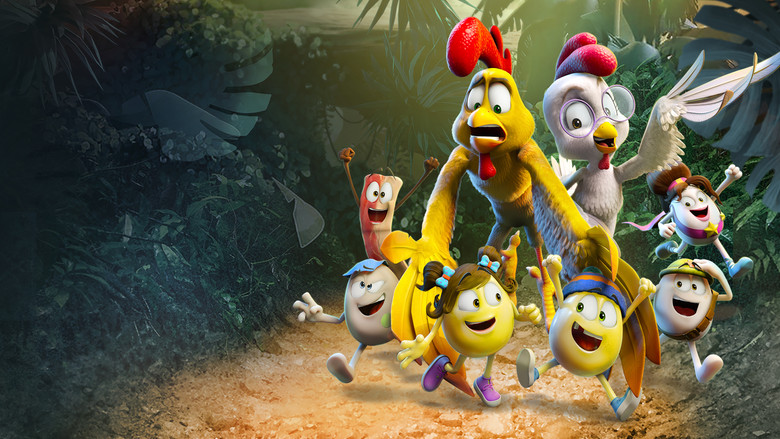
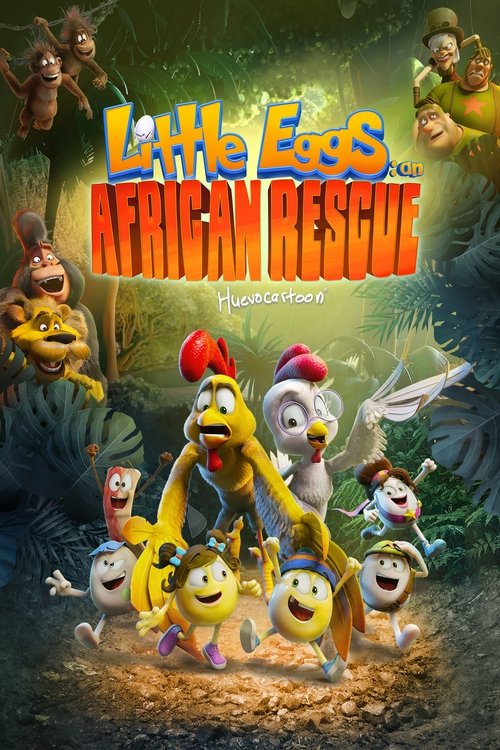
"An Egg Rescue" (original title: "Un rescate de huevitos") is the fourth film in the popular Mexican animated saga from Huevocartoon Producciones. The story follows Toto, who has grown from a young rooster into a proud father of two beautiful golden eggs, Max and Uly, with his wife Di. Their peaceful life on the farm is shattered when the rare golden eggs are stolen by Russian egg collectors, led by the villainous Duchess, to be sold as an exotic delicacy at a secret gourmet event in Africa.
Forced into action, Toto and Di, along with their loyal friends Willy, Bibi, and Confi, embark on a perilous journey across the world to rescue their children. Their adventure takes them to the Congo, where they must navigate a foreign land and encounter a host of new characters, including a pride of lions, clumsy monkeys, and hungry crocodiles, all while trying to outsmart the collectors and save Max and Uly before they are served to the world's millionaires.
Core Meaning
The core meaning of "An Egg Rescue" revolves around the powerful and unbreakable bonds of family and the lengths parents will go to protect their children. The film explores the theme of letting go, as the overprotective father, Toto, must learn to trust in his children's strength and resilience. Co-director Rodolfo Riva Palacio Alatriste based Toto's overprotective nature on his own experience as a father, wanting to show the difficult balance between keeping children safe and allowing them to grow and make their own decisions. The film also carries a message about conservation and the dark world of exotic animal trafficking, framing the villains as collectors who steal endangered and rare species for extravagant meals.
Thematic DNA
Family and Parenthood
This is the central theme of the film. The plot is driven entirely by Toto and Di's desperate mission to rescue their children. Toto's character arc is defined by his journey into fatherhood, moving from an overprotective parent to one who understands the need to let his children be brave and independent. The story highlights the fierce, instinctual love that propels parents to face impossible odds for the sake of their family.
Courage and Overcoming Fear
Despite being a small rooster and a group of eggs, the protagonists embark on a dangerous intercontinental journey. They face intimidating foes, from human traffickers to the king of the jungle. The film posits that true courage isn't the absence of fear, but acting in spite of it, especially when motivated by love and loyalty. The young eggs, Max and Uly, also demonstrate immense courage as they navigate their capture and attempt to escape.
Teamwork and Friendship
Toto and Di do not face their challenge alone. Their success hinges on the unwavering support of their friends—Willy, Bibi, Confi, and even the reptile eggs who return from previous films. They must collaborate, using their diverse skills to overcome obstacles. This theme is further expanded in Africa, where they must recruit new, unlikely allies from the local animal population to succeed.
Humanity as Predator
A notable sub-theme is the portrayal of humans as the ultimate predators. The antagonists are wealthy, ruthless collectors who exploit rare animals for profit and decadent consumption. The African animals express a deep-seated fear of humans, a commentary on poaching and environmental destruction. The film gently introduces this serious topic to a younger audience, contrasting the natural world with human greed.
Character Analysis
Toto
Bruno Bichir
Motivation
His sole motivation is the rescue of his stolen children, Max and Uly. This singular, powerful drive pushes him to travel across the world and face any danger necessary to reunite his family.
Character Arc
Having grown from an egg to a rooster over the course of the franchise, Toto's arc in this film is about his transition into fatherhood. He begins as a loving but intensely overprotective parent, smothering his children with caution. The kidnapping forces him on a hero's journey where he must confront his fears and, more importantly, learn to trust his children's capabilities. He ends the film as a prouder, wiser father who understands that part of loving his children is letting them be brave.
Di
Maite Perroni
Motivation
Like Toto, her primary motivation is to rescue her children. She is a full partner in the quest, providing emotional balance and unwavering resolve.
Character Arc
Di is the supportive and level-headed partner to Toto. While equally devastated by the loss of her children, she often serves as the voice of reason and encouragement for her more anxious husband. Her arc is less about personal change and more about demonstrating steadfast maternal strength and resilience throughout their harrowing journey. She is a constant source of emotional support and courage for the entire rescue team.
Willy
Carlos Espejel
Motivation
His motivation is pure friendship. He joins the dangerous rescue mission without a second thought to help his best friend, Toto, and his family.
Character Arc
Willy is Toto's best friend and a former egg-sergeant. He is steadfastly loyal and provides both comic relief and genuine support. Though he gets worried, he is mentally stable and always there for Toto. His role is to be a reliable member of the team, using his experience and courage to help his friend without hesitation.
La Duquesa (The Duchess)
Mayra Rojas
Motivation
Her motivation is financial gain and prestige. She orchestrates the kidnapping to sell the golden eggs for an enormous profit at a secret dinner for millionaires in Africa.
Character Arc
The Duchess is the leader of the Russian egg collectors. She is a sophisticated and ruthless antagonist who views the rare golden eggs purely as a valuable commodity for a high-stakes auction. She remains an uncomplicated villain throughout, driven by greed and a desire to cater to the decadent tastes of the world's super-rich.
Symbols & Motifs
The Golden Eggs
Max and Uly's golden color symbolizes their preciousness and rarity, not just to their parents but to the outside world. To Toto and Di, they are priceless children. To the villains, they are a valuable commodity, an exotic prize to be consumed. This duality highlights the conflict between love and greed that drives the narrative.
The golden eggs are the central MacGuffin of the plot. Their unique appearance is what triggers their abduction by Russian collectors seeking them for a clandestine gourmet auction in Africa. Their journey is a constant struggle to be seen as children to be rescued, not objects to be owned.
Toto's Medals
The medals Toto makes for his children initially represent his overprotective nature and desire to keep them safe via tracking ribbons. When he later creates new medals from spare parts after their adventure, they symbolize his newfound respect for their bravery and independence. It's an acknowledgment of their growth and his evolution as a father.
Early in the film, Toto attaches ribbons to medals for his eggs, which they dislike. He breaks them in a moment of frustration. At the end of the film, after they have proven their courage, he gifts them new, makeshift medals, signifying his apology and changed perspective.
Philosophical Questions
What is the right balance between protection and freedom in parenting?
The film directly explores this through Toto's character arc. His initial impulse is to shield his children from all harm, but this suffocates them. The entire adventure serves as a lesson that children must be allowed to experience the world, face challenges, and develop their own strength. The narrative suggests that true parental success lies not in building a fortress around a child, but in equipping them with the courage to face dangers on their own.
Does inherent value differ from monetary value?
The central conflict around the golden eggs poses this question. To their parents, their value is emotional, inherent, and infinite. To the Duchess and her clients, their value is purely monetary and based on their rarity and exoticism. The film champions the former perspective, portraying the commodification of life as a villainous and empty pursuit, while positioning familial love as the ultimate, non-negotiable value.
Cultural Impact
"An Egg Rescue" is a significant entry in modern Mexican cinema, particularly in the field of animation. It represents the continued success and technical evolution of Huevocartoon Producciones, a studio that originated with satirical web cartoons for adults before successfully transitioning to family-friendly feature films. The "Huevos" franchise is one of Mexico's most successful and recognizable animated properties, proving that a domestic studio can compete and create a lasting series with a distinctly Mexican sense of humor, even when aiming for an international audience.
While the earlier films were known for their heavy use of Spanish-language double-entendres and wordplay (especially with the word "huevos"), the 3D-animated entries, including this one, have adopted a more universal comedic tone to appeal to global audiences while retaining some of the original's playful spirit. The film's critical and commercial success in Mexico reinforces the viability of its national animation industry. The directors have explicitly stated their goal is to "compete against the United States," demonstrating a high level of ambition for Mexican animation on the world stage.
Audience Reception
Audience reception for "An Egg Rescue" has been generally positive, particularly among families and fans of the franchise. Viewers often praise its high-quality animation, which is seen as a significant step up for the studio and for Mexican animation in general. The film is considered entertaining, fast-paced, and full of vibrant colors, making it enjoyable for younger children. Many appreciate the positive messages about family, courage, and teamwork.
Points of criticism sometimes focus on the humor, with some finding it more geared towards children than the franchise's earlier installments, which were famous for their adult-oriented double-entendres. Some reviewers have noted that while the plot is solid and carries a good message, it can feel formulaic and less memorable for adults compared to top-tier international animated features. Overall, it is regarded as a strong and enjoyable entry in a beloved national franchise.
Interesting Facts
- This is the fourth feature film in the "Huevos" franchise, which began with web shorts in 2001 before the first film in 2006.
- It is the second film in the series to be fully animated in 3D CGI, following "Un gallo con muchos huevos" (2015).
- The film's international English title is "Little Eggs: An African Rescue".
- Co-director Rodolfo Riva Palacio Alatriste's daughter, Dione, voiced one of the golden egg children, Uly. The theme of Toto's overprotectiveness was inspired by Rodolfo's own experiences as a father.
- The film was in production during the COVID-19 pandemic, with a team of around 350 people, many of whom worked remotely from home.
- The film is dedicated to the memory of voice actors Pepe Lavat (who voiced Don Poncho) and Lulu Morán (who voiced Mama Gallina), who passed away in 2018 and 2019, respectively.
- The "Huevos" franchise is one of the highest-grossing original film franchises in Mexico.
- The film's release was postponed from 2020 to August 2021 due to the COVID-19 pandemic.
⚠️ Spoiler Analysis
Click to reveal detailed analysis with spoilers
Frequently Asked Questions
Explore More About This Movie
Dive deeper into specific aspects of the movie with our detailed analysis pages
Comments (0)
No comments yet. Be the first to share your thoughts!