Skip to content
Angry Mom
A biting satirical melodrama drenched in razor-sharp maternal grief, navigating the dark labyrinth of institutional greed like an enraged mother wielding a broken school ruler against an indifferent monolith.
Angry Mom

Angry Mom

앵그리맘

18 March 2015 — 07 May 2015 1 season 16 episode Ended 7.7 (117)

Cast: Kim Hee-seon, Ji Hyun-woo, Kim You-jung, Lim Hyung-jun, Koh Soo-hee

Drama Family Comedy Maternal Fierceness and Adult Guardianship Institutional and Structural Corruption: School-to-State Pipeline The Architecture and Cycle of Bullying Societal Betrayal and the Destruction of Youthful Innocence Moral Awakening, Redemption, and Solidarity

Overview

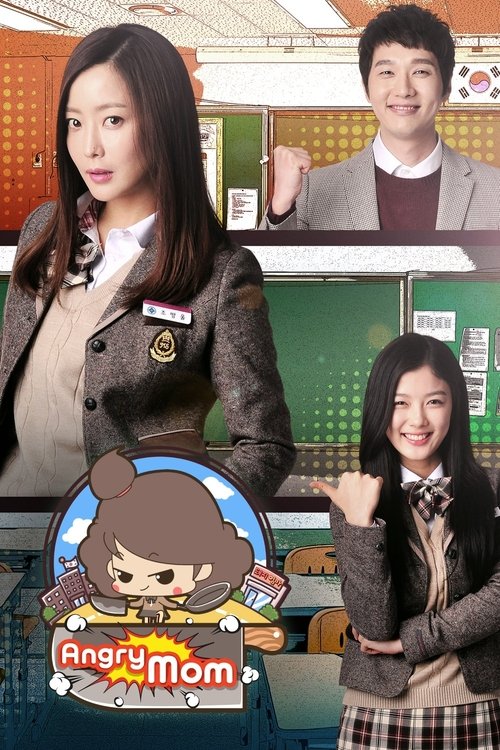
Angry Mom (MBC, 2015) is a 16-episode South Korean television drama created by executive producer Han Hee, written by Kim Ban-di, and directed by Choi Byung-gil (Ashbun). The narrative centers on Jo Kang-ja (Kim Hee-sun), a former high school delinquent who buried her rough past to live as a mild-mannered diner cook and homemaker. Her domestic quietude is destroyed when her teenage daughter, Oh Ah-ran (Kim Yoo-jung), returns home severely bruised and terrified. Confronted by an educational system that conceals violence and law enforcement that shields wealthy offenders, Kang-ja realizes that institutional justice protects oppressors rather than victims.

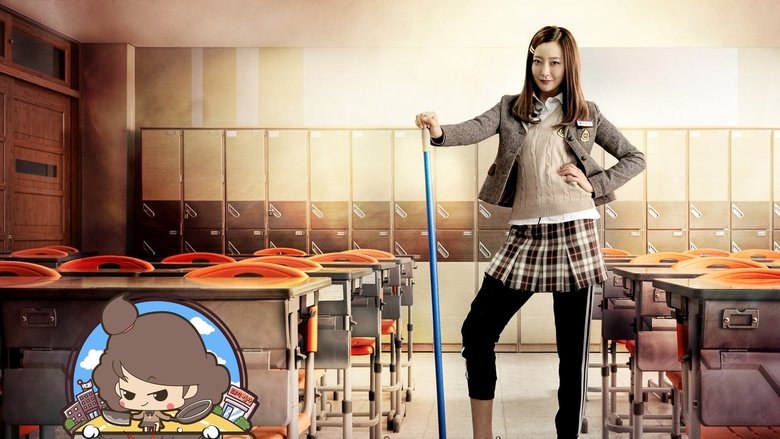
Refusing to let her daughter suffer, Kang-ja takes extreme action: she puts on a school uniform, assumes the identity of a rebellious transfer student named Jo Bang-wool, and infiltrates Ah-ran's class at Myeongseong High School. Supported by her eccentric friend Han Gong-joo (Go Soo-hee), a former gangster princess, Kang-ja uses physical strength and street smarts to neutralize schoolyard bullies. However, she quickly unearths a reality far more sinister than typical classroom intimidation: the adolescent aggression is merely the lowest rung of a sprawling, predatory syndicate.

Kang-ja forms an unexpected alliance with Ah-ran's naive, idealistic homeroom teacher, Park No-ah (Ji Hyun-woo), conflicted teenage enforcer Go Bok-dong (Ji Soo), and Ah-ran. Together, they unravel a corporate network operated as an embezzlement and money-laundering machine by board chairman Hong Sang-bok (Park Yeong-gyu), predatory teacher Do Jung-woo (Kim Tae-hoon), and national politicians. What begins as a mother's personal intervention transforms into a perilous crusade against structural corruption, dangerous construction practices, and institutional negligence threatening every student.
Core Meaning

The core message of Angry Mom is a scathing indictment of adult society's catastrophic failure to protect the young. The drama argues that school violence (hakpok) is not an isolated adolescent phenomenon, but a direct byproduct of adult greed, political corruption, and institutional negligence. By disguising a protective mother as a student, the narrative dramatizes the total breakdown of the social contract: when state apparatuses abdicate their protective duties, citizens are forced to abandon ordinary life to ensure their children's survival.

Written in the direct emotional shadow of the 2014 MV Sewol ferry disaster, the drama serves as an artistic manifest of collective grief and fury. It posits that authentic adulthood is defined by active guardianship—the willingness to resist an unjust system to preserve innocent lives—and cautions that any society willing to sacrifice its youth for power and profit is built on a foundation doomed to collapse.

Thematic DNA

Maternal Fierceness and Adult Guardianship 30%
Institutional and Structural Corruption: School-to-State Pipeline 25%
The Architecture and Cycle of Bullying 20%
Societal Betrayal and the Destruction of Youthful Innocence 15%
Moral Awakening, Redemption, and Solidarity 10%

Maternal Fierceness and Adult Guardianship

The series frames motherhood not as passive domestic nurturing, but as an aggressive, radical force. Jo Kang-ja's trajectory shows how protective parenthood necessitates direct confrontation with institutional rot, eventually expanding beyond her biological daughter to encompass an ethic of adult accountability that draws in allies like Park No-ah and former convicts.

Institutional and Structural Corruption: School-to-State Pipeline

The school is dissected as a corporate entity engineered for embezzlement, political campaign financing, and illicit kickbacks. The narrative tracks how collusion between foundation heads, construction executives, judiciary figures, and politicians directly manifests as cracked school walls and corner-cut buildings.

The Architecture and Cycle of Bullying

The drama deconstructs classroom bullying by exposing its structural origins. Bullies like Go Bok-dong and Wang Jung-hee are revealed to be victims of extortion and neglect, mimicking the predatory dynamics modeled by corrupt teachers, administrators, and criminal adults.

Societal Betrayal and the Destruction of Youthful Innocence

Dramatized through the murder of Jin Yi-kyung and the collapse of the school annex, the series shows how adult cowardice destroys children. The psychological trauma of authority figures disbelieving or suppressing victims drives students into silence, presenting institutional indifference as a form of violence.

Moral Awakening, Redemption, and Solidarity

Characters who start as complicit, sheltered, or self-serving—such as Park No-ah, Ahn Dong-chil, and Hong Sang-tae—undergo severe moral awakenings. The show emphasizes that true redemption requires active public whistleblowing, confession, and accepting legal and personal consequences.

Character Analysis

Jo Kang-ja (alias Jo Bang-wool)

Kim Hee-sun

Archetype: Protective Hero / Rebel Mother Key Trait: Fierce moral indignation and formidable physical combat ability.

Motivation

To protect her daughter Ah-ran from torment, eventually expanding her mission to safeguard all students from institutional corruption.

Character Arc

Transforms from an exhausted, repressed homemaker hiding her past into an undercover student vigilante, before shedding the disguise to stand as a courageous public whistleblower.

Park No-ah

Ji Hyun-woo

Archetype: Idealist Mentor / Awakened Whistleblower Key Trait: Radical empathy and uncorrupted integrity.

Motivation

To protect his students and fulfill his professional calling as an ethical, caring educator.

Character Arc

Begins as an overly naive, sheltered teacher protected by his judge father, but shatters his illusions upon discovering institutional bribery, maturing into an unyielding legal and moral crusader.

All 5 characters and cast

Symbols & Motifs

The School Uniform (Gyobok)

Meaning:

Represents both enforced adolescent subjugation and subversive rebellion. When worn by Kang-ja, the attire of vulnerable conformity is inverted into an armor of militant resistance against institutional abuse.

Context:

Worn by Jo Kang-ja when infiltrating Myeongseong High School under the alias Jo Bang-wool to confront bullies and administrators directly.

Cracking Concrete and Shoddy Foundations

Meaning:

Symbolizes the hollow, morally rotten state of South Korea's political and corporate infrastructure, where unbridled capitalist greed literally endangers human lives.

Context:

Visible across the walls and basement pillars of the newly built school annex before its catastrophic structural collapse during school hours.

The Sashimi Knife

Meaning:

Acts as a relic of Kang-ja's violent youth, representing maternal protection and the suppressed edge she must draw when peaceful domesticity fails.

Context:

Kept and handled by Kang-ja in her family's small diner, recalling her past moniker as the legendary fighter Sashimi of Beolgyo.

Han Gong-joo’s Outlandish Princess Outfits and Tiaras

Meaning:

Signifies theatrical defiance against rigid respectability, using flamboyant absurdity to mock the self-important veneer of corrupt elites.

Context:

Worn consistently by gangster leader Han Gong-joo and matched by her henchmen when executing covert operations and courtroom entries.

Audio Recorders and Leaked Cellphone Files

Meaning:

The precarious currency of truth in an ecosystem where official police reports, academic transcripts, and autopsies are manipulated.

Context:

Utilized repeatedly by Ah-ran, Kang-ja, and No-ah to capture illicit conversations, illicit affairs, and proof of structural bribery.

Memorable Quotes

내 새끼 건드리면 가만 안 둬.
— Jo Kang-ja

Context

Spoken in Episode 1 while examining Ah-ran’s severely bruised body in the emergency room.

Meaning

Signifies Kang-ja's psychological shift from a docile, long-suffering homemaker to an uncompromising protector, initiating her infiltration of the high school.

세상이 개판이면, 어른들이 고쳐야지! 왜 애들한테 참으라고 해?
— Jo Kang-ja

Context

Delivered to teacher Park No-ah in Episode 6 when he initially urges patience and official protocol.

Meaning

Articulates the series' primary thesis: forcing children to quietly endure institutional abuse is adult complicity rather than education.

All 5 quotes

Episode Highlights

The Infiltration

S1E1

Ah-ran is hospitalized due to severe bullying while authorities ignore the violence, prompting Kang-ja to reawaken her combative skills and enroll undercover as student Jo Bang-wool.

Significance:

Establishes the core premise, tone, and character dynamics while highlighting the administrative complicity in school bullying.

The Rooftop Staged Suicide

S1E3

Student Jin Yi-kyung falls to her death from the school roof, and teacher Do Jung-woo swiftly conspires with law enforcement to disguise the homicide as a suicide.

Significance:

Elevates the stakes from standard school intimidation to lethal criminal cover-ups and exposes top-to-bottom police corruption.

The Unmasking of the Teacher

S1E6

Kang-ja infiltrates Do Jung-woo's private residence and uncovers evidence of his predatory relationships with students alongside ties to elite political leaders.

Significance:

Broadens the drama's scope from classroom bullying to deep-seated systemic exploitation involving the nation's political apparatus.

Cracks in the Armor

S1E8

Go Bok-dong begins forming an emotional bond with Kang-ja after experiencing her care, while Ahn Dong-chil starts suspecting Bang-wool's true adult identity.

Significance:

Marks the turning point where primary antagonists begin questioning their allegiances, transitioning the plot toward redemption and alliances.

The Grand Unmasking

S1E12

Jo Kang-ja's undercover identity as Jo Bang-wool is publicly exposed before the school board, students, and media by Joo Ae-yeon.

Significance:

Deprives Kang-ja of her disguise, forcing her to confront her corporate and political enemies directly as an adult mother and citizen.

The Collapse

S1E14

Ignored structural safety warnings and budget embezzlement cause the newly built school annex to collapse during active school hours, trapping students inside.

Significance:

Serves as the narrative and thematic climax of the series, mirroring real-world South Korean structural and institutional tragedies.

Grief and the Ledger

S1E15

The community mourns student casualties while leadership attempts to shift blame; Dong-chil rescues Kang-ja and recovers the foundation's hidden slush fund ledgers.

Significance:

Secures the vital evidence required to hold the ruling elite legally accountable and completes Dong-chil's moral turnaround.

The Courtroom and the Fight Ahead

S1E16

The conspirators face trial and prison sentences, while the epilogue reveals that corporate and political power structures continue to operate in the background.

Significance:

Concludes the series by providing emotional closure for the victims while emphasizing the necessity of permanent civic vigilance over easy resolutions.

Philosophical Questions

Is vigilantism morally justified when the state's legal mechanisms become accomplices to violence?

The narrative explores whether private citizens are morally obligated to operate outside the law when courts, schools, and law enforcement actively shield predatory figures from accountability.

What constitutes true adult accountability toward the younger generation?

Through characters ranging from passive family members to the awakened Park No-ah, the series examines where personal complicity begins and what price adults must pay to ensure children's safety.

Can institutional rot ever be fully eradicated, or is civic vigilance a permanent state of being?

The realistic finale explores whether structural corruption can ever be permanently vanquished, concluding that justice requires persistent civic resistance rather than passive complacency.

How It Ends

Alternative Interpretations

Angry Mom has been analyzed through multiple critical frameworks:

Full ending explanation

Cultural Impact

Airing in spring 2015, approximately one year after the tragic sinking of the MV Sewol that claimed the lives of 250 high school students, Angry Mom resonated deeply with a South Korean public dealing with collective grief, guilt, and outrage toward regulatory negligence. By connecting school bullying directly to financial embezzlement, political bribery, and an actual school building collapse, the production tapped directly into the national zeitgeist.

The drama helped pioneer a darker, socially critical wave of school-based K-dramas (such as Class of Lies, Extracurricular, and The Glory). It pushed the high school genre beyond lighthearted adolescent romance and into rigorous, politically charged critiques of institutional hierarchy and adult complicity.

Audience Reception

Angry Mom achieved steady nationwide viewership ratings in South Korea ranging between 7% and 9.9%, maintaining a dedicated audience against tough weekday primetime competition. Critical reception was broadly enthusiastic, singling out the series for its bold social critique, the dynamic chemistry between Kim Hee-sun and Kim Yoo-jung, Ji Soo’s star-making performance, and Kim Hee-won’s complex redemption arc. Kim Hee-sun received particular acclaim for shedding her glamorous image to deliver a raw, physically intense performance.

Some critics and viewers pointed out tonal inconsistencies, noting that the show occasionally struggled to balance broad, cartoonish humor—such as Han Gong-joo's flamboyant princess gang—with harrowing themes of sexual grooming, suicide, and disaster fatalities. Additionally, minor criticism was leveled at narrative conveniences, particularly the timely discovery of crucial evidence. Overall, it remains regarded as an impactful, emotionally resonant series that elevated a high-concept premise into biting sociopolitical commentary.

Interesting Facts

  • The screenplay was written by debut screenwriter Kim Ban-di and won the Excellence Award at the 2014 MBC Screenwriting Contest.
  • Screenwriter Kim Ban-di explicitly disclosed that she wrote the drama while following continuous television coverage of the MV Sewol ferry disaster.
  • At age 37, Kim Hee-sun performed her own action choreography and embraced vulgar dialogue while portraying a high school student, revitalizing her career image.
  • Actor Ji Soo achieved breakout popularity through his role as Go Bok-dong, earning widespread praise for his chemistry with Kim Hee-sun.
  • Director Choi Byung-gil (Ashbun) and composer Lee Joo-han used a big band jazz, brass, and swing-heavy score, deviating from conventional K-drama melodramatic soundtracks.

Easter Eggs

Casting of K-pop idol Lizzy as delinquent Wang Jung-hee

Subverted Lizzy's cheerful public persona from After School and Orange Caramel, satirizing Korean delinquent culture alongside commercial idol aesthetics.

Visual motifs of yellow ribbons and protesting parents outside barricades

Directly referenced the national mourning, grief, and government resistance surrounding the MV Sewol disaster victims and their families.

Kang-ja's late-1990s delinquent reputation

Meta-reference to Kim Hee-sun's real-life status as the premier South Korean youth and television icon of that exact late-1990s era.

Frequently Asked Questions

Explore More About This Movie

Dive deeper into specific aspects of the movie with our detailed analysis pages

Comments (0)

Leave a comment

No comments yet. Be the first to share your thoughts!

Similar Movies