Marriage Story
"Where there's a love, there's a way."
Overview
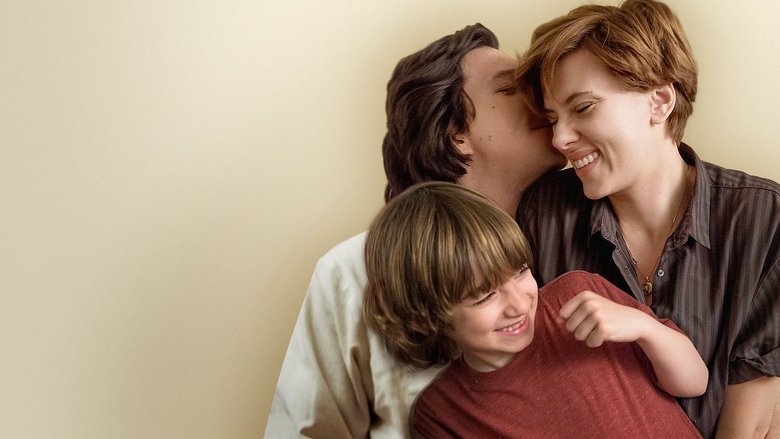
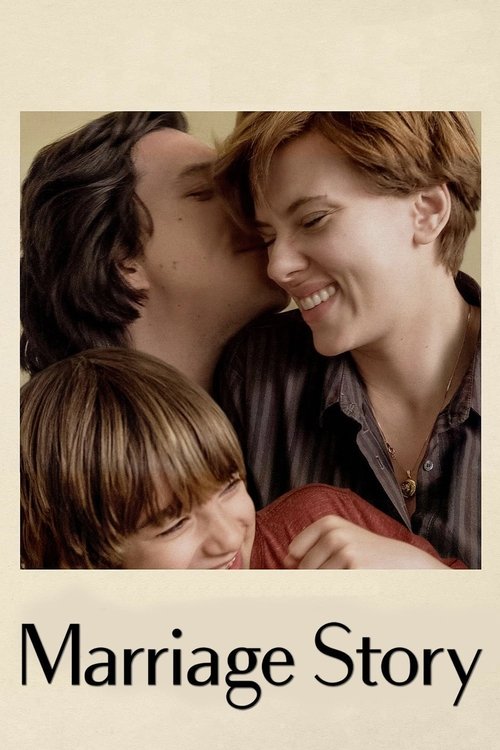
Marriage Story chronicles the unraveling of the marriage between Charlie Barber, a successful New York theater director, and Nicole, an actress who has spent years starring in his plays. What begins as a conscious attempt to separate amicably quickly spirals into a legal battlefield when Nicole moves to Los Angeles with their son, Henry, and hires a high-powered divorce attorney. The geographic distance between New York and Los Angeles becomes a physical manifestation of their emotional drift.
As the legal proceedings escalate, the film peels back the layers of their relationship, exposing long-buried resentments, creative stifle, and infidelity. The narrative shifts perspectives, allowing the audience to witness the "business" of divorce—the aggressive lawyers, the financial draining, and the custody logistics—clashing violently with the lingering human connection between the two leads. The story culminates not in a courtroom victory, but in the quiet, painful acceptance of their new reality as co-parents who must find a way to care for each other from a distance.
Core Meaning
Director Noah Baumbach intended the film to be a "love story about divorce." The core meaning suggests that a marriage doesn't simply disappear when it ends; rather, it undergoes a violent but necessary transformation. The film argues that the legal system often forces a false narrative of "victim" and "villain" onto a complex human relationship, yet the shared history and love (especially through a child) ultimately survive the institutional brutality of the divorce process.
Thematic DNA
The Construction of Narrative
The film opens with affectionate letters describing the other person, but these are immediately silenced. As the plot progresses, lawyers hijack the characters' stories, twisting loving memories into weapons for court. The theme explores how the "story" of a marriage is rewritten to fit a legal framework.
Performance vs. Reality
Both protagonists are in the theater world. The film parallels their professional acting with the "performance" required in divorce court—feigning aggression, hiding weakness, and staging one's life for a judge (or a social worker).
Geography as Identity
The conflict is mapped onto the physical spaces of New York (cramped, intellectual, Charlie's domain) and Los Angeles (spacious, sun-drenched, Nicole's new freedom). The locations symbolize their divergent needs: Charlie's desire for continuity vs. Nicole's need for expansion.
The Economics of Heartbreak
The film brutally depicts how the "divorce industrial complex" drains resources. Emotional grievances are converted into billable hours, illustrating how the legal system extracts capital from human suffering.
Character Analysis
Nicole Barber
Scarlett Johansson
Motivation
To reclaim her agency and "voice" after years of feeling small within her husband's genius.
Character Arc
Starts as a passive muse who feels her voice has shrunk; moves through anger and legal aggression to reclaim her identity as a director and individual in LA.
Charlie Barber
Adam Driver
Motivation
To maintain the status quo of his "New York family" and keep his son close without sacrificing his career.
Character Arc
Begins in control and oblivious to the depth of the crisis; loses his city, his money, and his dominance; ends humbled but more connected to his son's reality.
Nora Fanshaw
Laura Dern
Motivation
To win at all costs and dismantle the patriarchy within the divorce court system.
Character Arc
Static character who acts as a catalyst; she validates Nicole's suppressed anger and ruthlessly executes the separation strategy.
Symbols & Motifs
The Automatic Gate
Symbolizes the finality of separation and the new barriers between them. It represents the shutting out of the former partner from one's private life.
Used in the scene where Charlie helps close the gate at Nicole's mother's house, physically placing him on the outside looking in.
Halloween Costumes
Represent the masks they wear and the loss of identity. Charlie as the "Invisible Man" reflects his feeling of being erased from the family unit in LA.
During the Halloween sequence in Los Angeles, where Charlie struggles to participate in a holiday that feels foreign and disjointed.
The Unread Letters
They symbolize the dormant love and truth of their relationship that exists beneath the anger. Reading them is the key to catharsis.
Introduced in the opening montage but refused by Nicole; they return in the final scene when Henry finds them, forcing Charlie to read Nicole's words aloud.
The Shoelace
A visual metaphor for enduring care and the practical intimacy that survives the legal severance of marriage.
In the final shot, Nicole chases after Charlie to tie his untied shoelace, a simple, non-verbal act of parenting him one last time.
Memorable Quotes
I can't believe I have to know you forever!
— Nicole Barber
Context:
Screamed during the climactic, devastating argument in Charlie's LA apartment.
Meaning:
Expresses the suffocating realization that divorce does not end a relationship when children are involved; they are permanently bound.
Every day I wake up and I hope you're dead! Dead, like, if I could guarantee Henry would be okay, I'd hope you get an illness and then get hit by a car and die!
— Charlie Barber
Context:
The climax of the apartment fight scene, followed immediately by his collapse into tears.
Meaning:
The peak of his frustration and loss of control, illustrating how deep hurt can morph into momentary, murderous rage.
People don't accept mothers who drink too much wine and yell at their child and call him an asshole. We don't accept it... We accept an imperfect dad. Let's face it, the idea of a good father was only invented like 30 years ago.
— Nora Fanshaw
Context:
Nora's monologue to Nicole while preparing her for the courtroom evaluation.
Meaning:
A feminist critique of the double standards in parenting and the legal system, highlighting the immense pressure on mothers to be perfect.
I didn't belong to myself.
— Nicole Barber
Context:
Nicole explaining the root of her unhappiness to Nora in their first meeting.
Meaning:
The core of Nicole's motivation; the feeling of having her identity consumed by her husband's larger personality.
Philosophical Questions
Does the institutionalization of love (marriage) inevitably lead to the commodification of hate (divorce)?
The film questions whether the legal structures surrounding marriage are capable of handling the nuance of human emotion, or if they are designed to turn sadness into billable conflict.
Can you truly know someone if you don't know who you are without them?
Explored through Nicole's journey; the film suggests that a healthy union requires two fully realized individuals, and that enmeshment (losing oneself in the other) is a precursor to collapse.
Alternative Interpretations
Some critics view the film not as a "two-sided" story but as a tragedy of Charlie's ego, arguing that his refusal to compromise earlier is the sole driver of the conflict. Others interpret the film as an indictment of the legal system itself, suggesting that Charlie and Nicole could have separated amicably if the lawyers hadn't weaponized their grievances. A more cynical reading suggests the film is an apology letter from Baumbach to his ex-wife, trying to justify his own past behavior through Charlie's eventual redemption.
Cultural Impact
Marriage Story became a cultural touchstone for discussions on modern divorce. It sparked intense online debates (Team Nicole vs. Team Charlie), with the climactic argument scene becoming a viral meme format, paradoxically mixing tragedy with internet humor. The film brought attention to the predatory nature of the "divorce industry" in the US. Critically, it was a darling of the awards season, earning Laura Dern an Academy Award for Best Supporting Actress. It is cited alongside Kramer vs. Kramer as a definitive cinematic text on the dissolution of a family.
Audience Reception
The film received widespread acclaim, with a 94% on Rotten Tomatoes. Audiences praised the raw, realistic performances of Driver and Johansson. However, a segment of the audience criticized the film for its "bourgeois" perspective, arguing that the problems of wealthy, bi-coastal artists fighting over expensive lawyers were hard to empathize with. Despite this, the emotional core resonated universally, with many viewers reporting that it felt "too real" and difficult to watch due to its honesty.
Interesting Facts
- Adam Driver punched the wall so hard during the fight scene that he almost broke through the fake wall; he did the scene about 15 times.
- The film was shot on 35mm film with a 1.66:1 aspect ratio, a format often used in European cinema and portraits, to keep the characters close in the frame.
- Laura Dern's character, Nora, was inspired by celebrity divorce attorney Laura Wasser, who actually represented Dern and Scarlett Johansson in their real-life divorces.
- The songs 'Being Alive' and 'You Could Drive a Person Crazy' are from Stephen Sondheim's musical Company, which is also about marriage and commitment.
- Noah Baumbach showed the script to his ex-wife, Jennifer Jason Leigh, to ensure she was comfortable with the material, though he states it is not strictly autobiographical.
- Scarlett Johansson was going through her second divorce during the production of the film, which she felt helped her connect deeply to the role.
Easter Eggs
The 'Company' Musical Connection
Charlie singing 'Being Alive' and Nicole singing 'You Could Drive a Person Crazy' mirrors their emotional states—Charlie realizing the pain of 'being alive' alone, and Nicole embracing the chaos of freedom.
The Invisible Man Costume
Charlie dresses as The Invisible Man for Halloween, visually representing his feeling of disappearing from his son's life and being erased in the new LA dynamic.
⚠️ Spoiler Analysis
Click to reveal detailed analysis with spoilers
Frequently Asked Questions
Explore More About This Movie
Dive deeper into specific aspects of the movie with our detailed analysis pages
Comments (0)
No comments yet. Be the first to share your thoughts!