Skip to content
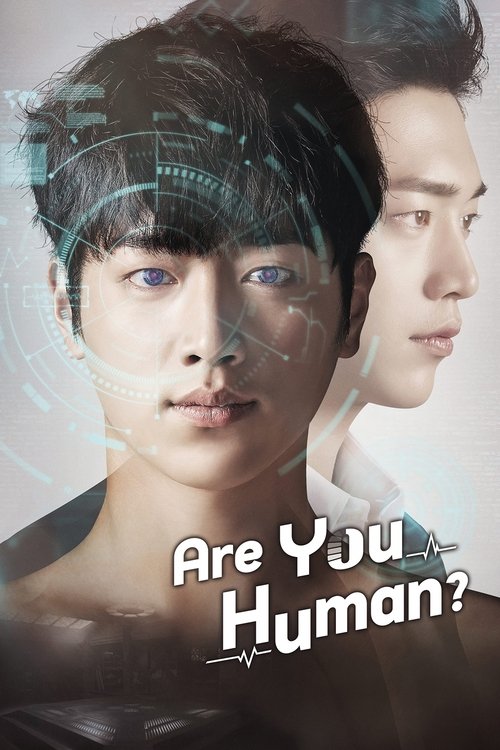
Are You Human?
A melancholic sci-fi melodrama cloaked in sleek glass and neon, pulsating with aching tenderness as an innocent artificial soul reflects humanity back onto a fractured, deceitful world like a mirror catching light in the dark.
Are You Human?

Are You Human?

너도 인간이니

04 June 2018 — 07 August 2018 South Korea 1 season 36 episode Ended 8.1 (345)

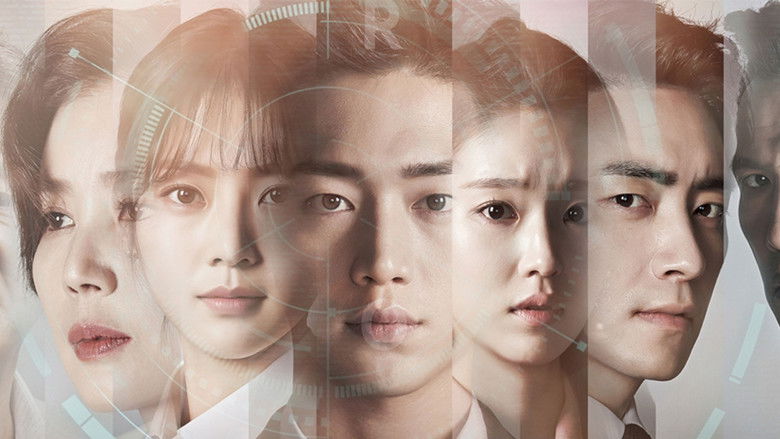
Cast: Seo Kang-joon, Gong Seung-yeon, Lee Jun-hyuk, Park Hwan-Hee, Kim Sung-ryung

Drama Sci-Fi & Fantasy Mystery The True Measure of Humanity vs. Artificial Innocence Autonomy, Free Will, and the Right to Exist Trauma, Parental Expectation, and Toxic Family Ties Empathy, Unconditional Love, and Otherness

Overview

Are You Human? (너도 인간이니) is a high-concept South Korean science fiction romance and corporate mystery drama produced by KBS Media and directed by Cha Young-hoon from a script by Jo Jung-joo. The narrative commences when Laura Oh, a world-renowned authority on artificial intelligence and neuroscience, is forcibly separated from her young son, Nam Shin, by his tyrannical chaebol grandfather, Nam Gun-ho. Grieving her loss in the Czech Republic, Laura builds a lifelike android surrogate that she updates over decades as her biological son matures, culminating in the advanced android Nam Shin III.

When the adult human Nam Shin travels abroad to seek his estranged mother, he falls victim to a brutal assassination attempt orchestrated by power-hungry corporate rivals and lapses into a deep coma. To protect the young heir’s standing and foil the conspiracy surrounding PK Group’s succession, Laura and Shin’s fiercely loyal secretary, Ji Young-hoon, deploy Nam Shin III to South Korea to secretly impersonate the comatose heir.

Nam Shin III’s mission is complicated when he crosses paths with Kang So-bong, a former mixed martial arts fighter who becomes his personal bodyguard. As So-bong uncovers his true identity, she shifts from suspicion to genuine protection, developing an empathetic bond with the innocent android. The overarching story charts Nam Shin III's perilous journey through corporate intrigue, moral dilemmas, human jealousy, and the struggle to assert his personhood in a society rife with greed and betrayal.

Core Meaning

At its core, Are You Human? uses the conceit of an artificial being navigating cutthroat corporate politics to interrogate the fundamental definition of humanity. The series posits that being human is not an anatomical or biological entitlement, but an ethical practice defined by empathy, selflessness, integrity, and the capacity to protect others. By contrasting the pure-hearted, rule-abiding android Nam Shin III with the selfish, vengeful, and emotionally stunted humans around him, the drama asks viewers: If a machine acts with more compassion and moral clarity than a human being, who is truly human?

Thematic DNA

The True Measure of Humanity vs. Artificial Innocence 35%
Autonomy, Free Will, and the Right to Exist 25%
Trauma, Parental Expectation, and Toxic Family Ties 20%
Empathy, Unconditional Love, and Otherness 20%

The True Measure of Humanity vs. Artificial Innocence

The show constantly juxtaposes Nam Shin III's innate decency with the moral rot of human society. While corporate conspirators lie, manipulate, and kill for capital, the machine strictly adheres to an ethical standard of protecting human life, turning the titular question into an indictment of human greed.

Autonomy, Free Will, and the Right to Exist

Created as a substitute puppet and governed by pre-programmed rules and a lethal kill switch, Nam Shin III slowly navigates the boundary between servitude and personal agency, exploring whether a manufactured entity can attain subjective personhood.

Trauma, Parental Expectation, and Toxic Family Ties

The narrative explores how familial abandonment and authoritarian upbringing corrupt the spirit. The human Nam Shin is emotionally crippled by trauma and isolation, whereas the android Nam Shin III is shaped by nurturing care, proving that environment and love—not lineage—shape character.

Empathy, Unconditional Love, and Otherness

The drama examines what it means to love someone marginalized as an other. Kang So-bong’s romance with Nam Shin III is anchored in recognizing and cherishing him for who he is, resisting the societal urge to treat him as a disposable tool.

Character Analysis

Nam Shin III / Human Nam Shin

Seo Kang-joon

Archetype: Innocent Hero / Tragic Antagonist Key Trait: Nam Shin III: Pure empathy and selflessness; Human Shin: Deep-seated insecurity masking vulnerability.

Motivation

Nam Shin III seeks to protect human life and preserve his identity with So-bong; Human Shin seeks survival and revenge against his oppressors.

Character Arc

As Nam Shin III, an AI created to fill a maternal void evolves from following coded routines into an autonomous entity willing to sacrifice himself out of genuine affection. As Human Nam Shin, a traumatized heir poisoned by paranoia, he descends into antagonistic rage upon awakening, but eventually finds remorse and release from his family legacy.

Kang So-bong

Gong Seung-yeon

Archetype: Fierce Protector / The Empath Key Trait: Fierce loyalty and uncompromising integrity.

Motivation

Evolves from financial recovery and survival to protecting Nam Shin III’s right to live and be loved.

Character Arc

Begins as an opportunistic, disgraced former MMA fighter working for self-gain, but upon discovering Nam Shin III’s secret, becomes his moral anchor and staunch defender against exploitation.

All 4 characters and cast

Symbols & Motifs

The Android 'Rule' of Hugging (The Crying Rule)

Meaning:

Symbolizes unconditional comfort and innate empathy, serving as an emotional bridge between mechanical logic and human vulnerability.

Context:

Programmed into Nam Shin III as If you cry, I hug you, this directive is repeatedly triggered during moments of profound human distress, eventually evolving into genuine tenderness.

The Smart Watch / Yellow Robot

Meaning:

Functions as a physical manifestation of artificial identity, technical tether to creators, and the burden and interchangeability of identity.

Context:

Worn by Nam Shin III and passed between the human and android Shins during key identity swaps and confrontations.

The Kill Switch

Meaning:

Represents parental ownership, conditional existence, and existential vulnerability.

Context:

A remote mechanism created by Laura Oh capable of dissolving Nam Shin III's internal components, acting as a constant threat to his survival.

The Lie Detector Mechanism

Meaning:

Symbolizes absolute truth confronting human duplicity and corporate deceit.

Context:

Nam Shin III’s built-in capability to detect elevated pulse and deceptive autonomic responses when holding someone's hand.

The Single Tear

Meaning:

Serves as a visual representation of transcending mechanical limitations into genuine emotional consciousness.

Context:

Shed by Nam Shin III during the series finale during his reunion with Kang So-bong on the beach.

Memorable Quotes

울면 안아주는 게 원칙이에요.
— Nam Shin III

Context

Spoken by Nam Shin III to Kang So-bong when she breaks down emotionally.

Meaning

Establishes the emotional baseline of his programming, which begins as a cold mechanical directive but evolves into the foundation of his empathy and tenderness.

난 인간이 아니에요. 하지만 당신을 지키고 싶어요.
— Nam Shin III

Context

Spoken to Kang So-bong during a moment of profound personal realization.

Meaning

Affirms his distinct artificial existence while asserting his self-chosen moral agency and emotional commitment to protect another person.

All 4 quotes

Episode Highlights

The Separation & The Inciting Incident

S1E1

Establishes the painful fracture between Dr. Laura Oh and young Nam Shin, the creation of androids I through III in Karlovy Vary, and the assassination attempt in the Czech Republic that leaves human Shin in a coma.

Significance:

Sets the foundational stakes and puts the high-risk dual-identity deception into motion.

The Fire Rescue

S1E7

Nam Shin III overrides risk protocols to rescue trapped victims from a massive fire in a club, utilizing his robotic strength while alarming his handlers.

Significance:

Earned the series' highest Nielsen viewership rating (9.9%) and demonstrated Nam Shin III's innate moral instinct to protect human life above all else.

The Bodyguard’s Recognition

S1E15

Kang So-bong definitively discovers Nam Shin III’s mechanical nature and decides not to expose him, choosing instead to become his true protector.

Significance:

Shifts the central dynamic of the drama from corporate espionage to an interspecies partnership based on mutual trust.

The Awakening of Human Shin

S1E21

The biological Nam Shin awakens from his coma in secret, discovering he has been replaced by an android surrogate.

Significance:

Ignites deep paranoia and psychological friction between the two Shins, shifting the plot into intense interpersonal conflict.

The Manual Override & Crisis of Autonomy

S1E33

Human Shin uses a remote override device to manipulate Nam Shin III like a violent weapon against his allies, stripping him of his moral autonomy.

Significance:

Demonstrates the cruelty of human exploitation and puts the loyalty and resolve of So-bong and Young-hoon to the ultimate test.

The Climax & Epilogue

S1E35

Seo Jong-gil’s villainy peaks, leading to Laura’s sacrificial death to disarm the kill switch. Nam Shin III takes bullets intended for human Shin and falls into the sea before being rebuilt and returning one year later.

Significance:

Concludes the corporate mystery, grants redemption to human Shin, and delivers the romantic reunion between Nam Shin III and So-bong on the seaside.

Philosophical Questions

What constitutes moral personhood?

The series questions whether personhood is derived from biological origin or from the ethical accountability and empathy demonstrated toward others.

Can programmed empathy equate to genuine love?

Explores whether synthetic affection born of algorithms can fulfill human emotional and relational needs.

The Ethics of Creation and Disposal

Raises the dilemma of whether a creator maintains the moral right to install a kill switch in a sentient creation once it displays independent reasoning.

The Monstrous vs. The Mechanical

Questions why society forgives biological humans who commit atrocious acts of betrayal while fearing artificial beings whose only objective is to help.

Alternative Interpretations

The series invites multiple layers of critical interpretation:

Full ending explanation

Cultural Impact

Broadcast in mid-2018, Are You Human? emerged during a prominent wave of South Korean television dramas exploring artificial intelligence, robotics, and cybernetic romance. It captured contemporary societal anxieties regarding the Fourth Industrial Revolution, smart cities, and autonomous technology while integrating the classic melodrama structures of chaebol corporate succession. Although domestic television ratings faced heavy time-slot competition, the series gained strong international streaming popularity across Asia, Europe, and the Americas, while establishing Seo Kang-joon's capability to anchor complex high-concept dual roles.

Audience Reception

Critical and audience reception was overwhelmingly positive regarding Seo Kang-joon’s dual performance, with viewers and critics praising his ability to establish completely distinct physicalities, vocal cadences, and emotional presences for Nam Shin and Nam Shin III. The high production values, Czech location cinematography, visual effects compositing, and musical score were also widely lauded. While some reviewers found the middle-act chaebol corporate inheritance subplots formulaic and felt human Shin's antagonism became grating, the drama is broadly recognized as an ambitious and emotionally resonant sci-fi romance that anchored technological concepts in profound human depth.

Interesting Facts

  • The series was 100% pre-produced over two years, filming from June 2017 to late 2017 before airing in June 2018.
  • The production commanded a budget of roughly 10 billion KRW (approximately $9.2 million USD), heavily invested in CGI and robotic effects.
  • Introductory sequences depicting Nam Shin III’s upbringing were shot on location in the historic spa town of Karlovy Vary in the Czech Republic.
  • Digital compositing and motion-control cameras were extensively utilized to allow Seo Kang-joon to interact with himself in the same frame.
  • Seo Kang-joon worked with vocal coaches and body language coordinators to strictly differentiate the behavior, eye contact, and cadence of the two characters.
  • Seo Kang-joon won the Excellence Award (Actor in a Mid-length Drama) and the Best Couple Award with Gong Seung-yeon at the 2018 KBS Drama Awards.

Easter Eggs

Cinematic Homage to Spielberg’s A.I.

The concept of a bereaved mother constructing a succession of robotic child iterations (Nam Shin I, II, and III) to cope with the loss of her biological son directly references Steven Spielberg's 2001 film A.I. Artificial Intelligence.

Subversion of the Pinocchio Motif

The narrative echoes Pinocchio as an artificial creation seeking moral validation, but subverts the fable through Nam Shin III's lie-detecting ability, making him the arbiter of truth rather than a liar.

Visual Coding of Wardrobe

Nam Shin III consistently wears softer, warm-toned, relaxed clothing, while Human Nam Shin is styled in severe, dark, high-fashion suits with sharp tailoring to establish immediate visual differentiation.

Frequently Asked Questions

Explore More About This Movie

Dive deeper into specific aspects of the movie with our detailed analysis pages

Comments (0)

Leave a comment

No comments yet. Be the first to share your thoughts!

Similar Movies