Skip to content
Arrow
Enveloped in rain-drenched urban noir and visceral brutality, Arrow pulses with agonizing grief and resolute redemption. It is a shattered sword reforged in green fire, cutting through personal darkness to illuminate a flawed city.
Arrow

Arrow

"Heroes fall. Legends rise."

10 October 2012 — 28 January 2020 United States of America 8 season 170 episode Ended 6.8 (6,447)

Cast: Stephen Amell, David Ramsey, Emily Bett Rickards, Katie Cassidy, Paul Blackthorne

Drama Crime Action & Adventure Redemption and Atonement The Cost of Heroism and Self-Sacrifice Legacy and Sins of the Father Found Family and Trust Vigilantism vs. The Rule of Law

Overview

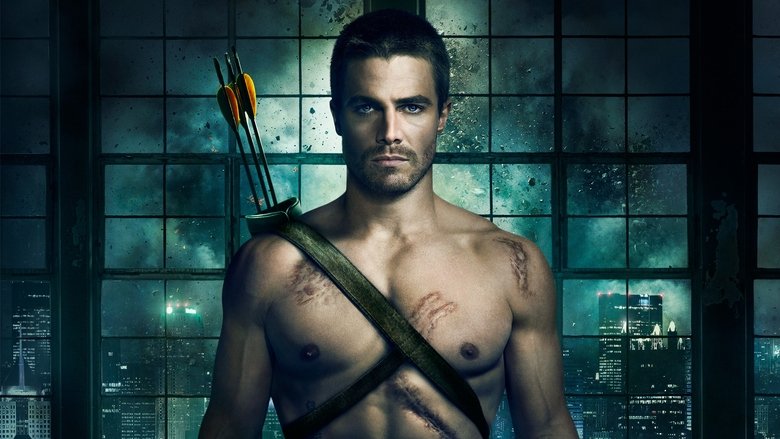
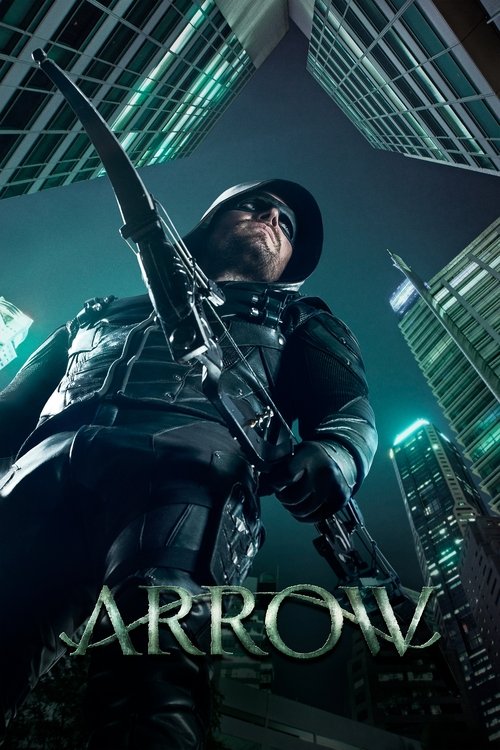
Developed by Greg Berlanti, Marc Guggenheim, and Andrew Kreisberg, Arrow reimagines the DC Comics superhero Green Arrow for contemporary television. The narrative chronicles Oliver Queen, a former spoiled billionaire playboy who returns to his hometown of Starling City (later renamed Star City) after five years of survival following a shipwreck that claimed his father's life. Armed with lethal archery and combat prowess honed through harrowing trials, Oliver assumes a hooded vigilante persona to purge his home of systemic crime and political corruption while honoring his late father’s dying wish.

As the series evolves over eight seasons, Oliver transitions from a solitary killer crossing names off a hit list into the leader of an extended network of masked heroes, intelligence operatives, and reformed adversaries. The story splits its focus between Queen’s high-stakes crusade in the present day and serialized flashbacks (and later flash-forwards) detailing the brutal crucible that forged his identity across Lian Yu, Hong Kong, and Russia.

Across 170 episodes, the show charts Star City's escalating threats—ranging from rogue paramilitary organizations and ancient ninja clans to vengeful specters from Oliver's past. Oliver is forced to reckon with the moral cost of violence, the burden of leadership, public exposure, incarceration, and cosmic upheaval, ultimately asking what a single mortal is willing to endure to safeguard those he loves.
Core Meaning

The overarching message of Arrow is that no one is defined solely by their worst sins, and that true heroism lies not in vengeance or physical dominance, but in self-sacrifice, accountability, and the capacity to inspire others. The series argues that a broken person can rebuild their humanity through community, vulnerability, and love. Oliver begins his mission believing he must act as a lethal weapon of retribution, but learns that darkness cannot conquer darkness; redemption requires choosing restraint, bearing the weight of consequences, and becoming a symbol of hope rather than fear.

Thematic DNA

Redemption and Atonement 30%
The Cost of Heroism and Self-Sacrifice 25%
Legacy and Sins of the Father 20%
Found Family and Trust 15%
Vigilantism vs. The Rule of Law 10%

Redemption and Atonement

The driving engine of the entire series. Oliver continually struggles to escape his past as a killer, seeking atonement not only for his father’s corrupt corporate legacy but for his own destructive actions. This theme extends across the ensemble—including Black Siren, Slade Wilson, Malcolm Merlyn, and Roy Harper—reinforcing that salvation is a continuous choice.

The Cost of Heroism and Self-Sacrifice

Heroism in Arrow extracts a heavy personal toll. Protecting the innocent demands the forfeiture of normal life, physical agony, strained relationships, public condemnation, and ultimately mortal sacrifice.

Legacy and Sins of the Father

The actions of preceding generations cast long, destructive shadows over Star City. Oliver, Thea, Laurel, and Adrian Chase are all shaped, traumatized, and motivated by parental secrets and moral compromises. The characters must actively choose whether to perpetuate familial curses or forge clean paths for their heirs.

Found Family and Trust

Oliver begins as an isolated vigilante but discovers that survival and victory require emotional interdependence. The bonds formed within Team Arrow serve as the moral compass preventing Oliver from slipping back into pure brutality.

Vigilantism vs. The Rule of Law

The series constantly interrogates extrajudicial justice. It balances the necessity of street-level direct action against the societal damage of lawlessness, tracking Oliver's evolution from an outlaw hunted by the police to a deputized civic protector and mayor.

Character Analysis

Oliver Queen / The Green Arrow

Stephen Amell

Archetype: Tragic Hero / Fallen Prodigal Son turned Martyr Key Trait: Relentless willpower and boundless capacity to shoulder agony for others.

Motivation

Initially fueled by survivor's guilt and vengeance on behalf of his father; evolves into unconditional love for his family, friends, and the safety of the entire multiverse.

Character Arc

Begins as a reckless, hedonistic youth who survives extreme trauma to become a merciless killer crossing names off a notebook. Over eight seasons, he learns to value life, builds a team, operates in the light as the city’s Mayor, reveals his secret identity to the world, endures federal prison, and embraces cosmic martyrdom during Crisis on Infinite Earths to reboot the multiverse.

John Diggle / Spartan

David Ramsey

Archetype: The Loyal Moral Anchor / Mentor / Warrior Brother Key Trait: Stoic moral integrity, combat discipline, and steadfast loyalty.

Motivation

Protecting his family and keeping Oliver anchored to his humanity.

Character Arc

A former US Army Special Forces soldier hired as Oliver’s bodyguard, Diggle becomes Oliver's earliest ally and voice of reason. He forces Oliver to look past personal vendettas, steps up to wear the Green Arrow cowl when Oliver cannot, reconciles fratricidal trauma with his brother Andy, and ultimately accepts a destiny that hints at cosmic guardianship.

All 5 characters and cast

Symbols & Motifs

The Bow and Arrow

Meaning:

Represents precision, lethal capability, and Oliver’s survival instinct. Over time, it transforms into an instrument of tactical incapacitation, symbolizing Oliver’s mastery over his inner rage.

Context:

In early seasons, it serves as a weapon of summary execution against the names in his father's notebook, before evolving into a non-lethal tool of justice.

The Hood / Mask

Meaning:

Symbolizes emotional detachment, compartmentalization, and anonymity, while removing it represents vulnerability and authentic human connection.

Context:

Slipping the hood on allows Oliver to unleash the monster needed for combat, shielding his personal self from the psychological trauma of violence.

Lian Yu (The Island)

Meaning:

Translating to Purgatory in Mandarin, it functions as both a literal geographic crucible and a psychological prison where Oliver is remade.

Context:

It is the metaphysical birthplace of the Green Arrow, to which Oliver must repeatedly and physically return to confront and resolve his deepest conflicts.

Robert Queen’s Pocket Notebook ("The List")

Meaning:

A physical embodiment of generational guilt, corruption, vengeance, and the burden of paternal legacy.

Context:

Oliver's progression across the series is marked by shifting away from systematically crossing names off the list to saving lives irrespective of who they are.

The Salmon Ladder

Meaning:

Visually represents Oliver’s relentless discipline, physical conditioning, and the arduous upward climb required to overcome impossible odds.

Context:

Featured prominently in the Arrowcave during intense training montages throughout the series.

Green Light / The Color Green

Meaning:

Represents the shift from dark survivalism to public inspiration, unity, and hope for Star City.

Context:

Evolves visually from the murky, jungle camouflage of Lian Yu into a vibrant emerald emblem worn in the daylight.

Memorable Quotes

You have failed this city!
— Oliver Queen / The Hood

Context

Spoken as Oliver's signature catchphrase throughout Season 1 (and recurring across the series) when confronting corrupt targets from his father's list.

Meaning

Establishes Oliver's moral authority and uncompromising judgment over Starling City's corrupt elite during his early vigilante phase.

My name is Oliver Queen. For five years, I was stranded on an island with only one goal: survive... To honor my friend's memory, I must be someone else. I must be something else.
— Oliver Queen

Context

Delivered as the opening monologue introduction across the series with subtle seasonal evolutions reflecting Oliver's internal growth.

Meaning

Articulates the central thesis of the series: the conscious transmutation of a traumatized survivor into an inspiring heroic symbol.

All 5 quotes

Episode Highlights

Sacrifice

S1E23

Malcolm Merlyn successfully triggers the Markov device to destroy half of The Glades, while Tommy Merlyn sacrifices his life to save Laurel Lance.

Significance:

Shatters the trope of clean superhero victories, cements the grim reality of collateral damage, and inspires Oliver's no-kill vow in Season 2.

Three Ghosts

S2E9

Oliver endures hallucinations of Shado, Slade, and Tommy while Barry Allen saves his life and crafts his iconic domino mask.

Significance:

Plants the narrative seeds for the wider Arrowverse by launching The Flash and forces Oliver to confront his internal psychological trauma.

Seeing Red

S2E20

Slade Wilson recreates the tragic choice from Lian Yu and executes Moira Queen in front of Oliver and Thea.

Significance:

Delivers the most devastating emotional trauma of the series, cementing Deathstroke as Oliver's quintessential nemesis and testing his moral resolve.

Unthinkable

S2E23

Oliver outwits Slade Wilson using a coordinated deception with Felicity and chooses to imprison Slade on Lian Yu instead of executing him.

Significance:

Confirms Oliver's definitive moral transformation from a lethal vigilante into a genuine superhero bound by restraint.

The Climb

S3E9

Oliver duels Ra's al Ghul in trial by combat on a snowy mountain summit to protect Thea, resulting in Oliver being impaled and kicked off the cliff.

Significance:

Serves as one of television's most shocking mid-season cliffhangers, introducing the existential threat of the League of Assassins and testing Team Arrow's autonomy.

Kapiushon

S5E17

Through prolonged physical and mental torture, Adrian Chase forces Oliver to admit the buried truth that he enjoyed killing his targets.

Significance:

Represents the profound emotional deconstruction of Oliver Queen, directly confronting the underlying darkness of his crusade.

Lian Yu

S5E23

Oliver allies with former foes including Slade Wilson and Malcolm Merlyn to rescue his son from Adrian Chase, who triggers island-wide explosives by killing himself.

Significance:

Widely regarded as the series' pinnacle; it concludes the five-year flashback cycle and tests Oliver's vow of restraint against total nihilism.

The Slabside Redemption

S7E7

Oliver battles through a violent maximum-security prison riot, highlighted by an uninterrupted hallway combat sequence against Ricardo Diaz and former inmates.

Significance:

Concludes Oliver's incarceration arc, restores his heroic standing, and exhibits peak technical stunt choreography.

Crisis on Infinite Earths: Part Four

S8E8

Operating as the Spectre, Oliver leads the Paragons at the dawn of time, sacrificing his life force to defeat the Anti-Monitor and birth Earth-Prime.

Significance:

Oliver’s ultimate heroic culmination, forfeiting his own existence to guarantee the survival of his loved ones and the entire multiverse.

Fadeout

S8E10

Star City celebrates a crime-free era as allies gather for Oliver’s memorial, culminating in Oliver reuniting with Felicity in an eternal paradise.

Significance:

The series finale brings emotional closure to eight seasons, solidifies Oliver's enduring legacy, and passes the mantle to a new generation.

Philosophical Questions

Can extrajudicial violence ever truly serve justice?

The narrative constantly examines whether lethal vigilante actions undermine civil society or whether direct intervention is mandatory when democratic institutions fail.

Is a person defined by their past sins or their ongoing choices?

Explored through the redemptive arcs of Oliver Queen, Slade Wilson, and Black Siren, demonstrating that atonement is a continuous discipline rather than a permanent destination.

Does the end justify the means during existential crises?

Oliver repeatedly faces utilitarian dilemmas requiring him to weigh extreme measures—such as torture, deception, and personal sacrifice—against the protection of innocent lives.

Alternative Interpretations

Several distinct interpretations of the series narrative exist:

Full ending explanation

Cultural Impact

Debuting in 2012 following The Dark Knight Rises and The Avengers, Arrow demonstrated that serialized, gritty superhero drama could succeed on network television. Its success spawned the Arrowverse—a multi-series franchise including The Flash, DC's Legends of Tomorrow, Supergirl, Batwoman, Black Lightning, and Superman & Lois.

The franchise revolutionized television production through annual multi-show crossover events, culminating in the five-hour adaptation of Crisis on Infinite Earths. Furthermore, Arrow's grounded martial arts choreography and street-level stakes paved the way for subsequent gritty adaptations such as Netflix’s Daredevil and Gotham.

Audience Reception

Arrow experienced notable shifts in critical and audience reception across its eight-season run:

  • Seasons 1–2: Acclaimed for tight plotting, visceral fight sequences, grounded tone, and Manu Bennett’s iconic performance as Deathstroke (maintaining 85–95% critical scores).
  • Seasons 3–4: Suffered critical backlash due to supernatural plot shifts, overemphasis on romantic melodrama, repetitive flashbacks, and the controversial death of Laurel Lance.
  • Season 5: Celebrated as a creative renaissance, anchored by Josh Segarra's villainous Prometheus and the acclaimed finale Lian Yu.
  • Seasons 6–7: Received mixed reactions for team divisions in Season 6, but earned strong praise for Season 7's brutal Slabside Prison storyline.
  • Season 8: Highly praised as a focused, nostalgic 10-episode farewell that effectively concluded the character's legacy.

Interesting Facts

  • Justin Hartley previously played Green Arrow on Smallville, but the creators opted for a fresh, grounded reboot with Stephen Amell to establish a darker, street-level tone.
  • The iconic salmon ladder routine in the pilot was not in the script; producers added it to the Arrowcave after seeing Stephen Amell using it during his workout at the gym.
  • Emily Bett Rickards was originally cast for a single one-off scene in Season 1, Episode 3, but strong on-screen chemistry with Stephen Amell made her the female lead.
  • Every single episode title throughout the entire series is spoken aloud as a line of dialogue by a character within that episode.
  • Stunt coordinator and director James Bamford used Hong Kong action cinema techniques, wirework, and Kali martial arts, with Stephen Amell performing a substantial portion of his stunts.
  • The exterior of Queen Manor is Hatley Castle in British Columbia, Canada, which also served as Xavier's School in the X-Men films and Luthor Mansion in Smallville.
  • A Harley Quinn cameo voiced by Tara Strong occurred in Season 2's 'Suicide Squad', but Warner Bros. placed an embargo on the character due to the 2016 film.

Easter Eggs

John Diggle's Comic Namesake

John Diggle was created specifically for the show and named after comic writer Andy Diggle (author of Green Arrow: Year One), later becoming so popular that DC Comics integrated him into official comic continuity.

Ferris Air and Coast City

Frequent visual and verbal mentions of Ferris Aircraft and Coast City serve as direct homages to Green Lantern (Hal Jordan), Green Arrow's close comic book partner.

DC Comic Creator Street Intersections

Starling City street names continually reference famous DC writers and artists, including 4th and Adams (Neal Adams), 3rd and Lemire (Jeff Lemire), and Nodell Way (Mart Nodell).

Blüdhaven and Corto Maltese

Visits to Blüdhaven reference Nightwing's home turf, while Corto Maltese references the mercenary haven featured in Frank Miller's The Dark Knight Returns.

The Green Lantern Box in 'Fadeout'

In the series finale, John Diggle discovers a glowing green extraterrestrial object inside a crashed box, confirming years of fan theories linking Diggle to the Green Lantern mantle.

Frequently Asked Questions

Explore More About This Movie

Dive deeper into specific aspects of the movie with our detailed analysis pages

Comments (0)

Leave a comment

No comments yet. Be the first to share your thoughts!

Similar Movies