Skip to content
Hawaii Five-0
A sun-drenched, high-octane police thriller bathed in adrenaline and deep emotional resonance, where a fractured warrior finds healing in chosen brotherhood against the backdrop of paradise, riding crashing Pacific waves toward hard-won redemption.
Hawaii Five-0

Hawaii Five-0

20 September 2010 — 03 April 2020 United States of America 10 season 240 episode Ended 7.7 (1,890)

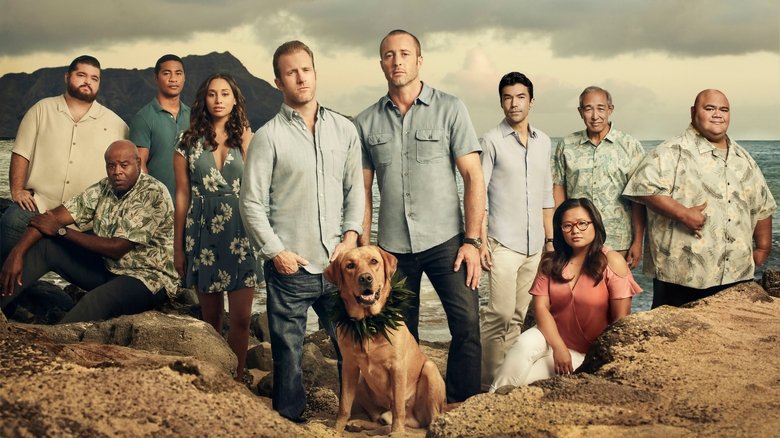
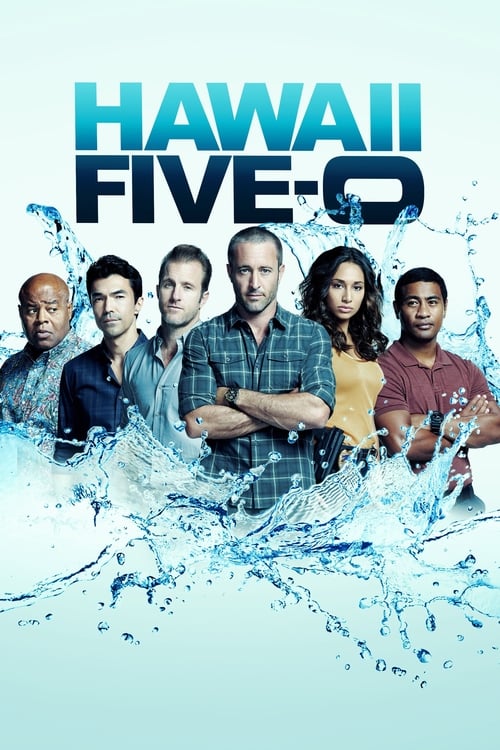
Cast: Alex O'Loughlin, Scott Caan, Taylor Wily, Grace Park, Daniel Dae Kim

Drama Crime Action & Adventure 'Ohana (Chosen Family & Loyalty) Generational Trauma & Vengeance Justice vs. The Rule of Law Duty, Brotherhood & Sacrifice Cultural Identity & Belonging

Overview

Hawaii Five-0 (2010–2020) reimagines the classic procedural through the high-stakes lens of modern law enforcement, following Lieutenant Commander Steve McGarrett, a decorated Navy SEAL who returns to his native Oahu to investigate his father’s murder. Offered full immunity and means by the Governor of Hawaii to operate an elite, red-tape-free state police task force, McGarrett recruits an unconventional team: Danny "Danno" Williams, an exasperated transplant detective from New Jersey; Chin Ho Kelly, a disgraced former Honolulu police detective; and Kono Kalakaua, Chin’s fearless, rookie cousin freshly out of the police academy. Together, the Five-0 task force defends the Hawaiian Islands from international terrorists, ruthless cartels, corrupt politicians, and syndicated organized crime.

Across ten seasons and 240 episodes, the series expands beyond episodic criminal investigations into a decade-long saga of personal reckoning, government conspiracy, and deep-rooted familial legacy. The task force evolves through personal tragedies, traumatic injuries, high-level political shakeups, and shifting personnel, welcoming new allies such as SWAT Captain Lou Grover, conspiracy enthusiast Jerry Ortega, and former recruits Tani Rey and Junior Reigns. While the weekly operations showcase explosive military-grade tactics, the overarching narrative anchors itself in the characters' shared personal struggles, tracing how law enforcement professionals balance high-stress duties with their private lives.

The series continually tests the boundaries between justice, institutional duty, and personal loyalty. What begins as an isolated quest for vengeance transforms into a broader mission to protect an adoptive community. Grounded in the scenic and cultural landscape of Hawaii, the show chronicles a family of choice weathering extreme adversity, ultimately finding closure after confronting deep-seated historical trauma.
Core Meaning

The fundamental message of Hawaii Five-0 is that true family—encapsulated by the Hawaiian concept of ‘Ohana—is defined not merely by bloodlines, but by the conscious commitment to protect, forgive, and stand beside one another through trauma and moral trials. Across its entire narrative arc, the series illustrates that unresolved generational grief and vengeance cannot heal a broken soul; healing occurs only through connection, vulnerability, and learning when to lay down one’s armor in pursuit of inner peace.

Thematic DNA

'Ohana (Chosen Family & Loyalty) 30%
Generational Trauma & Vengeance 25%
Justice vs. The Rule of Law 20%
Duty, Brotherhood & Sacrifice 15%
Cultural Identity & Belonging 10%

'Ohana (Chosen Family & Loyalty)

The emotional backbone of the series centers on the concept of ‘Ohana, where biological fractures are repaired by bonds of mutual respect and dedication. Starting with Steve and Danny’s combative yet devoted partnership ("McDanno"), this theme expands across seasons to include the entire unit, demonstrating that family provides sanctuary and moral grounding against external chaos.

Generational Trauma & Vengeance

The series opens with John McGarrett's murder and unravels the web woven by Steve's mother, CIA operative Doris McGarrett (Agent Shelburne). For years, Steve seeks closure through combat and retribution, only to learn that perpetual violence deepens psychic scars and that breaking destructive generational cycles is essential.

Justice vs. The Rule of Law

Operating under the mandate of "full immunity and means," Five-0 frequently bends procedural protocols to neutralize imminent threats. The show examines the moral hazard of unchecked power, confronting characters with the unintended consequences, internal investigations, and ethical compromises that arise when operating above standard legal boundaries.

Duty, Brotherhood & Sacrifice

Represented through military service, physical trauma, organ donation (Danny saving Steve with a liver transplant), and psychological weariness, the series honors the dedication of first responders and armed service members while honestly depicting the physical and emotional tolls exacted over a lifetime of service.

Cultural Identity & Belonging

The series contrasts mainland sensibilities with indigenous Hawaiian traditions and community values. It traces the journey of outsiders becoming integrated into the island community and native locals reclaiming their dignity and standing within their ancestral home.

Character Analysis

Steve McGarrett

Alex O'Loughlin

Archetype: Reluctant Warrior / Tragic Hero Key Trait: Unyielding Loyalty

Motivation

Finding the truth behind his family’s fractured history; evolving into safeguarding his adoptive team and the island community.

Character Arc

Begins as a hyper-focused, emotionally guarded Navy SEAL driven by a single-minded quest for vengeance regarding his father's murder. Across a decade of physical trauma, losing comrades, and discovering his mother’s espionage secrets, he evolves into a protective patriarch who learns to accept his emotional limits, ultimately stepping away from active command to find inner peace.

Danny "Danno" Williams

Scott Caan

Archetype: Skeptical Companion / Reluctant Foil Key Trait: Passionate Devotion

Motivation

Being an attentive, loving father to Grace and Charlie; keeping Steve grounded and alive.

Character Arc

Starts as an anxious, cynical New Jersey detective who hates island life, having relocated solely for joint custody of his daughter Grace. Over time, he embraces Hawaii as his home, becomes Steve’s closest confidant and life-saver (donating part of his liver), and grows into an emotional pillar of Five-0.

All 5 characters and cast

Symbols & Motifs

The "Champ" Toolbox

Meaning:

Symbolizes unresolved family secrets, the heavy burden of paternal expectations, and the lingering inheritance of the past.

Context:

Kept in the McGarrett garage, John McGarrett's metal toolbox contains tape recordings, notes, and keys central to the overarching conspiracy.

The Mercury Marquis (John McGarrett's Car)

Meaning:

Parallels Steve’s internal psychological repair of his relationship with his late father and his re-anchoring to his island heritage.

Context:

Featured across multiple seasons as Steve meticulously restores his father’s vintage 1974 blue sedan.

The Silver Silverado / Danny's Camaro

Meaning:

Symbolizes the contrasting worldviews of the two leads—military pragmatism versus structured civic caution—and their underlying bond of unconditional trust.

Context:

Danny’s cars are constantly requisitioned and driven recklessly by Steve during their signature "carguments."

The Surfboard and the Ocean

Meaning:

Serves as a motif of equilibrium, cultural reconnection, spiritual renewal, and grounding amidst trauma.

Context:

Featured extensively in scenes involving Kono, Steve, and Junior as they interact with the Hawaiian waters.

The Five-0 Badge and Immunity Mandate

Meaning:

Represents the heavy responsibility of exceptional authority and the ongoing tension between institutional law and moral justice.

Context:

The physical shield granted by the Governor of Hawaii providing the task force full immunity and means.

Memorable Quotes

Book 'em, Danno.
— Steve McGarrett

Context

Repeated to Danny Williams throughout all 10 seasons, first spoken in Season 1, Episode 1, "Pilot".

Meaning

The franchise catchphrase bridging the 1968 classic and modern remake, marking the resolution of cases and sealing the operational trust between the two partners.

What is the matter with you? You are a psychopath! You do not throw a man off a roof to get answers!
— Danny Williams

Context

Spoken to Steve during their early investigation in Season 1, Episode 1, "Pilot".

Meaning

Establishes the foundational dynamic of their "carguments"—Danny’s standard constitutional policing versus Steve’s military, rule-bending shock tactics.

All 5 quotes

Episode Highlights

Pilot

S1E1

Establishes the inciting incident: the death of John McGarrett by terrorist Victor Hesse, leading to Governor Pat Jameson chartering the Five-0 task force.

Significance:

Forms the Five-0 task force, establishes core character relationships, introduces the "Champ" box, and initiates iconic banter.

Oia'i'o

S1E24

The task force uncovers that Governor Jameson is allied with Wo Fat; Jameson is murdered, and Steve is framed for the crime.

Significance:

The team is framed, McGarrett is arrested, Chin returns to HPD, Kono is suspended, and the task force is temporarily disbanded, proving the vulnerabilities of political immunity.

Ina Paha

S5E7

Kidnapped and drugged by arch-nemesis Wo Fat, Steve experiences an alternate reality where his father survived.

Significance:

The 100th episode provides closure to the show’s central rivalry as Steve kills Wo Fat in a brutal showdown and confronts his foundational trauma.

O Ke Ali'i Wale No Ka'u Makemake

S6E25

Steve is critically shot while piloting a plane during an undercover sting; Danny lands the aircraft and donates part of his liver to save him.

Significance:

Deepens the central brotherhood between Steve and Danny beyond military and police camaraderie through a literal life-saving sacrifice.

Ua Malo'o Ka Wai

S7E25

The team tackles a major operation while Chin Ho Kelly and Kono Kalakaua make life-changing decisions regarding their law enforcement careers.

Significance:

Marks the final appearance of original cast members Daniel Dae Kim and Grace Park, closing the original quartet era and setting up a new generation.

Ka lali'i banikele

S10E7

Steve travels overseas on a mission to rescue his mother Doris, who is fatally stabbed before his eyes.

Significance:

Brings a tragic resolution to Steve's lifelong maternal conflict and his pursuit of Doris's true espionage identity.

Aloha

S10E22

Wo Fat’s widow Daiyu Mei attacks and tortures Danny, leading to a final dockside confrontation where Steve chooses justice over vengeance.

Significance:

The series finale resolves Wo Fat's lingering legacy, provides an emotional farewell between Steve and his team, and sees Steve depart Hawaii to find healing.

Philosophical Questions

Does exceptional danger justify the suspension of civil liberties?

The series tests whether granting "immunity and means" to an elite task force effectively protects society or gradually erodes the essential democratic principles of legal accountability.

Can a cycle of generational violence ever be ended through force?

Through the multi-decade feud between the McGarretts and Wo Fat's family, the show questions whether retributive violence brings true healing or merely perpetuates continuous conflict and new adversaries.

What constitutes true family in the modern world?

The narrative repeatedly explores whether biological ties outweigh the bonds of ‘Ohana forged through shared values, loyalty, and mutual sacrifice.

Alternative Interpretations

The series can be analyzed through several distinct critical lenses:

Full ending explanation

Cultural Impact

Premiering in the fall of 2010, Hawaii Five-0 spearheaded a major wave of successful broadcast network reboots, proving that legacy 20th-century intellectual properties could be modernized with cinematic action and serial continuity. The production provided a major economic boost to Hawaii’s local film industry, creating employment for local crews, cultural advisors, and native performers.

The series balanced procedural structures with serialized character arcs and action choreography influenced by post-2000s military blockbusters. It introduced global audiences to Hawaiian cultural concepts, local terminology (such as haole, kapu, mahalo, and ohana), and indigenous historical sites, leaving a lasting legacy on island-based television production.

Audience Reception

During its early run (Seasons 1–4), Hawaii Five-0 earned high ratings, solid critical acclaim, and the People's Choice Award for "Favorite New TV Drama," with viewers praising the chemistry between Alex O'Loughlin and Scott Caan, the action choreography, and the vibrant cinematography. In its middle seasons (Seasons 5–7), it remained a reliable Friday night hit for CBS, where serialized milestones like the 100th episode and the liver transplant storyline maintained strong fan investment despite some procedural formula fatigue.

The departures of Daniel Dae Kim and Grace Park ahead of Season 8 sparked significant public debate regarding representation and pay equity. However, the late seasons (Seasons 8–10) refreshed the team dynamics with new additions, and the series finale "Aloha" was praised for providing a heartfelt, character-focused conclusion celebrating friendship and family.

Interesting Facts

  • Developed by Peter M. Lenkov, Alex Kurtzman, and Roberto Orci, serving as the anchor for the 'Lenkov-verse' including reboots of MacGyver and Magnum P.I.
  • The entire production filmed on location in Oahu, Hawaii, utilizing former Honolulu Advertiser warehouse facilities for soundstages.
  • CBS hosted an annual 'Sunset on the Beach' red-carpet premiere event at Waikiki Beach for local fans.
  • Alex O'Loughlin performed many of his own stunts, sustaining torn shoulders, back injuries, and bicep tears over ten years.
  • Daniel Dae Kim and Grace Park departed the show prior to Season 8 after contract negotiations failed to reach pay parity with Alex O'Loughlin and Scott Caan.
  • In the Season 7 premiere, digital visual effects, body doubles, and archival audio were used to create a scene where Alex O'Loughlin's McGarrett interacts with the late Jack Lord's original McGarrett.
  • Awarded a Guinness World Record in its first season for 'Highest-Rated New Television Show' after garnering 19.34 million viewers for its post-NFL Sunday episode.

Easter Eggs

Original 1968 Series Cast Cameos

Al Harrington (who played Ben Kokua in the 1968 series) guest-starred as Mamo Kahike, and Dennis Chun (Sgt. Duke Lukela) is the real-life son of Kam Fong Chun, the original Chin Ho Kelly.

Ed Asner Reprising August March

Legendary actor Ed Asner reprised his role as smuggling mastermind August March from the 1975 original series, with the reboot utilizing actual 1970s archive footage as flashbacks.

Inter-Series Crossovers

Features official crossovers within the 'Lenkov-verse' and 'Bellisario-verse,' incorporating characters from NCIS: Los Angeles (Agents Sam Hanna and G. Callen), MacGyver, and Magnum P.I.

Pop-Culture Icon Guest Appearances

Included recurring roles and cameos such as musician Jimmy Buffett as pilot Frank Bama, Willie Garson as Gerard Hirsch, and Carol Burnett as Steve's Aunt Deb.

Frequently Asked Questions

Explore More About This Movie

Dive deeper into specific aspects of the movie with our detailed analysis pages

Comments (0)

Leave a comment

No comments yet. Be the first to share your thoughts!

Similar Movies