Skip to content
City Hunter
A slick, neon-drenched vigilante noir pulsing with sorrow and unspoken longing, where a ghost from a buried massacre navigates the razor's edge between righteous reform and consuming blood retribution.
City Hunter

City Hunter

시티헌터

25 May 2011 — 28 July 2011 South Korea 1 season 20 episode Ended 7.5 (105)

Cast: Lee Min-ho, Park Min-young, Lee Jun-hyuk, Kim Sang-joong, Cheon Ho-jin

Drama Crime Action & Adventure Vengeance vs. Lawful Justice The Burden of Paternal Legacy and Chosen Identity Institutional Corruption and the Betrayal of Civic Trust Love as Vulnerability versus Salvation

Overview

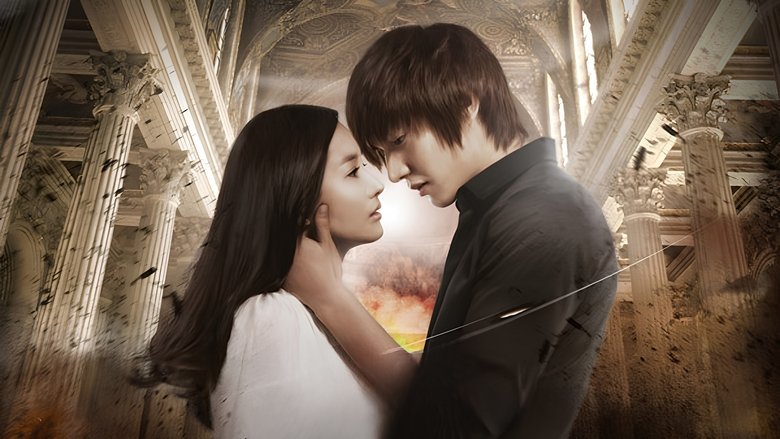
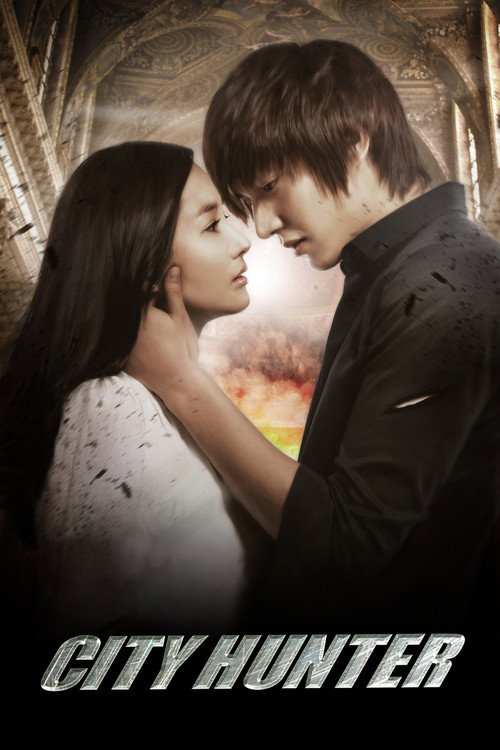
City Hunter (시티헌터) is a 20-episode South Korean political action-thriller and revenge melodrama broadcast by SBS in 2011. The story traces its roots back to 1983, when twenty-one elite South Korean special forces operatives sent on a covert retaliatory mission into North Korea are betrayed and murdered by their own government's leadership to avert an international incident. The sole survivor, Lee Jin-pyo, abducts the infant son of his fallen comrade and raises the boy in the harsh jungle terrain of the Golden Triangle with a single, unbending purpose: to mold him into an instrument of absolute vengeance against the five corrupt officials responsible for the massacre.

Nearly three decades later, the child—now the brilliant and lethal Lee Yoon-sung—infiltrates the Blue House under the guise of an MIT-educated IT communications specialist. Operating undercover in Seoul, Yoon-sung systematically targets the Council of Five, peeling back layers of high-level institutional corruption spanning public healthcare, military procurement, education, and labor exploitation. Rather than executing them as his ruthless adoptive father demands, Yoon-sung exposes their crimes to the public and delivers them bound to the judicial system, assuming the masked mantle of the vigilante City Hunter.

The overarching narrative develops into a multi-front conflict: Yoon-sung faces the dogmatic, lethal retribution demanded by Jin-pyo, the lawful and relentless pursuit of righteous prosecutor Kim Young-joo, and his blossoming romantic connection with Kim Na-na, a fiercely independent Presidential Security Service bodyguard whose life is inextricably tied to the same shadowy web of state corruption.
Core Meaning

The fundamental message of City Hunter centers on the moral distinction between justice and vengeance. The series argues that when a socio-political system betrays its citizens' trust, genuine restoration cannot be achieved through reactionary bloodshed and cyclical hatred. Instead, real justice requires bringing truth into the light, holding corrupt institutions accountable under the rule of law, and refusing to allow personal trauma to erode one's humanity. It serves as an indictment of systemic state corruption and a defense of societal faith, demonstrating that breaking a cycle of violence requires greater strength than perpetuating it.

Thematic DNA

Vengeance vs. Lawful Justice 35%
The Burden of Paternal Legacy and Chosen Identity 25%
Institutional Corruption and the Betrayal of Civic Trust 20%
Love as Vulnerability versus Salvation 20%

Vengeance vs. Lawful Justice

The central thematic engine of the entire series is the ideological clash between Lee Jin-pyo’s philosophy of blood for blood and Lee Yoon-sung’s insistence on exposing corruption to legal and public accountability without killing. This conflict escalates across the drama as each corrupt official is confronted, contrasting nihilistic retribution with regenerative justice.

The Burden of Paternal Legacy and Chosen Identity

Yoon-sung spends his life trapped between multiple fathers: the idealized memory of his fallen father Park Moo-yul, the dark conditioning of his adoptive father Jin-pyo, and his biological father President Choi Eung-chan. The series explores an individual’s struggle to forge their own moral compass against heavy parental programming.

Institutional Corruption and the Betrayal of Civic Trust

Each of the five targets represents a pillar of systemic exploitation in modern society: embezzlement of welfare funds, supply of substandard boots and bulletproof vests to soldiers, university tuition theft, and industrial worker oppression. The drama exposes how political elites manipulate the state for personal enrichment.

Love as Vulnerability versus Salvation

Trained to keep emotional attachments at bay because affection breeds weakness, Yoon-sung's love for Kim Na-na threatens his survival yet simultaneously becomes the sole anchor that preserves his moral conscience and prevents him from devolving into a cold-blooded monster.

Character Analysis

Lee Yoon-sung (Poo-chai / John Lee)

Lee Min-ho

Archetype: Vigilante Hero / Reluctant Avenger Key Trait: Moral empathy beneath lethal skill.

Motivation

Starts driven by duty to avenge his father; evolves into a defender of civic justice and individual lives.

Character Arc

Transforms from an obediently trained combatant into an independent moral crusader who rejects his mentor's violent path to protect innocents and redeem his heritage.

Kim Na-na

Park Min-young

Archetype: Resilient Heroine / Moral Compass Key Trait: Unwavering emotional resilience.

Motivation

Seeks to clear her comatose father’s name; evolves into protecting Yoon-sung and upholding true integrity.

Character Arc

Grows from a struggling, debt-burdened part-timer into a Blue House bodyguard who discovers the vigilante's identity and chooses to actively shield and support him.

All 5 characters and cast

Symbols & Motifs

The Dog Tags of the 21 Soldiers

Meaning:

A continuous physical reminder of the 1983 betrayal. For Jin-pyo, they serve as a talisman of unrelenting hatred, while for Yoon-sung they represent the heavy moral duty to redeem the forgotten dead without committing further atrocities.

Context:

Carried by Jin-pyo and referenced throughout the revenge mission to honor the fallen special forces operatives murdered during Operation Cleansweep.

The Black Face Mask / Everyday Weaponry

Meaning:

Symbolizes that true justice requires adaptability and intellect rather than raw firearm violence.

Context:

Worn during Yoon-sung's vigilante operations as the City Hunter, where he improvises weapons using everyday items such as a silver spoon, a water bottle, neckties, and office binders.

The Coffee Motif

Meaning:

An emblem of warm, modest, everyday domesticity and the human connection that Yoon-sung desperately craves.

Context:

Represented through Kim Na-na’s inexpensive, three-in-one instant mix coffee, which stands in stark contrast to Yoon-sung’s expensive imported tastes.

The Bullet Pendants / Scars

Meaning:

Represents a past that cannot heal, contrasting with physical wounds endured to protect others rather than inflict malice.

Context:

Seen on Jin-pyo through his artificial leg and bullet wounds, set against Yoon-sung's battle scars sustained while shielding innocent lives.

Memorable Quotes

믿음 때문입니다. 국민들이 뽑은 정치인들이 양심적으로 행동할 것이라는 믿음. 나라를 지키기 위해 입대한 군인들이 자기 나라가 그들을 지켜줄 것이라는 믿음... 그 믿음을 지키기 위해서입니다.
— Lee Yoon-sung

Context

Delivered during his Episode 17 confrontation regarding why he protects civic institutions instead of executing corrupt officials.

Meaning

Captures the core thematic ethos of Yoon-sung's crusade—he is not fighting for blood, but to restore fractured societal trust.

나 좋아하지 마. 너 행복해질 생각 따위 버려.
— Lee Yoon-sung

Context

Spoken to Kim Na-na in Episode 12 as he struggles with his growing romantic feelings.

Meaning

The defining line of Yoon-sung’s inner torment, pushing Na-na away to protect her from the dangerous crossfire of his covert life.

All 5 quotes

Episode Highlights

The 1983 Rangoon Massacre & Rebirth

S1E1

Establishes the historical premise with the 1983 Rangoon bombing and Operation Cleansweep, depicting the brutal betrayal of the 21 soldiers, Jin-pyo’s abduction of infant Yoon-sung, and the boy's rigorous training in the Golden Triangle.

Significance:

Sets the foundational motivation and ideological origin for the entire 20-episode revenge narrative.

The Spoon Fight & First Target

S1E3

Features the famous spoon-combat action sequence and the tactical takedown of corrupt politician Lee Kyung-wan.

Significance:

Establishes Yoon-sung's signature modus operandi of subduing targets non-lethally and mailing them bound directly to Prosecutor Kim Young-joo.

Rooftop Showdown

S1E9

Yoon-sung and Jin-pyo engage in a fierce physical rooftop confrontation over whether to murder or legally expose the second target, culminating in Na-na shooting the masked City Hunter.

Significance:

Crystallizes the lethal ideological divide between father and son while initiating the unraveling of Yoon-sung's secret identity to Na-na.

Identity Revealed to Na-na

S1E13

Na-na verifies that Yoon-sung is the City Hunter after treating his gunshot wound, while Jin-pyo targets Na-na to eliminate Yoon-sung's emotional vulnerability.

Significance:

Transforms Yoon-sung and Na-na's relationship from guarded romance into an active operational alliance.

Direct Filial Confrontation

S1E17

Yoon-sung delivers his iconic monologue on civic faith as the ideological rift with Jin-pyo reaches a boiling point, prompting Yoon-sung to resort to self-harm to force Jin-pyo to stand down.

Significance:

Solidifies Yoon-sung's complete moral autonomy and explicit refusal to become a vessel for destructive vengeance.

The Fall of Kim Young-joo

S1E19

Prosecutor Kim Young-joo discovers Yoon-sung’s identity, tracks the secret documents belonging to corrupt tycoon Cheon Jae-man, and is fatally beaten while defending the evidence.

Significance:

Marks the tragic end of lawful institutional prosecution and forces Young-joo to entrust the final mission of truth directly to the City Hunter.

The Final Sacrifice & Resolution

S1E20

Yoon-sung discovers President Choi Eung-chan is his biological father. In the climactic Blue House standoff, Jin-pyo shields Yoon-sung, claims sole responsibility as the City Hunter, and is gunned down.

Significance:

Brings the 28-year cycle of blood vengeance to an end, freeing Yoon-sung from prosecution and completing the unmasking of the Council of Five.

Philosophical Questions

Can ends justify morally compromised means in governance?

The drama examines whether national leaders are justified in sacrificing 21 soldiers for broader geopolitical diplomacy, concluding that state cover-ups inherently rot governmental legitimacy from within.

Where does lawful authority end and vigilance become necessary?

Through the ideological duel between Prosecutor Kim Young-joo and Yoon-sung, the story interrogates whether extrajudicial vigilante exposure is permissible when the legal apparatus is corrupted at the highest levels.

Is human nature shaped by biology or nurture?

Yoon-sung is conditioned from infancy by a vengeful killer and fathered by a compromised president, yet he exercises moral autonomy to choose a third path rooted in empathy and restorative justice.

Alternative Interpretations

Interpretations of the series finale diverge across three main perspectives:

Full ending explanation

Cultural Impact

City Hunter set a high benchmark for large-scale action-thrillers in Korean television during a transitional period in 2011, alongside landmark titles like IRIS. The series resonated deeply by integrating real contemporary South Korean socio-political anxieties, including controversies over half-price university tuition protests, military defense procurement kickbacks, corporate health negligence, and the political shielding of corrupt chaebols.

Achieving major international success across East Asia, Southeast Asia, and Europe, the drama played a pivotal role in solidifying Lee Min-ho's status as a top global Hallyu star and paved the way for subsequent high-concept action-melodramas such as Healer (2014) and The K2 (2016).

Audience Reception

City Hunter was met with widespread critical and commercial acclaim, dominating its broadcast time slot as nationwide viewership ratings climbed from approximately 10% to nearly 20% by the finale. Viewers and critics heavily praised the dynamic pacing, stylish action choreography, and the compelling on-screen chemistry between Lee Min-ho and Kim Sang-joong.

Minor criticisms targeted specific middle-arc villain takedowns for feeling melodramatic or legally simplistic compared to real administrative processes. Additionally, some viewers expressed frustration over the rapid pacing of the finale and the lack of an extended romantic epilogue between Yoon-sung and Na-na. Nevertheless, the series remains regarded as an all-time classic Korean action-melodrama.

Interesting Facts

  • On June 13, 2011, while filming a high-speed driving scene in Ilsan, Lee Min-ho crashed into a parked utility truck, completely wrecking the front of the vehicle, though he avoided major injuries and resumed filming shortly after.
  • During an explosive action sequence, pyrotechnic glass shards struck Lee Min-ho's leg, requiring immediate on-set medical care.
  • Lee Min-ho underwent intensive training in the Filipino martial art Kali-Arnis and Judo to perform the celebrated Episode 3 spoon fight.
  • Lead actors Lee Min-ho and Park Min-young developed romantic feelings while filming and publicly dated for a period following the finale.
  • The original soundtrack, directed by Oh Jun-seong and featuring tracks like Im Jae-bum's 'Love' and Kim Bo-kyung's 'Suddenly', dominated Korean digital music charts throughout the broadcast.

Easter Eggs

Manga Prequel Reimagining

While Tsukasa Hojo's original 1985 manga City Hunter features a comedic Ryo Saeba in contemporary Tokyo, this adaptation reimagines the story as a dark, dramatic origin prequel explaining how the vigilante acquired his lethal skills and moniker.

Historical Grounding (1983 Rangoon Bombing)

The narrative's inciting incident draws directly from the real-world October 9, 1983 Aung San Mausoleum bombing in Burma, in which North Korean operatives attempted to assassinate South Korean President Chun Doo-hwan.

Lee Kwang-soo's Comic Role

Features future variety star Lee Kwang-soo as Go Ki-wook, Yoon-sung's Blue House colleague, injecting lighthearted comedy that balances the intense political melodrama.

Comic Noir Opening Sequence

The series utilizes high-contrast, black-and-white graphic animations during its opening sequences, directly paying homage to classic comic book aesthetics and Japanese manga panels.

Frequently Asked Questions

Explore More About This Movie

Dive deeper into specific aspects of the movie with our detailed analysis pages

Comments (0)

Leave a comment

No comments yet. Be the first to share your thoughts!

Similar Movies