Skip to content
Ascendance of a Bookworm
A tender, slow-burning medieval fantasy bathed in melancholic warmth, where an inextinguishable craving for the printed word blooms like a fragile flower cleaving through cold cobblestone and rigid social stratifications.
Ascendance of a Bookworm

Ascendance of a Bookworm

本好きの下剋上 司書になるためには手段を選んでいられません

03 October 2019 — 18 July 2026 Japan 2 season 60 episode Returning Series 8.1 (140)

Cast: Yuka Iguchi, Show Hayami, Mutsumi Tamura, Megumi Nakajima, Takehito Koyasu

Drama Animation Sci-Fi & Fantasy Democratization of Knowledge and Literacy Found Family, Kinship, and Sacrificial Love Class Stratification, Institutional Power, and Gekokujō Economic Realism, Invention, and the Ethics of Commerce

Overview

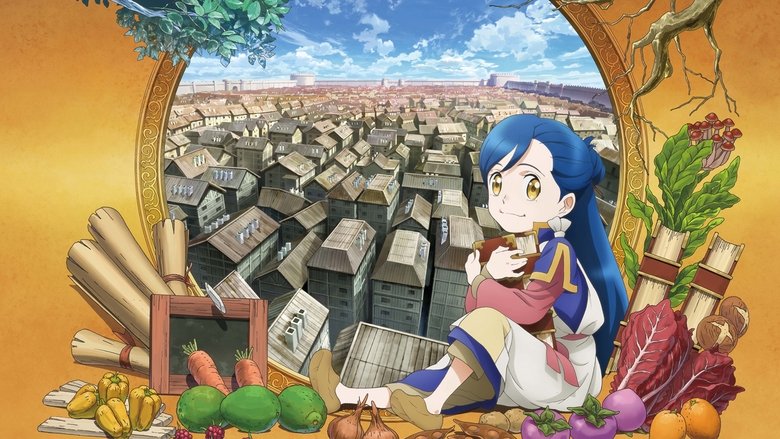
Ascendance of a Bookworm follows the journey of Motosu Urano, a contemporary Japanese book lover on the verge of becoming a certified librarian, who is crushed to death beneath an avalanche of falling books during an earthquake. She awakens in an unfamiliar, low-magic medieval European-inspired city named Ehrenfest, having reincarnated into the frail, poverty-stricken body of a five-year-old commoner girl named Myne. Consumed by an agonizing thirst for literature, Myne is horrified to discover that books are exclusively handcrafted, hyper-expensive status symbols accessible only to wealthy merchants, high clergy, and nobility, while the literacy rate among commoners is practically nonexistent.

Driven by a sheer refusal to live in a world devoid of reading material, Myne sets out to manufacture books herself from scratch. Partnering with her childhood friend Lutz and savvy merchant Benno, she pioneers inventions ranging from plant-based papermaking and natural shampoo to printing techniques, inadvertently disrupting the established economic ecosystem. However, her rapidly progressing, feverish condition—known as the "Devouring" (excess uncompressed magical power)—forces her to enter the local temple as a blue-robed apprentice priestess, entangling her in the perilous political and magical machinations of the ruling aristocracy.


Core Meaning

The core thesis of Ascendance of a Bookworm is that knowledge and literacy are the ultimate catalysts of human agency, empathy, and social revolution. Through Myne’s unyielding pursuit, the narrative asserts that industrial and technological progress does not happen in isolation through pure genius, but rather through meticulous labor, economic cooperation, and institutional navigation. Concurrently, the overarching emotional message explores the maturation from individualistic obsession to communal empathy: true ascendance is not merely rising through class hierarchy, but using that position to shelter, educate, and uplift the people one loves.

Thematic DNA

Democratization of Knowledge and Literacy 30%
Found Family, Kinship, and Sacrificial Love 25%
Class Stratification, Institutional Power, and Gekokujō 25%
Economic Realism, Invention, and the Ethics of Commerce 20%

Democratization of Knowledge and Literacy

Starting in Season 1 with the rudimentary crafting of clay slates and plant parchment, this theme escalates through Seasons 2 and 3 into the creation of the Ehrenfest printing press, children’s picture bibles, and educational systems. The story illustrates how restricting literacy reinforces authoritarian feudalism and how distributing the written word fundamentally redistributes power.

Found Family, Kinship, and Sacrificial Love

Initially self-centered and dismissive of her commoner family, Myne gradually realizes that genuine love requires reciprocal sacrifice. This matures across Seasons 2 and 3, culminating in the heartbreaking truth that protecting her biological family requires legally severing ties with them to enter high nobility.

Class Stratification, Institutional Power, and Gekokujō

Gekokujō ("the lower overcoming the higher") is explored not through brute conquest, but through bureaucratic maneuverability, economic leverage, and mana capital. The rigid caste divide between commoners, temple orphans, blue priests, and Archnobles emphasizes the violence and exploitation underpinning aristocratic privilege.

Economic Realism, Invention, and the Ethics of Commerce

Unlike conventional isekai tropes that grant instantaneous invention miracles, Ascendance of a Bookworm spends extensive time on contracts, patent rights, supply lines, raw material shortages, and labor division through the Plantin Company and the Merchant Guild.

Character Analysis

Myne / Rozemyne

Yuka Iguchi

Archetype: The Unorthodox Protagonist / Intellectual Revolutionary Key Trait: Obsessive intellectual curiosity paired with severe physical frailty.

Motivation

Initial: Read books at any cost.
Evolved: Build a sustainable printing industry and protect her family and subordinates.

Character Arc

Transforms from a frail, self-centered Japanese bibliophile into a compassionate, politically astute leader and industrial reformer who sacrifices personal identity to protect her loved ones.

Ferdinand

Show Hayami

Archetype: The Stern Mentor / Pragmatic Shadow Ruler Key Trait: Uncompromising rationalism and tactical brilliance masking deep emotional isolation.

Motivation

Initial: Safeguard Ehrenfest’s mana supply and temple order.
Evolved: Preserve Myne’s life, harness her innovations, and navigate high politics.

Character Arc

Evolves from a deeply traumatized, suspicious, and strictly pragmatic High Priest into a fiercely protective guardian who finds genuine emotional solace in Myne's radical honesty.

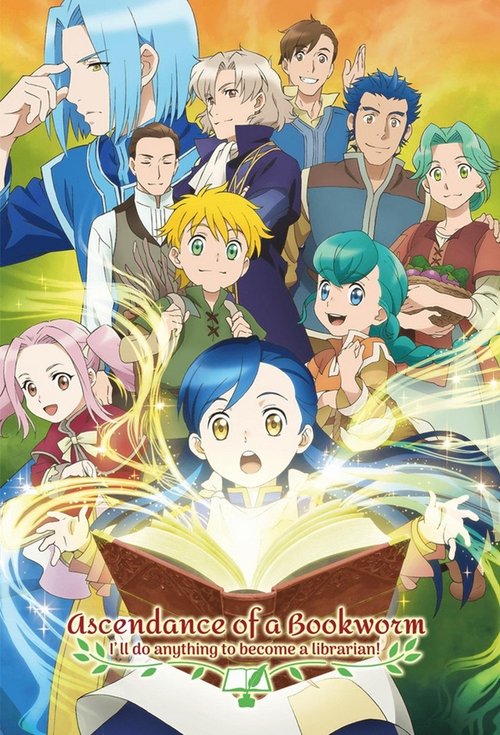
All 5 characters and cast

Symbols & Motifs

Handcrafted Hairpins (Tsuzumu / Crocheted Lace)

Meaning:

Symbolizes the tangible emotional bridge connecting Myne to her sister Tuuli and her commoner roots.

Context:

Each hairpin commissioned for the high-ranking nobility represents commoner craftsmanship penetrating aristocratic society.

The Devouring / Glowing Mana

Meaning:

A visual metaphor for suppressed capability, societal inequality, and mortality.

Context:

Mana that would kill a commoner child without magic tools becomes the ultimate qualification for rulership when possessed by high nobility.

Books and the Printing Press

Meaning:

The ultimate beacon of enlightenment, civilization, and intellectual freedom.

Context:

Represents Myne's continuous industrial and educational crusade to make literature accessible to all.

The Blue and Gray Robes of the Temple

Meaning:

The visual embodiment of systemic caste oppression.

Context:

Blue robes indicate noble blood, while gray robes represent commoners, orphans, and servants viewed as expendable assets.

Trombe Trees and Feyplants

Meaning:

Symbolizes the unpredictable volatility of magic when disconnected from human stewardship and the parasitic nature of raw mana extraction.

Context:

Encountered in agricultural land and noble extermination missions where magical flora drain the surrounding soil of life.

Memorable Quotes

Hon ga nai nara, tsukureba ii ja nai!
— Myne

Context

Season 1, Episode 2, upon realizing books are unattainable in Ehrenfest.

Meaning

The inciting mantra of the entire series, establishing Myne’s proactive defiance against circumstance.

Kamigami ni inori o! Shukufuku o!
— Temple clergy / Myne

Context

Recurring across Seasons 2–3 during temple ceremonies and magical activations.

Meaning

The liturgical prayer of the temple, later subverted by Myne into both a running gag and the trigger for world-altering magical blessings.

All 4 quotes

Episode Highlights

A World Without Books

S1E1

Establishes Urano’s death, her reincarnation into the impoverished city of Ehrenfest, the grim reality of medieval poverty, and the discovery that books are completely out of reach.

Significance:

Sets up the premise, world rules, and Myne's foundational drive to produce reading materials.

The Meaning of Myne

S1E6

Lutz confronts Myne about her adult behavior and knowledge, prompting her to confess her dual identity.

Significance:

Marks the foundational turning point of mutual trust and partnership that underpins the rest of the show.

Conclusion of the Devouring

S1E14

Myne suffers a near-fatal mana collapse during the baptism ceremony and uses magic to subdue High Bishop Bezewanst.

Significance:

Forces Ferdinand to realize her staggering mana capacity and recruit her as a blue shrine maiden, transitioning the story from the commoner world to the temple.

The Temple's Orphanage

S2E17

Myne discovers the starvation and squalor in the temple basement, revolutionizing orphanage management by introducing cleanliness, industry, and early childhood education.

Significance:

Expands Myne's role into social reform and establishes the orphanage as her dedicated printing workshop workforce.

The Trombe Extermination

S2E21

Demonstrates the high stakes of noble combat as Myne provides vast mana restoration to the land.

Significance:

Gains the respect of the Knights' Order while directly exposing Myne to the lethal prejudices of the nobility.

The Dream World

S2E26

Ferdinand utilizes a mind-reading magic tool on Myne, uncovering her memories of modern Tokyo.

Significance:

Leads to emotional catharsis as Myne grieves her original mother, solidifying Ferdinand’s role as her true confidant and protector.

Black and White Clouds

S3E8

External aristocrats and rogue knights attempt to abduct Myne and baby Dirk.

Significance:

Pushes Ehrenfest's internal security crisis and foreign noble interference to a boiling point.

Blessing

S3E10

The climactic finale of the initial anime era: High Bishop Bezewanst is arrested, Count Toad is executed, and Sylvester formally adopts Myne as "Rozemyne, daughter of the Archduke."

Significance:

Forces Myne into a heartbreaking, irreversible parting from her commoner family to protect their lives, fully elevating her into high nobility.

Philosophical Questions

Is the democratization of knowledge fundamentally an act of liberation or destabilization?

The narrative examines how spreading literacy uplifts the poor while threatening the security architecture of an aristocracy built on secret magical knowledge.

What constitutes true family identity?

Explored through Myne’s dual existence as Urano, commoner Myne, and later noble Rozemyne—questioning whether family is defined by blood, social contract, or shared love.

Does preserving social order justify systemic human commodification?

The grim reality of gray priests, contractual servitude, and concubinage in the temple forces viewers to confront institutional utilitarianism.

Alternative Interpretations

The Industrialization / Marxist Critique: A structural reading sees Myne’s journey as the rise of early modern capitalism against stagnant feudalism. Her alliances with the merchant class expose the parasitic nature of the nobility, who monopolize mana and resources without labor.

Full ending explanation

Cultural Impact

Premiering in late 2019, Ascendance of a Bookworm stood in stark contrast to the dominant wave of power-fantasy isekai. By centering on a physically incapacitated female protagonist whose "cheat ability" was historical industrial knowledge, the series established what critics termed "cozy, bureaucratic, and industrial fantasy". It garnered critical acclaim for its rigorous depiction of late-medieval social structures, supply chain economics, and child labor dynamics. Its legacy persists as the gold standard of literary worldbuilding and deliberate pacing within the modern isekai genre.

Audience Reception

Critical Praise: Overwhelmingly lauded for immaculate worldbuilding, organic character development, and refreshing reliance on intellect over combat. The emotional depth of Myne's relationships with Lutz, Gunther, and Ferdinand consistently earned praise.

Common Criticisms: Some viewers and critics found the early pacing overly methodical and the animation quality by Ajia-do modest, with limited dynamic action sequences.

Evolution of Opinion: The series built a dedicated following; as the cozy workshop crafting of Season 1 gave way to high-stakes political intrigue and emotional climaxes in Seasons 2 and 3, audience reception solidified Bookworm as a premier narrative-driven fantasy.

Interesting Facts

  • Director Mitsuru Hongo insisted on a grounded, slice-of-life pacing for Seasons 1–3 at studio Ajia-do Animation Works, focusing deliberately on historical realism, domestic hygiene, and procedural manufacturing over rapid action.
  • Light novel author Miya Kazuki reviewed scripts and character designs closely, providing extensive supplementary worldbuilding notes on Ehrenfest’s calendar, mana physiology, and economic trade laws.
  • Composer Michiru created an acoustic score relying on historical European instruments—such as recorders, lutes, harpsichords, and bagpipes—which transitioned to grander orchestral and synthesized classical arrangements as the setting moved to nobility.
  • Following Season 3, the production transitioned to WIT Studio for the adaptation of Part 3 (Adopted Daughter of an Archduke), with Yoshiaki Iwasaki taking over direction to reflect the elevated aesthetic and political scale of high-society nobility.

Easter Eggs

Historical Printing Milestones

Myne’s invention trajectory directly mirrors the real-world history of recording media: Mesopotamian clay tablets to Egyptian papyrus/Mokkan wood slips, Chinese plant-based paper (Cai Lun), and Gutenberg movable metal type.

Germanic Linguistic Architecture

Almost every term and name in Ehrenfest is derived from German (e.g., Ehrenfest means "honorable fortress," Trombe means "whirlwind," along with names like Adalgisa, Schtappe, Ferdinand, Lutz, Tuuli, and Karstedt).

The 'Praise the Gods' Pose

The comical ritual posture required for temple blessings pays playful homage to both the "Praise the Sun" stance from Dark Souls and Japanese corporate calisthenics / dogeza apologetics.

Frequently Asked Questions

Explore More About This Movie

Dive deeper into specific aspects of the movie with our detailed analysis pages

Comments (0)

Leave a comment

No comments yet. Be the first to share your thoughts!

Similar Movies