Skip to content
Fruits Basket
A poignant supernatural drama bathed in bittersweet melancholy and radiant warmth, where scarred souls unravel generations of inherited isolation like autumn leaves gently giving way to spring blossom.
Fruits Basket

Fruits Basket

フルーツバスケット

06 April 2019 — 22 July 2021 Japan 3 season 63 episode Ended 8.0 (180)

Cast: Manaka Iwami, Nobunaga Shimazaki, Yuma Uchida, Yuichi Nakamura, Satomi Sato

Drama Animation Sci-Fi & Fantasy Generational Trauma & Cycles of Abuse Grief, Loss, and the Impermanence of Bonds Unconditional Acceptance & Self-Worth Autonomy vs. Predetermined Destiny

Overview

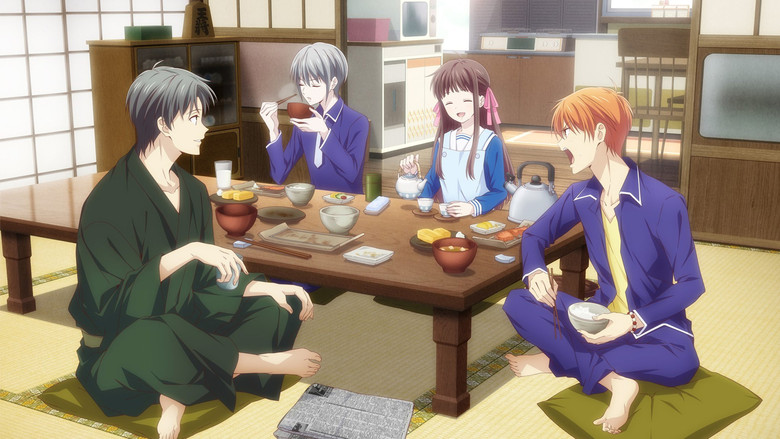
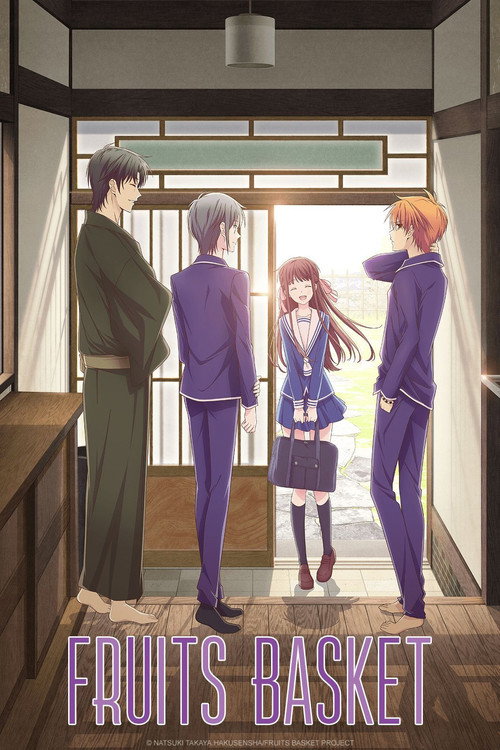
Fruits Basket (2019) is a complete, faithful 63-episode adaptation of Natsuki Takaya’s celebrated manga, produced by TMS Entertainment and directed by Yoshihide Ibata. The narrative begins when kindhearted, orphaned high school student Tohru Honda, living secretly in a tent after her mother’s death, is taken in by classmates Yuki and Shigure Sohma. Tohru soon stumbles upon an ancient family secret: thirteen members of the Sohma clan are cursed to transform into animals of the Chinese Zodiac whenever they are embraced by members of the opposite sex or placed under severe physical stress.

As Tohru is drawn deeper into the insular world of the Sohma estate, the initial comedic premise gradually unfolds into an emotional exploration of trauma, social alienation, and psychological bondage. Beneath their eccentric personalities, each Zodiac member bears profound emotional wounds inflicted by family rejection, societal isolation, and subservience to the clan's enigmatic and tyrannical head, Akito Sohma. Tohru offers unconditional acceptance, quietly encouraging the cursed members to confront their pasts and seek genuine self-worth.

Across its three-season narrative arc, the series shifts from an episodic character study to an urgent deconstruction of generational trauma and destiny. Tohru, Yuki, Kyo, and their companions strive to break the spiritual chains of the Zodiac banquet, transforming their mutual codependency into authentic bonds and paving a path toward an unwritten future.
Core Meaning

The core philosophical premise of Fruits Basket is that human connection and genuine love cannot thrive on coercion, obligation, or frozen promises of eternity. True healing requires acknowledging past grief, accepting impermanence, and granting individuals the agency to change and walk away. Through Tohru and the Sohma family, the series demonstrates that unconditional empathy and the courage to confront painful truths can dismantle cycles of abuse, proving that people are defined by the choices they make rather than the ancestral burdens they inherit.

Thematic DNA

Generational Trauma & Cycles of Abuse 30%
Grief, Loss, and the Impermanence of Bonds 25%
Unconditional Acceptance & Self-Worth 25%
Autonomy vs. Predetermined Destiny 20%

Generational Trauma & Cycles of Abuse

The Zodiac curse functions as an allegory for inherited familial dysfunction and toxic codependency. Season 1 establishes individual manifestations of childhood trauma; Season 2 examines how parental rejection and clan expectations reinforce those wounds; Season 3 confronts the apex of this abuse in the estate's hierarchy. The narrative illustrates that abuse persists until individuals consciously choose accountability and emotional honesty over tradition.

Grief, Loss, and the Impermanence of Bonds

Grief is the catalyst for Tohru’s journey and a pervasive current throughout the Sohma family history. Characters cling to old promises and idealized bonds out of fear of being forgotten or left alone. The series demonstrates that true love requires making peace with change and allowing relationships to evolve or end naturally rather than trapping them in stasis.

Unconditional Acceptance & Self-Worth

A central theme is the transformative power of being seen and accepted at one’s lowest point. Tohru’s acceptance of Kyo’s monstrous true form and her willingness to listen to the Sohmas without judgment empower them to recognize their intrinsic value beyond the roles thrust upon them by birth.

Autonomy vs. Predetermined Destiny

The Zodiac bond imposes mandatory devotion to the "God" of the Zodiac, stripping members of their self-determination. As the characters develop independent relationships in the outside world, their reliance on the supernatural bond deteriorates, proving that forged bonds built on mutual respect hold greater vitality than inherited fate.

Character Analysis

Tohru Honda

Manaka Iwami

Archetype: The Compassionate Healer / Guileless Hero Key Trait: Empathy and emotional resilience

Motivation

Initially driven by the desire to keep her late mother’s memory alive and support everyone around her; evolves into a determined quest to break the Sohma curse so her loved ones can live freely.

Character Arc

Tohru enters as a relentlessly cheerful girl who represses her own sadness and desires to avoid burdening others. Over three seasons, she confronts her unresolved grief over her mother, acknowledges her attachment to Kyo, and embraces her own emotional needs.

Kyo Sohma

Yuma Uchida

Archetype: The Scapegoat / Rebellious Tsundere Key Trait: Fierce loyalty masked by a prickly exterior

Motivation

Starts as an obsession with defeating Yuki to earn family validation; matures into the desire to protect Tohru and live authentically.

Character Arc

Plagued by self-hatred, guilt over Kyoko’s death, and fear of confinement in the Cat’s room, Kyo begins as an aggressive outsider. With Tohru’s love and Kazuma’s guidance, he learns to forgive himself, unlearn his shame, and claim an independent future.

All 5 characters and cast

Symbols & Motifs

The Onigiri (Rice Ball) & Plum on the Back

Meaning:

Inherent, unseen goodness and self-worth.

Context:

Introduced in Season 1: Tohru shares the metaphor of a rice ball unable to see the plum on its own back to explain why people overlook their own virtues while envying others.

Kyo’s Juzu Prayer Bead Bracelet

Meaning:

Suppression of true nature, shame, and ancestral subjugation.

Context:

Worn constantly by Kyo; made of bone and lacquered wood, it suppresses his monstrous true form. Its breaking symbolizes liberation from scapegoating.

The Cat of the Zodiac

Meaning:

Ostracization, the familial scapegoat, and unconditional love.

Context:

The excluded thirteenth spirit represents the rejected outsider whose suffering validates the cohesion of the other Zodiac members.

The Baseball Cap

Meaning:

Protection, kindness passed forward, and interconnected destinies.

Context:

Originally bought by Kyo, given to young Tohru by Yuki when she was lost, and preserved by Tohru for years as a token of unseen comfort.

The Banqueting Room / Estate Walls

Meaning:

Isolation, feudal stasis, and forced familial attachment.

Context:

The inner grounds of the Sohma compound represent imprisonment in the past, contrasting sharply with the bright school and suburban exterior settings.

Memorable Quotes

人の素敵なところって、おにぎりの背中についた梅干しみたいなものかもしれない…
— Tohru Honda

Context

Season 1, Episode 5: Tohru shares the plum on the back metaphor to describe inherent human value.

Meaning

Encapsulates the show’s perspective on human worth—that people readily see the beauty in others while remaining blind to their own.

不安で押しつぶされそうになったら、今、足元にある洗濯物を一枚ずつ洗えばいいんだよ。
— Shigure Sohma

Context

Season 1, Episode 9: Shigure offers advice on confronting overwhelming emotional burdens.

Meaning

A practical philosophy on dealing with overwhelming grief and life anxieties by focusing on immediate, manageable steps.

All 4 quotes

Episode Highlights

I've Been Fooling Myself

S1E5

Tohru explains the "Plum on the Back" metaphor to Kyo and is welcomed back into the Sohma home by Yuki and Kyo.

Significance:

Solidifies the found-family dynamic and sets the emotional cornerstone for the series.

Let's Go Home

S1E24

Kazuma removes Kyo’s bracelet, revealing his monstrous true form; Tohru refuses to run away and embraces him.

Significance:

The climax of the first season, demonstrating Tohru's unconditional acceptance and breaking Kyo's isolation.

My Precious...

S2E9

At the summer villa, Akito visits and exerts psychological violence over the Zodiacs; Tohru commits to breaking the curse.

Significance:

Shifts the entire narrative tone from slice-of-life healing to a concerted struggle against generational subjugation.

There Was, Definitely

S2E21

Yuki reflects on his childhood imprisonment, his encounter with young Tohru with the cap, and his maternal feelings for her.

Significance:

Decouples Yuki from the love triangle, resolving his internal conflict and enabling his individual path forward.

...I'm Different Now

S2E25

Kureno reveals to Tohru that his rooster curse broke years earlier, yet he stays with Akito out of pity; Akito is revealed to be biologically female.

Significance:

Destabilizes the premise of the curse's permanence and reveals the psychological nature of their captivity.

It Was So Foolish

S3E6

Momiji’s curse unexpectedly breaks; Akito attempts to assert dominance, but Momiji chooses emotional independence.

Significance:

Signals the irreversible collapse of the Zodiac contract and inspires other members to step away.

Goodbye

S3E11

Tohru and Kyo embrace; Kyo’s curse breaks without turning into a cat, followed by the breaking of Yuki’s and the remaining curses.

Significance:

Resolves the central supernatural conflict of the series, freeing the characters from ancestral fate.

Philosophical Questions

Can bonds formed through obligation or eternity ever foster genuine love?

The Zodiac contract promised eternal togetherness, but resulted in stasis, emotional rot, and violence.

Is pain an unavoidable prerequisite for authentic empathy?

Tohru’s capacity to heal others stems directly from her own deep grief and fear of abandonment.

How does one balance filial loyalty against self-preservation?

The Zodiac youths are repeatedly forced to choose between the safety of clan expectations and their individual moral autonomy.

Alternative Interpretations

The dissolution of the curse can be interpreted through different analytical lenses:

Full ending explanation

Cultural Impact

Serialized in Hana to Yume from 1998 to 2006, Fruits Basket became one of the defining shōjo properties worldwide. The 2019 reboot arrived during an era of prestigious shōjo remakes, setting a benchmark for adapting long-form character dramas with modern production values.

The series subverted traditional shōjo and harem tropes by trading superficial romantic rivalry for explorations of psychological abuse, domestic dysfunction, and mental health. Season 3 garnered critical acclaim and briefly held the #1 spot on MyAnimeList, illustrating that classic character-driven romance and psychological drama retain enduring appeal in contemporary anime fandom.

Audience Reception

The series received widespread critical acclaim across its three-season run:

  • Season 1: Praised for its faithful adaptation, refined character art, and nostalgic warmth, though some casual viewers found the early pacing slow.
  • Season 2: Widely acclaimed for delving into darker psychological themes, spotlighting Yuki's maturity, and executing the emotional summer house arc.
  • Season 3 (The Final): Celebrated as an emotional triumph with exceptional voice acting and visual directing. Minor criticism focused on pacing adjustments and the condensation of certain secondary manga chapters (such as Ayame and Mine’s backstories and parts of the Kyoko/Katsuya prequel material) into 13 episodes.

Overall, it is regarded as one of the finest, most emotionally mature shōjo adaptations in anime history.

Interesting Facts

  • Manga creator Natsuki Takaya approved the 2019 adaptation under two strict conditions: it had to feature a completely brand-new production team and voice cast, and the art style could not mimic her original manga art, which she felt was dated and affected by prior illness.
  • Unlike the 2001 anime (which diverged substantially and covered only the first few volumes), the 2019 reboot adapted all 23 volumes of the manga across 63 episodes.
  • Natsuki Takaya was personally involved as executive supervisor in supervising character designs and scripts to maintain faithfulness to her narrative.
  • Funimation co-produced the series with TMS Entertainment, arranging theatrical screenings for season premiere episodes and delivering same-day Simuldubs.
  • While Japan overhauled the voice cast entirely (casting Manaka Iwami, Yuma Uchida, and Nobunaga Shimazaki), the English dub brought back key legacy voice actors including Laura Bailey (Tohru), Eric Vale (Yuki), and Jerry Jewell (Kyo).

Easter Eggs

Opening / Ending Imagery Shifts

In opening and closing animations across all three seasons, the Zodiac animal figurines and character positioning subtly change to reflect developing relationships and broken bonds.

Wardrobe Transitions

Shigure’s gradual change from wearing traditional kimonos around the house to wearing Western suits signals his shifting role from domestic observer to active manipulator.

The Meaning of the Children's Game

The title refers to the Japanese school game "Fruits Basket," where Tohru was assigned the label "Onigiri" (Rice Ball)—an item that does not belong in a fruit basket, foreshadowing her status as a loving outsider who enters the Zodiac circle.

Parental Echoes in Speech

Tohru deliberately speaks in excessively polite, formal Japanese (keigo) as a childhood coping mechanism to imitate her deceased father, fearing her mother would abandon her if she did not remind her of him.

Frequently Asked Questions

Explore More About This Movie

Dive deeper into specific aspects of the movie with our detailed analysis pages

Comments (0)

Leave a comment

No comments yet. Be the first to share your thoughts!

Similar Movies