The Owl House
A whimsical, gothic fantasy bursting with heartfelt emotion, painting a vibrant world of glorious misfits finding their light in the shadows.
The Owl House

The Owl House

"Us weirdos have to stick together."

10 January 2020 — 08 April 2023 United States of America 3 season 43 episode Ended ⭐ 8.7 (1,711)
Cast: Tati Gabrielle, Mae Whitman, Issac Ryan Brown, Sarah-Nicole Robles, Wendie Malick
Drama Animation Sci-Fi & Fantasy Action & Adventure Comedy Kids
Individuality vs. Conformity Found Family LGBTQ+ Representation and Acceptance Challenging Authority and Dogma

Overview

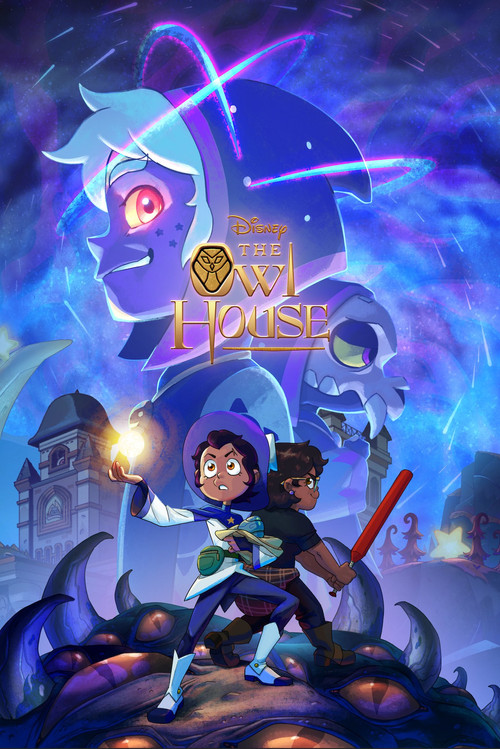
"The Owl House" follows Luz Noceda, a creative and self-assured teenage girl who, instead of going to a conformist summer camp, accidentally stumbles through a portal into the Boiling Isles, a magical realm built on the remains of a fallen Titan. There, she befriends the rebellious and cynical witch Eda Clawthorne, also known as "The Owl Lady," and her diminutive, power-hungry demon companion, King. Despite lacking innate magical abilities, Luz is determined to become a witch and serves as Eda's apprentice at the titular Owl House.

Across its three seasons, the series chronicles Luz's journey as she learns a unique form of magic using glyphs, attends the Hexside School of Magic and Demonics, and forges deep bonds with a diverse group of young witches, including the talented but initially aloof Amity Blight. The overarching narrative evolves from episodic adventures into a serialized epic as Luz and her newfound family uncover the dark secrets of the Boiling Isles' history and the tyrannical rule of Emperor Belos, who seeks to control all wild magic. The story becomes a high-stakes battle for freedom, self-expression, and the very soul of their world, forcing Luz and her friends to confront immense loss and discover their true strength.

Core Meaning

The core meaning of "The Owl House" is a powerful celebration of nonconformity, self-acceptance, and the creation of a "found family." The creators convey the message that being different or "weird" is a source of strength and creativity, not something to be suppressed. The series champions the idea that individuals should be free to forge their own paths, rather than being forced into rigid, predetermined boxes—a concept literalized by the Coven system in the Boiling Isles. It explores the idea that family is not defined by blood, but by love, support, and mutual acceptance. Through Luz's journey, the show posits that true belonging comes from embracing one's authentic self and finding others who love you for it, building a community of outcasts who become stronger together.

Thematic DNA

Individuality vs. Conformity 35%
Found Family 30%
LGBTQ+ Representation and Acceptance 25%
Challenging Authority and Dogma 10%

Individuality vs. Conformity

This is the central theme of the series, embodied by the struggle against Emperor Belos and his Coven system. Belos enforces a rigid magical society where witches must choose one type of magic for life, suppressing their full potential. Luz, who can learn all forms of magic through glyphs, and Eda, a powerful wild witch who refuses to join a coven, represent the spirit of individuality. The entire series arc is a rebellion against this forced conformity, arguing that people are more powerful and fulfilled when they embrace all facets of their identity.

Found Family

"The Owl House" is a profound exploration of the found family trope. Luz, feeling like an outcast in the human realm, finds a true family with Eda and King, two other misfits who have been rejected by society. This bond becomes the emotional core of the series. The theme expands to include Luz's friends—Willow, Gus, and Amity—and later, Hunter, as they form a tight-knit support system. They consistently choose to protect and uplift one another, demonstrating that the families we choose can be just as, if not more, powerful and loving than the ones we are born into.

LGBTQ+ Representation and Acceptance

The series is groundbreaking for its open and heartfelt depiction of LGBTQ+ relationships in a Disney animated show. The central romance between Luz Noceda, who is bisexual, and Amity Blight, a lesbian, is a core emotional storyline. Their relationship develops naturally and thoughtfully, from rivals to friends to a loving couple, becoming a benchmark for positive queer representation. The show also features a non-binary character, Raine Whispers, and normalizes these identities without making them the sole focus of conflict.

Challenging Authority and Dogma

The series encourages questioning established systems and narratives. Emperor Belos rules through fear, propaganda, and religious-like dogma about "wild magic" being savage. Luz and her allies slowly uncover the lies at the foundation of his empire, revealing that the authority they were taught to revere is corrupt and genocidal. It serves as a cautionary tale about the dangers of blind faith and the importance of seeking out the truth.

Character Analysis

Luz Noceda

Sarah-Nicole Robles

Archetype: The Hero / The Enthusiast
Key Trait: Optimistic Empathy

Motivation

Initially, Luz is motivated by a desire to escape her mundane life. This evolves into a deep, selfless love for her found family in the Boiling Isles. Her primary motivation becomes protecting them from Emperor Belos and ensuring they can live in a world free from tyranny and oppression.

Character Arc

Luz begins as a creative outcast who escapes to a fantasy world. Her arc is one of maturation and responsibility. She evolves from a naive fangirl of magic into a skilled witch who learns to take accountability for her actions, grappling with immense guilt over accidentally helping the villain in the past. Her journey culminates in her accepting her own worth, not as a prophesied "chosen one," but as someone who chooses to do good, finding a true sense of belonging in the process.

Eda Clawthorne

Wendie Malick

Archetype: The Mentor / The Rebel
Key Trait: Defiant Independence

Motivation

Eda's initial motivation is survival and freedom on her own terms, defying the restrictive Coven system. As the series progresses, her motivation shifts entirely to protecting Luz and King, whom she considers her children. She is willing to sacrifice everything for them.

Character Arc

Eda starts as a cynical, fiercely independent con artist, hiding the pain of her curse. Meeting Luz and King slowly breaks down her emotional walls, transforming her into a loving and protective maternal figure. Her arc is about learning to accept vulnerability and finding strength in connection rather than solitary power. She reconciles with her sister, confronts her curse, and finds a new purpose as a teacher and a mother.

Amity Blight

Mae Whitman

Archetype: The Rival / The Lancer
Key Trait: Driven Perfectionist

Motivation

At first, Amity is motivated by a desperate need for her parents' approval. This motivation completely changes after she befriends Luz. Her new motivation is to be a better person, to protect Luz and her friends, and to be someone Luz can be proud of.

Character Arc

Amity is introduced as a top student and antagonist, driven by the immense pressure of her emotionally abusive mother. Her arc is one of unlearning toxic mindsets through her friendship and eventual romance with Luz. She transforms into a brave, loyal, and compassionate witch who defines her own worth outside of her family's expectations, becoming a pillar of support for Luz and a hero in her own right.

King Clawthorne

Alex Hirsch

Archetype: The Jester / The Lost Heir
Key Trait: Insecure Grandiosity

Motivation

King's motivation starts as a comical and selfish desire for power and adoration. This is replaced by a fierce loyalty to his family, Luz and Eda. In the final season, his motivation is to understand his heritage and use the power he inherits as a Titan to save his friends.

Character Arc

King begins as a comedic sidekick who believes he was once an all-powerful "King of Demons." His character arc is a journey of discovering his true identity: he is not a demon but the last son of a colossal, god-like Titan. This revelation forces him to grapple with a legacy far greater than he imagined, maturing from a selfish child into a brave and selfless young hero who understands that true power comes from protecting his loved ones.

Hunter

Zeno Robinson

Archetype: The Anti-Hero / The Tragic Hero
Key Trait: Traumatized Loyalty

Motivation

Hunter is initially driven by a desperate need to please Emperor Belos and prove his worth. After learning the truth, his motivation becomes a quest for identity and freedom. He is driven to understand who he is outside of Belos's shadow and to protect his new friends from the man who abused him.

Character Arc

Introduced as the loyal Golden Guard, Hunter's arc is a heart-wrenching journey of deconstruction and self-discovery. After learning he is a "Grimwalker," a clone of his abusive 'uncle's' murdered brother, his entire world shatters. With the help of his friends, he slowly escapes his past, learns to trust others, and forges his own identity separate from his creator, transforming from a brainwashed soldier to a free individual.

Symbols & Motifs

Glyphs

Meaning:

Glyphs symbolize resourcefulness, understanding, and an alternative source of power outside the established system. They represent Luz's unique connection to the magic of the Boiling Isles, proving that power can be attained through study and connection to nature, not just innate ability.

Context:

Luz discovers the four primary glyphs (Light, Ice, Plant, and Fire) in Season 1 by observing them in nature. In the finale, her deep understanding of glyphs allows her to communicate with the Titan and gain immense power, solidifying their symbolism as the key to true magic.

The Owl House (Building)

Meaning:

The Owl House, protected by the chaotic but fiercely loyal demon Hooty, symbolizes a sanctuary for misfits and outcasts. It is a home where the main characters can be their authentic selves without judgment, representing the core theme of found family.

Context:

From the very first episode, the Owl House is established as Eda's base of operations and a haven for those who don't fit in. Luz finds her first true home here. The house itself is shown to be alive and protective of its inhabitants, literally getting up and walking in one episode.

Eda's Curse

Meaning:

Eda's curse, which transforms her into a ravenous Owl Beast, symbolizes chronic illness, disability, and living with a part of yourself that you cannot control. Her journey with the curse—from fighting it to accepting and partnering with it—is a powerful metaphor for managing and accepting personal struggles.

Context:

Introduced early in Season 1, the curse's origin is revealed to be a jealous act by her sister, Lilith. A major turning point occurs in Season 2 when Eda confronts the Owl Beast in her mindscape and learns to work with it, transforming her curse into a source of power (her Harpy form).

Emperor Belos' Mask

Meaning:

The mask worn by Emperor Belos symbolizes deception, false authority, and the hiding of one's monstrous true nature. It presents a calm, divine facade to the public, concealing the decaying, manipulative, and hateful human (Philip Wittebane) underneath.

Context:

Belos is never seen without his mask throughout most of the first two seasons. It is finally shattered during his confrontation with Luz in "King's Tide," revealing the monster beneath and symbolizing the unmasking of his lies.

Memorable Quotes

Us weirdos have to stick together.

— Luz Noceda

Context:

This is said in Season 1, Episode 3, "I Was a Teenage Abomination." After Luz, Willow, and Gus are ostracized, Luz says this to solidify their new friendship, establishing the foundation of their group.

Meaning:

This line encapsulates one of the show's core themes: finding strength and belonging in being different. It becomes a mantra for the main characters, defining their found-family dynamic and their collective identity as outcasts who support each other unconditionally.

But then how pathetic are you, that you can't best me at my worst?!

— Eda Clawthorne

Context:

Eda shouts this during her duel with Lilith in the Season 1 finale, "Agony of a Witch." Despite her curse taking a heavy toll, she is still able to outsmart and overpower her sister.

Meaning:

This defiant roar perfectly captures Eda's personality. Even when weakened by her curse, her spirit is unbreakable. It's a statement of immense pride and resilience, showing that her true strength isn't just her magic, but her indomitable will.

The only thing I've ever really wanted... was to be understood!

— Hunter

Context:

Hunter screams this during a panic attack in Season 2, Episode 13, "Any Sport in a Storm." After being betrayed, his emotional defenses crumble, revealing his deepest desire.

Meaning:

This heartbreaking cry reveals the core of Hunter's trauma and motivation. Beneath his stoic exterior is a lonely boy desperate for connection and validation from Belos, the abuser he sees as a father figure. It re-frames him from an antagonist to a deeply tragic figure.

Oh. Crikey.

— Luz Noceda

Context:

This occurs at the end of Season 2, Episode 5, "Through the Looking Glass Ruins." After Luz helps Amity, Amity gives her a surprise kiss, leaving Luz completely flustered.

Meaning:

This simple, understated line is Luz's reaction after Amity kisses her on the cheek for the first time. It's a perfect representation of her adorkable personality and the sweet, awkward joy of a first crush, making a landmark moment in LGBTQ+ representation both momentous and incredibly relatable.

Episode Highlights

Enchanting Grom Fright

S1E16

A landmark episode for LGBTQ+ representation in animation. The plot centers on a school dance and a fear-manifesting monster. The episode culminates in Luz and Amity sharing a magical dance, confirming Amity's crush on Luz and setting the stage for their future romance.

Significance:

This episode was widely praised for its unabashedly queer romance. The dance sequence is beautifully animated and emotionally resonant, marking the turning point in Luz and Amity's relationship and cementing the show as a trailblazer for representation.

Agony of a Witch

S1E18

The penultimate episode of the first season, this is where the stakes are dramatically raised. Luz learns the devastating truth that Eda's own sister, Lilith, was the one who cursed her. The episode features a powerful duel and ends on a somber cliffhanger with Eda captured.

Significance:

This episode fundamentally changes the series' dynamics, revealing the primary antagonist of the season and adding layers of tragedy to Eda's backstory. It serves as the first major appearance of Emperor Belos, setting up the main conflict for the rest of the series.

Knock, Knock, Knockin' on Hooty's Door

S2E8

An unconventional episode that delivers massive plot and character development. The house demon Hooty attempts to "help" King, Eda, and Luz, inadvertently pushing them toward major breakthroughs: King discovers his Titan heritage, Eda unlocks her Harpy form, and Luz and Amity officially become a couple.

Significance:

Despite its comedic framing, this episode resolves and advances several major character arcs simultaneously. The official start of Luz and Amity's relationship was a huge moment for fans and a significant milestone for the series.

Hollow Mind

S2E16

A dark, revelatory episode where Luz and Hunter are accidentally trapped inside the mind of Emperor Belos. They travel through his memories, uncovering his true identity as Philip Wittebane, a 17th-century human witch hunter, and learn of his genocidal plan.

Significance:

This is arguably the most important lore-heavy episode. It completely reframes the main antagonist, revealing his horrifying backstory and motivations. The reveal that Belos is Philip and Hunter is a clone is a massive twist that redefines the entire conflict.

King's Tide

S2E21

The explosive Season 2 finale. The Day of Unity begins, and the heroes fight to stop Belos. King makes a heart-wrenching sacrifice to stop The Collector, a chaotic god-like being. The episode ends with Luz and her friends stranded in the human realm.

Significance:

This episode serves as a dramatic climax for the series' main arc, featuring the apparent defeat of Belos and the introduction of a new threat. The ending completely changes the show's status quo, setting up the emotionally heavy final season specials.

Watching and Dreaming

S3E3

The 44-minute series finale. Luz, Eda, and King face off against a monstrous Belos. After a temporary death, Luz is granted Titan powers and defeats Belos for good. The episode concludes with a time skip, showing the characters several years later, happy and rebuilding their world.

Significance:

This episode provides a powerful and emotional conclusion to the entire series. It resolves the central conflict, gives Luz her ultimate moment of heroism, and delivers satisfying conclusions for all the main characters' arcs, celebrating the found family they built.

Philosophical Questions

What makes a family?

The series extensively explores this question through the "found family" trope. Luz, Eda, and King form a family unit based on mutual love and support, which is often contrasted with the dysfunctional and abusive biological families of characters like Amity and Hunter. The show strongly posits that family is not about blood ties but about unconditional love, acceptance, and the conscious choice to care for one another.

Does our identity come from our origins or our choices?

This question is central to the arcs of Hunter and King. Hunter discovers he is a Grimwalker, a clone created for a specific purpose, but his journey is about rejecting that function and choosing his own identity. King learns he is a god-like Titan, but he chooses to define himself by his love for his family rather than his powerful lineage. The series consistently argues that who we choose to be is more important than where we come from.

Alternative Interpretations

One common reading views the entire story as a complex allegory for neurodivergence. Luz's inability to fit into the rigid structures of the human world, her unique way of processing information, and her intense special interests resonate strongly with the experiences of many neurodivergent individuals. The Boiling Isles, in this interpretation, is a world where her "weirdness" becomes a superpower.

Another interpretation focuses on a religious and colonial allegory. Emperor Belos (Philip Wittebane) is seen as a Puritanical colonizer who arrives in a foreign land, demonizes its native practices ("wild magic"), and imposes his own rigid system (the Covens) through violence and deception. His goal, the Day of Unity, is an act of genocide rooted in his fanatical beliefs. In this reading, Luz and her friends are an indigenous resistance movement fighting to reclaim their culture and freedom.

Cultural Impact

"The Owl House" has had a significant cultural impact, particularly in the realm of LGBTQ+ representation in children's animation. The show's central queer romance between Luz and Amity was a landmark moment for Disney, presenting a loving, nuanced, and central same-sex relationship that was celebrated by critics and audiences. It pushed the boundaries of what was considered acceptable on a major children's network and has been cited as a positive influence for subsequent inclusive shows. The series also garnered a passionate online fandom, which actively campaigned for its continuation when news of its shortened final season broke, using hashtags like #SaveTheOwlHouse. This fan movement highlighted the growing disconnect between network executives and the desires of modern audiences for more serialized, emotionally complex, and representative storytelling. Its legacy is that of a trailblazing series that championed acceptance and left an indelible mark on modern animation.

Audience Reception

"The Owl House" received widespread critical acclaim and developed a large, passionate, and dedicated fanbase. Critics praised its world-building, humor, emotional depth, and particularly its groundbreaking LGBTQ+ representation. The central romance between Luz and Amity was highlighted as a positive and well-developed example of a queer relationship in children's media. On review aggregator sites, the series holds exceptionally high critic and audience scores. The main point of criticism from the audience was not directed at the show's content, but at Disney's decision to shorten the third season, which many felt was an unjust cancellation that prevented the story from reaching its full potential. This led to organized fan campaigns to save the show, showcasing the deep connection the audience felt with its characters and world.

Interesting Facts

  • The show's creator, Dana Terrace, based the character of Luz Noceda on her former roommate, Luz Batista, a story artist and consultant on the show, who requested the character be Dominican-American.
  • The visual style of the Boiling Isles was heavily inspired by the surreal and fantastical paintings of artists like Hieronymus Bosch.
  • The first letter of each episode title in Season 1 spells out the message: "A WITCH LOSES A TRUE WAY".
  • Alex Hirsch, the creator of "Gravity Falls," provides the voices for King, Hooty, and various other side characters.
  • The series was cut short, receiving three 44-minute specials for its third season instead of a full run. Creator Dana Terrace stated this was a decision from Disney executives who felt the serialized show didn't fit the "Disney brand."
  • There's a fan theory, fueled by easter eggs, that Eda Clawthorne was once married to Stan Pines from "Gravity Falls," as Stan mentions an ex-wife who used the alias "Marilyn," an alias Eda has also used.

Easter Eggs

References to "Gravity Falls"

Due to the involvement of Alex Hirsch, numerous nods to "Gravity Falls" are scattered throughout the series. Dipper's iconic pine tree hat can be seen among Eda's human treasures, and a picture of Bill Cipher appears on King's board of demons, leading to extensive fan theories about a shared universe.

Amphibia Crossovers

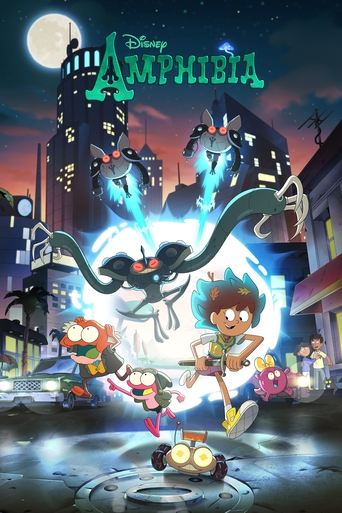
"The Owl House" shares many subtle nods with its contemporary Disney Channel show, "Amphibia." A newspaper article about Anne Boonchuy's disappearance can be seen in one episode, and in "Amphibia," a blurred image of the Owl House appears on a monitor, suggesting a friendly connection between the production teams.

Howl's Moving Castle Homage

The episode "Hooty's Moving Hassle" is a direct reference to the Studio Ghibli film "Howl's Moving Castle." In the episode, Hooty literally makes the Owl House grow legs and walk, similar to Howl's magical castle. Lilith's nickname for Hooty, "Hootsifer," is a pun on the fire demon Calcifer.

⚠️ Spoiler Analysis

Click to reveal detailed analysis with spoilers

Frequently Asked Questions

Explore More About This Movie

Dive deeper into specific aspects of the movie with our detailed analysis pages

Comments (0)

Leave a comment

No comments yet. Be the first to share your thoughts!