Skip to content
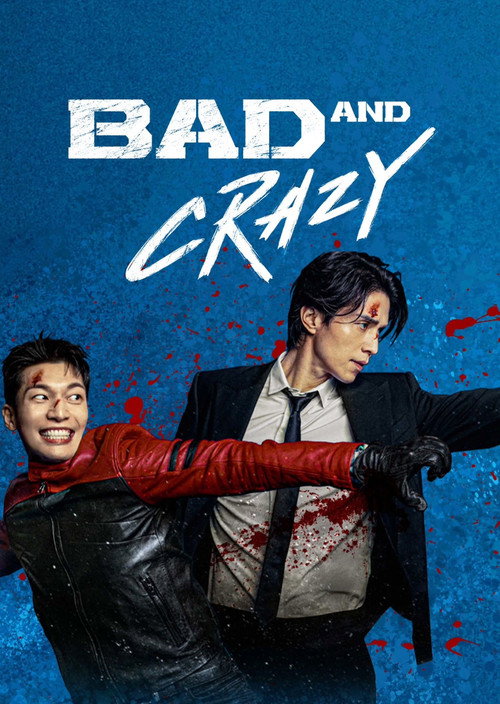
Bad and Crazy
An adrenaline-soaked neo-noir crime thriller pulsating with suppressed guilt and cathartic fury, where a fractured psyche mirrors a shattered city bathed in neon red and bruised shadows.
Bad and Crazy

Bad and Crazy

배드 앤 크레이지

"An unlikely duo unites to regain humanity!"

17 December 2021 — 28 January 2022 South Korea 1 season 12 episode Ended 7.9 (110)

Cast: Lee Dong-wook, Wi Ha-jun, Han Ji-eun, Cha Hak-yeon, Kang Ae-sim

Drama Crime Sci-Fi & Fantasy Action & Adventure Internal Conscience vs. Moral Compromise Trauma, Dissociation, and Psychological Healing Institutional Corruption and the Illusion of Merit Genuine Family and Chosen Solidarity Identity, Reclamation, and Rebirth

Overview

Bad and Crazy is a 12-episode South Korean crime-action drama directed by Yoo Seon-dong and written by Kim Sae-bom. The narrative centers on Ryu Su-yeol, an exceptionally capable yet ethically bankrupt senior police inspector in the Anti-Corruption Investigation Unit of the Munyang Police Agency who has advanced his career by systematically burying cases that inconvenience powerful elites.

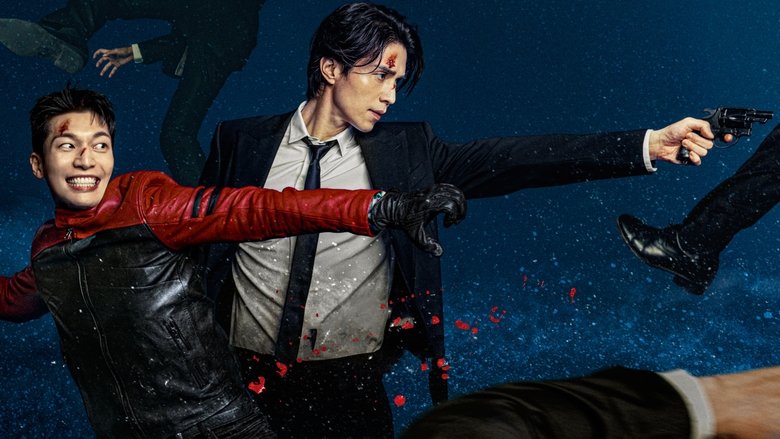
Su-yeol's meticulously crafted life unravels when he is violently ambushed by 'K', a leather-clad, motorcycle-helmeted vigilante possessing unhinged martial arts prowess and an uncompromising devotion to justice. Alongside tenacious narcotics detective Lee Hee-gyeom and rookie officer Oh Gyeong-tae, Su-yeol is forced into explosive confrontations with high-level systemic corruption and dangerous drug cartels.

As the narrative deepens, the series evolves from a fast-paced buddy-cop action comedy into a layered psychological thriller. The dynamic between Su-yeol and K transitions into an intense battle for truth, identity, and moral awakening against shadowy criminal syndicates and long-buried personal trauma.

Core Meaning

The fundamental message of Bad and Crazy is that genuine justice and self-worth cannot be achieved through passive complicity or self-delusion. Confronting institutional corruption demands that one first confront the corrupted facets of one's own conscience. The drama illustrates that redemption is not about erasing past scars or darker impulses, but integrating them into a courageously honest, accountable, and whole self.

Thematic DNA

Internal Conscience vs. Moral Compromise 30%
Trauma, Dissociation, and Psychological Healing 25%
Institutional Corruption and the Illusion of Merit 20%
Genuine Family and Chosen Solidarity 15%
Identity, Reclamation, and Rebirth 10%

Internal Conscience vs. Moral Compromise

Su-yeol initially silences his moral compass for career advancement. His suppressed conscience violently manifests as K, forcing him to transition from external compulsion to an internalized, authentic moral responsibility.

Trauma, Dissociation, and Psychological Healing

The narrative explores how severe childhood abuse and gaslighting fracture identity, showing that Su-yeol's dissociative identity disorder served as a survival mechanism that heals once repressed memories are courageously confronted.

Institutional Corruption and the Illusion of Merit

The series critiques socio-political systems where promotions and survival rely on political patronage and institutional self-preservation rather than ethical merit and public service.

Genuine Family and Chosen Solidarity

Su-yeol's loving adoptive family and loyal colleagues contrast with biological ties tainted by domestic violence, highlighting unconditional chosen solidarity as the ultimate anchor for healing.

Identity, Reclamation, and Rebirth

Su-yeol's psychological journey involves rediscovering his birth identity as In Jae-hui and facing painful truths without shame to achieve genuine self-actualization.

Character Analysis

Ryu Su-yeol / In Jae-hui

Lee Dong-wook

Archetype: Fractured Antihero Key Trait: Hyper-competent, ambitious, repentant strategist

Motivation

Initially strives for bureaucratic promotion and social status to escape childhood insecurity; later fights to uncover truth, protect loved ones, and heal his fractured psyche.

Character Arc

Evolves from a cynical, opportunistic detective fabricating narratives for corrupt elites into an empathetic, self-sacrificing protector of justice who embraces his inner wounds.

K

Wi Ha-jun

Archetype: Chaotic Vigilante / Alter Ego Key Trait: Fearless, righteous, fiercely protective

Motivation

Enforce uncompromising physical justice against wrongdoers and awaken Su-yeol's dormant conscience.

Character Arc

Begins as an anarchic, intrusive vigilante haunting Su-yeol; develops into a trusted partner and guardian who steps aside once Su-yeol integrates his own courage.

All 5 characters and cast

Symbols & Motifs

The Motorcycle and Helmet

Meaning:

Symbolizes raw, unconstrained rebellion, uncompromising justice, and psychological anonymity.

Context:

Used by K as a literal and figurative battering ram against bureaucratic deceit and physical barriers Su-yeol is too fearful to challenge.

The Wooden Door / Inner Hallway

Meaning:

Represents repressed childhood memories of domestic abuse, trauma, and hidden guilt.

Context:

Visualized during Su-yeol's hypnotic sessions and psychological regressions as a locked barrier to his true past.

Lollipops and Candy

Meaning:

Symbolizes childlike innocence, playfulness, and emotional arrest at the age Su-yeol's psyche fractured.

Context:

Frequently consumed by K during chaotic brawls and high-stakes confrontations.

The 'Eye for an Eye' Drug

Meaning:

Represents societal contamination, false escapism, and systemic exploitation of vulnerable youths.

Context:

Manufactured and distributed as illicit eye drops by Boss Yong's cartel across the city.

The Police Badge and Uniform

Meaning:

Represents societal duty, ethical responsibility, and true moral integrity.

Context:

Shifts from a commodified bargaining tool for Su-yeol into an earned emblem of justice, mirrored in rookie Oh Gyeong-tae's pure devotion.

Memorable Quotes

난 말야. 수열이만의 히어로, 수열이만의 액션스타, 수열이만의 K.
— K

Context

Delivered during the emotional psychological farewell scene inside Su-yeol's mind in Episode 12.

Meaning

Defines K's existence not as an illness to be erased, but as a loving, protective guardian born from Su-yeol's primal will to survive.

이 시대의 마지막 히어로, K.
— K

Context

Spoken after crashing into Su-yeol's vehicle on his motorcycle in Episode 1.

Meaning

Establishes K's eccentric, comic-book persona and introduces the drama's overarching theme of everyday heroism.

All 5 quotes

Episode Highlights

The Biker in the Sauna

S1E1

Introduces the morally compromised world of inspector Ryu Su-yeol and the sudden, chaotic physical intervention of the vigilante K.

Significance:

Establishes the dual-tone rhythm of high-octane martial arts, dark comedy, and institutional police corruption.

The Mirror Revelation

S1E2

Reveals that K is not a separate physical person, but Su-yeol's own alternate dissociative identity.

Significance:

Fundamentally recontextualizes the entire narrative, transforming a buddy-cop setup into an internal psychological battle.

The Politician's Downfall

S1E4

Su-yeol and K collaborate to dismantle the criminal enterprise of corrupt Assemblyman Do Yoo-gon.

Significance:

Marks the complete dismantling of Su-yeol's corrupt persona and cements his alliance with Hee-gyeom and Gyeong-tae.

The Drug Ring & Boss Yong

S1E7

Expands the criminal underworld plot by introducing cartel leader Boss Yong and framing Detective Hee-gyeom.

Significance:

Escalates stakes to life-or-death territory, pushing Su-yeol into high-risk rogue police maneuvers.

Ghosts of the Past

S1E10

Su-yeol uncovers his repressed childhood memories surrounding his abusive father and his history with Jeong Yoon-ho.

Significance:

Unmasks youth counselor Shin Joo-hyuk as the true mastermind and shifts the final act into psychological warfare.

The One and Only Hero

S1E12

Su-yeol defeats Shin Joo-hyuk through his own internal strength and bids a heartfelt farewell to K.

Significance:

Resolves the series arc by demonstrating complete psychological integration and self-actualization.

Philosophical Questions

Is moral compromise ever justifiable as pragmatic self-preservation?

The series examines how small moral concessions gradually erode integrity, proving that pragmatic complicity eventually destroys the self.

Can an individual escape responsibility for actions conditioned by childhood trauma?

Through the contrasting paths of Su-yeol (seeking redemption) and Yoon-ho (justifying violence), the show explores personal agency and ethical accountability.

What is the true nature of a hero?

The narrative questions whether heroism lies in flawless perfection or in a deeply scarred individual's courage to do the right thing despite fear.

Alternative Interpretations

Beyond the primary Psychological Integration Reading—where K represents Su-yeol's dissociated trauma and moral conscience—critics also view the narrative as an Urban Superhero Fable. In this allegorical reading, K functions as the dormant spark of justice residing inside every compromised human being, waiting to be unleashed against injustice.

Full ending explanation

Cultural Impact

Aired during the winter 2021–2022 season, Bad and Crazy contributed to the prominent trend of South Korean 'dark hero' antihero series alongside titles like Vincenzo and Taxi Driver. While domestic ratings remained modest due to late-night broadcast competition, the series developed a strong international cult following on streaming platforms for its innovative action choreography and dynamic lead bromance.

Audience Reception

Audiences and critics widely praised the dynamic on-screen chemistry between Lee Dong-wook and Wi Ha-jun, the creative fight choreography, and charismatic performances from supporting cast members like Cha Hak-yeon and Kim Hieora. Minor critiques pointed to trope-heavy medical liberties regarding Dissociative Identity Disorder and the tonal shift toward darker procedural horror in the middle episodes.

Interesting Facts

  • Director Yoo Seon-dong and writer Kim Sae-bom reteamed for this drama immediately following their massive success with The Uncanny Counter.
  • The drama was filmed and aired right as co-star Wi Ha-jun achieved worldwide fame through Squid Game.
  • Lee Dong-wook and Wi Ha-jun performed a substantial portion of their own combat stunts, wirework, and slapstick action scenes.
  • Wi Ha-jun publicly shared during the press conference that his goal was to win a Best Couple Award with Lee Dong-wook.
  • Scenes depicting Su-yeol and K in the same space were frequently filmed twice to facilitate complex split-screen and solo blocking.
  • Musical actress Kim Hieora gained breakout screen recognition as the platinum-haired cartel boss Boss Yong.

Easter Eggs

Fight Club Homage

The dynamic of an uptight suit-wearing investigator hallucinating a chaotic leather-clad brawler directly homages David Fincher's Fight Club, complete with an underground boxing ring opening.

Tokusatsu / Superhero Tropes

K's dramatic motorcycle entrances, colorful outfits, and exaggerated martial arts poses intentionally parody Japanese Kamen Rider and classic superhero archetypes.

Quiznos Meta-Humor

Episode 6 breaks the fourth wall during an exaggerated product placement sequence where Su-yeol and K argue over sandwiches, satirizing commercial mandates in K-dramas.

Frequently Asked Questions

Explore More About This Movie

Dive deeper into specific aspects of the movie with our detailed analysis pages

Comments (0)

Leave a comment

No comments yet. Be the first to share your thoughts!

Similar Movies