
Skip to content
Be With You
A rain-soaked Korean fantasy romance of grief and quiet wonder. A lost wife comes back with the monsoon, and love has to be relearned one wet summer day at a time before the skies clear.
Be With You

Be With You

지금 만나러 갑니다

"A miracle that came with the rain."

14 March 2018 South Korea 132 min 8.2 (226)

Director: Lee Jang-hoon

Cast: So Ji-sub, Son Ye-jin, Kim Ji-hwan, Ko Chang-seok, Lee Jun-hyeok

Drama Fantasy Romance Love as a conscious choice Grief and healing Family and parenthood Memory and rediscovery Time and fate
Box Office: $18,588,844

Overview

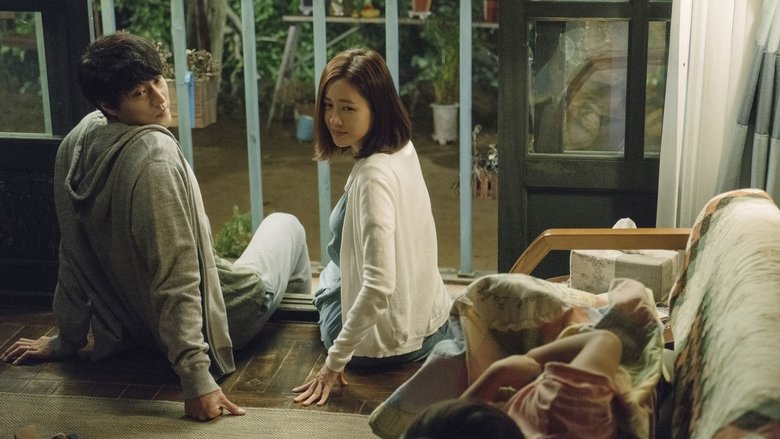
Be With You (Korean title 지금 만나러 갑니다, "Now I Will Meet You") is a 2018 South Korean romantic fantasy drama directed by Lee Jang-hoon. It stars So Ji-sub as Woo-jin, a gentle single father trying to raise his young son Ji-ho alone after his wife Soo-ah (Son Ye-jin) dies unexpectedly.

Before she died, Soo-ah promised that she would come back when the rainy season arrived. A year later, on a rainy day, she does reappear, but she has no memory of her husband, her son or the life they had together. Woo-jin and Ji-ho carefully bring her back into family life. Woo-jin tells her the story of how they met and fell in love, and slowly she falls for him all over again.

The family's second chance has a deadline, though. Everyone understands that Soo-ah may vanish again once the rains stop. The film is a remake of the 2004 Japanese film based on Takuji Ichikawa's novel. It runs 131 minutes and combines melodrama, family comedy and a gently magical premise.


Core Meaning

At its core, Be With You argues that love is a choice you make knowing the cost. Soo-ah's return lets a grieving family say what they never got to say. The film's deeper point is that the time we have with people we love is worth having even when we know it will be short and will end in loss.

The film also treats grief as something to work through rather than escape. Woo-jin has to become a stronger father, Ji-ho has to learn that his mother's death was not his fault, and all three have to accept that a goodbye can be an act of love too.

Thematic DNA

Love as a conscious choice 30%
Grief and healing 25%
Family and parenthood 20%
Memory and rediscovery 15%
Time and fate 10%

Love as a conscious choice

The final revelation shows that Soo-ah chose her life with Woo-jin even though she knew how it would end. That turns the romance from fate into a decision, and it recasts everything the audience has watched.

Grief and healing

Woo-jin and Ji-ho are barely coping when the film begins. Soo-ah's temporary return gives them room to grieve properly, to heal old guilt and to prepare for a life without her.

Family and parenthood

Much of the film is domestic: Soo-ah teaching Ji-ho everyday tasks and Woo-jin learning to manage the household. It is about the small routines that hold a family together.

Memory and rediscovery

Because Soo-ah remembers nothing, Woo-jin has to tell their love story again from the beginning. By the end, love is shown as something that can be rebuilt, not only remembered.

Time and fate

The story loops back on itself, with past and future feeding into each other. It asks whether knowing the future changes how we should live now.

Character Analysis

Woo-jin

So Ji-sub

Archetype: The devoted everyman / grieving widower Key Trait: Gentle, self-effacing devotion

Motivation

To protect his son and to hold on to the wife he lost for as long as the rain lasts.

Character Arc

Woo-jin starts as a shy, overwhelmed single father struggling after his wife's death. Retelling their love story wins Soo-ah's heart again and also restores his own confidence. By the end he is ready to raise Ji-ho by himself.

Soo-ah

Son Ye-jin

Archetype: The returning beloved / time-crossing heroine Key Trait: Warm, brave selflessness

Motivation

To prepare her husband and son to live without her and to make sure they know they were loved.

Character Arc

She comes back with no memory and cautiously falls in love with her family again. The ending reveals that she lived through these events from the other side of time and knowingly chose the life that would lead to her early death.

All 3 characters and cast

Symbols & Motifs

The rainy season

Meaning:

The time the family borrows from fate. Rain stands for mourning, but it also stands for miracles and renewal.

Context:

Soo-ah comes back on a rainy day, and everyone knows she may vanish once the rainy season ends. That puts a natural clock on the family's reunion.

Soo-ah's journal

Meaning:

Memory, foresight and a deliberate choice. It is the key that explains the film's time loop.

Context:

Near the end, the journal reveals how Soo-ah saw her own story, including the line that she survived an accident because Woo-jin and Ji-ho were waiting for her in the future.

The storybook animation

Meaning:

A parent's promise put into the form of a children's fairy tale. It frames the whole film as a story told to comfort a child.

Context:

The film opens with a storybook animation that introduces the promise of Soo-ah's return.

Memorable Quotes

I survived that accident, because you and Ji-Ho were desperately waiting for me in the future.
— Soo-ah

Context

Soo-ah writes this in her journal, which Woo-jin reads near the end of the film.

Meaning

This line explains the film's time loop. It shows that Soo-ah's love was a choice she made with full knowledge of the outcome, not an accident of fate. (The original Korean dialogue was not available in the sources, so the English subtitle-based wording is given.)

Philosophical Questions

Would you choose a love if you knew it would end in early loss?

The ending shows that Soo-ah knew her future and chose Woo-jin and Ji-ho anyway. The film says that time with the people we love is worth its pain.

Is love memory, or can it be reborn without memory?

Soo-ah falls in love again with no memory of her past. That suggests love depends on who people are more than on shared history.

Does knowing the future remove free will?

Because the story loops, it raises the question of whether choices made with foreknowledge are truly free, or whether freedom lies in accepting what we know is coming.

How It Ends

Alternative Interpretations

As a literal time-loop fantasy: Soo-ah really did travel across time, and the reunion is a closed causal loop. Her future experience gives her the courage to choose her past.

Full ending explanation

Cultural Impact

Be With You belongs to a long line of adaptations of Takuji Ichikawa's novel, which has become a touchstone of East Asian fantasy melodrama. The Korean version brought the story to a new audience with two major stars, So Ji-sub and Son Ye-jin. Son was already closely associated with Korean melodrama.

It was a commercial success. It opened at number one with over 100,000 viewers, reached a million admissions in a week (faster than Architecture 101 and The Beauty Inside) and grossed about US$19.7 million. Its success showed that tearjerker romance still had strong box-office appeal in Korea. Critics were mostly positive about the performances and emotional impact, while noting how closely it follows the earlier versions.

Audience Reception

Viewers and critics mostly praised the touching story, heartfelt performances and stunning cinematography. Son Ye-jin and So Ji-sub were singled out for bringing depth and authenticity to their roles. The ending got particular praise as unexpected and satisfying, tying up all loose ends and leaving many viewers in tears.

The main criticism was that the film sticks very closely to the earlier Japanese versions in story and even camera choices, which made some people question whether it adds anything new. Overall, it is widely seen as an effective, crowd-pleasing melodrama and was a clear box-office hit.

Interesting Facts

  • The film is a remake of the 2004 Japanese film Be with You, which was based on a novel by Takuji Ichikawa.
  • It was the third screen adaptation of Ichikawa's 2003 novel, after Nobuhiro Doi's 2004 Japanese film and a 10-part TBS series in 2005.
  • The Korean title 지금 만나러 갑니다 (Jigeum mannareo gamnida) means 'Now I Will Meet You.'
  • Kang Soo-jin's screenplay keeps almost all of the earlier versions' story beats but adds an opening storybook animation.
  • Cinematography is by Cho Sang-yun, editing by Nam Na-yeong and music by Bang Jun-seok.
  • The film drew over 100,000 viewers on its opening day and topped the local box office.
  • It passed one million admissions within seven days, faster than the Korean melodramas Architecture 101 and The Beauty Inside.
  • It runs 131 minutes and grossed about US$19.7 million.

Easter Eggs

Camera choices that echo the 2004 Japanese film

Critics pointed out that some shots are so close to Nobuhiro Doi's 2004 version that the film plays more like a direct remake than a fresh adaptation. Fans of the original can pick out these deliberate visual nods.

Frequently Asked Questions

Explore More About This Movie

Dive deeper into specific aspects of the movie with our detailed analysis pages

Comments (0)

Leave a comment

No comments yet. Be the first to share your thoughts!

Similar Movies