Clarkson's Farm
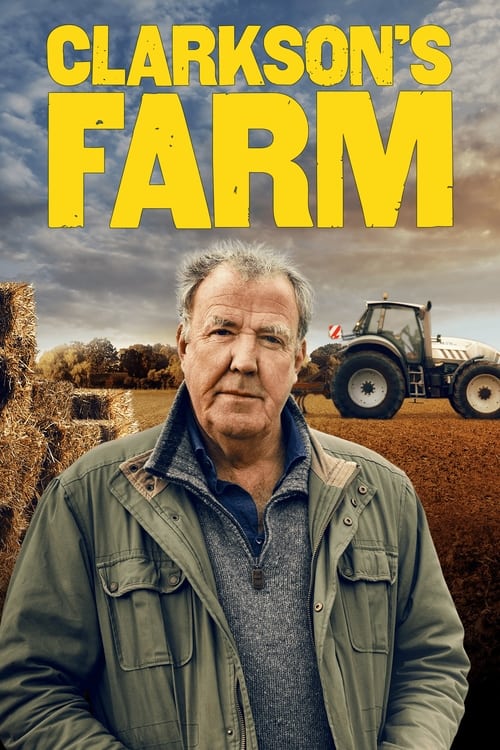
A comedic docu-series capturing the chaotic, heartfelt clash between a bombastic TV host and the unforgiving, beautiful reality of British farming.
Clarkson's Farm

Clarkson's Farm

"It’s the pig one."

11 June 2021 — 06 June 2025 United Kingdom 4 season 32 episode Returning Series ⭐ 8.5 (346)
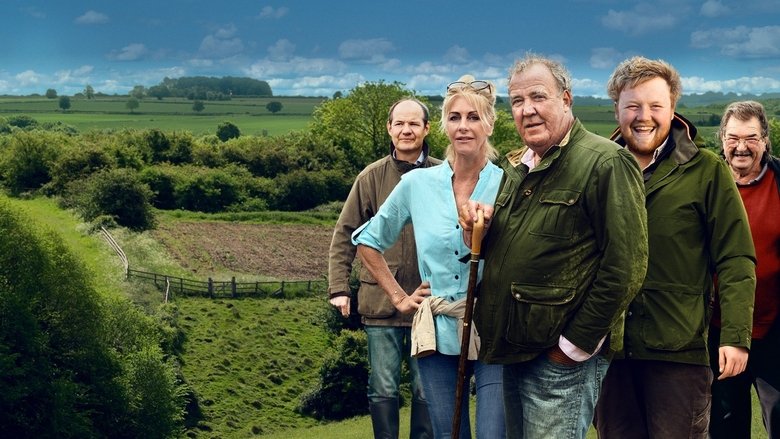
Cast: Jeremy Clarkson, Kaleb Cooper, Charlie Ireland, Lisa Hogan, Gerald Cooper
Comedy Reality
The Harsh Reality of Farming Bureaucracy vs. Common Sense Man vs. Nature Community and Mentorship

Overview

"Clarkson's Farm" chronicles the hilarious and often poignant efforts of outspoken television personality Jeremy Clarkson as he attempts to manage a 1,000-acre farm in the Cotswolds. Having owned Diddly Squat Farm since 2008, Clarkson decides to take over the day-to-day operations himself in 2019 after the previous farmer retires. With zero prior experience, he dives headfirst into the complex world of agriculture, facing relentless challenges from unpredictable weather, stubborn livestock, uncooperative crops, and stifling local council bureaucracy.

The series follows Clarkson and his endearing team through the annual farming cycle, from the chaotic planting seasons to the make-or-break harvests. Each season introduces new, ambitious, and often ill-advised schemes to make the farm profitable, from rearing sheep and cows to opening a farm shop and a restaurant, and even venturing into pig farming and mushroom cultivation. Aided by a cast of genuine local characters, including the wonderfully exasperated young farmer Kaleb Cooper, the series is an authentic, witty, and surprisingly educational look at the immense struggles and small triumphs of modern British farming.

Core Meaning

The core meaning of "Clarkson's Farm" is a profound and accessible exploration of the immense, often invisible, struggles of modern British farmers. Through the eyes of an inept but passionate amateur, the series demystifies the origins of our food, highlighting the relentless hard work, financial precarity, and bureaucratic hurdles that define agricultural life. It serves as both a critique of a system that often fails its food producers and a celebration of the resilience, community, and deep-seated connection to the land that sustains them. The show argues that farming is not a quaint hobby but a complex, vital, and undervalued science, urging viewers to reconsider their relationship with food and the people who grow it.

Thematic DNA

The Harsh Reality of Farming 35%
Bureaucracy vs. Common Sense 25%
Man vs. Nature 20%
Community and Mentorship 20%

The Harsh Reality of Farming

This is the central theme, consistently showcased across all seasons. Clarkson's initial romanticism is quickly shattered by relentless challenges: dreadful weather ruining crops, the astronomical cost of equipment, the complexities of soil science, diseases affecting livestock (like bovine TB), and the minuscule profit margins. Season 1 culminates in a meager profit of just £144, powerfully illustrating the financial precarity farmers face. Later seasons delve deeper into these struggles, from the emotional toll of losing piglets to the economic necessity of selling beloved cows after the forced closure of his restaurant.

Bureaucracy vs. Common Sense

A significant and recurring source of conflict is Clarkson's endless battle with local council planning regulations and government red tape. His attempts to diversify—most notably by opening a farm-to-table restaurant in an old lambing barn—are consistently thwarted by planning restrictions and enforcement notices, which he portrays as illogical and stifling to small farm businesses. This theme resonated so strongly that it reportedly contributed to a change in UK law, nicknamed "Clarkson's Clause," making it easier for farmers to repurpose existing buildings.

Man vs. Nature

The series vividly portrays the farmer's perpetual struggle against the forces of nature. Clarkson's plans are constantly at the mercy of the weather, from droughts that stunt crop growth to torrential rains that make fields unworkable and threaten harvests. The theme also explores the balance between farming and conservation ('wilding' parts of the farm) and the emotional connection and responsibility Clarkson develops towards his animals, transforming him from a detached owner to a genuinely caring, albeit clumsy, shepherd and herdsman.

Community and Mentorship

Despite his arrogance, Clarkson's journey is defined by his reliance on the expertise of others. The show highlights the importance of community and local knowledge in farming. His relationship with Kaleb Cooper evolves from a simple employer-employee dynamic into a powerful, comedic mentorship, with the younger, experienced farmer constantly schooling the older celebrity. Similarly, land agent Charlie Ireland provides essential (if often sobering) financial and strategic advice, while Gerald Cooper represents a lifetime of unspoken, ingrained farming wisdom.

Character Analysis

Jeremy Clarkson

Jeremy Clarkson

Archetype: The Antihero / The Fool
Key Trait: Obstinate determination

Motivation

Initially, his motivation seems to be a mix of ego, boredom, and creating content for a TV show. As the series progresses, his primary motivation shifts to a desperate, earnest desire to make Diddly Squat Farm a financially viable business and to succeed against the odds. He becomes driven by a newfound sense of responsibility to his land, his animals, and his team, and a desire to prove that he can be a real farmer.

Character Arc

Clarkson begins his journey as an arrogant, ignorant celebrity playing at being a farmer, viewing the endeavor as another grand adventure. Across the seasons, he undergoes a significant transformation. The immense difficulty and financial hardship of farming humble him. He develops a genuine, deep-seated passion for the land and a profound respect for the farming community. His initial bluster is gradually replaced by genuine emotional investment, seen when he is heartbroken by the death of his piglets or forced to sell his cows. He evolves from a caricature into a passionate, albeit still clumsy, advocate for British farmers.

Kaleb Cooper

Kaleb Cooper

Archetype: The Mentor / The Voice of Reason
Key Trait: Unyielding pragmatism

Motivation

Kaleb's motivation is simple and unwavering: to farm correctly and efficiently. He has an immense passion for agriculture and a deep-seated intolerance for foolishness, particularly Clarkson's. He is driven by a desire to see the job done right, to maintain the tramlines perfectly straight, and to ensure the farm doesn't go bankrupt due to his boss's harebrained schemes.

Character Arc

Kaleb starts as a young, straight-talking, no-nonsense farmhand who is frequently exasperated by Clarkson's incompetence. He is the embodiment of practical, local knowledge versus Clarkson's misguided book-learning. As the series progresses, Kaleb grows in confidence, becoming a breakout star and a national farming personality. His arc sees him step beyond the confines of Chadlington, launching a nationwide tour and becoming an entrepreneur, yet he remains grounded in his farming roots and his role as Clarkson's indispensable, and often comically furious, right-hand man.

Charlie Ireland

Charlie Ireland

Archetype: The Herald / The Skeptic
Key Trait: Sobering realism

Motivation

Charlie is motivated by professional duty and a desire to run the farm as a sustainable, compliant, and hopefully profitable business. His job is to translate the complexities of agricultural law and economics for Clarkson, and to steer him away from financial ruin and legal trouble. He is the brakes to Clarkson's accelerator.

Character Arc

Charlie, often sarcastically called "Cheerful Charlie" by Clarkson, is the professional land agent and agronomist who brings the sobering reality of rules, regulations, and financial consequences to Clarkson's grand plans. He remains a consistent presence throughout the series, his arc less about personal change and more about serving as the constant, necessary anchor to reality. He is the voice of spreadsheets and regulations in a world where Clarkson wants to operate on impulse. His recurring appearances to deliver bad financial news or complex bureaucratic obstacles are a key structural element of the show.

Lisa Hogan

Lisa Hogan

Archetype: The Supporter / The Business Mind
Key Trait: Pragmatic resilience

Motivation

Lisa is motivated by a desire to make the farm's direct-to-consumer business a success. She is passionate about the farm shop and developing new product lines. She also provides crucial emotional support for Jeremy, motivated by her love for him and her growing connection to the Diddly Squat enterprise.

Character Arc

Lisa, Clarkson's partner, starts as a supportive girlfriend but quickly carves out her own essential role in the farm's ecosystem. Her arc is one of growing business acumen as she takes charge of the Diddly Squat Farm Shop. She becomes the face of the farm's diversification efforts, dealing with stock, sales, and the logistical nightmare of the shop's popularity. She also acts as Clarkson's emotional sounding board, sharing in the triumphs and, more visibly, the heartbreaks, such as the death of the piglets and the sale of the cows.

Gerald Cooper

Gerald Cooper

Archetype: The Sage
Key Trait: Incomprehensible wisdom

Motivation

Gerald is motivated by a lifetime of habit and a deep, intrinsic understanding of his craft. He simply does what needs to be done on the farm, the way it has always been done. His joy comes from his work and his interactions with the team, even if they can't understand a word he's saying.

Character Arc

Gerald is the farm's specialist in building and maintaining dry stone walls, and a beloved local character known for his completely indecipherable West Country accent. His role is consistent throughout the series as a symbol of traditional, lifelong farming knowledge. His personal arc becomes a major emotional focal point in Season 3, when he is diagnosed with cancer. His eventual recovery and return to the farm is a moment of profound joy and relief for the entire team and the audience, highlighting the deep bonds of the Diddly Squat community.

Symbols & Motifs

The Lamborghini Tractor

Meaning:

Symbolizes Clarkson's initial approach to farming: arrogant, impractical, and based on his "Top Gear" persona of prioritizing power and style over functionality. It represents the clash between his old world of high-performance machinery and the practical, often humble, realities of agriculture.

Context:

Introduced in the very first episode, the oversized and overly complex Lamborghini R8 270 DCR is a constant source of trouble. It's too big for the barn, too complicated to operate, and frequently mocked by Kaleb. Its presence throughout the series is a running gag and a continual reminder of Clarkson's journey from a clueless amateur to a more seasoned, practical farmer.

Diddly Squat Farm Shop

Meaning:

Represents Clarkson's entrepreneurial spirit and his attempts to bridge the gap between producer and consumer. It symbolizes the modern farmer's need for diversification to survive, moving beyond traditional commodity production to create a direct market and a brand.

Context:

Established in Season 1, the farm shop is a central hub of activity throughout the series. Clarkson's partner, Lisa Hogan, is primarily in charge of it. Its success and the chaotic queues it generates become a recurring plot point, leading to conflicts with the local council over traffic and planning permissions. It's the physical embodiment of his efforts to make the farm profitable.

The Weather

Meaning:

The weather is an ever-present, uncontrollable antagonist, symbolizing the fundamental uncertainty and powerlessness that farmers face. It dictates the entire rhythm of farm life, representing the forces of nature that can nullify the best-laid plans and hardest work in an instant.

Context:

In every season, the weather is a critical factor. The intense drought in one season and the relentless rain in another directly impact crop yields and financial outcomes. Conversations about the forecast are constant, and the stunning cinematography often juxtaposes the beauty of the countryside with the ominous threat of changing skies, emphasizing its dominance over the narrative.

Memorable Quotes

You rural halfwit!

— Jeremy Clarkson

Context:

Said numerous times across all seasons, typically after Kaleb points out a very obvious and expensive mistake Clarkson has made, such as drilling tramlines incorrectly or buying the wrong piece of equipment.

Meaning:

This is Clarkson's signature, exasperated insult directed at Kaleb. It's significant because it's entirely ironic; Kaleb is the farming expert, and Clarkson is the clueless one. The phrase encapsulates their comedic, bickering relationship where Clarkson's urban arrogance clashes with Kaleb's rural expertise.

That is as straight as a roundabout.

— Kaleb Cooper

Context:

This quote is used in Season 1 when Kaleb inspects Jeremy's first attempts at cultivating a field. The sight of the wobbly, chaotic lines prompts this hilarious and memorable assessment of his boss's skills.

Meaning:

Kaleb's scathing critique of Clarkson's attempts to plow or drill a straight line in a field. It perfectly captures Kaleb's obsession with precision in farming and his utter disdain for Clarkson's shoddy workmanship. It has become one of his most iconic catchphrases.

I'm basically Alan Sugar in wellies.

— Jeremy Clarkson

Context:

Clarkson often says this when one of his business ideas, like the farm shop or making chutney, shows a glimmer of success, before Cheerful Charlie inevitably arrives with a spreadsheet to prove he's losing money.

Meaning:

A classic piece of Clarkson hyperbole, comparing himself to the famously tough British business magnate. It reveals his self-perception as a shrewd entrepreneur, which is immediately and humorously undercut by the financial failures and practical disasters that constantly plague the farm.

I've grown a thing!

— Jeremy Clarkson

Context:

Said with genuine delight in Season 1 after his wasabi plants or other crops begin to successfully sprout, representing his first tangible victory against the challenges of agriculture.

Meaning:

This quote captures the pure, almost childlike, wonder and pride Clarkson discovers in the simple act of successful farming. For a man used to explosive, grand-scale adventures, the simple achievement of cultivating a vegetable becomes a profound moment, symbolizing his fundamental shift in perspective.

Why does everybody shout at me all the time? I literally get up in the morning and people shout at me.

— Jeremy Clarkson

Context:

This is a recurring sentiment, often expressed after a particularly intense telling-off from Kaleb about a farming error, or from Charlie about a financial misstep, or from Lisa about a chaotic decision regarding the shop.

Meaning:

A moment of comedic self-pity that highlights Clarkson's position as the bumbling amateur at the center of the storm. It's funny because the shouting is almost always a direct and justified consequence of his own mistakes, but he frames it as though he's an innocent victim.

Episode Highlights

Tractoring

S1E1

The episode that started it all. Clarkson, fresh from taking over the farm, decides he needs a tractor. Eschewing all sensible advice, he imports a monstrously large and complicated Lamborghini. This single decision perfectly establishes the show's central comedic dynamic: Clarkson's grandiose, impractical ideas clashing with the grounded reality of farming, as personified by the instantly memorable Kaleb Cooper.

Significance:

This episode masterfully sets the tone and introduces the key players and core conflicts of the entire series. The Lamborghini tractor becomes a running gag and a symbol for Clarkson's entire learning curve. It lays the foundation for the Clarkson-Kaleb relationship that is the heart of the show.

Harvesting

S1E8

The culmination of Clarkson's first year in farming. After a season of mishaps, bad weather, and steep learning curves, the harvest is a race against time. The episode brilliantly captures the tension and immense pressure of this critical period. It concludes with the now-famous reveal of the farm's total profit for the year: a paltry £144.

Significance:

This episode was a watershed moment for public understanding of farming. The £144 profit figure became a major talking point, viscerally demonstrating the economic fragility of British agriculture to a mainstream audience. It cemented the show's purpose beyond just comedy.

Cowering

S2E2

Clarkson decides to get into the cattle business, buying a herd of cows, including one he has a particular dislike for. This episode shows his attempts to build a fence and manage the new animals, leading to predictable chaos. More significantly, it introduces the central project of Season 2: his plan to open a restaurant to sell his own beef and lamb.

Significance:

This episode kicks off the major story arc of the second season – the battle with the local council over the restaurant. It also deepens Clarkson's emotional connection to the animals on his farm, a theme that becomes increasingly important.

Climaxing

S2E8

Despite the council's rejection, Clarkson and Lisa find a loophole and frantically rush to open their Diddly Squat restaurant in a dilapidated barn. The episode is a chaotic whirlwind of last-minute construction, menu planning, and navigating regulations, culminating in the triumphant, if short-lived, opening night.

Significance:

This episode is the peak of the "us vs. them" battle against bureaucracy. It's a story of defiance and ingenuity that showcases the team's ability to pull together under pressure. The restaurant's eventual forced closure in Season 3 makes this temporary victory all the more poignant.

Porking

S3E2

Embarking on a pig farming venture, Clarkson becomes deeply attached to his litter of piglets. The episode takes an unexpectedly heartbreaking turn as many of the piglets die, despite his and Lisa's frantic efforts to save them. Clarkson is shown to be genuinely devastated, marking a new level of emotional depth for the series.

Significance:

This episode powerfully conveys the emotional toll of livestock farming, where life and death are a daily reality. Clarkson's raw, unfiltered grief was a major talking point, showing a vulnerable side to his personality and highlighting the often-unseen heartbreaks of the profession.

Calculating

S3E8

The finale of the third season brings together the year's successes and failures. A major plotline involving a competition between Clarkson (focusing on the 'unfarmed' land) and Kaleb (on the arable crops) is resolved. The episode features the emotional return of Gerald Cooper after his cancer treatment, and the final profit calculations for the year are revealed.

Significance:

This episode is a powerful emotional rollercoaster, balancing the joy of Gerald's return with the ever-present financial tension. It reinforces the core themes of community, resilience, and the constant struggle for profitability in the face of adversity, ending the season on a note of hard-won hope.

Philosophical Questions

What is the true value of food and the labor that produces it?

The series constantly forces the audience to confront the disconnect between the price of food in a supermarket and the immense cost, labor, and risk involved in its production. By meticulously detailing every expense—from seeds and fertilizer to veterinary bills and fuel—and then revealing the minuscule profits, the show philosophically questions a global economic system that undervalues its most essential workers. Clarkson's journey from a price-insensitive consumer to a price-obsessed producer highlights this stark disparity.

Can humanity truly control nature, or are we always at its mercy?

Despite deploying massive machinery, advanced chemical science (via his agronomist), and detailed plans, Clarkson is repeatedly humbled by forces beyond his control. The weather, disease, and the simple, stubborn refusal of animals to cooperate serve as constant reminders of nature's supremacy. The series explores the idea that farming is not an act of domination over nature, but rather a precarious and perpetual negotiation with it.

Where is the line between beneficial regulation and stifling bureaucracy?

Clarkson's frequent and bitter clashes with the local council raise fundamental questions about the role of governance in rural life. While the regulations are ostensibly in place for public good (environmental protection, traffic management), the show portrays them as inflexible, illogical, and detrimental to the survival of small businesses. It provokes a debate about whether such bureaucracy ultimately serves the community or hinders the innovation and diversification needed for modern farms to thrive.

Alternative Interpretations

While overwhelmingly popular, "Clarkson's Farm" has faced some alternative interpretations and criticisms. One perspective is that the show presents a romanticized and privileged view of farming. Critics point out that Clarkson's immense personal wealth (£48 million has been reported) provides a safety net that is entirely unrealistic for the vast majority of farmers. His ability to absorb huge financial losses on failed projects (like the restaurant) or expensive machinery is a luxury others do not have, potentially downplaying the true severity of financial ruin that threatens real farm businesses.

Another point of debate revolves around the show's authenticity. While Clarkson and Kaleb Cooper insist the show is unscripted, some critics and viewers suggest that certain scenarios feel contrived or exaggerated for comedic effect, following a familiar "scripted reality" format similar to "Top Gear." The convenient timing of Cheerful Charlie's appearances or the dramatic escalation of minor problems are sometimes seen as being carefully produced rather than purely spontaneous. However, the consensus remains that the core farming activities and the emotional stakes are genuine.

Cultural Impact

"Clarkson's Farm" has had a surprisingly profound cultural impact, far exceeding expectations for a celebrity reality show. Its primary influence has been in raising mainstream awareness of the plight of British farmers. The series has been widely praised by the farming community for its honest, unfiltered depiction of their daily struggles, from financial hardship and bureaucratic nightmares to the emotional toll of the work. Farmer and author James Rebanks famously stated the show "has done more for farmers in one series... than Countryfile achieved in 30 years."

This heightened awareness has been termed the "Clarkson Effect." It has led to a significant increase in public support for local produce and farm shops, with retailers noting a spike in sales of British goods after new seasons air. Perhaps most significantly, the show has inspired a new generation to consider careers in agriculture, with agricultural universities and colleges across the UK reporting a sharp rise in applications. The show's portrayal of Clarkson's battles with planning laws also brought national attention to the issue of farm diversification, allegedly influencing the creation of a new planning law known as "Clarkson's Clause" to help farmers convert unused buildings.

Critically, the show has been a massive success, becoming one of Amazon Prime Video's most-watched original series, lauded for its humour, heart, and stunning cinematography. It successfully repurposed Clarkson's bombastic television persona into a vehicle for empathy, making the complexities of modern farming accessible and compelling for a global audience. Its legacy is a revitalized public conversation about food security, land management, and the crucial, yet often overlooked, role of farmers in society.

Audience Reception

"Clarkson's Farm" has received overwhelmingly positive reception from audiences, becoming a phenomenal success for Amazon Prime Video and its highest-rated original series ever. Viewers have praised its perfect blend of humour, genuine heart, and educational insight into the world of farming. The authentic, often hilarious, chemistry between Jeremy Clarkson and Kaleb Cooper is consistently cited as a highlight, with Kaleb becoming a beloved breakout star.

Audiences across all seasons have lauded the show for its honesty in depicting the brutal realities and financial hardships of farming, something many viewers were previously unaware of. The emotional moments, such as the death of the piglets in Season 3 or Gerald's health scare, have been praised for showing a raw vulnerability that deepens the show's impact. While some critics express mild skepticism about how much of the show might be contrived for television, the general audience consensus is that its core authenticity shines through. The series has cultivated a loyal and passionate fanbase that eagerly awaits each new season, connecting deeply with the characters and their ongoing struggle to make Diddly Squat Farm a success.

Interesting Facts

  • Jeremy Clarkson bought the farm in 2008, but only decided to run it himself in 2019 when the farmer who had managed it retired.
  • The show's success has had a tangible impact, dubbed the "Clarkson Effect," leading to a surge in applications for agricultural colleges in the UK.
  • The series is largely unscripted. Clarkson and the cast have repeatedly stated that while they have a vague plan for filming, events unfold naturally and are not pre-written.
  • Kaleb Cooper, despite his extensive farming knowledge, had rarely left his home village of Chadlington before the show, and his trip to London in Season 1 was a major event for him.
  • Diddly Squat Farm's first-year profit, as revealed in the show, was a shockingly low £144.
  • The popularity of the show has led to massive queues and traffic jams around the real Diddly Squat Farm Shop in Oxfordshire.
  • Andy Wilman, the long-time producer of "Top Gear" and "The Grand Tour," also serves as an executive producer on "Clarkson's Farm," which contributes to its similar visual and editing style.
  • A viewer-started GoFundMe campaign raised nearly £40,000 for a local dairy farmer, Emma Ledbury, after her struggle with bovine TB was featured on the show.

⚠️ Spoiler Analysis

Click to reveal detailed analysis with spoilers

Frequently Asked Questions

Explore More About This Movie

Dive deeper into specific aspects of the movie with our detailed analysis pages

Comments (0)

Leave a comment

No comments yet. Be the first to share your thoughts!