Skip to content
Beyond Evil
Set in a perpetually damp, claustrophobic South Korean backwater, this bleak psychological noir drowns viewers in suffocating paranoia, where two fractured detectives hunt monsters through a haunting labyrinth of rotting reed fields and fractured mirrors.
Beyond Evil

Beyond Evil

괴물

"These days... It's dangerous to trust someone."

19 February 2021 — 10 April 2021 South Korea 1 season 16 episode Ended 8.5 (189)

Cast: Shin Ha-kyun, Yeo Jin-goo, Choi Dae-hoon, Choi Sung-eun, Kim Shin-rock

Drama Crime Mystery The Nature of Evil & Systemic Complicity Prolonged Grief, Trauma, and Ambiguous Loss Moral Ambiguity & "Becoming the Monster" Reluctant Trust and Mutual Redemption

Overview

Beyond Evil (괴물) centers on the quiet rural town of Manyang in Gyeonggi Province, which was torn apart twenty years prior by an unsolved cold case involving serial murders and the disappearance of Lee Yu-yeon. Lee Dong-sik (Shin Ha-kyun), Yu-yeon’s twin brother and a former star Seoul detective who was once the prime suspect, now serves as an assistant inspector at the humble Manyang Police Substation. Broken by grief and viewed with lingering suspicion by his neighbors, Dong-sik lives a solitary existence obsessed with finding his sister's remains.

The status quo is shattered when Han Joo-won (Yeo Jin-goo), an elite, hyper-rigid young detective and son of the candidate for National Police Agency Commissioner, transfers to Manyang. Joo-won harbors a hidden agenda, suspecting Dong-sik of being the serial killer. When a new murder occurs mirroring the twenty-year-old cold case—with severed fingertips left behind—the hostile partners are forced into an uneasy alliance.

As their investigation unfolds across sixteen episodes, the narrative transforms from a traditional "whodunit" into an intricate psychological study. Dong-sik and Joo-won uncover a dense web of local secrets, municipal real-estate corruption, police leadership cover-ups, and shared guilt, forcing both men to confront the monsters within themselves and their institution.

Core Meaning

The central core of Beyond Evil is captured in its original Korean title, Goemul (怪物), which translates to "Monster". Through its complete story arc, the creators ask a profound question: "Who is the monster? Is it you, is it me, or is it us?"

The series demonstrates that monsters are not merely born as isolated psychopaths like serial killer Kang Jin-mook. Rather, monstrousness is bred and sustained by institutional self-preservation, political ambition, real-estate greed, and a community's willingness to look away from evil for comfort or progress. Beyond solving a murder mystery, the creators focus heavily on the enduring psychological trauma of victims' families. True justice requires confronting systemic corruption, acknowledging personal guilt, and breaking the cycle of silence—even when it destroys one's own status or family legacy.

Thematic DNA

The Nature of Evil & Systemic Complicity 30%
Prolonged Grief, Trauma, and Ambiguous Loss 25%
Moral Ambiguity & "Becoming the Monster" 25%
Reluctant Trust and Mutual Redemption 20%

The Nature of Evil & Systemic Complicity

The series dismantles the idea of evil as an isolated anomaly. While it begins with the hunt for a serial killer, it expands to show how municipal officials, police commanders, and real-estate developers actively covered up evidence to protect property values and political promotions. Systemic complicity turns ordinary leaders into functional monsters.

Prolonged Grief, Trauma, and Ambiguous Loss

Focusing on the families left behind, the show explores how unresolved disappearances trap loved ones in psychological purgatory. Dong-sik's twenty-year obsession with finding Yu-yeon’s body illustrates how ambiguous loss freezes life. Healing can only begin when the truth is unearthed and dignity is restored to the victims.

Moral Ambiguity & "Becoming the Monster"

Drawing on the Nietzschean motif of fighting monsters, both protagonists cross legal and ethical boundaries. Dong-sik manipulates evidence to force a cold case open, while Joo-won abandons his rigid legalism to entrap corrupt elites. The series questions whether clean hands are possible when fighting dirty systems.

Reluctant Trust and Mutual Redemption

Beginning with intense hostility, mutual profiling, and psychological warfare, Dong-sik and Joo-won’s partnership slowly evolves into deep mutual empathy. Their bond becomes the emotional anchor of the series, showing that human connection and shared accountability are the ultimate antidotes to isolation and despair.

Character Analysis

Lee Dong-sik

Shin Ha-kyun

Archetype: Tragic Antihero / Reluctant Vigilante Key Trait: Eerie, manic laughter used as a shield against overwhelming grief.

Motivation

Finding his twin sister’s body and bringing every complicit person to justice.

Character Arc

Traumatized for twenty years as both a grieving brother and primary suspect, Dong-sik acts like an unpredictable "nutcase" masking immense grief. He moves from reckless, solitary vigilante tactics to trusting Joo-won, ultimately uncovering the full truth, accepting prison time for his own illegal acts, and regaining a genuine smile.

Han Joo-won

Yeo Jin-goo

Archetype: Fallen Idealist / Elite Detective Hero Key Trait: Uncompromising, sharp moral rectitude.

Motivation

Catching the serial killer to prove himself, which evolves into an unyielding quest for absolute truth regardless of personal cost.

Character Arc

An arrogant, germaphobic stickler for protocol who views small-town officers with condescension. After carrying intense guilt over a failed sting operation and discovering his father's involvement in the crime, he discards his cold elitism, learns moral flexibility, and risks his career to bring down his own father.

All 5 characters and cast

Symbols & Motifs

Severed Fingertips / Missing Fingerprints

Meaning:

Symbolizes the total erasure of a victim's identity and dignity by the killer.

Context:

Dong-sik's later replication of this ritual serves as a desperate symbol to force a neglected system to pay attention.

Simju-san Reed Fields

Meaning:

A visual metaphor for hidden, buried secrets beneath Manyang's tranquil exterior.

Context:

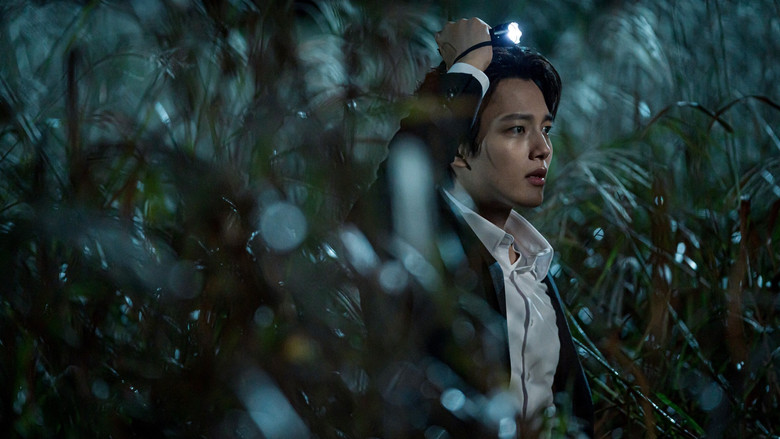
It represents fog, confusion, and the physical graves where victims were abandoned.

Manyang Butcher Shop & Meat Hooks

Meaning:

Represents raw human vulnerability and exposure.

Context:

The slicing of raw meat mirrors how cold-blooded power brokers carve up human lives for profit.

Mirrors and Decalcomania Visuals

Meaning:

Symbolizes duality, self-reflection, and how the two leads reflect each other's moral journeys.

Context:

Camera setups frequently feature glass reflections, interrogation room mirrors, and symmetrical framing between Dong-sik and Joo-won.

The Underground Cellar / Basement

Meaning:

Represents repressed trauma and the dark subconscious.

Context:

Dong-sik isolates himself here with murder boards, and ironically, it is where his sister’s remains were buried beneath his own floorboards.

Memorable Quotes

괴물은 누구인가? 너인가, 나인가, 우리인가?
— Overarching Tagline / Narrated motif

Context

Prominently featured across promotional material and key internal monologues throughout the series.

Meaning

Frames the central thematic question of the drama.

내가 사람을 죽였어... 농담이야. 왜 그렇게 진지한가? 딱 친구 없을 타입이야.
— Lee Dong-sik

Context

Season 1, Episode 2; Dong-sik taunting Joo-won inside the police station.

Meaning

Demonstrates Dong-sik's unsettling psychological mind games used to test and provoke Joo-won.

All 6 quotes

Episode Highlights

The Appearance

S1E1

Establishes the claustrophobic setting of Manyang, the hostile dynamic between Dong-sik and Joo-won, and the discovery of skeletal remains in the reed field.

Significance:

Sets the series' tone and places Dong-sik simultaneously as protagonist and prime suspect.

Cried

S1E4

Follows the disappearance of Kang Min-jung. Features a single-take tracking shot of Joo-won having a panic attack and Joo-won’s dramatic press conference declaring a serial killer in Manyang.

Significance:

Shifts the story into high gear as Joo-won publicly breaks police protocol.

Catch

S1E7

Rated as one of the best episodes. Reveals Kang Jin-mook secretly observing Min-jung and shows Dong-sik's extreme maneuvers to trap the killer.

Significance:

Realigns the viewer's understanding of Dong-sik's actions.

Caught

S1E8

The climax of the local serial killer arc; Kang Jin-mook is arrested for murdering his daughter and other women.

Significance:

Resolves the immediate "whodunit" mystery at the midpoint, pivoting the series toward high-level institutional corruption.

Sink

S1E10

Kang Jin-mook dies in his police cell under staged suicide conditions. Dong-sik and Joo-won fully cement their alliance.

Significance:

Shifts the target from local serial murder to police leadership cover-ups.

Tighten

S1E11

Dong-sik discovers his twin sister Yu-yeon's skeleton buried behind his own basement wall.

Significance:

Delivers the primary emotional resolution for Dong-sik's twenty-year search while revealing a separate hit-and-run crime.

Ask

S1E14

Unspools the full sequence of events on the night Yu-yeon died, exposing that Han Ki-hwan ran over Yu-yeon with his car.

Significance:

Forces Joo-won into the ultimate moral test of targeting his own father.

Catch / Caught

S1E16

Series finale. Joo-won wiretaps his father’s confession; all conspirators are arrested, and Dong-sik surrenders to Joo-won for evidence tampering.

Significance:

Delivers complete resolution, emphasizing legal accountability and psychological healing.

Philosophical Questions

Do noble ends justify illegal means in the pursuit of justice?

Explored through Dong-sik placing Min-jung's severed fingertips at the minimart to force an investigation. The show asks whether breaking procedural law is morally acceptable when institutional apathy protects killers.

What defines a true "monster"?

Contrasts Kang Jin-mook (a psychopathic serial killer) with Han Ki-hwan (a respected police official who runs over a victim and covers it up for political gain). The show examines whether respectable systemic corruption is more monstrous than overt murder.

Is true justice possible without self-accountability?

Answered in the finale when Dong-sik and Joo-won insist on accepting legal consequences for their own infractions rather than walking away clean.

Alternative Interpretations

The Psychological Dualism Reading: Dong-sik and Joo-won represent two halves of a single fragmented psyche restoring balance. Dong-sik represents emotional grief and chaos, while Joo-won represents intellect, order, and law. Only by combining their perspectives can justice be achieved.

Full ending explanation

Cultural Impact

Released in early 2021, Beyond Evil emerged during a golden era of South Korean cable psychological thrillers. It addressed a real-world legal issue in South Korea: missing adult cases are often categorized by law enforcement as "voluntary runaways," preventing official police searches. Shin Ha-kyun specifically highlighted in interviews that he took the role to shed light on missing adults and the forgotten pain of their families.

The series established a gold standard for K-drama thriller writing, praised internationally for avoiding plot holes and makjang tropes. It cemented Shin Ha-kyun's legendary acting status and proved Yeo Jin-goo’s capability in intense, adult dramatic roles.

Audience Reception

Praise: Universally lauded for Shin Ha-kyun and Yeo Jin-goo’s acting synergy, Kim Su-jin’s airtight, plot-hole-free screenplay, and Sim Na-yeon’s atmospheric direction. The OST and cinematography were widely commended.

Criticism: Some viewers noted that the first 3-4 episodes were slow-burning and confusing due to Dong-sik’s erratic behavior. Others felt the mid-series transition from a serial killer mystery to political redevelopment corruption slightly altered the show's initial visceral tone.

Overall Verdict: Regarded by critics and audiences as a masterpiece of Korean television, winning Best Drama at the Baeksang Arts Awards and maintaining high user ratings globally.

Interesting Facts

  • Won 3 major trophies at the 57th Baeksang Arts Awards: Best Drama, Best Screenplay (Kim Su-jin), and Best Actor (Shin Ha-kyun), receiving 7 total nominations.
  • Written by Kim Su-jin (Mad Dog) and directed by Sim Na-yeon (At Eighteen), bringing a female creative leadership that focused on victim dignity and grief rather than gratuitous gore.
  • Shin Ha-kyun was dubbed 'the actor who acts with his blood vessels' by critics for naturally inducing bloodshot eyes during high-intensity scenes without artificial drops.
  • During cold rain shoots, 23-year-old Yeo Jin-goo insisted on performing without warm padding; when his eyes swelled from pouring water, he lightheartedly joked to crew, 'I'm not crying, rain just got in my eyes!'.
  • JTBC published a 3-volume script set including 'Writer's Secret Notes,' featuring mock autopsy reports, police case files, and character profiles used by the cast.
  • Premiered at 4.5% nationwide cable rating and grew steadily through word-of-mouth praise to peak at a series-high 6.0% for its finale.

Easter Eggs

Episode 1 Voice Message Foreshadowing

In Episode 1, Dong-sik leaves a voicemail for Kang Min-jung warning her that if she touches his phone, he will cut off her fingers. This seemingly dark joke foreshadows the killer's signature move and Dong-sik's later desperate placement of her fingertips at the minimart.

Han Ki-hwan's Static Microphone

During a parliamentary hearing where Chief Han Ki-hwan states that society 'must not give a microphone to criminals,' his microphone emits harsh static—a visual/audio hint that he is a criminal hiding in plain sight.

Symmetrical Decalcomania Framing

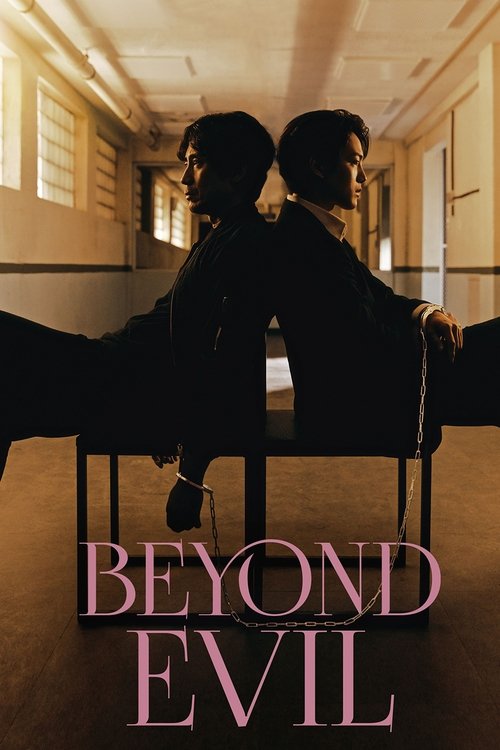
Cinematographer Jang Jong-kyung deliberately framed Dong-sik and Joo-won in mirrored postures across tables, car windows, and interrogation rooms, visual representations of the promotional poster where they are handcuffed together.

The Deer Paintings Motif

Park Jung-je repeatedly draws deer in dark forests. In Korean folklore, deer represent innocence and vulnerability, mirroring Jung-je's fragile state under his mother's control.

Frequently Asked Questions

Explore More About This Movie

Dive deeper into specific aspects of the movie with our detailed analysis pages

Comments (0)

Leave a comment

No comments yet. Be the first to share your thoughts!

Similar Movies