Skip to content
Slow Horses
A grimly comedic, rain-soaked espionage thriller pulsating with bitter defiance and bruised hope, operating like a filthy, sputtering neon tube buzzing in a London alleyway that refuses to die out amidst the encroaching dark.
Slow Horses

Slow Horses

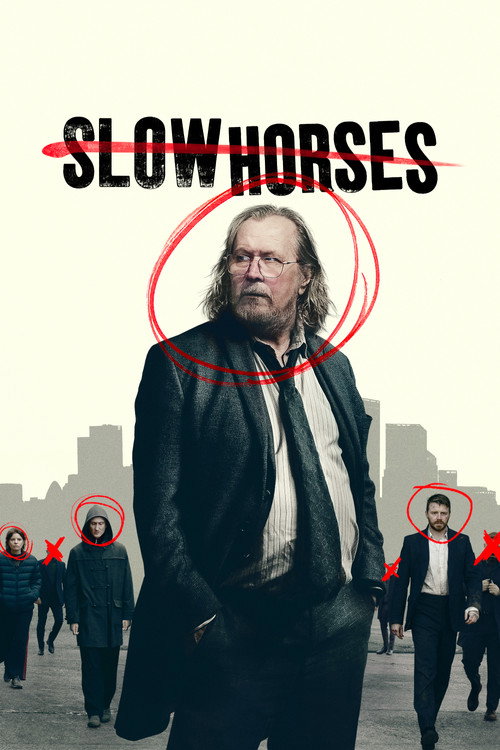
"They finally made the hit list."

01 April 2022 — 29 October 2025 United Kingdom 6 season 36 episode Returning Series 8.0 (954)

Cast: Gary Oldman, Jack Lowden, Kristin Scott Thomas, Saskia Reeves, Christopher Chung

Drama Crime Mystery Bureaucratic Cannibalism & State Cynicism The Weight of Failure, Disgrace, and Atonement Unspoken Loyalty & the Misfit Family Generational Trauma & Cold War Phantoms

Overview

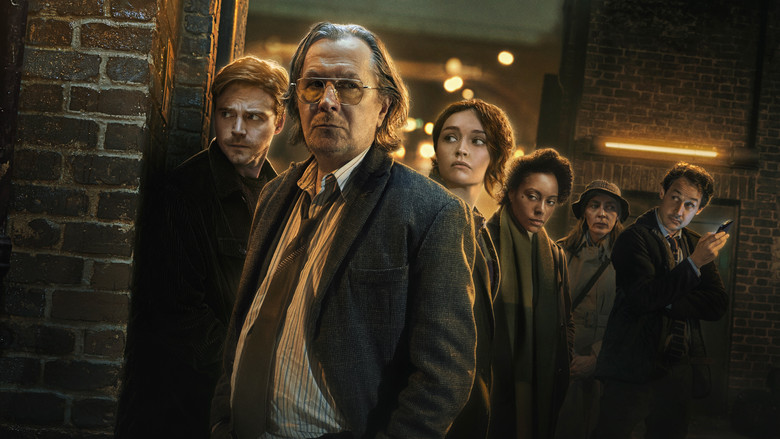
Adapted from Mick Herron’s acclaimed Slough House novel series by showrunner Will Smith, Slow Horses strips modern espionage of 007-style romanticism and drops it into the damp, fluorescent-lit purgatory of British bureaucracy. Slough House is MI5’s administrative dumping ground, an off-the-books, decaying office building near the Barbican where disgraced intelligence officers—the titular "Slow Horses"—are exiled after committing catastrophic professional blunders. Headed by the unwashed, flatulent, yet razor-sharp Cold War veteran Jackson Lamb (Gary Oldman), the unit is officially tasked with mind-numbing administrative grunt work in the cynical hope that boredom will drive them to resign, sparing the service the embarrassment of employment tribunals.

Across its multi-season arc, however, the series constantly collides this island of misfit toys with real-world, high-stakes geopolitical crises. From white-nationalist kidnappings and Cold War sleeper cells to rogue MI5 false-flag operations, mercenary death squads, and deep-seated familial conspiracies, Slough House routinely uncovers conspiracies that Regent’s Park—MI5’s pristine, corporate headquarters led by the machiavellian First Desk and Diana Taverner (Kristin Scott Thomas)—either mishandles, engineers, or covers up. Despite being under-resourced, deeply traumatized, and actively despised by their superiors, the Slow Horses are repeatedly forced into the line of fire to save the nation from its own protectors.

The narrative backbone of the entire series is the friction between disposable human cogs and the self-serving preservation of state machinery. As each season adapts a successive novel—ranging from Slow Horses and Dead Lions to Real Tigers, Spook Street, and London Rules—the ensemble navigates a revolving door of loss, institutional betrayal, and brief glimpses of dignity.

Core Meaning

The fundamental thematic thrust of Slow Horses is a sharp deconstruction of institutional competence and modern patriotic myth-making. Through the complete narrative, the creators propose that power structures in intelligence and government are driven less by grand ideological battles than by petty political maneuvering, blame-shifting, and PR damage control.

Against this corrosive cynicism, the series delivers a profound paradox: true duty, loyalty, and tradecraft do not reside in the sterile, air-conditioned corridors of power, but in the grime and gutters. The "Slow Horses" are broken, flawed human beings whose real virtue is that they have already hit bottom; possessing nothing left to lose in the bureaucratic rat race, they alone are capable of acting with genuine humanity, grit, and unexpected honor. Jackson Lamb’s foul defense of his subordinates reminds the audience that loyalty to one's vulnerable colleagues will always outshine loyalty to an unfeeling, amoral institution.

Thematic DNA

Bureaucratic Cannibalism & State Cynicism 30%
The Weight of Failure, Disgrace, and Atonement 25%
Unspoken Loyalty & the Misfit Family 25%
Generational Trauma & Cold War Phantoms 20%

Bureaucratic Cannibalism & State Cynicism

Intelligence leadership is portrayed not as guardians of democracy, but as self-serving careerists whose primary operational goal is avoiding public scandal and preserving budgets. Throughout the series, Regent's Park consistently uses Slough House as disposable bait or sacrificial scapegoats to cover up internal blunders or off-the-books operations. The threat often originates inside the British establishment itself rather than from foreign adversaries.

The Weight of Failure, Disgrace, and Atonement

Every agent at Slough House carries a defining humiliation—a bungled drill, a forgotten secret dossier on a train, an addiction relapse, or a gambling debt. The series treats failure not as a death sentence, but as a defining human condition. The characters repeatedly fight for redemption, not necessarily to be reinstated to the Park, but to regain self-respect and prove that a single mistake does not erase their utility as human beings.

Unspoken Loyalty & the Misfit Family

Despite relentless mutual mockery, insults, and the wretched conditions of their workplace, the Slow Horses form an unbreakable pack bond. Lamb subjects his staff to relentless verbal torment, yet operates on an uncompromising moral code: he alone is allowed to abuse them, and he will tear down the entire establishment to avenge or protect them if an outside hand strikes them down.

Generational Trauma & Cold War Phantoms

The past in Slow Horses is never buried. The series tracks how unresolved Cold War crimes, secret assassinations, and clandestine backroom treaties continuously bubble up to poison contemporary Britain. Through the generational conflict between veteran handlers and younger agents, the show exposes the collateral damage inherited by children forced to pay for their predecessors' covert sins.

Character Analysis

Jackson Lamb

Gary Oldman

Archetype: Cynical Mentor / The Unrepentant Veteran Key Trait: Deceptive tactical genius concealed beneath calculated vulgarity.

Motivation

Waiting out his clock while fiercely guarding his agents and balancing old blood debts.

Character Arc

Runs Slough House as an indolent tyrant who appears half-asleep and permanently drunk. Across the seasons, his backstory as a lethal Cold War field operative and assassin in Berlin emerges. His motivation shifts from waiting out his clock to fiercely guarding his agents and balancing old blood debts.

River Cartwright

Jack Lowden

Archetype: The Fallen Prodigy / Idealist Hero Key Trait: Headstrong determination, relentless athleticism, and chronic impetuousness.

Motivation

Initially desperate to claw his way back to "The Park," later driven to find his own moral center after confronting painful familial truths.

Character Arc

Banished after being set up in a humiliating mock disaster. Desperate throughout the early seasons to claw his way back to "The Park," he gradually realizes Regent's Park is corrupt to the bone. Confronted with dark truths regarding his grandfather and biological father, his pursuit shifts from ambition to finding his own moral center.

All 5 characters and cast

Symbols & Motifs

Slough House

Meaning:

Stands as a physical manifestation of bureaucratic oblivion, purgatory, and institutional contempt.

Context:

A dingy, decaying brownstone near the Barbican with flaking paint, blocked toilets, and rattling floorboards where disgraced agents are exiled.

The Park (MI5 HQ)

Meaning:

Symbolizes cold corporate power, detachment from reality, and an environment where moral clarity is scrubbed away in favor of pristine image control.

Context:

The sleek, glassy, sterile headquarters at Regent's Park where intelligence leadership operates.

Jackson Lamb’s Stained Trench Coat & Holed Socks

Meaning:

Functions as deliberate armor—a vulgar middle finger designed to lower adversaries' guard and signal his total refusal to play polite institutional politics.

Context:

A walking visual biohazard, Lamb’s slovenly wardrobe and disgusting habits are seen constantly throughout the series.

Greasy Takeaway Containers & Cigarettes

Meaning:

Reflects a man sustaining himself entirely on toxic waste and pure spite, unburdened by self-preservation.

Context:

Lamb's constant diet of cheap Chinese food, cold chips, whisky, and chain-smoked cigarettes.

"White Shirt, Blue T-shirt"

Meaning:

A symbol of how thin the margin is between glory and exile, and how junior agents can be tripped up by institutional traps.

Context:

The miscommunicated code that derailed River Cartwright's career in the pilot episode during a training exercise.

Memorable Quotes

They’re a bunch of absolute losers. But they’re my losers.
— Jackson Lamb

Context

Season 1, Episode 6 ("Follies" / "Old Scores"). Confronting Diana Taverner when she tries to sacrifice Slough House to cover up her botched false-flag operation.

Meaning

Lays down the bedrock code of the series: contemptuous paternal loyalty toward his exiled subordinates.

Working with you has been the lowest point in a disappointing career.
— Jackson Lamb

Context

Season 1, Episode 1 ("Failure’s Contagious"). Lamb welcomes River Cartwright to Slough House after assigning him the soul-destroying task of searching domestic rubbish bins.

Meaning

Demonstrates Lamb's caustic greeting style and deliberate degradation of newcomers.

All 6 quotes

Episode Highlights

Failure’s Contagious

S1E1

Masterfully introduces the world of the series by establishing the stark contrast between River’s catastrophic, pulse-pounding Stansted drill failure and the dismal purgatory of Slough House.

Significance:

Anchors the central toxic dynamic between River and Lamb and establishes Slough House's role as MI5's dumping ground.

Follies

S1E6

The climax of the first season resolves the Sons of Albion crisis as Lamb outmaneuvers Taverner to protect his team.

Significance:

Cements the show's dark soul through a devastating final flashback revealing that Lamb executed former Director-General Charles Partner in cold blood decades earlier.

Old Scores

S2E6

Resolves the "Cicada" Russian sleeper cell plot while subverting classic Cold War victory tropes: Min Harper’s murder is unceremoniously papered over, and Lamb takes brutal, off-the-books revenge against the Russian operative.

Significance:

Demonstrates the ruthless nature of Cold War retribution and forces the Park to officially acknowledge Min's sacrifice on the service memorial.

Footprints

S3E6

Presents a relentless tactical siege at the covert records archive Facility "First Team", where Slough House outguns and outsmarts the Park’s heavy-handed "Dogs".

Significance:

Uncovers that high-level intelligence directors buried evidence of British government complicity in foreign scandals, bringing down First Desk Ingrid Tearney and leading to Standish's resignation.

Identity Theft

S4E1

Opens with a devastating London shopping center bombing and a heart-stopping home invasion where David Cartwright, slipping deep into dementia, shoots an intruder he believes to be an assassin.

Significance:

Completely shifts the tone of the series into an intensely personal familial tragedy.

Grave Danger

S4E5

Drives the Harkness mercenary conspiracy to its boiling point as London faces an all-out crisis and Slough House mobilizes under DEFCON conditions.

Significance:

Sets up the climatic reveals regarding River's parentage and the dark covert treaties between David Cartwright and Frank Harkness.

Philosophical Questions

Can an institution dedicated to deception ever retain internal morality?

The series asks whether an espionage apparatus—built fundamentally on lying to adversaries—inevitably rots from the inside out until it routinely lies to, betrays, and consumes its own personnel.

Is loyalty a virtue or an exploitable vulnerability?

Characters like Catherine Standish and River Cartwright are repeatedly brought low by their personal loyalty, forcing the audience to consider whether fidelity to a cause or person is admirable or merely an operational liability.

What constitutes the value of a human life in service of the state?

By constantly juxtaposing the "unimportant" dead Slow Horses against high-ranking officials who escape consequences, the show explores how state hierarchies commodify human sacrifice.

Alternative Interpretations

Several critical readings provide alternative perspectives on the series:

Full ending explanation

Cultural Impact

Slow Horses arrived at a pivotal moment in contemporary British cultural history, premiering in 2022 amid post-Brexit political malaise, recurring ministerial scandals, and an erosion of public faith in British state institutions. The show struck an immediate chord by discarding the high-tech, infallible glamour of traditional espionage tropes (typified by modern James Bond or Spooks) and replacing them with a distinctly British celebration of battered resilience, tea-stained paperwork, and institutional dysfunction.

Critically, the series has attained near-universal critical adoration with sustained 95%–100% scores across review aggregators, earning Gary Oldman multiple BAFTA and Emmy nominations. Its impact demonstrated that streaming audiences could be sustained through tight, six-episode seasons released reliably every year rather than through bloated mega-budgets with multi-year delays.

Audience Reception

Slow Horses has earned near-flawless critical acclaim, maintaining a consensus Rotten Tomatoes average in the 98%–100% range across its seasons.

Praises: Critics consistently highlight the screen adaptation by Will Smith, the lightning-fast pacing, and Gary Oldman's balance of revolting physical humor and lethal gravity. Jack Lowden's performance as River brings crucial earnestness and vulnerability, while Kristin Scott Thomas provides the perfect icy foil. Audiences celebrate that the series maintains tight six-episode narratives devoid of filler.

Minor Criticisms: The few criticisms point to occasional action tropes in late-season shootouts that stretch credulity compared to the grounded tradecraft, as well as the deliberate gross-out humor surrounding Lamb's bodily functions, which some early viewers found abrasive before appreciating it as intentional character armor.

Interesting Facts

  • Despite an illustrious film career spanning four decades and an Academy Award, Slow Horses marks Gary Oldman’s first-ever starring lead role in a continuing television series, and he has stated Jackson Lamb may well be his final acting role before retirement.
  • Gary Oldman actively curated Lamb’s repulsive persona, even sending author Mick Herron a photograph of his late father-in-law’s duct-taped socks, which was incorporated into both the television series and subsequent novels.
  • The show’s theme song, "Strange Game," was co-written and performed by The Rolling Stones frontman Mick Jagger alongside composer Daniel Pemberton after Jagger, an avid reader of the books, penned the lyrics in just a few days.
  • See-Saw Films produced Slow Horses almost continuously without multi-year hiatuses, shooting Seasons 1 and 2 back-to-back, as well as Seasons 3 and 4, allowing for rapid releases.
  • The exterior of Slough House was shot on location at 126 Aldersgate Street, across from Barbican tube station, with physical action filmed in public London hubs like St Pancras International, Kings Cross, Southwark, and the London Underground.
  • Jack Lowden, who plays River Cartwright, is a native Scotsman who uses an upper-middle-class Southern English accent for the role.
  • Showrunner and head writer Will Smith is an acclaimed British comedy writer and satirist best known for his work on Armando Iannucci’s political masterworks The Thick of It and Veep.

Easter Eggs

Subway Poster Foreshadowing in Season 4

In Season 4, Episode 4 ("Returns"), posters at St. Pancras Station depicting human evolution with the tagline "What's Your Story?" and Shakespeare’s Hamlet featuring a skull subtly prefigure that Frank Harkness is River's biological father and that River's lineage is poisoned by generational bloodshed.

Inversion of George Smiley

Jackson Lamb is an intentional inversion of John le Carré's George Smiley. Gary Oldman, who earned an Oscar nomination playing the polite Smiley in 2011's Tinker Tailor Soldier Spy, subverts his own cinematic legacy by portraying Lamb as an uncouth, flatulent counterpart with the identical deductive brilliance.

Mick Herron's Cameo

Author Mick Herron makes a brief cameo appearance in Season 1 as a quiet commuter on a train who watches River Cartwright frantically sprint past down the aisle.

Frequently Asked Questions

Explore More About This Movie

Dive deeper into specific aspects of the movie with our detailed analysis pages

Comments (0)

Leave a comment

No comments yet. Be the first to share your thoughts!

Similar Movies