Skip to content
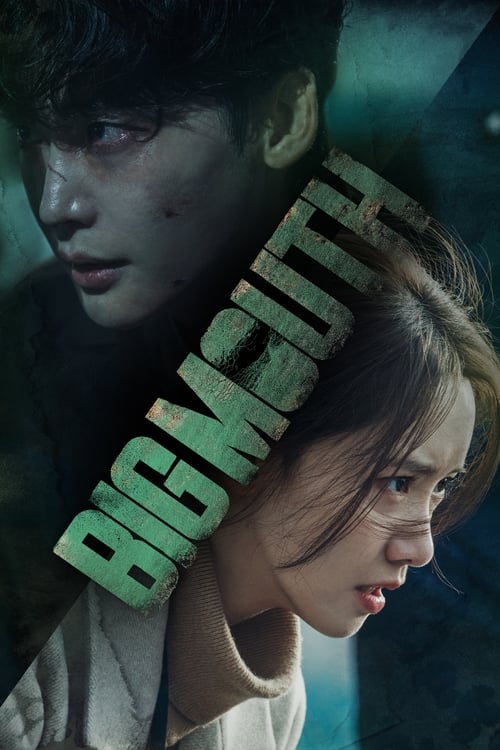
Big Mouth
A dark noir legal thriller dripping with shadowy conspiracies, where desperate love collides with unyielding vengeance, plunging a powerless mouth into the viperous, blood-drenched jaws of systemic corruption.
Big Mouth

Big Mouth

빅마우스

29 July 2022 — 17 September 2022 South Korea 1 season 16 episode Ended 8.3 (355)

Cast: Lee Jong-suk, Yoona, Kim Ju-hun, Kwak Dong-yeon, Yang Kyung-won

Drama Crime Mystery The Fallibility of Legal Justice vs. Vigilantism Systemic Corruption and Elite Impunity Identity, Deception, and Transformation Unconditional Sacrificial Love The Illusion of Moral Purity

Overview

Big Mouth (2022) follows Park Chang-ho, a third-rate lawyer with a dismal 10% win rate, dubbed 'Big Mouth' by his legal peers for his tendency to speak before taking action. Desperate to clear his debts and prove himself, Chang-ho accepts a high-stakes murder case from Choi Do-ha, the Mayor of Gucheon, involving the city's powerful elites. However, this lucrative assignment turns out to be a deadly trap. Chang-ho is drugged, involved in a mysterious car crash, and framed as 'Big Mouse'—the world’s most elusive, genius conman and shadow criminal boss.

Incarcerated in the brutal Gucheon Prison alongside dangerous convicts and corrupt guards, Chang-ho quickly realizes that maintaining his innocence will get him killed. To survive and shield his family from ruthless power brokers, he is forced to adopt the terrifying persona of Big Mouse himself, climbing to the top of the prison hierarchy through tactical mind games and sheer grit. Meanwhile, his fiercely loyal wife, Go Mi-ho, a courageous nurse, conducts her own dangerous investigation on the outside to uncover a hidden academic thesis and expose a sinister corporate-governmental syndicate.

As the narrative unfolds across its 16 episodes, the boundary between Chang-ho's pretend identity and real authority begins to dissolve. The overarching arc transforms a grounded legal fight into an all-out war against the NR Forum, a secretive high-society cabal dominating Gucheon. Together, Chang-ho and Mi-ho navigate a treacherous web of double-crosses, chemical conspiracies, and institutional corruption to bring the true villains to light, testing how far good people must go when legal justice fails.
Core Meaning

The core message of Big Mouth centers on the systemic rot within society and the failure of institutional justice when pitted against absolute wealth and political authority. The series posits that in a world where the law serves as a weapon for the privileged rather than a shield for the powerless, clean-handed righteousness is often insufficient to effect real change.

Through Chang-ho’s forced transformation from an idealistic, powerless lawyer into a dark vigilante boss, the creators explore the moral price of fighting systemic evil. To defeat monsters who operate above the law, one must step into the shadows and adopt their tools of power. However, this crusade carries devastating personal costs, underscoring the tragic truth that vigilante justice, while sometimes necessary, leaves permanent, bitter wounds.

Thematic DNA

The Fallibility of Legal Justice vs. Vigilantism 30%
Systemic Corruption and Elite Impunity 25%
Identity, Deception, and Transformation 20%
Unconditional Sacrificial Love 15%
The Illusion of Moral Purity 10%

The Fallibility of Legal Justice vs. Vigilantism

Chang-ho begins as a law-abiding attorney who believes in courtroom proceedings. As the judicial system is continually manipulated by the NR Forum and Mayor Choi Do-ha, Chang-ho abandons traditional legal remedies, concluding that institutional justice is an illusion designed to protect the ruling elite.

Systemic Corruption and Elite Impunity

Revealed through the NR Forum and NK Chemical, showing how politicians, corporate heads, and medical institutions collaborate to exploit marginalized citizens. Ordinary people are treated as disposable 'laboratory mice,' while the wealthy operate with complete legal immunity.

Identity, Deception, and Transformation

Anchored in the duality of 'Big Mouth' (talkative incompetent) versus 'Big Mouse' (underworld genius). Chang-ho must act the part of a criminal mastermind so convincingly that the line between his fake persona and his actual evolution into a shadow leader blurs completely.

Unconditional Sacrificial Love

Illustrated through Chang-ho and Mi-ho's marriage. Unlike typical K-drama romances, their bond is tested under life-or-death pressure. Mi-ho repeatedly risks her life and health to clear Chang-ho's name, culminating in her ultimate sacrifice.

The Illusion of Moral Purity

The series demonstrates that combating absolute rot requires stepping into moral ambiguity. Chang-ho cannot dismantle Choi Do-ha through polite, squeaky-clean methods; he must embrace extrajudicial tactics to deliver final retribution.

Character Analysis

Park Chang-ho

Lee Jong-suk

Archetype: Everyman / Tragic Antihero Key Trait: Extreme psychological adaptability and theatrical performance under pressure.

Motivation

Begins with a desire to clear his debts and protect his family; evolves into a mission to destroy Choi Do-ha's corrupt empire and avenge Mi-ho.

Character Arc

Transforms from a weak, talkative attorney with a 10% win rate into a hardened, highly calculating shadow leader who inherits the real Big Mouse organization.

Go Mi-ho

Im Yoon-ah / Yoona

Archetype: The Loyal Crusader / Heroic Anchor Key Trait: Courageous, persistent, and emotionally unyielding.

Motivation

Unshakeable faith in Chang-ho's innocence and an unyielding moral obligation to expose systemic injustice.

Character Arc

Evolves from a pragmatic nurse and supportive wife into a fearless field investigator who exposes NK Chemical’s environmental atrocities, sacrificing her own life for the truth.

All 5 characters and cast

Symbols & Motifs

Tarot Cards

Meaning:

They symbolize fate, cryptic warnings, hidden power dynamics, and the unseen puppet master guiding events from the shadows.

Context:

Used as the primary communication medium between the real Big Mouse and Chang-ho inside Gucheon Prison.

Gold Bars

Meaning:

Represents the hidden, rotten wealth accumulated through human exploitation, corporate crimes, and political bribery.

Context:

Hidden beneath concrete in an underground warehouse.

Radioactive Wastewater (NF9 / NK Chemical)

Meaning:

Symbolizes the invisible, deadly taint of elite greed slowly poisoning the unsuspecting public under the guise of municipal prosperity.

Context:

The toxic runoff from NK Chemical's secret research facility.

'Big Mouth' vs. 'Big Mouse' Wordplay

Meaning:

Symbolizes how words without power are dismissed as mere noise ('Big Mouth'), whereas hidden, calculated authority generates fear and compliance ('Big Mouse').

Context:

In Korean phonetics, both names are written and pronounced as Bingmauseu (빅마우스).

Laboratory Mice / DNR Cancer Patients

Meaning:

Represents how corrupt elites view ordinary citizens as dispensable subjects for dangerous medical and chemical experiments.

Context:

Used as a recurring motif in Gucheon Hospital and the prison.

Memorable Quotes

내가 왜 빅마우스인지 똑똑히 보여줄 테니까.
— Park Chang-ho

Context

Season 1, Episode 3 – Inmates and prison guards attempt to intimidate Chang-ho, prompting him to assert dominance.

Meaning

Marks Chang-ho's psychological shift from a terrified victim into a ruthless prison kingpin persona.

권력은 칼과 같아. 생선한테 쓰면 회칼이고, 사람한테 쓰면 무기가 되지.
— Chairman Kang (Kang Seong-geun)

Context

Season 1, Episode 7 – Chairman Kang addresses his inner circle regarding political dominance.

Meaning

Summarizes the corrupt worldview of the NR Forum elites, who view political authority solely as an instrument of force.

All 4 quotes

Episode Highlights

The Trap is Set

S1E1

Establishes Chang-ho's struggling legal career, his assignment by Mayor Choi Do-ha to the Gucheon Hospital murder case, and his subsequent drugging and framed car accident.

Significance:

Launches the entire series' inciting incident and establishes the core mystery.

Becoming the Monster

S1E3

Desperate to die so his wife can claim his life insurance, Chang-ho attempts suicide by confronting the prison's most violent criminals, but accidentally defeats them, earning supreme authority behind bars.

Significance:

Pivotal turning point where Chang-ho embraces the 'Big Mouse' persona for survival.

The Bet

S1E6

Mi-ho gets hired at Gucheon Hospital to search for Professor Seo's missing thesis, while Chang-ho engages in a high-stakes psychological duel with Gong Ji-hoon regarding Big Mouse's ledger.

Significance:

Solidifies the dual-narrative structure between prison mind games and outside investigation.

The Live Broadcast

S1E9

Chang-ho orchestrates a dramatic media spectacle by appearing via live broadcast during a high-profile trial, turning the court case into a public exposure of the VIP defendants.

Significance:

Shifts Chang-ho from defensive survival to offensive counter-attacks.

Unmasked

S1E12

Prison room leader No Park is revealed as the real Big Mouse. Shortly after being released on bail, No Park’s restaurant is blown up, killing him instantly.

Significance:

Climax of the 'Who is Big Mouse?' mystery and major structural shift in leadership.

Inheriting the Shadow

S1E14

Following No Park's death, Chang-ho officially accepts the leadership of the Big Mouse organization, utilizing its full underground network to contest Choi Do-ha's mayoral campaign.

Significance:

Marks Chang-ho's complete transition into a shadow vigilante chief.

Justice Outside the Law

S1E16

Mi-ho exposes NK Chemical's toxic water during Choi Do-ha's televised mayoral debate before succumbing to Stage 4 lymphoma. After Choi Do-ha wins reelection and escapes legal punishment, Chang-ho fills Choi Do-ha’s private swimming pool with radioactive wastewater, executing him.

Significance:

The series finale that resolves the central conflict through extrajudicial justice.

Philosophical Questions

Can true justice exist within a legal system engineered by the powerful?

The show systematically breaks down Chang-ho's faith in courts, demonstrating that when evidence can be bought and elections rigged, vigilante action becomes the sole alternative.

Does fighting monsters inevitably make one a monster?

Explored through Chang-ho taking over the Big Mouse syndicate and using radioactive water to murder Choi Do-ha, blurring the line between crime boss and hero.

How much of identity is defined by external perception versus inner truth?

Chang-ho is forced into becoming Big Mouse because society and the media labeled him as such, demonstrating how external framing can dictate individual destiny.

Alternative Interpretations

1. The Tragic Moral Collapse (Antihero Tragedy): Viewing Chang-ho’s victory not as a triumph, but as a moral tragedy. To eliminate Choi Do-ha, Chang-ho loses his wife and fully morphs into an extrajudicial crime lord, proving that systemic evil corrupts even the most well-meaning people.

Full ending explanation

Cultural Impact

Social Context: Released in 2022, Big Mouth tapped into deep South Korean public dissatisfaction with elite corporate impunity (chaebols), political corruption, and environmental scandals involving industrial waste cover-ups.

Critical & Popular Reception: Praised heavily across South Korea and Asian markets (streaming via Disney+) for its breakneck pacing, cliffhangers, and Lee Jong-suk’s energetic acting performance.

Finale Controversy: The finale sparked intense online debate. While ratings peaked, many viewers and critics expressed frustration over Mi-ho's sudden terminal illness and Chang-ho’s decision to poison Choi Do-ha rather than securing a legal conviction in court.

Audience Reception

Praised Elements:

  • Lee Jong-suk's compelling performance balancing desperation, dark humor, and terrifying authority.
  • High-octane 'Who is Big Mouse?' mystery driving massive audience engagement during its initial broadcast.
  • Grounded chemistry and mutual trust between Chang-ho and Mi-ho.
  • Yang Kyung-won's wildly entertaining portrayal of Gong Ji-hoon.

Main Points of Criticism:

  • Pacing stumbles after the real Big Mouse reveal in Episode 12.
  • Rushed finale plotlines, specifically Mi-ho's rapid cancer progression.
  • Lack of traditional courtroom catharsis in the final episode.

Overall Verdict: A highly thrilling, stylish hardboiled noir drama that captured massive ratings and accolades, though its controversial final episodes divided viewers seeking a cleaner legal resolution.

Interesting Facts

  • Big Mouth marked Lee Jong-suk’s highly anticipated return to television after completing his mandatory military service (discharged in January 2021).
  • Director Oh Chung-hwan previously directed Lee Jong-suk in the 2017 hit drama While You Were Sleeping and specifically sought Lee for the complex role of Park Chang-ho.
  • Lee Jong-suk personally recommended Im Yoon-ah (Yoona) for the role of Go Mi-ho, feeling her grounded, resolute energy matched the character's tough personality.
  • Produced by AStory and Studio Dragon with a budget of approximately 30 billion KRW (~$23 million USD).
  • The series was a major broadcast hit for MBC TV, escalating from an initial 6.2% rating to a peak of 13.7% nationwide for its finale.
  • At the 2022 MBC Drama Awards, Big Mouth won Drama of the Year, Grand Prize (Daesang) for Lee Jong-suk, Top Excellence Award (Actress) for Im Yoon-ah, and Best Couple Award.

Easter Eggs

The Name 'Jerry'

Kwak Dong-yeon's character is named Jerry. In prison, Jerry wears a mouse tattoo and acts as Chang-ho's loyal fan, a direct, playful reference to the classic Tom and Jerry cartoon duo.

Noir Homages

Visual staging in Gucheon Prison—specifically Chang-ho walking down the dark corridor surrounded by cheering inmates—homages classic hardboiled prison cinema like Jacques Audiard’s A Prophet.

Frequently Asked Questions

Explore More About This Movie

Dive deeper into specific aspects of the movie with our detailed analysis pages

Comments (0)

Leave a comment

No comments yet. Be the first to share your thoughts!

Similar Movies