Skip to content
Connect
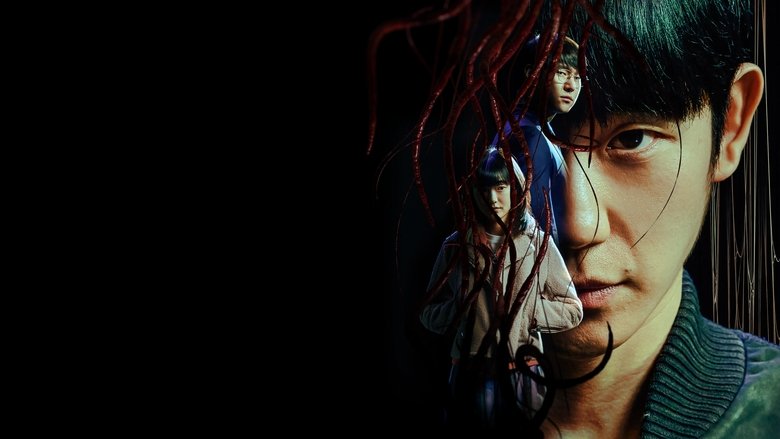
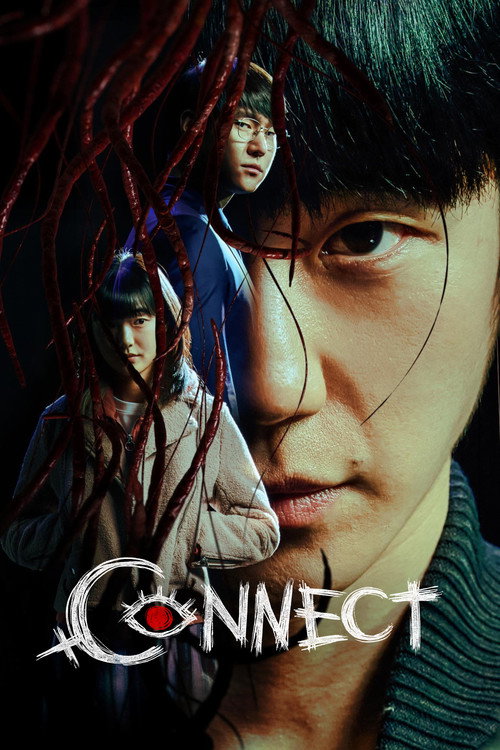
A gritty, neon-drenched body-horror thriller where deep existential alienation bleeds into visceral dread, visualized through pulsing scarlet tendrils desperately stitching together shattered flesh across the fractured gaze of two intertwined souls.
Connect

Connect

커넥트

"I can see what he sees."

07 December 2022 — 07 December 2022 South Korea 1 season 6 episode Ended 7.6 (124)

Cast: Jung Hae-in, Go Kyung-pyo, Kim Hye-jun, Kim Roi-ha, Yang Dong-geun

Drama Crime Sci-Fi & Fantasy Mystery Empathy vs. Psychopathy Bodily Autonomy and Exploitation Alienation, Isolation, and 'The Monster' Label The Double (Doppelgänger) and Shared Perception Art, Creation, and Immortality

Overview

Connect is a six-episode South Korean dark fantasy crime thriller produced by Studio Dragon and directed by renowned Japanese filmmaker Takashi Miike. Based on the digital webtoon by Shin Dae-sung, the story introduces Ha Dong-soo, an isolated young songwriter who belongs to 'Connect'—a clandestine, immortal humanoid sub-race endowed with instant physical regeneration. Dong-soo's quiet life is violently derailed when he is ambushed and abducted by an illicit organ-trafficking syndicate operating in the backstreets of Seoul. Although Dong-soo awakens mid-surgery and manages to escape through gruesome bodily self-repair, he is forced to flee leaving one of his harvested eyes behind.

The harvested eye is transplanted into Oh Jin-seop, an immaculate corporate manager who secretly operates as a meticulous, aesthetic-obsessed serial killer known across Seoul for posing his victims' preserved bodies as public 'corpse art'. Soon, Dong-soo discovers that an involuntary ocular telepathic link has bridged them: whenever Jin-seop experiences heightened adrenaline or Dong-soo's signature melody is played, Dong-soo vividly perceives the killer's brutal crimes through his missing right eye.

Determined to stop further bloodshed and reclaim his stolen anatomy, Dong-soo embarks on a hazardous urban manhunt. Along the way, he must evade both ruthless organ harvesters and a skeptical police task force led by Detective Choi, while forming an uneasy alliance with Lee I-rang, an enigmatic young woman who possesses intimate knowledge of Connect physiology and their contested place in the world.

Core Meaning

At its core, Connect explores the fundamental tension between monstrosity and humanity. The series suggests that physical abnormalities and biological 'otherness' do not determine monstrosity; rather, one's moral choices and capacity for empathy do. While society reflexively ostracizes Dong-soo as a freak and an urban legend, he retains profound empathy, altruism, and a desire for creative self-expression. Conversely, Jin-seop—outwardly a polished, civilized citizen—is completely hollow, treating living beings as disposable material for his narcissistic artistic vanity. Ultimately, genuine human connection is forged through emotional resonance, shared vulnerability, and moral duty, whereas the superficial commodification of bodies leads only to predatory violence.

Thematic DNA

Empathy vs. Psychopathy 30%
Bodily Autonomy and Exploitation 25%
Alienation, Isolation, and 'The Monster' Label 20%
The Double (Doppelgänger) and Shared Perception 15%
Art, Creation, and Immortality 10%

Empathy vs. Psychopathy

The central thematic conflict contrasts Dong-soo's hypersensitive moral conscience against Jin-seop's clinical sadism. The shared eye literally forces an empathetic soul to bear witness to calculated cruelty, questioning whether exposure to absolute darkness corrupts the innocent or sharpens their moral resolve.

Bodily Autonomy and Exploitation

Through the organ trafficking syndicate and corporate biotechnology overtones, the narrative interrogates how capitalism and criminal black markets view the human vessel as mere harvestable commodities. Dong-soo's journey is a battle to reclaim sovereignty over his own flesh.

Alienation, Isolation, and 'The Monster' Label

Throughout childhood flashbacks and adult solitude, Dong-soo is branded a monster (gwoemul) whenever people witness his regenerative nature. The series illustrates the profound psychological trauma of being rejected by ordinary society simply for being biologically different.

The Double (Doppelgänger) and Shared Perception

The physical linkage between Dong-soo and Jin-seop forms a classic psychological doppelgänger motif. As Dong-soo sees what Jin-seop sees, their mental landscapes clash, forcing the protagonist into an intimate psychological duel with his polar opposite.

Art, Creation, and Immortality

Both central figures seek immortality through creative acts: Dong-soo creates soulful music to connect with unseen strangers, while Jin-seop creates morbid 'statues' of resin and corpses to achieve immortal artistic notoriety.

Character Analysis

Ha Dong-soo

Jung Hae-in

Archetype: Reluctant Hero / Tragic Outcast Key Trait: Hyper-empathetic and physically regenerative.

Motivation

To retrieve his stolen eye, clear his name, and prevent innocent people from being slaughtered.

Character Arc

Starts as a frightened, traumatized recluse hiding his immortality behind hoodies and guitar music; transforms into an assertive, self-sacrificing protector willing to endure extreme pain to stop a serial killer and reclaim his wholeness.

Oh Jin-seop

Go Kyung-pyo

Archetype: Psychopathic Villain / Narcissistic Shadow Key Trait: Coldly manipulative, arrogant, and sadistic.

Motivation

To achieve immortal notoriety through aesthetic murder and master the Connect physiology.

Character Arc

Evolves from a confident, untouchable corporate perfectionist orchestrating macabre public sculptures into an unhinged, desperate predator obsessed with dominating Dong-soo's supernatural biology.

All 5 characters and cast

Symbols & Motifs

The Stolen Eye (The Shared Gaze)

Meaning:

Symbolizes moral perception, subjective truth, and unwanted psychological entanglement.

Context:

Through the transplanted eye, Dong-soo is forced to see the world from the vantage point of pure evil, converting physical vision into a harrowing moral burden.

Red Regenerative Tendrils (Scarlet Fibers)

Meaning:

Represents the primal, subconscious will to live and the visceral interconnectivity of biological systems.

Context:

Squirming, organic threads emerge from severed flesh to pull wounds and dismembered limbs back together, highlighting the visceral pain and monstrosity inherent in biological endurance.

The Acoustic Guitar and Dong-soo's Song

Meaning:

A recurring musical motif representing pure human connection, memory, and spiritual identity.

Context:

Dong-soo plays and hums this melody to process his grief; the frequency acts as the psychic trigger that activates and harmonizes the telepathic link across bodies.

The 'Corpse Art' Statues

Meaning:

Symbolizes modern alienation, narcissism, and the morbid commodification of human life turned into inanimate spectacle.

Context:

Jin-seop pumps resin into his murder victims and poses their preserved bodies in public urban squares across Seoul as macabre artistic installations.

The Eye Patch

Meaning:

Signifies fractured identity, grief, physical incompleteness, and the need to hide one's true nature.

Context:

Worn by Dong-soo across much of the narrative after escaping the organ trafficking operating table with an empty socket.

Detective Choi's Nosebleeds

Meaning:

A physical manifestation of investigative intuition and somatic stress, anchoring procedural detective work in bodily vulnerability.

Context:

Occurs repeatedly whenever Detective Choi experiences intense cognitive stress or reaches an intuitive breakthrough while investigating the bizarre murder cases.

Memorable Quotes

너도 느꼈지? 우리가 연결되어 있다는 걸.
— Ha Dong-soo

Context

Dong-soo speaks during his climactic mental and physical confrontation with Oh Jin-seop.

Meaning

Cements the reality of their involuntary bond and turns Dong-soo's psychic torment back upon the killer as an instrument of retribution.

나는 괴물이 아니야.
— Ha Dong-soo

Context

Spoken when confronting memories of his childhood alienation and facing adversaries who view his biological resilience with horror.

Meaning

A foundational emotional declaration asserting his humanity and rejecting the dehumanizing label forced upon him by society.

All 5 quotes

Episode Highlights

Connection

S1E1

Establishes the premise by displaying Dong-soo's organ harvesting, his regenerative escape, the loss of his eye, and the shocking first shared vision of Jin-seop preparing a murder.

Significance:

Sets the high-stakes ticking clock and introduces Takashi Miike's hyper-visceral visual signature.

Corpse Art

S1E2

Unveils Jin-seop's public corpse displays in Seoul and Dong-soo's realization that his stolen eye belongs to an active serial killer.

Significance:

Merges the supernatural creature narrative with an atmospheric urban police procedural.

Interception

S1E3

Dong-soo tracks Jin-seop to an active crime scene to thwart a murder, but is spotted by the police and wrongfully branded the prime suspect.

Significance:

Flips Dong-soo's status from hunter to hunted, forcing him on the run from both the police and organ syndicates.

Alliance

S1E4

Lee I-rang rescues Dong-soo and reveals deep lore about the Connect species, corporate interests, and biological evolution.

Significance:

Expands the series scope from an intimate cat-and-mouse revenge thriller to an overarching sci-fi conspiracy.

Clash

S1E5

Organ traffickers corner Dong-soo while Jin-seop uncovers Dong-soo's true identity, culminating in high-stakes kidnappings and explosive confrontations.

Significance:

Tightens all converging plotlines into a singular pressure cooker before the finale.

The Confrontation

S1E6

The climactic showdown where Dong-soo, I-rang, and Detective Choi confront Jin-seop; Dong-soo reclaims his eye before mysterious military helicopters descend.

Significance:

Concludes the personal vendetta between Dong-soo and Jin-seop while detonating a major cliffhanger regarding global corporate bioweapon projects.

Philosophical Questions

What defines humanity when biology becomes monstrous?

The series challenges whether being human is an innate biological classification or an active moral decision maintained through compassion, altruism, and empathy.

Can empathy survive the direct sight of pure malice?

By forcing a pure-hearted individual to physically share the ocular sensation of sadistic acts, the narrative questions whether witnessing evil inevitably corrupts the observer or fortifies moral resilience.

Is artistic immortality worth human degradation?

Jin-seop's desire to convert dying bodies into permanent statues interrogates the extreme egotism of aesthetic expression completely detached from human ethics.

Alternative Interpretations

Critical and thematic readings offer diverse layers to the narrative:

Full ending explanation

Cultural Impact

Connect arrived during the rapid global expansion of OTT streaming platforms (specifically Disney+ / Star Originals) investing in South Korean content. Rather than producing traditional romantic comedies or standard revenge thrillers, the collaboration between Korean drama producers and Japanese extreme cinema masters represented an ambitious experiment in cross-Asian prestige storytelling.

While it divided traditional K-drama viewers who were unaccustomed to extreme body horror and tentacular gore, it cemented a new precedent for auteur-driven, boundary-pushing hybrid genre projects on international streaming services.

Audience Reception

Critics praised Takashi Miike's idiosyncratic, unhinged visual style, the stellar performances of Jung Hae-in and Go Kyung-pyo, and the fast-paced, high-concept premise. However, several mainstream reviewers felt the pacing grew rushed toward the final episodes and noted that the short six-episode structure left several lore elements unresolved.

Viewers appreciated the distinctive blend of J-horror body gore and slick Korean crime-thriller staging. While Korean drama fans lauded Jung Hae-in's emotional depth in a radically dark role, some viewers found the abrupt cliffhanger ending polarizing without an immediate second season announced. Rating aggregates reflect this reception with approximately 6.5/10 on IMDb and 7.6/10 on MyDramaList.

Interesting Facts

  • Connect marks the first time in South Korean television history that a premier K-drama production company (Studio Dragon) commissioned a major Japanese cinema director (Takashi Miike) to direct a full Korean-language series with an all-Korean cast.
  • Due to pandemic travel constraints and linguistic differences, Miike directed portions of pre-production through video conferencing and heavily detailed cinematic storyboards and expressions.
  • The first three episodes received an official gala screening in the 'On Screen' section at the 27th Busan International Film Festival (BIFF) in October 2022.
  • Jung Hae-in had to shoot a significant portion of his scenes wearing a prosthetic eye patch and specialized lenses, which severely impacted his depth perception and required extensive spatial rehearsal during fight choreography.
  • The production combined Miike's signature practical gore effects with intricate CGI to render the squirming crimson tentacles and fibrous tissues that stitch Dong-soo's flesh together.
  • Jung Hae-in confirmed in post-release interviews that specialized body doubles were utilized for select rear-nudity sequences during the graphic operating room sequences.
  • The core thematic melody recurring throughout the show was recorded directly by actor Jung Hae-in, grounding the character's emotional longing in his actual voice.

Easter Eggs

Luis Buñuel & Salvador Dalí Reference (Un Chien Andalou)

The opening sequence features Dong-soo staring at the full moon while humming, immediately followed by the slicing and extraction of an eyeball—an overt cinematic homage to the surrealist 1929 masterpiece Un Chien Andalou.

Takashi Miike Self-Homages (MPD Psycho and Ichi the Killer)

The grotesque combination of clinical psychopathy, creative mutilation, and bodily transformation pays direct visual homage to Miike's classic works, notably the television masterpiece MPD Psycho and Ichi the Killer.

Hannibal Lecter Parallels

Oh Jin-seop's fastidious styling, classical aesthetics, culinary precision, and the artistic staging of corpses in public spaces evoke the cultural iconography of Thomas Harris's Hannibal Lecter.

Z's Song Adaptation

The transformation of Dong-soo's raw, melancholic acoustic bedroom pop into a glossy commercial hit mirrors real-world music industry commodification, highlighting how indie subculture is repackaged for mainstream consumer consumption.

Frequently Asked Questions

Explore More About This Movie

Dive deeper into specific aspects of the movie with our detailed analysis pages

Comments (0)

Leave a comment

No comments yet. Be the first to share your thoughts!

Similar Movies