
Bingo: The King of the Mornings
A vibrant, cocaine-fueled tragicomedy descending into the dizzying vertigo of anonymous fame, painted with the lurid, neon-soaked palette of 1980s Brazilian television.
Bingo: The King of the Mornings

Bingo: The King of the Mornings

Bingo: O Rei das Manhãs

"Clowning around can cost your soul"

24 August 2017 Brazil 113 min ⭐ 8.0 (399)
Director: Daniel Rezende
Cast: Vladimir Brichta, Leandra Leal, Tainá Müller, Ana Lúcia Torre, Augusto Madeira
Drama Comedy
The Dichotomy of Identity The Price of Fame Father-Son Relationship Art vs. Commerce

Overview

"Bingo: The King of the Mornings" chronicles the exhilarating rise and devastating fall of Augusto Mendes, an actor who has spent his career in the fringes of Brazil's film industry, primarily in soft-core "pornochanchada" films. Following in the footsteps of his actress mother, Augusto desperately craves legitimate recognition and a place in the spotlight. His big break arrives in the most unexpected form: he is cast as "Bingo," the lead clown in a new children's morning television show, a Brazilian franchise of a popular American program.

Pouring his irreverent and anarchic energy into the role, Augusto transforms Bingo into a national phenomenon, making the show a massive ratings success. However, his triumph is bittersweet. An iron-clad clause in his contract forbids him from ever revealing his true identity, turning him into the most famous anonymous person in Brazil. This paradox fuels a self-destructive spiral of drug abuse, womanizing, and alienation from his young son, Gabriel, the one person whose admiration he craves most. The film charts Augusto's frantic struggle to reconcile his hidden success with his personal decay, set against the cheerfully lurid and pop-infused backdrop of 1980s TV culture.


Core Meaning

The core meaning of "Bingo: The King of the Mornings" explores the corrosive nature of fame and the universal human need for validation. Director Daniel Rezende examines the paradox of an artist who achieves immense success but is denied personal recognition, leading to a profound identity crisis. The film poses a critical question: what is the value of applause if no one knows who you are? It delves into the tragic irony of a man who brings joy to millions of children while neglecting his own son, suggesting that true fulfillment comes not from public adoration but from authentic human connection and self-acceptance. Ultimately, it's a story about the man behind the mask, grappling with the profound emptiness that can accompany success when it's detached from one's true self.

Thematic DNA

The Dichotomy of Identity 35%
The Price of Fame 30%
Father-Son Relationship 20%
Art vs. Commerce 15%

The Dichotomy of Identity

The central theme is the split between Augusto's public persona (Bingo) and his private self. He is universally loved as the clown but completely unknown as the man. This anonymity, enforced by his contract, is the source of his deepest frustration and fuels his self-destruction. The film constantly plays with this duality: the vibrant, joyful world of the TV studio contrasts sharply with the dark, lonely reality of Augusto's life. He is trapped behind the greasepaint, a celebrity in disguise whose real face remains unrecognized.

The Price of Fame

The film is a classic rise-and-fall narrative that dissects the corrupting influence of celebrity. As Bingo's popularity soars, Augusto descends into a hedonistic lifestyle of cocaine, alcohol, and promiscuity. His success isolates him, particularly from his son, Gabriel, who feels abandoned by a father he cannot even boast about to his friends. The film suggests that the pursuit of fame, especially when it's detached from personal recognition, can lead to moral and emotional bankruptcy.

Father-Son Relationship

At its heart, the film is a powerful story about a father and son. Augusto's initial motivation to become Bingo is partly for his son, but his subsequent addiction to fame and drugs creates a deep chasm between them. Gabriel becomes the film's emotional anchor, representing the real-world consequences of Augusto's choices. The tragedy is that Augusto becomes a father figure to all of Brazil's children while failing his own. His journey towards redemption is intrinsically linked to repairing this fractured relationship.

Art vs. Commerce

Augusto is a talented, albeit unconventional, artist who views his role as more than just a job. He clashes with the rigid, commercialized structure of television, represented by the American franchise owner and the straitlaced director, Lúcia. He injects his own chaotic, often inappropriate, humor into the show, which ironically makes it a hit. This theme explores the tension between creative expression and the corporate demands of mass entertainment, questioning whether true artistry can survive in a world driven by ratings and contracts.

Character Analysis

Augusto Mendes / Bingo

Vladimir Brichta

Archetype: The Antihero / Tragic Hero
Key Trait: Charismatic & Self-Destructive

Motivation

His primary motivation is the need for applause and recognition as an artist, a desire inherited from his actress mother. He doesn't just want to be famous; he wants to be *seen* and validated for his craft. This deep-seated need is what makes the anonymity of being Bingo so torturous for him.

Character Arc

Augusto begins as a talented but struggling actor working in soft-porn, desperate for artistic validation. He achieves immense success as Bingo but finds it hollow due to his enforced anonymity. This frustration leads him down a path of hedonism and self-destruction, alienating his son and losing himself. His arc is a classic rise-and-fall, culminating in hitting rock bottom. The final phase of his arc is redemption, not through fame, but by finding a new stage (an evangelical church) where he can finally perform without the mask and reconnect with what truly matters.

Lúcia

Leandra Leal

Archetype: The Mentor / The Moral Compass
Key Trait: Principled & Empathetic

Motivation

Lúcia is motivated by her professionalism and her strong evangelical faith. She wants to produce a successful show that adheres to the rules. However, she is also motivated by a growing empathy for Augusto, recognizing the tortured artist behind the self-destructive behavior and seeing his potential for goodness.

Character Arc

Lúcia starts as the rigid, professional, and deeply religious director of the Bingo show. She initially disapproves of Augusto's chaotic and irreverent style. As the film progresses, she witnesses both his talent and his painful downfall. Her character arc involves softening her strict exterior, developing a complex romantic and compassionate relationship with Augusto, and ultimately becoming a key figure in his path to redemption.

Gabriel Mendes

Cauã Martins

Archetype: The Innocent
Key Trait: Innocent & Longing

Motivation

Gabriel's motivation is simple and pure: he wants his father's love, attention, and presence. He wants the fun-loving dad he knew, not the anonymous celebrity or the drug-addled stranger Augusto becomes. His desire for a normal relationship is the film's emotional anchor.

Character Arc

Gabriel begins as a proud and loving son who encourages his father. As Bingo's fame grows, Gabriel's arc becomes one of disillusionment and heartbreak. He watches his father, his hero, slip away into addiction and neglect. He represents the innocent victim of Augusto's choices and serves as the emotional core of the film. His alienation is a mirror to Augusto's own loss of self, and their eventual reconciliation is central to the film's resolution.

Marta Mendes

Ana Lúcia Torre

Archetype: The Faded Star
Key Trait: Supportive & Melancholic

Motivation

Marta is motivated by a deep love for her son and a desire to see him achieve the recognition that she once had. She understands the actor's hunger for the spotlight and both fuels and fears it in Augusto.

Character Arc

Marta is Augusto's mother, a former stage artist from the 1950s. Her own career has faded, and she now lives through her son's ambitions. She encourages his dream but also witnesses his painful decline. Her death marks a pivotal turning point for Augusto, removing his anchor to reality and accelerating his descent into chaos.

Symbols & Motifs

The Clown Makeup/Mask

Meaning:

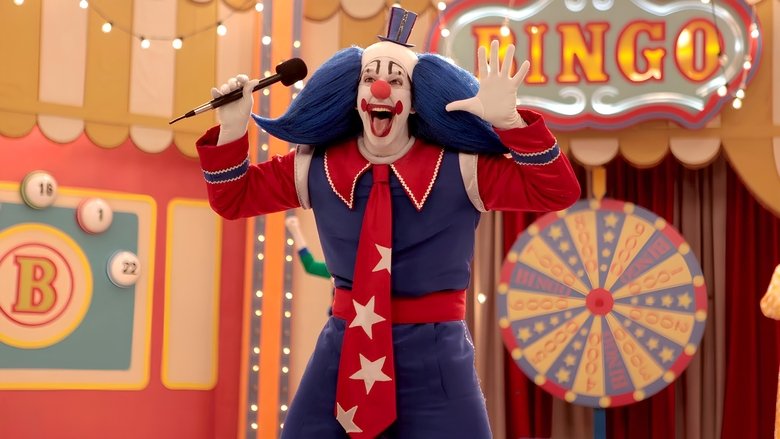
The Bingo makeup is the most potent symbol in the film. It represents both Augusto's greatest success and his profound imprisonment. It is the mask that grants him fame but simultaneously erases his identity, making him an anonymous celebrity. It symbolizes the facade people wear and the separation between the public persona and the private individual.

Context:

The makeup is central to the film's visual narrative. We see its application as a ritual of transformation. In a key moment, Augusto's cocaine-induced nosebleed seeps through the fake red nose, a horrifying visual metaphor for his inner decay corrupting his joyful public image. The final scene, where he preaches as a clown but then removes the mask, symbolizes his integration of both identities and his ultimate redemption.

Cocaine

Meaning:

Cocaine symbolizes the hedonism, excess, and self-destruction that accompany Augusto's anonymous fame. It is his escape from the frustration of being unrecognized and a catalyst for his downward spiral, representing the corrosive side of the 1980s entertainment industry.

Context:

The drug is shown frequently in backstage scenes, contrasting with the innocence of the children's show being filmed. Close-ups of Augusto snorting cocaine, often while in partial costume, highlight his double life. The nosebleed scene is the most dramatic use of this symbol, visually linking his addiction to the decay of his character.

The Television Screen

Meaning:

The television screen symbolizes the barrier between Augusto and the world, as well as the distorted reality of fame. He is trapped *inside* the TV, visible to millions but unable to connect with them authentically as himself. It represents the superficial nature of media and the culture of celebrity.

Context:

Director Daniel Rezende often frames shots through the monitors of the TV studio or on old-timey television sets. This aesthetic choice, sometimes borrowing from the look of 1980s VHS recordings, emphasizes how Augusto's life is mediated and packaged for public consumption, reinforcing his sense of separation and alienation.

Philosophical Questions

What is the true nature of identity when public perception and private reality are completely divorced?

The film relentlessly explores this question through Augusto's torment. As Bingo, he is a symbol of joy and innocence, yet as Augusto, he is mired in addiction and despair. The narrative forces the audience to consider whether identity is defined by one's actions, by public recognition, or by an internal sense of self. Augusto's crisis stems from the fact that the world loves his creation but is entirely ignorant of the creator, rendering his own identity meaningless in his eyes.

Can true fulfillment be found in applause?

Augusto's entire journey is a quest for applause as a validation of his artistic worth. However, when he achieves it on a massive scale, it brings him no happiness because it is directed at a persona, not at him. The film suggests that external validation is a hollow pursuit. The moments of potential true happiness come from his connection with his son or his budding relationship with Lúcia, not from the roar of the studio audience. The ending further complicates this, asking if the applause in a church is any more fulfilling than the applause in a TV studio.

Alternative Interpretations

While the film's ending is presented as a form of redemption, its nature is open to interpretation. One perspective is that Augusto finds true peace and purpose by combining his artistic talent with his newfound faith, finally able to perform for an audience and reveal his true self, free from the constraints of his old contract. His work in the church is seen as a genuine, positive transformation where he uses his clown persona for a higher purpose.

An alternative, more cynical interpretation suggests that Augusto has simply traded one stage for another. Is his religious conversion a true spiritual awakening, or is he an eternal performer who has merely found a new audience and a new costume? This reading views the ending not as a complete redemption but as a continuation of his fundamental need for applause and a spotlight, albeit in a different, seemingly more virtuous context. Director Daniel Rezende himself noted that he framed the story so that Augusto's redemption is found *through the stage*, which happened to be in a church, rather than a purely religious one, leaving the character's ultimate motivations ambiguous.

Cultural Impact

"Bingo: The King of the Mornings" had a significant cultural impact in Brazil by revisiting a nostalgic and complex period of the nation's pop culture history: the 1980s. The film tapped into the collective memory of millions who grew up watching Bozo the Clown, a massively popular TV show. However, it did so not with simple nostalgia, but with a critical, adult lens, exposing the decadent, politically incorrect, and drug-fueled reality behind the scenes of family entertainment.

The movie is based on the real-life story of Arlindo Barreto, one of several actors who portrayed Bozo, whose life was marked by addiction and a later religious conversion. By fictionalizing the names to "Bingo" and "Augusto Mendes," director Daniel Rezende gained the creative freedom to explore these darker themes without being a strict biopic. The film was praised by critics for its energetic direction, vibrant cinematography by Lula Carvalho, and a tour-de-force performance by Vladimir Brichta. It was often compared to films like "Boogie Nights" and "The King of Comedy" for its exploration of the seedy side of show business.

Critically acclaimed, it won numerous awards in Brazil and was selected as the country's entry for the Best Foreign Language Film at the 90th Academy Awards. For many, the film represented a maturation of Brazilian cinema, capable of producing a character-driven story about its own pop culture that was both entertaining and artistically profound, moving beyond the common genres of crime dramas or broad comedies.

Audience Reception

Audiences generally praised "Bingo: The King of the Mornings" for its high-energy storytelling, stylish direction, and especially the powerful lead performance by Vladimir Brichta, which many considered a career-best. Viewers who grew up in the 1980s appreciated the nostalgic recreation of the era, from the music to the fashion and the chaotic feel of live television. The film's ability to blend manic comedy with dark, tragic drama was a frequent point of praise.

Points of criticism were relatively minor but sometimes pointed to the film's conventional rise-and-fall narrative arc, which some viewers found predictable. A few critics and audience members felt the final act, which deals with Augusto's redemption, felt rushed and somewhat simplistic compared to the nuanced depiction of his descent. Despite this, the overwhelming consensus was that it was a bold, original, and technically proficient Brazilian film that stood out in the national cinematic landscape.

Interesting Facts

  • The film is inspired by the true story of Arlindo Barreto, one of the actors who played Bozo the Clown in Brazil during the 1980s.
  • To avoid copyright issues with the Bozo franchise, the filmmakers changed the clown's name to Bingo and fictionalized the names of people and TV networks.
  • The film was Brazil's official submission for the Best Foreign Language Film at the 90th Academy Awards, though it was not nominated.
  • This was the feature film directorial debut for Daniel Rezende, who is an Academy Award-nominated editor known for his work on films like "City of God" (2002) and "The Tree of Life" (2011).
  • The actor originally slated to play Bingo was Wagner Moura ("Narcos"), who had to drop out. He recommended Vladimir Brichta for the role.
  • The real Arlindo Barreto eventually became an evangelical pastor, and in his services, he preaches while dressed as a clown, removing his mask at the end—a practice mirrored in the film's final scene.
  • Vladimir Brichta underwent training at a circus to prepare for the role and was assisted by the late actor Domingos Montagner, who began his own career in the circus.
  • The film features a cameo from TV personality Pedro Bial, playing a network executive.

⚠️ Spoiler Analysis

Click to reveal detailed analysis with spoilers

Frequently Asked Questions

Explore More About This Movie

Dive deeper into specific aspects of the movie with our detailed analysis pages

Comments (0)

Leave a comment

No comments yet. Be the first to share your thoughts!