Black Beauty
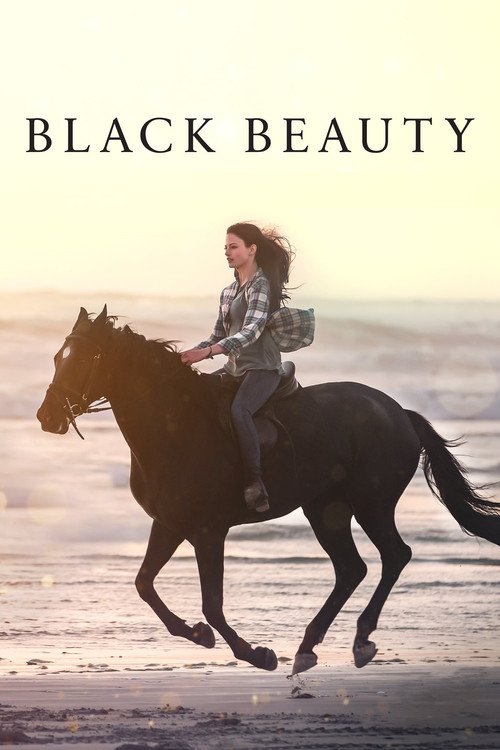
A poignant drama of a wild mustang's journey, capturing the untamed spirit of hope and the enduring bond between a girl and a horse, painted against the vast landscapes of the American West.
Black Beauty

Black Beauty

"Find your way home."

27 November 2020 Germany 110 min ⭐ 8.0 (344)
Director: Ashley Avis
Cast: Kate Winslet, Mackenzie Foy, Iain Glen, Calam Lynch, Claire Forlani
Drama
The Human-Animal Bond Animal Welfare and Cruelty Perseverance and Hope Coming of Age and Healing from Grief

Overview

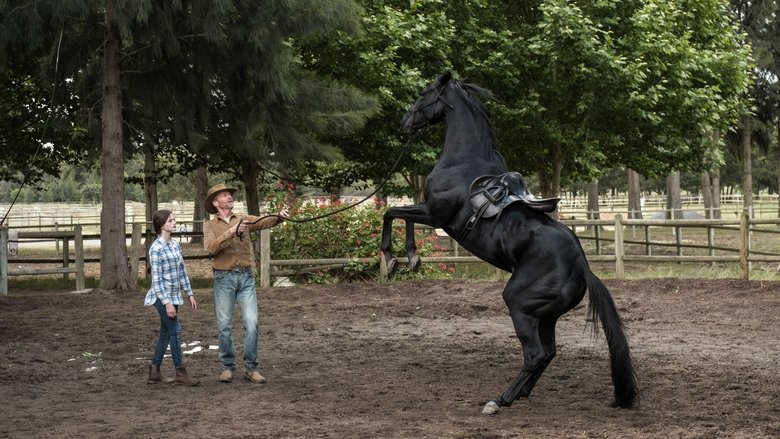
This 2020 adaptation of Anna Sewell's classic novel reimagines the story in the modern-day American West. The film follows a wild mustang, voiced by Kate Winslet, who is captured and separated from her family. She is brought to Birtwick Stables, a horse sanctuary, where she is named Black Beauty. There, she forms a deep and unbreakable bond with Jo Green (Mackenzie Foy), a spirited teenager who is also grieving the recent loss of her parents and has come to live with her estranged uncle, John Manly (Iain Glen), a horse trainer at Birtwick.

Their connection is built on mutual trust and understanding, as they both navigate their pain and find solace in each other's company. However, financial difficulties force Birtwick to close, and Beauty is sold, beginning a long and arduous journey through the hands of various owners. Some are kind, like a wilderness ranger, while others are cruel and neglectful. Through all the hardships, Beauty's spirit remains unbroken, fueled by the memories of Jo and the hope of one day being reunited with her. The film chronicles Beauty's life, highlighting the different chapters of her existence and the people she encounters along the way, all while holding onto the profound connection she shares with Jo.
Core Meaning

At its heart, the 2020 adaptation of "Black Beauty" is a powerful plea for empathy and kindness towards animals. Director Ashley Avis aimed to honor the original novel's message of animal welfare while modernizing it for a contemporary audience. The film explores the profound and healing bond that can exist between humans and animals, suggesting that this connection can mend even the most broken of spirits. By telling the story from Beauty's perspective, the film gives a voice to the voiceless and encourages viewers to consider the emotional lives of animals. It critiques animal cruelty, not just in overt forms but also in the casual neglect and ignorance that can cause suffering. Ultimately, the film champions the idea that all living creatures deserve to be treated with dignity and respect, and that true humanity is measured by our compassion for all beings.

Thematic DNA

The Human-Animal Bond 35%
Animal Welfare and Cruelty 30%
Perseverance and Hope 20%
Coming of Age and Healing from Grief 15%

The Human-Animal Bond

The central theme of the film is the profound, healing connection between Jo and Black Beauty. Both have experienced trauma and loss, and their shared pain allows them to form an unbreakable bond built on trust and mutual understanding. The film suggests that this relationship is not one of ownership, but of partnership, as Jo insists on the term "partnering" instead of "breaking" a horse. Their connection provides solace and strength for both, demonstrating the therapeutic power of the human-animal bond.

Animal Welfare and Cruelty

Honoring the spirit of Anna Sewell's novel, the film is a strong advocate for animal welfare. It exposes various forms of animal cruelty, from the roundup of wild mustangs to the harsh conditions of carriage horses and the painful practices in competitive riding. The narrative, told from Beauty's perspective, forces the audience to confront the suffering that animals endure at the hands of humans, whether through malice or ignorance. It serves as a call for greater empathy and more humane treatment of all creatures.

Perseverance and Hope

Despite the numerous hardships and separations she endures, Black Beauty's spirit is never completely broken. Her journey is a testament to resilience and the enduring power of hope. Fueled by her memories of Jo and the belief that they will be reunited, Beauty perseveres through neglect and abuse. This theme is mirrored in Jo's determination to find Beauty, showcasing how hope can sustain individuals through their darkest times and ultimately lead to redemption and reunion.

Coming of Age and Healing from Grief

Both Jo and Black Beauty are on a journey of healing from the trauma of losing their families. Jo arrives at Birtwick angry and closed-off, but her relationship with Beauty helps her to process her grief and find a new sense of purpose. Through her connection with the horse, Jo matures and discovers her passion for helping animals. The film portrays their parallel journeys of emotional growth, showing how connection and purpose can be powerful tools for overcoming loss.

Character Analysis

Black Beauty

Kate Winslet (voice)

Archetype: The Resilient Protagonist
Key Trait: Resilient Spirit

Motivation

Her primary motivation is to survive her various hardships and reunite with Jo, the person with whom she shares a deep, familial bond. She is also driven by an innate desire for freedom and kindness.

Character Arc

Black Beauty begins as a wild and free mustang, whose spirit is tested by capture and separation from her family. Initially distrustful of humans, she forms a powerful bond with Jo. Throughout her journey with various owners, she endures hardship and cruelty but never loses hope of returning to Jo. Her arc is one of resilience, demonstrating an unbreakable spirit and the enduring power of love and memory. She ultimately finds her way back to a life of peace and companionship.

Jo Green

Mackenzie Foy

Archetype: The Orphaned Heroine
Key Trait: Empathetic

Motivation

Initially motivated by her own pain, her focus shifts to protecting and caring for Black Beauty. After they are separated, her driving force becomes finding and rescuing the horse she loves, which expands into a broader mission to help all horses.

Character Arc

Jo starts as a grief-stricken and angry teenager, resentful of her new life with her uncle after her parents' death. Her connection with Black Beauty allows her to heal and find a new purpose. She transforms from a withdrawn girl into a determined young woman who dedicates her life to animal welfare. Her journey culminates in her saving enough money to buy Birtwick and create a permanent sanctuary for horses, including Beauty.

John Manly

Iain Glen

Archetype: The Wise Mentor
Key Trait: Patient

Motivation

John is motivated by a deep respect and love for horses and a desire to help them. He is also driven by a sense of responsibility for his niece, wanting to help her heal from her loss and find her way.

Character Arc

John is a patient and kind horse trainer who serves as a father figure to his niece, Jo. He bridges the gap between the hurt teenager and the untamed horse. He remains a steady, guiding presence throughout the first part of the film, teaching Jo about compassion and partnership with horses. He eventually reunites with Jo and Beauty at the restored Birtwick Stables.

George Winthorp

Calam Lynch

Archetype: The Kind-hearted Ally
Key Trait: Gentle

Motivation

George is motivated by his inherent decency and his affection for Jo. He stands in opposition to his family's callous treatment of animals and people, choosing empathy over status.

Character Arc

George is the son of the wealthy family who leases Beauty. Unlike his cruel mother and sister, George is gentle and shows kindness towards both Jo and Beauty. He develops a romantic connection with Jo and supports her. Years later, he marries Jo and helps her rebuild Birtwick, showing that his kind nature has remained steadfast.

Symbols & Motifs

The American West

Meaning:

The vast, open landscapes of the American West symbolize freedom, wildness, and a natural, untamed existence. It represents the idyllic life that Black Beauty was born into before being captured by humans.

Context:

The film opens with sweeping shots of wild mustangs galloping freely in the West. This imagery serves as a stark contrast to the confined and often cruel environments Beauty later finds herself in, constantly reminding the audience of the freedom she has lost.

Birtwick Stables

Meaning:

Birtwick Stables represents a sanctuary, a place of healing, kindness, and understanding. It is where both Jo and Black Beauty begin to recover from their respective traumas and form their deep bond.

Context:

After being captured, Beauty is brought to Birtwick where she meets John Manly and Jo. The stables are portrayed as a place where horses are treated with patience and respect, epitomizing the ideal relationship between humans and animals that the film advocates for.

The Stars

Meaning:

The stars symbolize the afterlife and an enduring connection to lost loved ones. Beauty's mother teaches her that when horses pass away, they rest among the stars, watching over those left behind.

Context:

This belief provides comfort to Beauty throughout her journey. When Jo is grieving her parents, Beauty wishes she could share this concept with her, highlighting the theme of shared spiritual understanding between the horse and the girl.

Memorable Quotes

A wise horse once told me that a mustang spirit can never be broken.

— Black Beauty

Context:

This is part of Black Beauty's narration, reflecting on the lessons learned from her mother and her own experiences, reinforcing her identity and her will to survive.

Meaning:

This quote encapsulates the central theme of the film: resilience. It speaks to Beauty's inherent strength and wildness that, despite all the hardships she faces, can never be extinguished.

I know you're not gonna hurt me. And I'm not gonna hurt you. Ever.

— Jo Green

Context:

Jo says this to Beauty in the stable during one of their early encounters. It's a quiet, heartfelt moment where the two broken spirits begin to connect and heal each other.

Meaning:

This line marks the turning point in the relationship between Jo and Beauty. It is a promise of mutual trust and respect, laying the foundation for their deep bond.

I was a mustang. Strong and proud and wild. And I would defend myself until my final breath.

— Black Beauty

Context:

This is from Beauty's internal monologue as she faces mistreatment, showing that even in her darkest moments, her innate spirit and pride remain intact.

Meaning:

This quote is a powerful assertion of Beauty's identity and fierce will to live. It highlights her connection to her wild origins and her refusal to be completely subjugated.

Philosophical Questions

What defines the relationship between humans and animals: ownership or partnership?

The film directly addresses this question through the character of Jo, who rejects the term "breaking" a horse in favor of "partnering." This linguistic shift reflects a deeper philosophical argument about the nature of our relationship with animals. The film contrasts the compassionate, partnership-based approach of John and Jo with the objectifying, ownership-driven mindset of characters like Mrs. Winthorp, who sees Beauty merely as a tool for winning competitions. Beauty's own narrative voice emphasizes her emotional and spiritual depth, challenging the notion of animals as mere property and advocating for a relationship built on mutual respect and understanding.

Can a spirit, whether human or animal, truly be broken?

The film explores the concept of an unbreakable "mustang spirit." Despite enduring capture, abuse, and profound loss, Black Beauty's core identity and hope for reunion remain. The narrative suggests that while trauma and suffering can inflict deep wounds, they cannot extinguish the innate spirit of a being. This theme is echoed in Jo's journey, as she moves through her grief without losing her capacity for love and empathy. The film posits that resilience is a fundamental quality of life, and that the spirit, in its essence, is wild and enduring.

Alternative Interpretations

While the film presents a fairly straightforward narrative, some alternative readings are possible. One interpretation could focus on the film as a subtle critique of class structures in modern society. The contrast between the working-class environment of Birtwick Stables and the wealthy, status-obsessed Winthorp family highlights different value systems: one based on empathy and hard work, the other on appearance and exploitation. Jo, a girl with no wealth, is shown to have a richer understanding of care and partnership than the privileged Georgina.

Another perspective could view Black Beauty's journey as an allegory for the loss of the wild in the face of human encroachment. Her capture at the beginning of the film symbolizes the taming and commodification of nature. Her subsequent experiences of being bought, sold, and used for human purposes reflect humanity's often exploitative relationship with the natural world. Her eventual reunion with Jo at a rehabilitated Birtwick could then be interpreted as a hopeful vision for a more harmonious coexistence between humans and nature, where the wild is respected and protected rather than broken.

Cultural Impact

The 2020 adaptation of "Black Beauty" serves as a contemporary reinterpretation of a timeless classic for a new generation. By shifting the setting from Victorian England to the modern American West and changing the protagonist horse to a female mustang, the film addresses current animal welfare issues, specifically the plight of wild horses in the United States. This modernization was a deliberate choice by director Ashley Avis to honor the spirit of Anna Sewell's original novel, which was a powerful social commentary on the mistreatment of horses in her era.

Upon its release on Disney+, the film received mixed reviews from critics. Some praised its heartfelt story, beautiful cinematography, and strong performances, viewing it as a touching family film that successfully carries the novel's core message of empathy. Others found it to be overly sentimental, predictable, and less impactful than the source material, with some critics noting that the episodic nature of the story felt disjointed. The gender-swapping of the main characters was generally seen as a positive move to empower young female viewers. While it may not have achieved the iconic status of the 1994 adaptation for a previous generation, the 2020 film continued the legacy of "Black Beauty" by sparking conversations about animal rights and the enduring bond between humans and animals in a modern context.

Audience Reception

Audience reception for "Black Beauty" was generally favorable, particularly among its target demographic of families and young viewers. Many praised the film for its emotional depth, the touching relationship between Jo and Beauty, and its beautiful cinematography. Kate Winslet's voice performance as Beauty was frequently highlighted as a strong point, bringing grace and poignancy to the character. The modernization of the story and the empowerment of its female leads were also well-received by many viewers.

However, some audience members and critics found the film to be overly sentimental and predictable. A common point of criticism was the pacing, with the first part of the film dedicated to building the central relationship, while the latter part rushes through Beauty's various owners in an episodic manner that some found jarring and emotionally underdeveloped. Devotees of the original novel and previous adaptations were divided, with some appreciating the fresh take and others feeling it didn't capture the grittier, more impactful tone of the source material. Overall, it was seen as a heartfelt, if somewhat safe, family film that effectively conveyed its message of kindness to animals.

Interesting Facts

  • The movie was primarily filmed in South Africa, which stood in for the American West and New York.
  • Four different horses played the role of Black Beauty throughout the various stages of her life: Spirit, Jenny, Awards, and Rosie.
  • Director and screenwriter Ashley Avis is a lifelong equestrian, and Anna Sewell's novel was one of the reasons she first fell in love with horses.
  • To capture authentic footage of wild horses, Avis and her husband filmed real mustang herds in Utah, Wyoming, and Nevada, which was then edited into the film.
  • Due to the COVID-19 pandemic, the film's planned theatrical release was cancelled, and it was acquired by Disney+ for a streaming release on November 27, 2020.
  • Mackenzie Foy performed some of her own riding stunts, including the emotional scene where Jo rides Beauty bareback for the first time.
  • This is one of many adaptations of the 1877 novel, but it introduces significant changes, such as making Black Beauty a mare (a female horse) instead of a stallion and setting the story in modern times.
  • The film was removed from Disney+ on May 26, 2023, as part of a content removal strategy by the streaming service.

⚠️ Spoiler Analysis

Click to reveal detailed analysis with spoilers

Frequently Asked Questions

Explore More About This Movie

Dive deeper into specific aspects of the movie with our detailed analysis pages

Comments (0)

Leave a comment

No comments yet. Be the first to share your thoughts!