Black Clover: Sword of the Wizard King
映画 ブラッククローバー 魔法帝の剣
"When the legend revives... The kingdom will fall."
Overview
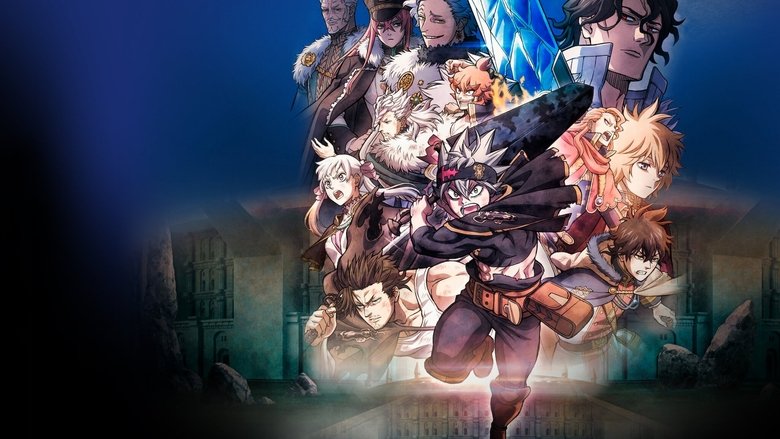
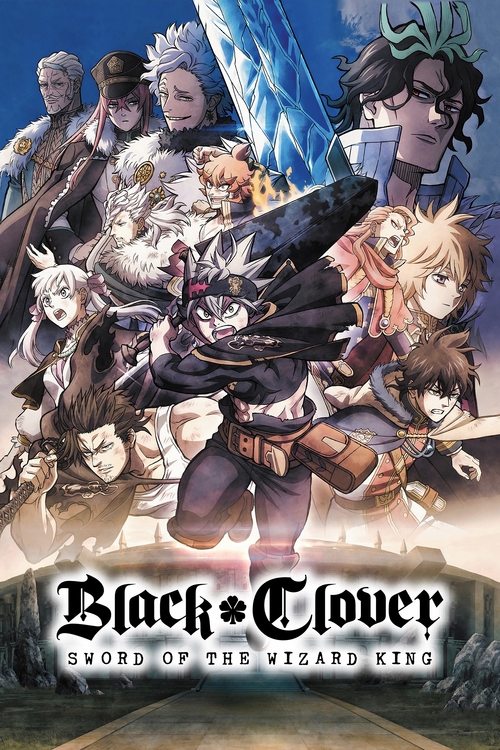
In "Black Clover: Sword of the Wizard King," the Clover Kingdom is celebrating the Triumph, a grand tournament, when the festivities are shattered by the return of Conrad Leto, a former and long-sealed Wizard King. Conrad, driven by a desire to create a new, equal society, intends to destroy the current kingdom and rebuild it from the ashes.
Wielding the powerful Imperial Sword "Elsdocia," Conrad revives three other former Wizard Kings who share his radical vision: Princia Funnybunny, Jester Garandaros, and Edward Avalaché. Faced with this unprecedented threat from the kingdom's most legendary figures, Asta, a boy born without magic, and his rival Yuno must rally the scattered Magic Knights. The film follows their desperate battle to protect their home and challenge the ideologies of their powerful predecessors.
Core Meaning
The core meaning of "Black Clover: Sword of the Wizard King" revolves around the conflict between idealism and cynicism, and the question of how to enact societal change. The film explores the idea that even noble goals can be corrupted by radical methods. Conrad and the other former Wizard Kings are not purely evil; they are jaded idealists who, after failing to reform the kingdom's unjust class system from within, have resorted to total destruction as the only solution.
Asta represents the opposing view: an unwavering optimism that believes in changing the system through perseverance, friendship, and by proving one's worth through merit, not birthright. The film posits that true strength and the right to lead come not from absolute power or destroying the old, but from the resolve to protect everyone and inspire gradual, positive change, a message encapsulated in Asta's ultimate refusal of Conrad's path.
Thematic DNA
Perseverance and Never Giving Up
This is the central theme of the entire Black Clover franchise, embodied by Asta. Despite being magicless, he consistently pushes past his limits to challenge overwhelmingly powerful foes. The film highlights this as he faces four of the most powerful mages in history, with his refusal to surrender inspiring others and forming the core of his heroic identity. His catchphrase, "I'm still going to become the Wizard King someday!" resonates throughout the film.
Justice, Ideals, and Corruption
The movie presents a complex view of justice. The antagonists, particularly Conrad Leto, are driven by a desire to eradicate the Clover Kingdom's corrupt and discriminatory class system. Their methods are extreme—total annihilation to create a new, equal world—forcing the heroes and the audience to question if a flawed system can be reformed or if it must be destroyed. The conflict is not one of good versus evil, but a clash of warring ideologies on how to achieve a just society.
Past vs. Future
The antagonists are literal figures of the past, resurrected Wizard Kings whose failures have twisted their ideals into a desire to erase the present. Asta and the new generation of Magic Knights represent the future. The film frames the central conflict as a battle for the soul of the kingdom: will it be defined by the cynical failures of its past leaders or the hopeful, optimistic vision of its aspiring new ones? Conrad's eventual defeat and entrustment of his dream to Asta signifies the passing of the torch to the next generation.
The Nature of a True Leader (Wizard King)
The film explores what it truly means to be the Wizard King. Is it about possessing immense power, as the former kings did? Or is it about protecting the people and earning their trust through merit, as Julius Novachrono believes? Asta's actions throughout the film—rallying his comrades and refusing to sacrifice anyone—demonstrate that true leadership lies in inspiring hope and unity, not in imposing one's will through force.
Character Analysis
Asta
Gakuto Kajiwara
Motivation
To become the Wizard King and create a society where everyone is treated equally, regardless of their magical ability or social standing. He is driven by a promise to his rival, Yuno, and his desire to protect his friends and the citizens of the Clover Kingdom.
Character Arc
Asta begins the film as a determined, if underestimated, Magic Knight. His core belief in never giving up is immediately tested by the appearance of Conrad and the former Wizard Kings. Throughout the film, he is forced to confront the idea that his dream might be doomed to fail, just as Conrad's did. His arc involves rejecting this cynicism, reaffirming his own path, and proving that his Anti-Magic and unwavering resolve can overcome even the most legendary powers, solidifying his role as the kingdom's future hope.
Conrad Leto
Toshihiko Seki
Motivation
To destroy the current Clover Kingdom and its corrupt social structure, then use the Imperial Sword to resurrect only those he deems worthy to live in a new, perfectly equal society. This is born from the pain of his past failures and losses.
Character Arc
Conrad is presented as a dark mirror of Asta. He once shared Asta's ideals of creating an equal society but became disillusioned after his efforts were thwarted by the corrupt nobility, leading to a personal tragedy. Having lost hope in reform, he believes destruction is the only path to creation. His arc is tragic; he sees in Asta his former, optimistic self and tries to convert him. In his defeat, he recognizes the strength of Asta's path and entrusts his dream to him, finding a measure of peace.
Yuno Grinberryall
Nobunaga Shimazaki
Motivation
To become the Wizard King, a goal he shares and competes for with Asta. He is driven by their lifelong promise and a desire to prove he is the most powerful mage in the kingdom, while also protecting it from harm.
Character Arc
Yuno's role in the film is to serve as Asta's powerful rival and steadfast ally. While he doesn't have a deep personal arc, he showcases immense growth in his power and strategic thinking. He leads the fight against the formidable Jester Garandaros, freeing the captured Magic Knight Captains and demonstrating his own qualifications for the title of Wizard King. His arc reinforces his symbiotic relationship with Asta; they push each other to surpass their limits.
Julius Novachrono
Toshihiko Seki
Motivation
To protect the Clover Kingdom and foster a future where there is no discrimination. He is fascinated by different forms of magic and believes in the potential of all mages, especially Asta and Yuno, to change the world for the better.
Character Arc
Julius serves as the voice of wisdom and the current standard for the title of Wizard King. His arc is one of confronting his past failure—being unable to save Conrad from his despair and having to seal him away. In the present, weakened from a previous battle, he places his faith in the new generation. He acts as a guide, providing Asta with the Imperial Sword at a crucial moment and affirming that the kingdom's future is in good hands.
Symbols & Motifs
The Imperial Sword "Elsdocia"
The sword symbolizes legacy and the duality of power. Created by the First Wizard King to pass down the strength and wisdom of his successors, it was intended to be a tool for protection. However, in Conrad's hands, it becomes a weapon of destruction, representing how even the noblest legacies and greatest powers can be corrupted and turned against their original purpose.
Conrad uses the sword to revive the former Wizard Kings and absorb the kingdom's magic to fuel his destructive spell. The sword is the central magical artifact of the plot. Asta ultimately wields it, filled with the magic of his allies, to defeat Conrad, reclaiming its original purpose as a tool to protect the kingdom.
The Title of "Wizard King"
The title itself is a symbol of the ultimate ideal within the Clover Kingdom's society. For Asta, it represents overcoming adversity and creating a world without discrimination. For Conrad and the other resurrected kings, it represents their past failure and a broken promise, fueling their desire for radical change. The film treats the title as a contested ideal, with its true meaning being debated through the characters' actions and ideologies.
Asta's relentless pursuit of the title is his primary motivation. The antagonists are all former holders of the title, adding immense weight to their threat. The final battle is, symbolically, a fight to determine who is worthy of the ideals the title represents. Asta's final declaration that he will become the Wizard King reaffirms his commitment to his optimistic path.
Memorable Quotes
諦めないのが俺の魔法だ! (Akiramenai no ga ore no mahō da!)
— Asta
Context:
Asta shouts this and variations of it throughout the film, particularly when facing seemingly insurmountable odds against the former Wizard Kings. It serves as his battle cry and a source of inspiration for his allies.
Meaning:
Translated as "Never giving up is my magic!" this is Asta's defining mantra. It encapsulates his entire character and the central theme of the series. In a world defined by magical talent, Asta declares that his true power lies in his indomitable spirit, a force that proves more resilient than any spell.
Continuously gaining merit is everything. Anyone who can't do that can never stand at the top.
— Julius Novachrono
Context:
This philosophy underpins the entire conflict. Conrad and the other kings failed to change the system despite their merit, leading to their rebellion. Asta's journey is a testament to Julius's words, as he consistently gains merit through his deeds, not his non-existent magical lineage.
Meaning:
This quote, originally from the series, defines Julius's philosophy and the ideal he strives for in the kingdom. He believes that status, pride, and even raw power are secondary to tangible results and the trust earned through one's actions. It's a direct challenge to the kingdom's nobility-focused class system and a core principle that Asta embodies.
俺は作らねばならぬ。そこに暮らす誰もが認め合う、笑い合って暮らせる世界を。それのどこが間違っているというのだ。
— Conrad Leto
Context:
Conrad says this while explaining his motivations, likely during his confrontation with Asta. He poses it as a genuine question, unable to see the flaw in his logic that the ends (a perfect world) justify the horrific means (destroying the current one).
Meaning:
"I must create it. A world where everyone who lives there accepts each other, where they can live smiling together. What is so wrong with that?" This quote reveals the tragedy of Conrad's character. His goal is noble and deeply sympathetic, mirroring Asta's own dream. The line highlights the film's moral complexity, showing that the villain's motives are rooted in a desire for a peaceful, just world, making his destructive methods all the more tragic.
Philosophical Questions
Do the ends justify the means in the pursuit of a perfect society?
This is the central philosophical question of the film, embodied by the clash between Asta and Conrad. Conrad believes that to create a world free of discrimination and suffering, the current world and its people must be completely destroyed and selectively rebuilt. He is willing to commit genocide for the sake of an ideal future. The film explores this through his justifications, which are rooted in genuine pain and a desire for good. Asta and the Magic Knights represent the counterargument: that the means are as important as the ends, and that a perfect world built on the sacrifice of innocent lives is fundamentally flawed and not worth creating.
Can a fundamentally flawed system be changed from within, or must it be destroyed?
The film delves into this question through the backstories of the four resurrected Wizard Kings. Each of them tried to reform the Clover Kingdom's corrupt and classist system during their reign but failed, leading to their disillusionment. Their collective decision to destroy the kingdom stems from their belief that it is beyond saving. Asta, on the other hand, represents the hope of internal reform. He believes that by becoming the Wizard King, he can change things through merit and by inspiring others. The film's conclusion sides with Asta's optimism but acknowledges the validity of the villains' despair, suggesting that while internal change is possible, it requires immense, perhaps even naive, resolve.
Alternative Interpretations
One alternative interpretation focuses on Conrad Leto as a tragic figure rather than a simple villain. This view suggests the film is less about Asta's heroism and more a cautionary tale about how institutions can create their own monsters. Conrad's rebellion is a direct result of the Clover Kingdom's deeply ingrained corruption and prejudice. Had the system not betrayed him and destroyed his life, he would have remained a beloved Wizard King with ideals identical to Asta's. In this reading, Asta's victory isn't just a triumph of good over evil, but a lucky break; Asta succeeded because he had a support system (the Black Bulls) that Conrad ultimately lost. The film could be interpreted as a critique of systemic injustice, arguing that without fundamental change, even the most heroic individuals are at risk of becoming jaded and destructive.
Cultural Impact
"Black Clover: Sword of the Wizard King" serves as a significant piece of fan service and a revitalization of the anime franchise after the TV series ended in 2021. Its release on Netflix globally gave it a massive platform, achieving significant viewership numbers and ranking highly on the platform's charts, especially in non-English film categories. The film was praised by fans and critics for its high-quality animation, a notable step up from the sometimes inconsistent production of the weekly TV series. This visual spectacle helped solidify Black Clover's place among other top-tier battle shonen movie releases like those from Jujutsu Kaisen and Demon Slayer. While the plot was seen by some as a standard, standalone shonen movie narrative, its exploration of the series' core themes and expansion of its lore were widely appreciated. The movie's success has fueled fan hope and speculation for the eventual return of the weekly anime series to adapt the manga's final arcs.
Audience Reception
Audience reception for "Black Clover: Sword of the Wizard King" was overwhelmingly positive, particularly among existing fans of the series. Viewers universally praised the film's animation and visual quality, considering it a significant upgrade from the TV anime and a major highlight. The non-stop, high-octane action sequences and well-choreographed battles were a huge draw, with many calling the movie a visual spectacle. The story, while sometimes considered predictable or generic for a shonen anime film, was appreciated for its thematic depth, especially the morally grey conflict between Asta's optimism and Conrad's jaded idealism. On platforms like Rotten Tomatoes, the film holds a high audience score. The main points of criticism were minor, with some reviewers noting that characters outside of Asta and Conrad received little development and that the fights could occasionally drag on. Overall, it was considered a successful and highly entertaining entry in the franchise that satisfied fans who had been waiting for new animated content.
Interesting Facts
- The movie is an anime-original story, meaning it is not directly adapted from a specific manga arc.
- Series creator Yūki Tabata served as the chief supervisor and provided the original character designs for the new characters, including the former Wizard Kings.
- The events of the film are set during the six-month training timeskip that occurs after the Elf Reincarnation Arc and before the Heart Kingdom arc. A special manga volume, 23.5, was released in Japan to tie into the movie's timeline.
- Ayataka Tanemura, who directed the second half of the Black Clover TV anime, returned to direct the film.
- The film was nominated for Best Film at the 8th Crunchyroll Anime Awards in 2024.
Easter Eggs
Younger Yami Sukehiro and Julius Novachrono in the opening flashback.
The film opens with a flashback to Julius sealing Conrad ten years prior. In this sequence, viewers can see a younger Yami Sukehiro, William Vangeance, and other future Magic Knight Captains fighting alongside Julius. This provides a glimpse into their past and reinforces their long-standing history and power even before they became captains.
Reference to Asta's exile.
The movie subtly acknowledges the manga's storyline where Asta is exiled after the battle with the elves. He participates in the Triumph tournament in disguise, which is a direct nod to the legal trouble he was in during that specific point in the timeline.
⚠️ Spoiler Analysis
Click to reveal detailed analysis with spoilers
Frequently Asked Questions
Explore More About This Movie
Dive deeper into specific aspects of the movie with our detailed analysis pages
Comments (0)
No comments yet. Be the first to share your thoughts!